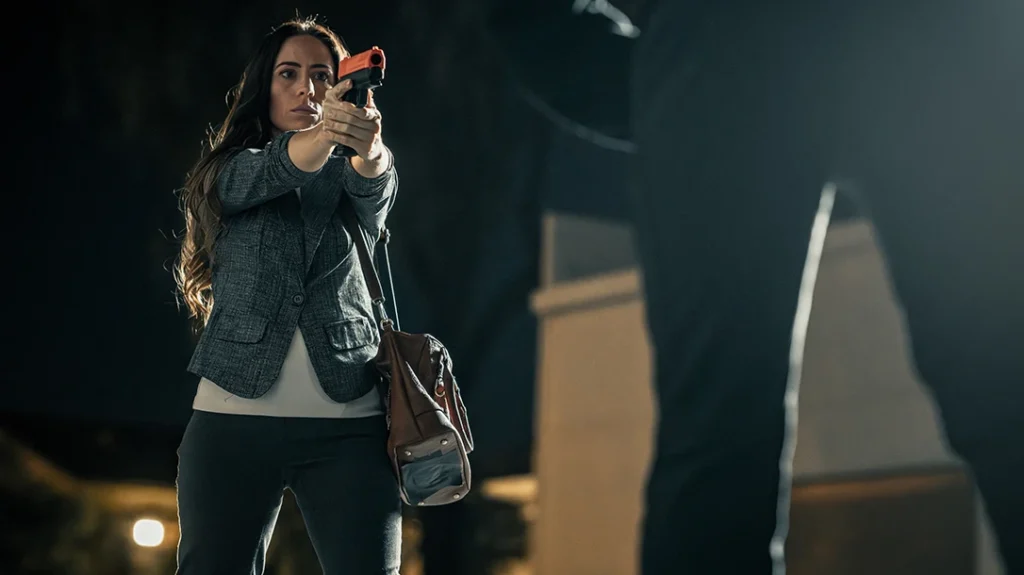
Carrying a firearm as part of your daily life is a responsibility in and of itself. However, doing so as a parent raises the stakes. Children introduce a new level of chaos, unpredictability, and physical demands. For the responsible gun owner with children, integrating a concealed carry lifestyle into parenting goes beyond just safeguarding yourself. You must also create an environment where your kids are protected, educated, and ultimately empowered to stay safe, too.
CCW with Children: Safe Storage Comes First
Before we talk about carry positions, gear, or awareness, let’s start where every armed parent must: storage. Responsible gun ownership begins and ends with securing firearms from unauthorized hands, especially curious young ones.
A solid home storage system doesn’t need to break the bank, but it does need to meet your actual use case. Some parents go all-in on traditional gun safes. Others prefer quicker-access options. Two standout solutions are StopBox and Vara Safety.
Advertisement — Continue Reading Below
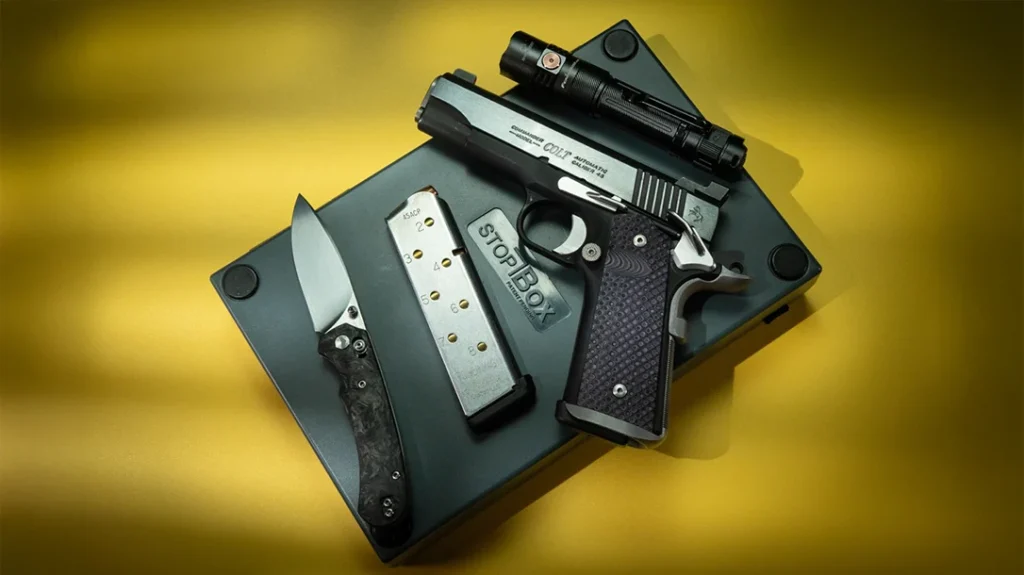
StopBox provides mechanical, non-electronic protection that requires muscle memory rather than digital input. It’s not a safe in the traditional sense. However, it serves as a smart deterrent and quick-access method for staging a defensive pistol in a drawer or on a nightstand, while keeping small hands away.
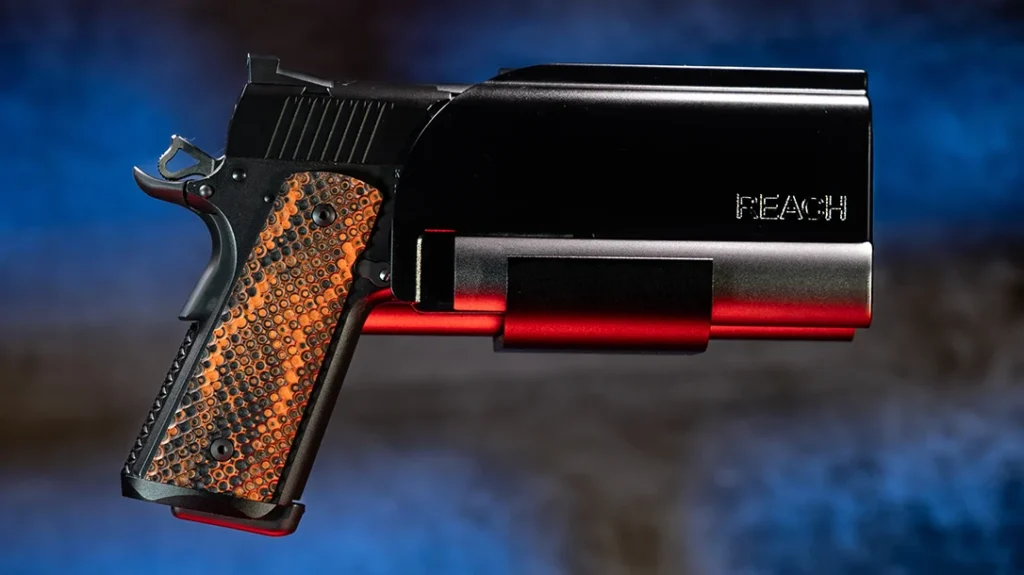
Vara Safety, on the other hand, offers a highly secure biometric solution. The Reach 2S pistol mount and the RACT rifle/shotgun mount allow for rapid deployment while restricting access only to authorized users. Multiple authorized fingerprints can be stored, making it ideal for spouses or co-guardians. With wall-mount options and battery longevity, Vara enables parents to keep a defensive firearm loaded, secure, and instantly accessible without sacrificing safety.
Advertisement — Continue Reading Below
For many, these tools open the door to having more than one loaded firearm in the house without compromising peace of mind. Still, that readiness needs to come with discipline.
Firearms should only move from secured storage to carry positions or live training environments. Never anywhere else. A strict inventory and transition protocol after range days or events is critical. Every gun must be cleared before entering the home, and no ammunition should be loose or unaccounted for.
Advertisement — Continue Reading Below
Your Kids Are Not Like Other Kids
Parents who carry have an opportunity to do something that society often avoids: teach children the realities of firearm safety.
Your child doesn’t need to become a shooter to benefit from this education. They need to understand what guns are, how they work, and most importantly, how to behave around them. Make it clear that they are tools. Use their own curiosity as a tool. If they’re fascinated, you’ve already got a student willing to learn.
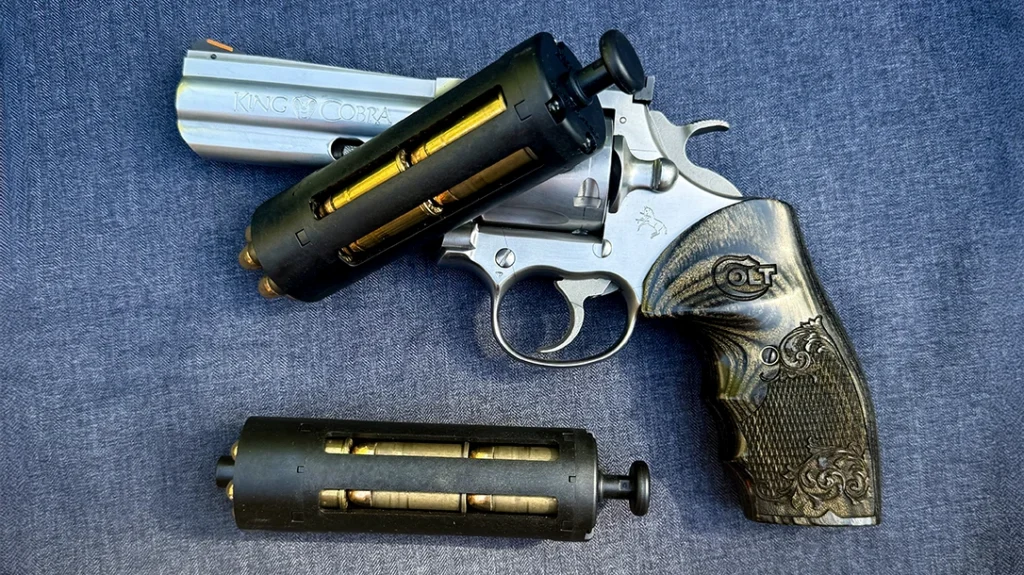
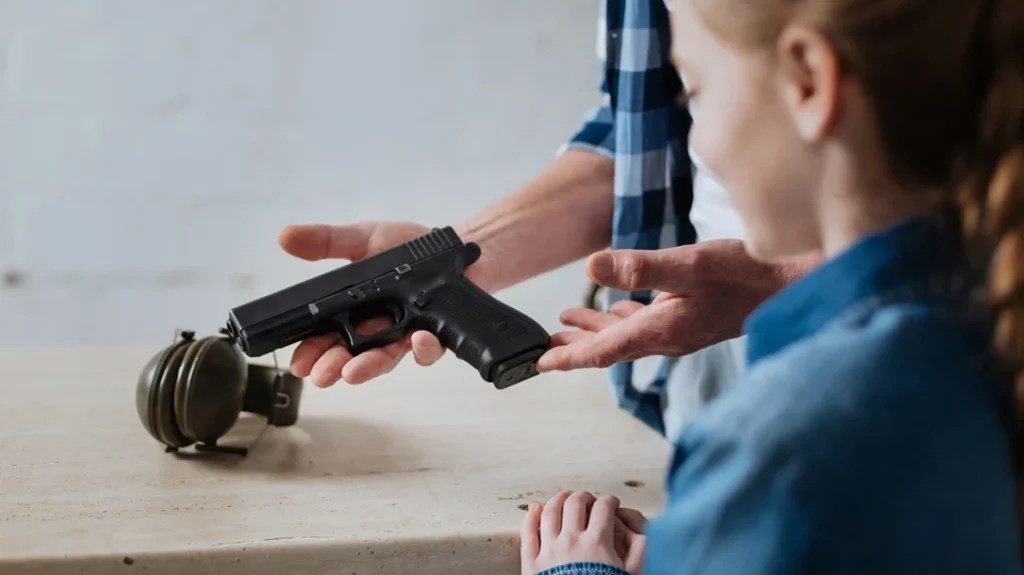
Start by teaching the four basic safety rules. Show them how to determine if a revolver or semi-auto pistol is loaded. Demonstrate the parts of a firearm, and let them touch or handle one in a controlled, dry-fire environment.
Advertisement — Continue Reading Below
The goal is not early proficiency; it’s to cultivate awareness and safety reflexes. If your child ever comes across a firearm outside your home, you want them to recognize danger and respond intelligently.
The teaching space matters. Avoid distractions. Pick a quiet, out-of-the-way part of the house. Establish a routine: a phrase that sets the tone for learning, not play. And keep it positive. If your child is nervous or feels ashamed, the learning shuts down.
Advertisement — Continue Reading Below
Situational Awareness with Kids
Children are joyful noise machines. They distract, wander, argue, and ask questions. In many ways, they can limit your ability to keep tabs on your surroundings. However, with the right mindset, they can also enhance it.
In public spaces, train your kids to stay alert by turning observation into a game. Who can spot the red truck? Who sees someone wearing sunglasses? How many people are in this room? This sharpens their eyes while reinforcing quiet, intentional movement. When transitioning from buildings to parking lots, use mantras like, “Eyes up, mouths closed.” It’s simple, repeatable, and works in practice.
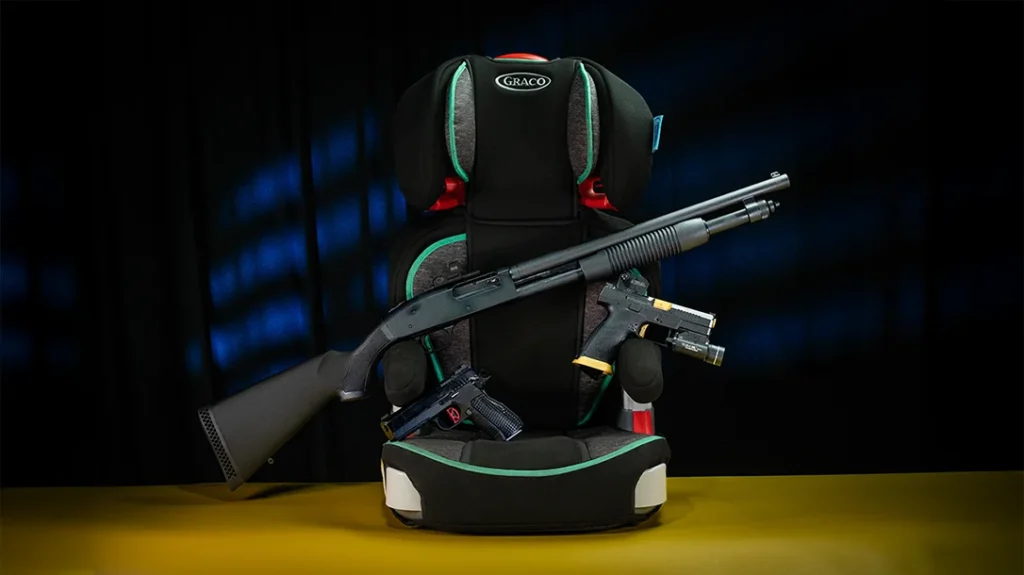
The most vulnerable moment for many parents is loading the car. Getting a toddler into a car seat requires focus, fine motor work, and usually both hands. It’s easy to let your head drop, leaving your situational awareness behind.
Advertisement — Continue Reading Below
Instead, practice buckling in your kids with your head outside the vehicle. Keep your spine aligned and your peripheral vision active. Build muscle memory so that your hands can work while your eyes scan.
CCW Gear That Works for You
Your carry gear has to serve two masters now: defensive readiness and the physicality of parenting.
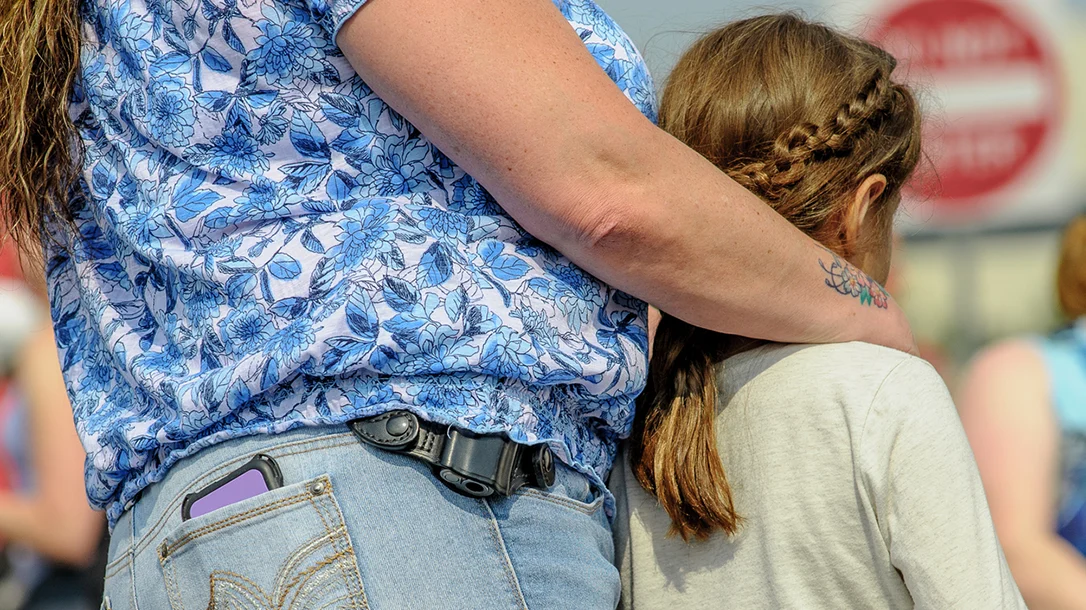
You may have to carry your child on your hip while moving through a sketchy parking lot. You may have to bend, twist, or run. If your holster doesn’t stay in place or your belt sags under the weight, you’re not just uncomfortable, you’re compromised.
A proper belt makes a difference. Brands like 5.11, Hunter Constantine, and Blue Alpha offer sturdy, purpose-built belts that distribute weight well and keep your holster secure. The same goes for the holster itself. Side Guard Holsters provide excellent retention and comfort, two essential traits when balancing the tasks of carrying a child and a gun.
Remember to keep your shooting hand free in higher-risk areas. If you need to carry your child, make sure they aren’t sitting on your holster.
Beyond the Gun
Defensive tools don’t end with your sidearm. Emergency contact cards, blood types, and trauma supplies should be part of your carry plan.
Keep a brightly colored contact card in your wallet or child’s backpack with emergency numbers, allergies, and blood types. If you’re unconscious or otherwise incapacitated, first responders need that information quickly. Don’t forget your child’s full name, an EMT can’t call for “Buddy” or “sweetheart.”
Statistically, you’re more likely to use a tourniquet than your firearm. Carry one, and know how to use it. Take a trauma class. Fifteen seconds is all it takes to lose consciousness from a femoral bleed. Don’t let fear stop you from preparing.
Train your kids in other emergencies, too. Can they call 911? Do they know how to unlock your phone? Do they understand what sharp means and how to cut something safely? Children doing dangerous things under supervision is the very essence of learning. Inclusion matters.
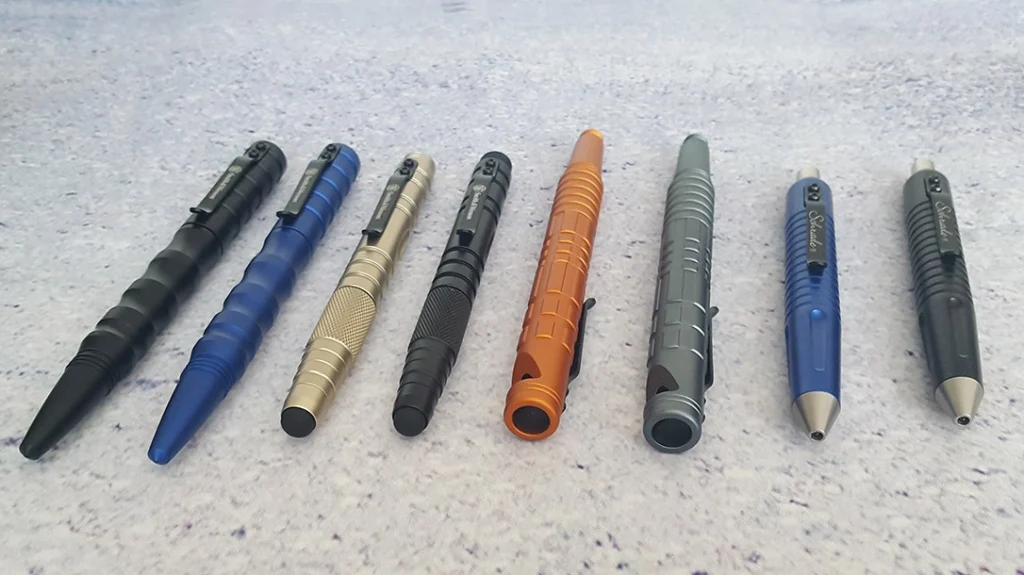
Even if you don’t carry a firearm, you should at minimum carry a knife and a flashlight. These aren’t just tools for emergencies; they’re daily problem-solvers.
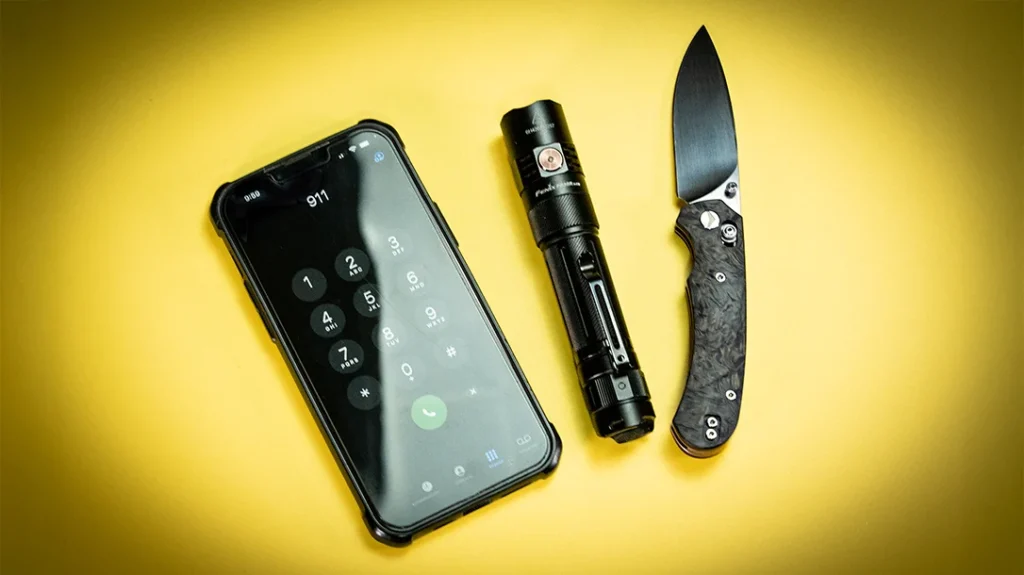
A knife gives you the ability to cut a seatbelt, open a package, or free a stuck strap. A flashlight gives you the power to search, signal, or navigate in the dark. Your phone doesn’t count. A multi-tool, sure, but you may need to use your hands for multiple tasks simultaneously.
These should be decent tools, not something out of the Walmart camping section. Your kids should be shown how both of these tools work, safely and with care. A flashlight isn’t a toy. A blade isn’t magic. Teach them what each does, how to use it without harm, and when to ask for help.
I’m a Dad Who Carried Concealed, Too
I’ve got two boys. Energetic, wild boys. And I carry a gun because I love them more than I fear the responsibility.
Our house runs on systems. Up until recently, I only allowed one loaded gun in the home at a time. It was either on me or in a StopBox by the bed. That changed when Vara Safety entered the picture. Their biometric safes let my wife and me store more than one loaded firearm with full peace of mind. We’re the only authorized users, and the guns stay put until they’re needed.
That level of safety gives us freedom. It gives me confidence as a dad who also happens to be an instructor.
Teaching my sons about firearms has never been about turning them into shooters. It’s about giving them the knowledge to walk away (or to respond) if they ever encounter a weapon. My seven-year-old can open a revolver and clear it safely. Not because I want him to shoot, but because I want him to survive.
I’ve had to learn how to buckle a car seat without dropping my head, how to keep one hand on my youngest, and my eyes on the parking lot. I’ve gotten better at carrying groceries, holding a toddler, and drawing a mental map of my environment—all at the same time.
Carrying with kids isn’t just about being armed. It’s about being aware, trained, and thoughtful.
To all the moms and dads out there who carry to protect their families: I see you. You’re not paranoid. You’re prepared.
Godspeed.