Have you ever heard of the startle response? It is a natural survival instinct that helps protect us from harm, such as when an object is suddenly coming at us. This reaction can happen within seconds, all before your brain has had a moment to actually process what is happening. Muscles will contract, your eyes will close, and your posture will shift defensively to protect vulnerable body parts. The five steps below will help you overcome recoil anticipation.
5 Steps to Overcome Recoil Anticipation
This flinching response is necessary in life-or-death situations. However, it can be frustrating when performing tasks where a physical reaction is unwanted but hard to avoid.
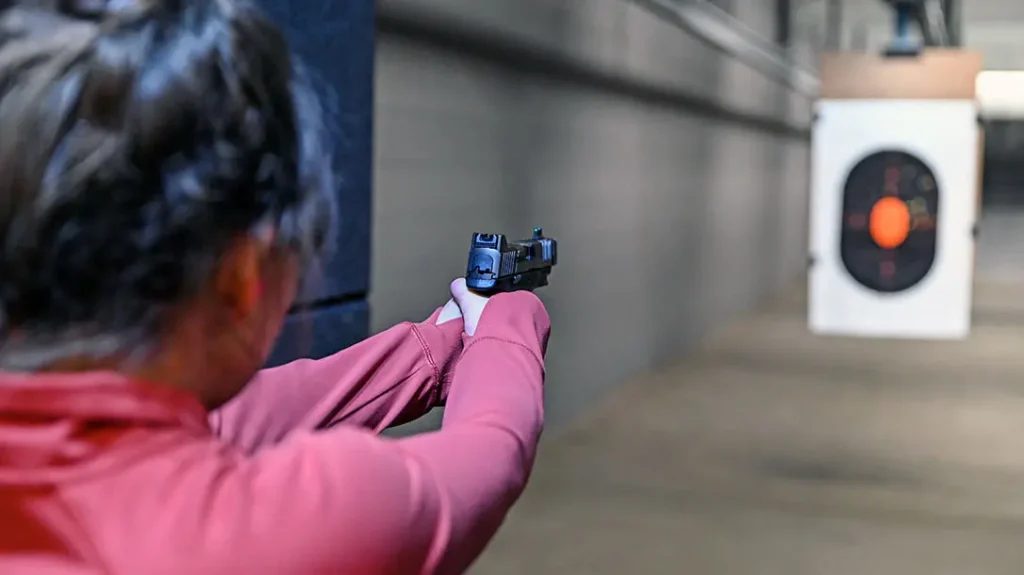
Many shooters, especially beginners, find that this reaction is common when first learning how to shoot. This is because of the adrenaline, loud noises, and the recoil of your firearm. This flinching results in an improper grip, failure to pull the trigger, and lowering your firearm’s muzzle due to subconscious movement.
Advertisement — Continue Reading Below
To improve your accuracy, consider the following five ways to minimize anticipating recoil.
1: Keep Sessions Short & Purposeful
I cannot tell you how many times I have gone to the firing range, eager to improve my skills, only to find that as my training session progressed, each shot I fired ended up getting worse over time. Without fail, my confidence levels decreased, and my flinching issue seemed not to be improving in the slightest.
Eventually, I came to the realization that I needed to keep my training sessions short. This would allow me to correct the bad habits I had been forming before frustration set in.
Advertisement — Continue Reading Below
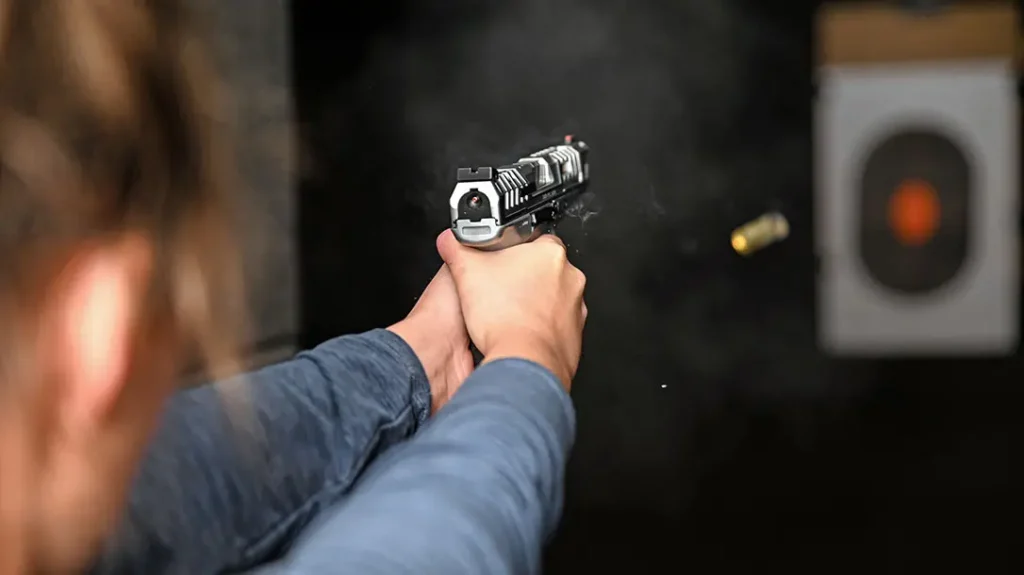
Unlike longer training sessions, where I would just fire round after round until my fingers hurt, short training sessions prevented mental fatigue and kept my focus sharp. This leads to a more enjoyable and beneficial shooting experience.
When learning how to control recoil, it is also recommended to keep your training sessions purposeful. Before you head out to the range, set a goal or two you want to focus on. This gives your brain something to focus on instead of worrying about what will happen after you squeeze the trigger.
Advertisement — Continue Reading Below
2: Lean Into It
From an outside perspective, the way a shooter positions their shoulders, feet, and arms may not seem critical. However, in reality, stance plays a fundamental role in an individual having a successful training experience.
A proper stance increases accuracy, allows for faster follow-up shots, and provides stability. It also helps a shooter control recoil because their body mass, rather than just their hands and arms, can absorb the force of the firearm’s recoil.
When learning how to shoot, one mistake that beginners often make is leaning backward because they are anticipating the recoil. This stance can disrupt your aim and cause physical fatigue to set in, creating an uncomfortable experience.
Advertisement — Continue Reading Below
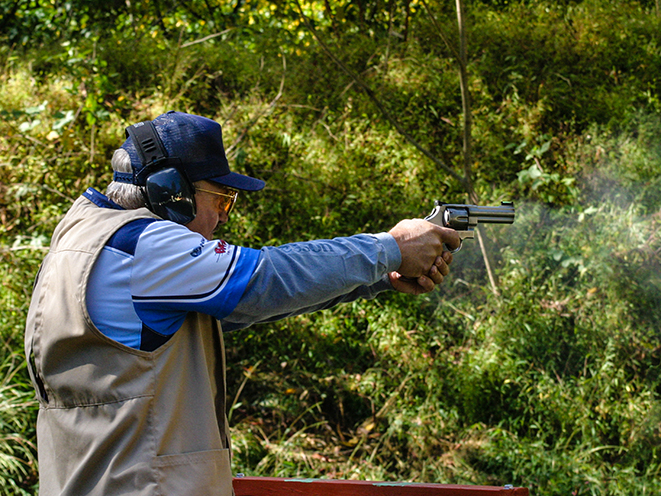
Instead, lean into your firearm as you shoot. Make sure you bend your knees, engage your core, and have your feet planted firmly on the ground. Since your stance is the foundation of good marksmanship, you must practice until your positioning is perfect.
Furthermore, do not be afraid to experiment with new stances until you find one that fits your needs and feels natural and comfortable.
3: Move Down a Caliber
When I first switched from shooting a .22 caliber handgun to a .9mm, I instantly noticed the difference in power between the two. Compared to the 22 caliber, a 9mm pistol can be louder, heavier, and much more challenging to control. This causes a shooter’s flinching problem to increase dramatically.
Advertisement — Continue Reading Below
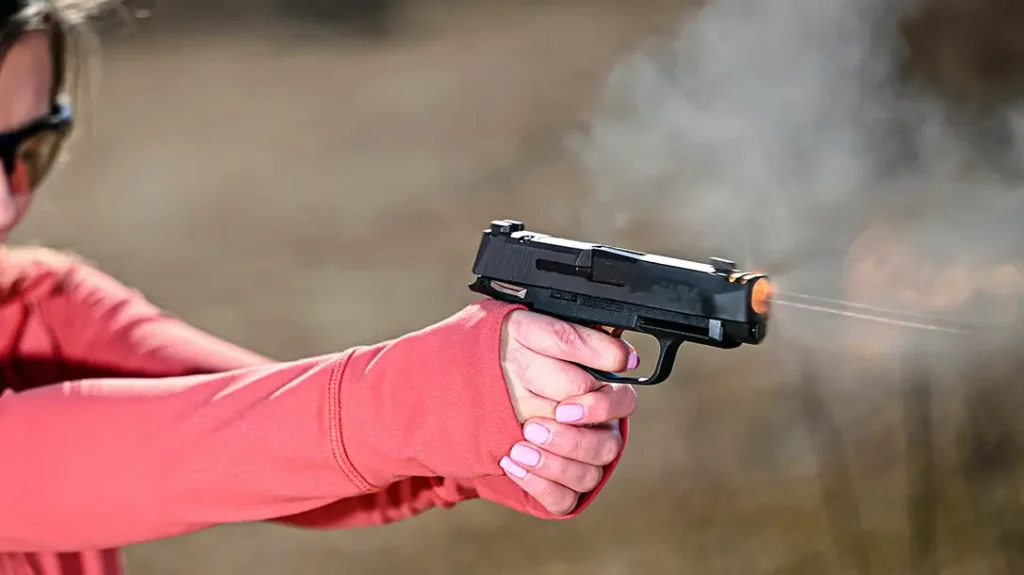
One solution to help overcome anticipating the recoil is taking a step back and training with smaller caliber handguns instead. In general, firearms with a lower caliber produce less recoil. This allows a shooter to focus on the core fundamentals of shooting and establish good habits that become muscle memory, making it a great beginner-friendly option.
If you find managing the recoil on a larger caliber firearm too difficult, there is nothing wrong with sticking with smaller calibers until you have mastered the art of not flinching.
Advertisement — Continue Reading Below
4: Go with a Friend
When a shooter flinches, it is typically a mental game. A shooter will anticipate the recoil and react well before the trigger has been squeezed. This, in turn, can lead to various types of shooting errors. So, learning how to be calm and get yourself in an appropriate headspace is essential.
One way to help overcome the fear of recoil is by bringing a friend with you. Having a familiar person nearby can provide comfort and peace of mind. This increases a shooter’s confidence levels because they do not feel alone.
Furthermore, training with a partner also allows you to take a break if necessary. Sometimes, the best way to break the fear is to take a step away from your surroundings, allowing yourself to reset mentally and physically. Having a partner allows you to watch from the sidelines while still maintaining a “training mode” mindset.
5: Focus on Your Fundamentals
Whether you are a new or seasoned shooter, there is no better feeling than contacting the center of your target. It’s fun, energizing, and rewarding for shooters at every level. However, it is critical to recognize that hitting a bullseye on paper is not possible without practicing your core fundamentals.
Perfecting your stance, grip, sight alignment, sight picture, breathing, trigger control, and ability to follow through not only improves precision but also prevents a shooter from anticipating the recoil. These concepts, especially stance, grip, breathing, and trigger control, allow you to absorb the recoil into your body properly.
The next time you train, instead of focusing heavily on being accurate, prioritize working on your shooting fundamentals. Before you know it, your marksmanship skills will slowly start to flourish, and your flinching problems will soon decrease.
Anyone Can Overcome Recoil Anticipation
Overall, recoil anticipation is a problem that shooters of all skill levels can face. This leads to several problems, including missed shots, poor trigger control, and frustration.
Thankfully, flinching can easily be corrected if you put in the practice and are patient with yourself. Keeping your training sessions short, leaning into your firearm as you shoot, moving down a caliber, having a range buddy, and focusing on your core fundamentals, you will reduce a physical reaction to the recoil. Not to mention, you will set yourself up for shooting success.