To many shooters shooting glasses are what looks good to them and how cool they look however there’s more to the story, much more. Through the myriad of colored lenses which one do you choose?
Colored Lenses Options
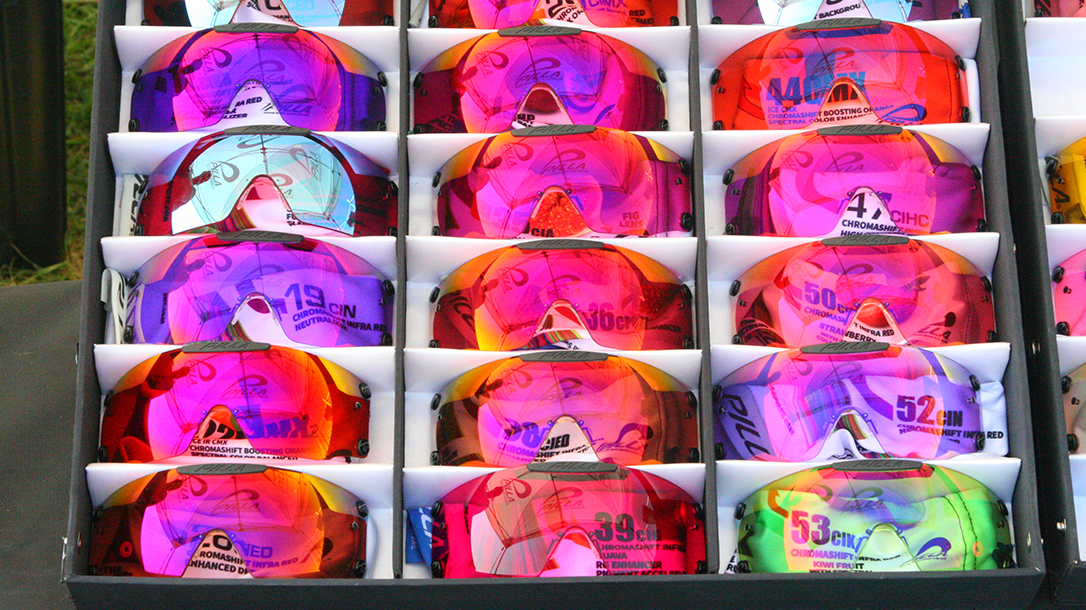
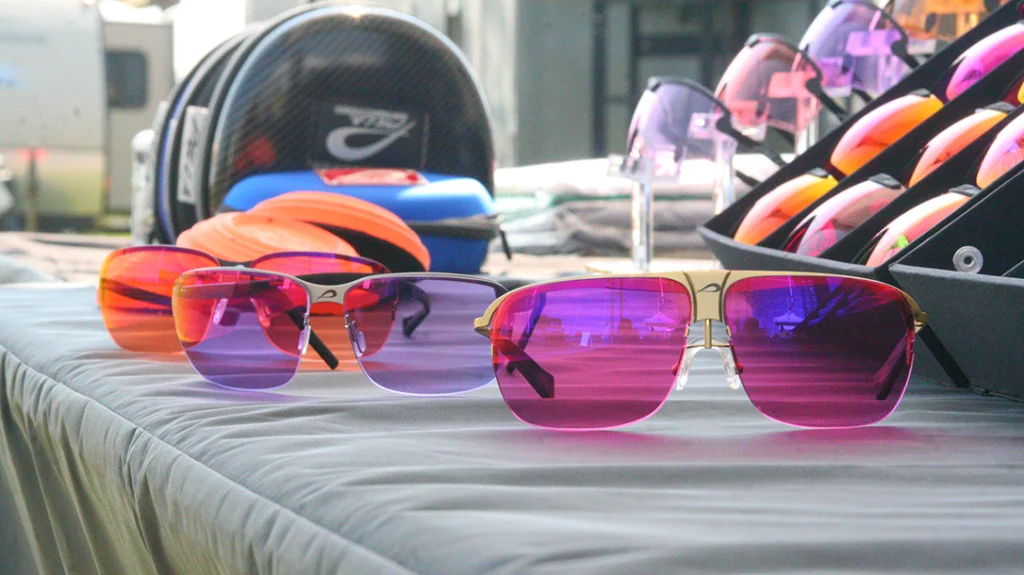
Shooting glasses are designed to help see your target better whether its bright and sunny or overcast. And because of the contrast between weather conditions, it’s nearly impossible to find one lens that works in all situations. Hence the different colors.
Each color lens serves a different purpose filtering out light.
Advertisement — Continue Reading Below
Yellow/Orange
Yellow and orange colors work great for cloudy/hazy days, or dusk or dawn shooting where there is lower light. These colors help enhance and define the orange target in low light conditions. Many deer hunters use them in wooded areas. They help highlight shadowed areas.
Purple
The color purple is very popular and tend to give great contrast of the orange target against green heavy tree lines and bluebird skies. Purple tends to transmit the reddish orange end of the color spectrum and absorb the greenish end. So, if you transmit one, you absorb the other.
Advertisement — Continue Reading Below
Red/Vermilion
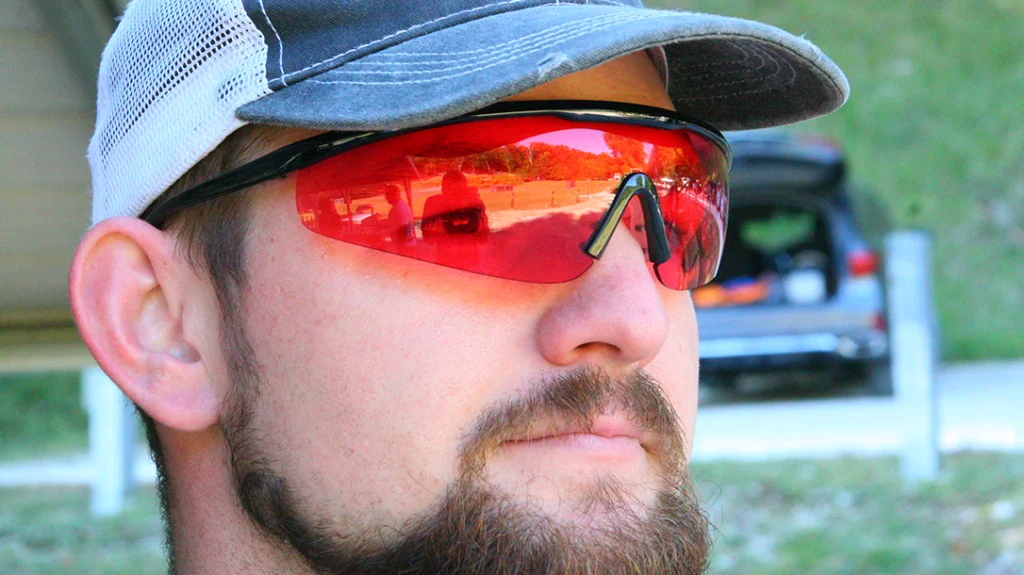
Red/Vermilion Lenses: Red and Vermilion colors are like purples. They too dampen the greens, while popping and defining the orange.
Brown/Bronze
Brown/Bronze Lenses reduce light on bright days. Many upland bird hunters like brown when hunting. Light conditions outside should dictate whether you use a lighter or darker lens. Brown lenses are also a great option for snow as brown lenses relax the eye.
Gray
Gray is a great “all around” lens. But doesn’t do much to help see the target “pop.”
Advertisement — Continue Reading Below
What Works for You
No two sets of eyes are the same, what works for one shooter may not work for another. Case in point Foster and Mathew Bartholow, Browning /Winchester Pro Staffers. Foster shoots a yellow/ orange tint lens, but his brother Matt is color deficient what many call “color blind” so he prefers a red/ vermillion.
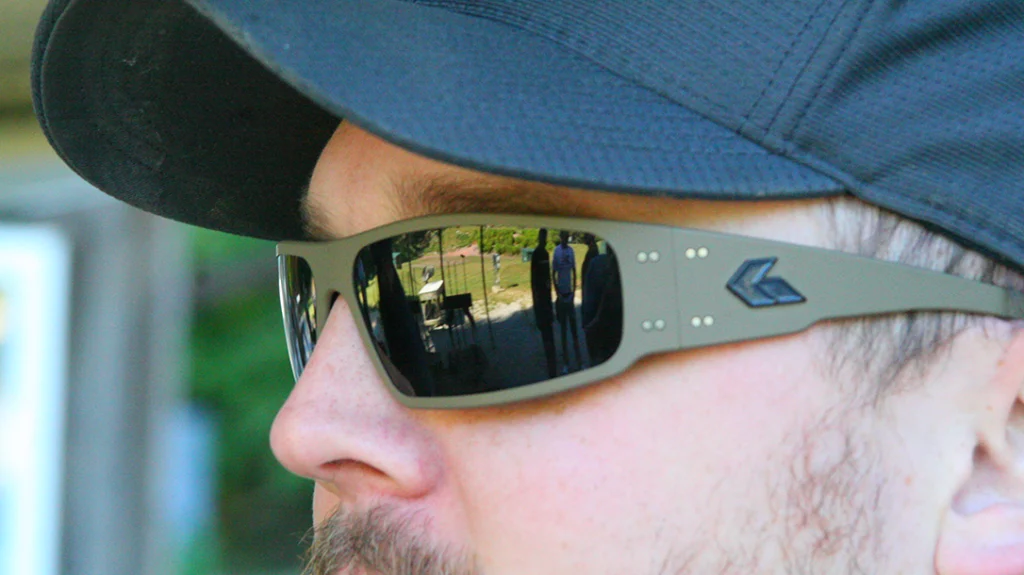
“Color vision is a complex topic,” claims Dr Mark Kahrhoff, O.D. of St Louis, Missouri. “One in 12 adult men have congenital color deficiency. What these people tend to do is confuse colors. By putting tinted lenses on, the color deficient person may shift their color perceptions a bit — perhaps in a ‘good direction’ or perhaps in a ‘bad’ direction — but certainly would not have normal color perception as a result.”
Advertisement — Continue Reading Below
Factors To Consider
“The exact tint and the exact impact depend on many factors including most importantly the type of color deficiency and the severity of it.” continues Kahrhoff, “Think about the visibility of an object against a background. When we do an eye exam, we show black letters on a white background. It’s designed that way in part because that’s the ‘easiest’ thing to see. Black letters on a white background”
Kahrhoff concludes by stating, “Remember all tints reduce the light reaching your eye. It’s all about optimizing visibility and tints do that through a combination of enhancing visibility of one object against the background of another color. Loss of light intensity by tint is the tradeoff you must make.”
Advertisement — Continue Reading Below
Of course, the colored lenses don’t just sit on your face, but they must have a frame. Here’s a few tips when choosing a frame.
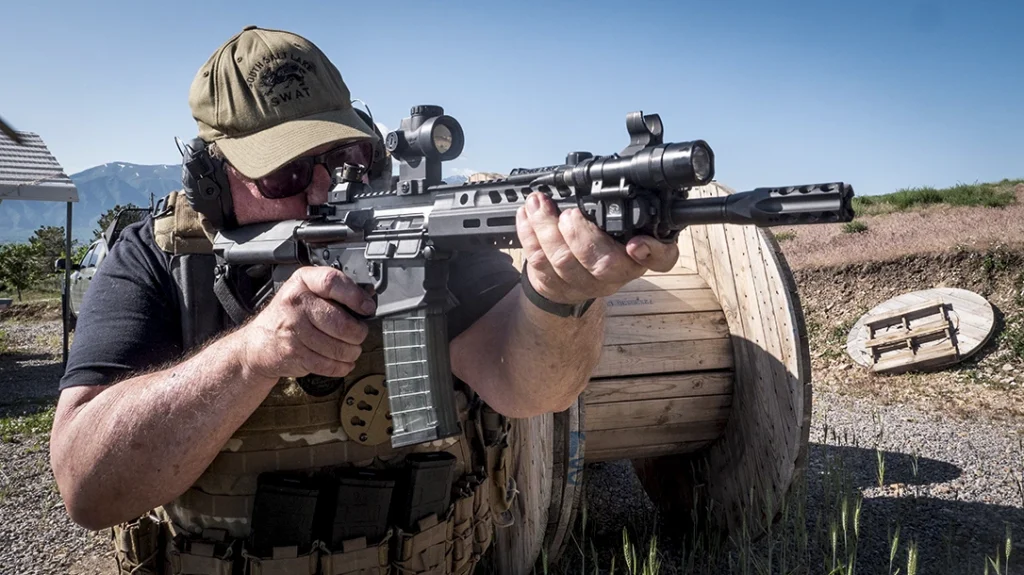
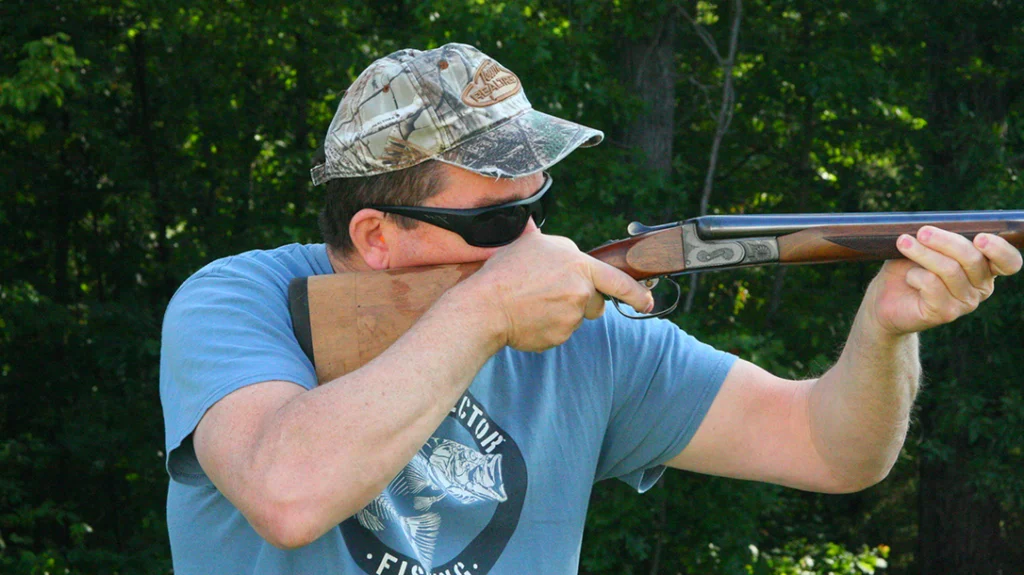
The frame should be comfortable. I prefer a wraparound style more than aviator style glasses.Ensure the frames fit your face. Too small and they will pinch making you uncomfortable. Too large and they will feel as though they are constantly falling off your face. Both can be very distracting. When shooting, your focus needs to be on crushing the target not your glasses falling off. You should not notice the glasses. They should feel as though they grew there.
Lens cut
Wrap around glasses help keep out light better than an aviator style. They also keep out debriswhen firing or wind-blown debris. Most trap shooting runs concurrent with pollen season. Wrap around glasses help prevent pollen and other dirt from winding up in your eyes.
Advertisement — Continue Reading Below
Prescription glasses can be difficult and costly as I recently learned when I purchased a set and months later discovered my prescription had changed.
Many manufactures offer a prescription insert which fits inside the shooting glasses. If your prescription changes only the insert needs to be changed whereby saving money.
Shooting glasses are not just for looks or being cool. The benefits of possible improved vison on the trap or sporting clays range along with eye protection, certainly justify the costs.