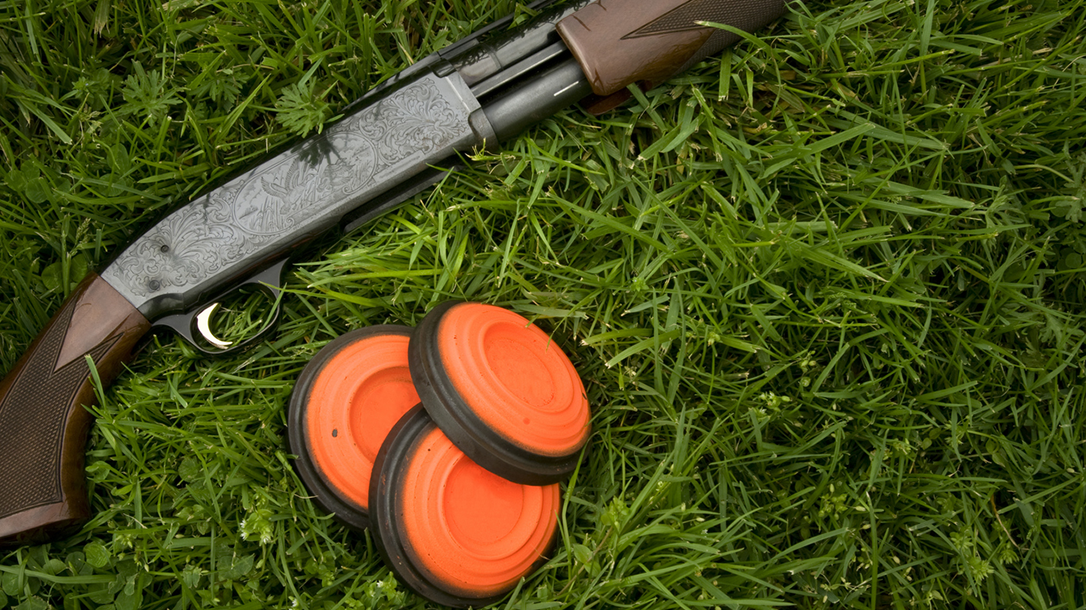
Skeet is an exciting, fast-paced shotgun game that anyone—from experts who seldom miss to brand-new shooters— can enjoy. It’s fairly inexpensive, doesn’t have a giant financial barrier to entry (you don’t need a super expensive gun) and doesn’t take four or five hours like a typical round of golf.
Those getting into the game might be confused by the denotations “American skeet” and “International skeet.” We’ll be talking about American skeet here. International skeet, which is what Olympians compete at, is much the same but is shot mainly with a 12 gauge, the targets are a little harder and they are thrown at a faster speed.
Before we delve into the things you’ll need to get started shooting skeet, let’s first explore the game and how it works.
Advertisement — Continue Reading Below
Skeet 101
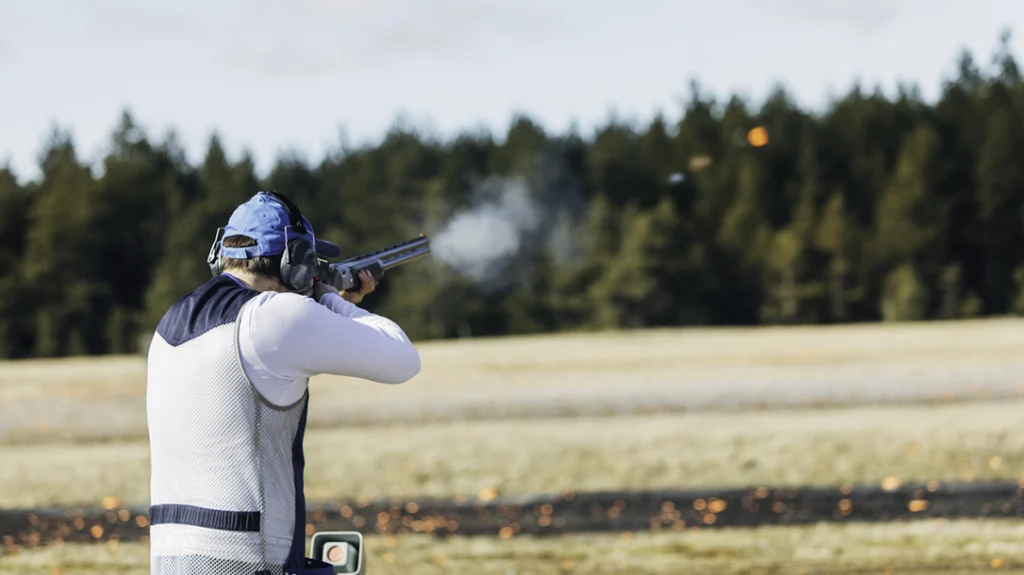
Skeet provides a little faster-paced action and somewhat more challenging shots than trap—another very popular shotgun game that we’ll highlight in an upcoming article. Shot in the United States since about 1920, skeet utilizes two trap houses—a high house on the left side of the field and a low house on the right.
Shooters move through eight shooting stations, seven of them arranged in a half-moon between the two trap houses and one directly between them. A round of skeet consists of 25 targets, with 17 shot as singles and eight as doubles. The first miss is repeated immediately and is called an option. If no targets are missed during the round, the last, or 25th target, is shot at the last station, low house 8.
Advertisement — Continue Reading Below
At stations 1 and 2, shooters shoot a high-house single, a low-house single and a high-house/low-house pair launched simultaneously. At stations 3, 4 and 5 shooters shoot a high-house single and a low-house single. Stations 6 and 7 are similar to 1 and 2 with a high-house single, a low-house single and a low-house/high-house pair. Station 8 consists of a high-house single and a low-house single.
There are some subtleties to the rules that you’ll need to learn eventually, but that’s about all you need to know starting out. The object, of course, is to break as many of the clay birds as possible. Whoever breaks the most wins. As with any other shooting sport, the most important thing to focus on is safety. It might be a game, but a shotgun can be a dangerous weapon if not handled and shot safely using accepted firearm safety rules.
Now, let’s take a look at the bare-bones equipment needed for jumping into skeet shooting with both feet.
Advertisement — Continue Reading Below
Shotgun
High-level skeet is a fairly high-dollar game. Top shooters compete in 12-, 20- and 28-gauge categories, as well as in .410 bore. Most have very expensive 12-gauge over-under shotguns and equally expensive sub-gauge tubes that screw into the same shotgun for shooting 20, 28 and .410. And when I say expensive shotguns, we’re talking in the high single-digit to double-digit thousands of dollars.
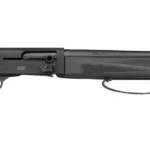
Fortunately, that’s not necessary for beginners. Whatever shotgun you have will probably work, but double barrels and semi-autos are the most preferred. Whatever gauge you have will work starting out, too. If you plan to buy a shotgun to start shooting skeet, I’d recommend a lightweight over/under or double-barrel in 12 or 20 gauge with barrels around 26 inches long. That’ll get you started on your skeet journey.
Shotgun Choke
Skeet is shot at short distances, so fairly open chokes are required. More open chokes allow the shot in the shotshell to spread more quickly, giving a bigger pattern at shorter distances than more closed chokes.
Advertisement — Continue Reading Below
For skeet, an Improved Cylinder, common in choke sets, will do nicely. Cylinder and even Skeet chokes will work even better. More constricted chokes like Modified and tighter will yield smaller patterns and put you at a disadvantage.
Ammunition
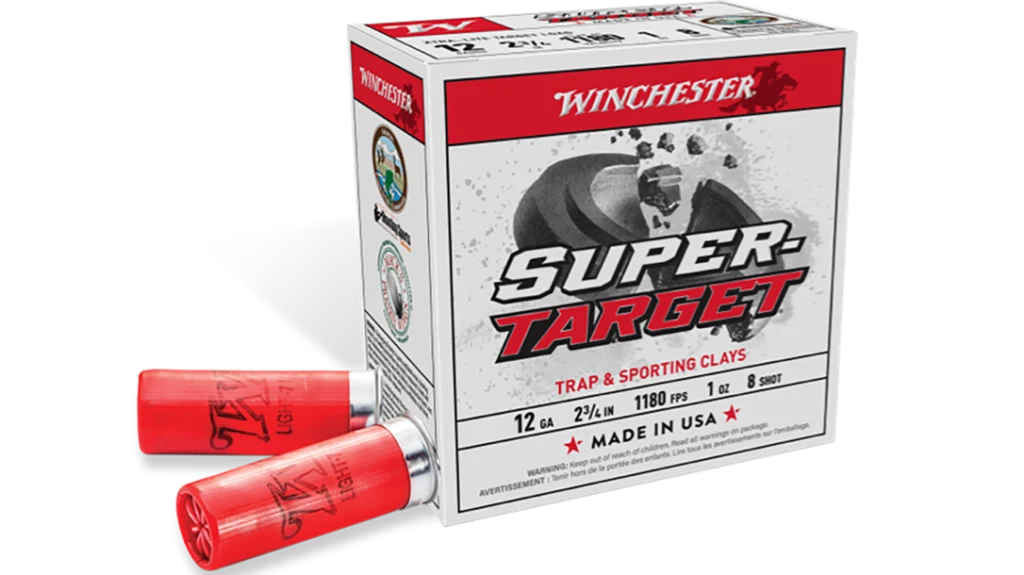
Typical shotshells with lead shot are typically used for shooting skeet. Those with smaller pellets, like No. 8, are best, as they have more pellets within their pattern, and clay birds aren’t all that hard to break if you hit them. Look for shotshells labeled “Target Loads” of “Upland Bird” loads, and they’ll serve you fine.
Advertisement — Continue Reading Below
Top skeet shooters, like those vying for world championships, mostly use purpose-made clay target loads like Federal Premium High Over All or Winchester Super Target. While great ammo, they aren’t a must-have for new skeet shooters.
Eye & Ear Protection
Two things that must always be protected when shooting are eyes and ears. God only gave you one pair each, and ruining either while out on the skeet field is completely avoidable if you use proper equipment.
Many companies make top-quality shooting glasses that will do the job. While a typical pair of sunglasses can be worn at the range, purpose-made shooting glasses with stronger lenses and various colors of lenses to aid vision are always safer and better. Simple ballistic-rated glasses like the Walker Ikon line retail for about $25, come in a variety of lens colors and do the job just fine. At the other end of the spectrum, Beretta’s Pull Shooting Glasses offer three interchangeable lenses of different colors and will set you back about $230.
Advertisement — Continue Reading Below
For ear protection, most skeet shooters prefer in-ear designs as muffs can get in the way of shouldering your shotgun properly. You can spend as little or as much as you want on these. Howard Leight’s High-Visibility Disposable Foam Earplugs only cost about $11 for a bag of 50 and have a Noise Reduction Rating (NRR) of 32. More complex models are also available, and,while pricier, offer other good features. In fact, many are made to magnify sounds like range commands and others speaking, then block noise when a gun is fired. Some can even be molded to your ear for an exact fit.
Shell Caddy
Last but not least is something to carry your 25 shells in. You can carry a shell box from station to station, but it’s cumbersome and makes you think about something other than hitting targets.
A simple clay shooting pouch like this one from Allen will serve you well. It will not only carry the shells needed for a round of skeet but also allow you to easily dump empty hulls out of the drop bottom after your round.
WHY OUR ARTICLES/REVIEWS DO NOT HAVE AFFILIATE LINKS
Affiliate links create a financial incentive for writers to promote certain products, which can lead to biased recommendations. This blurs the line between genuine advice and marketing, reducing trust in the content.