As shooters, we take many things at face value and keep right on pressing the trigger until something goes wrong. The gun goes click instead of bang. That sound is burned into every serious shooter’s memory for a reason. For many pistols, but especially the 1911, the magazines you use can have a real effect on their reliability. Let’s dig in a little deeper.
How Magazines Affect the Reliability of Your 1911
When you need your pistol, and it does not fire, nothing else matters in that moment except why it failed. We often trust that our gun will run because it always has. On many factory pistols, that is a fair assumption. What gets overlooked is how much of that reliability actually lives in the magazine.
For many 1911 owners, the traditional 7-round magazine does not sound all that adequate when we consider the pistol’s primary use as a defensive tool. It is also not all that exciting on the range. As a result, most shooters quickly adopt higher-capacity magazines holding 8 or even 10 rounds.
Advertisement — Continue Reading Below
The big question is whether we can simply keep stuffing rounds into a 1911 magazine without consequences. In short: no. The long answer is what this article is about.
Where It All Started
On Valentine’s Day in 1911, John Moses Browning filed the patent for what we now simply call the 1911 pistol. Patent number 984519 shows the pistol with its now-iconic single-stack, seven-round magazine as part of the core design. The original 7+1 capacity was not an arbitrary choice. It was a deliberate balance of reliability, spring tension, feed geometry, and the metallurgy and ammunition of the era.
Advertisement — Continue Reading Below
Those early magazines used flat steel followers and tapered feed lips that were tailored specifically for 230-grain ball ammunition. The entire feeding system was engineered as a complete unit. Slide velocity, magazine spring pressure, cartridge shape, and follower geometry all worked together in balance.
When people say the original seven-round pattern is the most reliable, that is not nostalgia. It is an observation rooted in how the system was designed from the ground up.
Advertisement — Continue Reading Below
In 2025, the ammunition landscape has changed dramatically. Bullet profiles are more diverse, hollow points have taken over defensive roles, and metallurgy has advanced by generations. Magazine technology has tried to keep pace with those changes, sometimes successfully and sometimes less so.
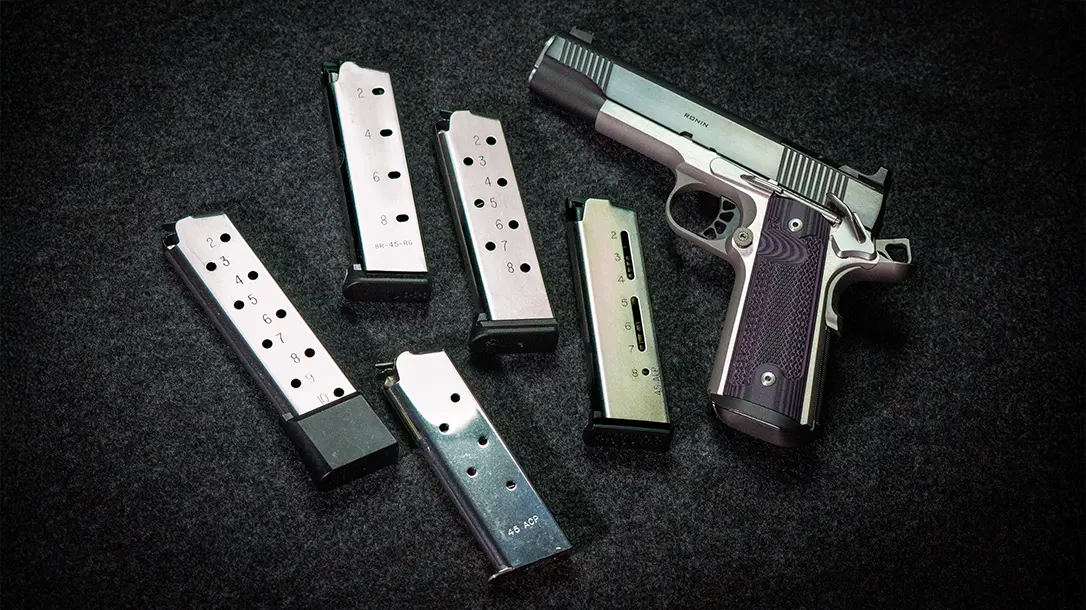
7, 8, and 10
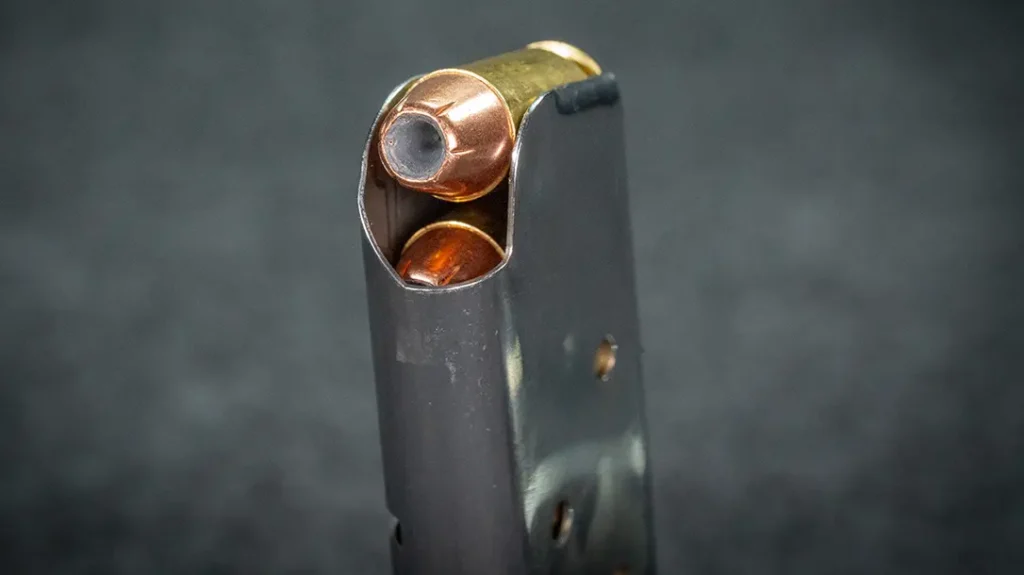
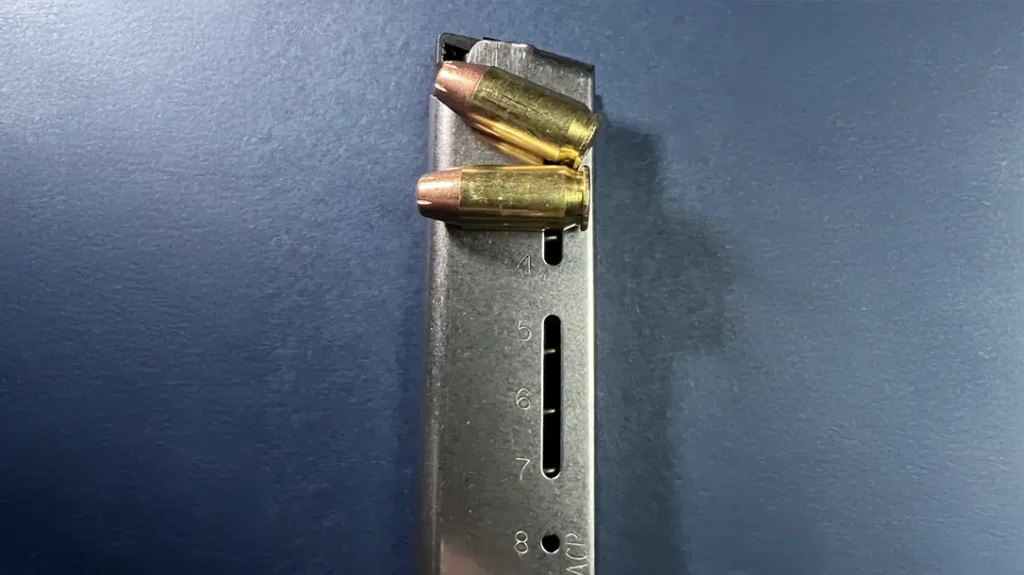
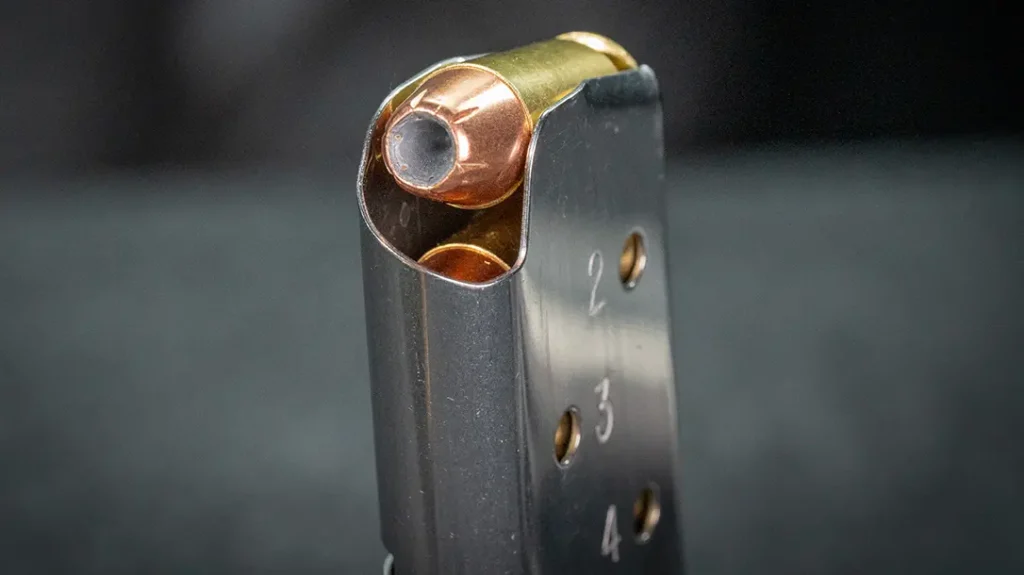
Most of the challenges with higher-capacity .45 ACP magazines come down to a single mechanical reality. The .45 ACP cartridge has a tapered case at the rim with a 26-degree angle, coupled with the necessary space at the rear of the magazine for the extractor to grab the case. Under spring compression, this geometry creates a natural tendency for cartridges to develop a gap toward the bullet end as they stack.
As more rounds are added to the magazine tube, internal pressure rises, and that forward gap widens. This is especially noticeable in 10-round magazines, where spring compression and stacking angle are taken to the extreme. When that gap becomes excessive, the magazine can no longer present the cartridge to the feed ramp at the correct angle with consistent timing. When that timing collapses, feed reliability follows it.
Advertisement — Continue Reading Below
This is why some instructors and 1911 builders still insist that the only true magazine is the 7-round factory pattern. They are not wrong mechanically. The seven-round format places the least stress on the system. It offers the widest margin for reliable feeding under adverse conditions. That does not mean eight- and ten-round magazines cannot be excellent. It simply means their design must work harder to maintain that same reliability window.
The Follower
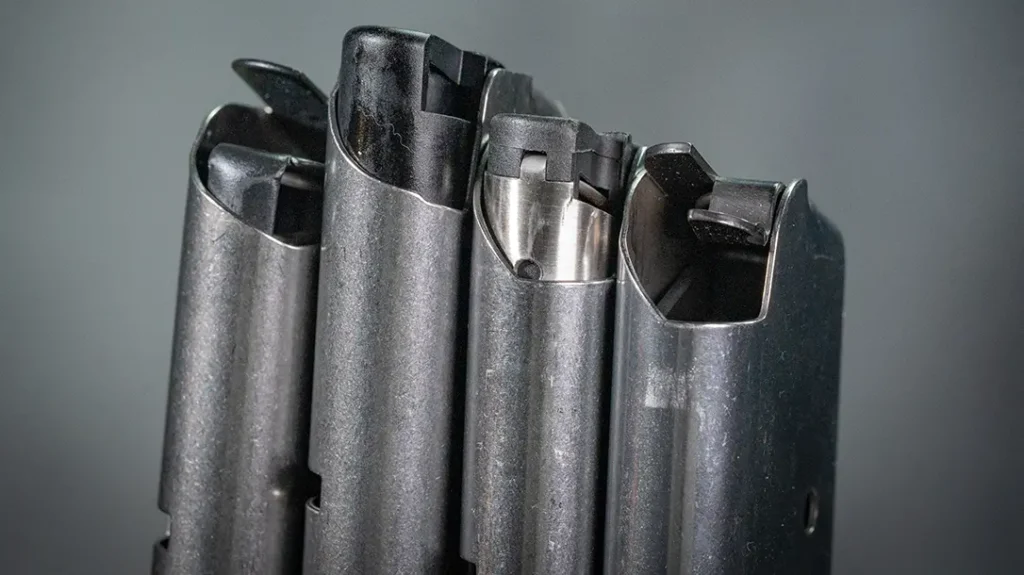
After capacity, the follower is the second most critical component in a 1911 magazine. A proper follower should include a tab that extends into the magazine body. That tab prevents the follower from rocking forward under spring pressure. Without it, the follower can tilt, which increases the departure angle between the first round and the second round in the stack.
Advertisement — Continue Reading Below
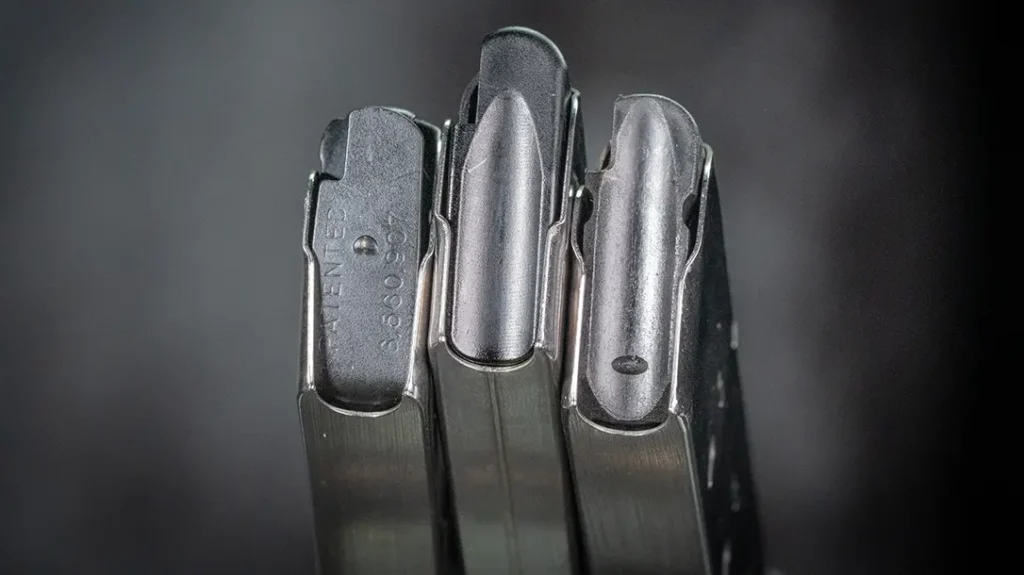
A tilting follower does two bad things at once. First, it compromises feeding reliability by changing the presentation angle of the cartridge. Second, it weakens the follower’s contact with the slide stop. That can cause inconsistent last-round lockback, leaving the pistol in the wrong mechanical state during a reload. A tabbed, stable follower controls this motion and preserves the feed path that the 1911 was originally designed around.
Follower material matters as well. Steel reinforcement increases longevity and dimensional stability, especially in high-round-count training guns where polymer followers can eventually deform under repeated stress.
Advertisement — Continue Reading Below
The Base Pad
Base pads are often treated as an afterthought, but their geometry matters more than most people realize. The base pad is the interface between your hand and the magazine during a reload. Its width, radius, and texture determine how confidently you can seat a magazine under stress.
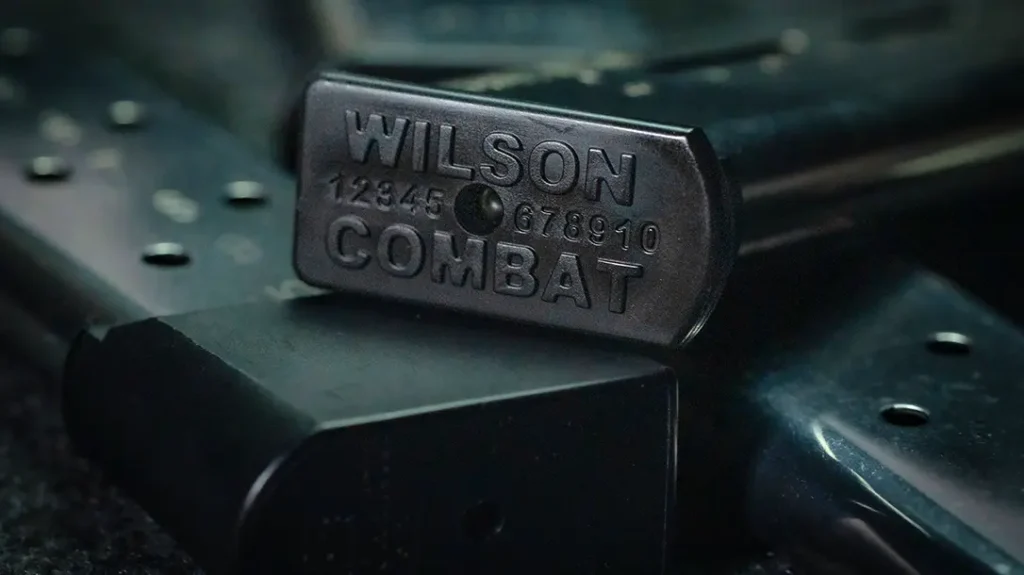
If a base pad is too narrow, too sharp, or poorly shaped, it increases the likelihood of pinched palms and uncertain seating. That uncertainty can lead to partially seated magazines that feel secure but are not. A base pad that is wide, softly radiused, and properly fitted to the magazine tube allows the shooter to drive the magazine home with confidence.
That same design also determines how well the magazine interfaces with magwells, whether factory or aftermarket. Even when not explicitly discussed, base pad and magwell compatibility quietly governs a large portion of reload reliability.
Mags That Get It Right
There are many magazines on the market. Only a handful consistently solve the design challenges of the 1911 in a way that holds up under real use. Three of my personal favorites come from Tripp Research, Wilson Combat, and Check-Mate.
Tripp Research Cobra Mag
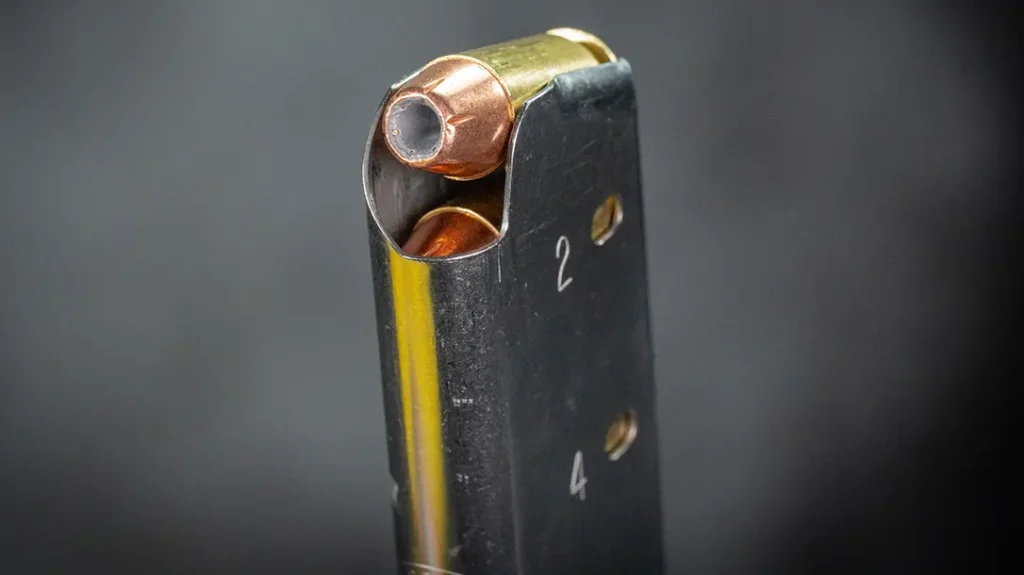
The Tripp Research Cobra Mag is one of the most mechanically robust eight-round magazines available. It uses a steel-reinforced follower that extends deep into the magazine tube. That reinforcement adds strength and longevity while maintaining stable feed geometry. The follower profile guides the cartridge smoothly into the bore, and large windows along the side of the tube allow clear round counts during status checks.
The base pad on the Cobra Mag features a large radius that feels excellent in the palm when seating. Disassembly is accomplished through a large retaining pin. This makes the magazine easy to service without tools, which is a genuine advantage for shooters who train hard or travel frequently.
The tradeoff is that the larger pin can, on rare occasions, be pushed partially inward during aggressive reloads. I have personally had a Cobra Mag attempt to come apart when my palm drove the pin inward. It is rare, but it can happen. Awareness of that mechanical detail is part of using the system responsibly.
Wilson Combat #500 Magazine
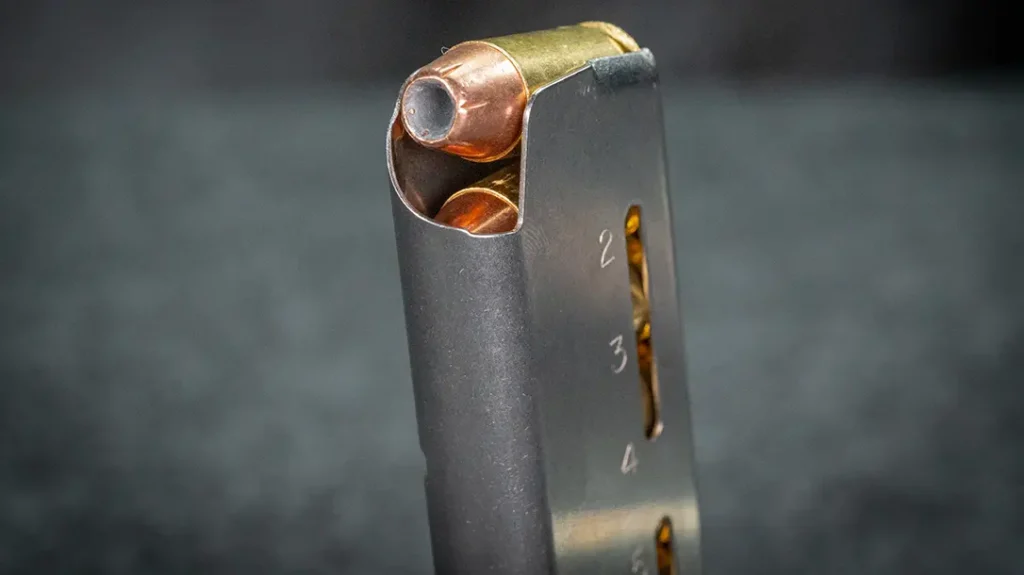
The Wilson Combat #500 magazine takes a slightly different approach. It uses a full-length follower that is not steel-reinforced but remains extremely stable in practice. The base pad is secured with a much smaller retaining pin that requires a punch for disassembly. This makes the magazine slower to service in the field but more resistant to accidental disassembly during hard reloads.
Wilson places windows along the length of the tube for easy status checks and includes a dedicated witness hole that confirms full eight-round capacity at a glance. For shooters who value clean internals and controlled maintenance intervals, this design strikes a strong balance between serviceability and security.
The base pad profile seats very confidently and works exceptionally well in magwells without adding unnecessary bulk.
Check-Mate CM45-1911-8-S
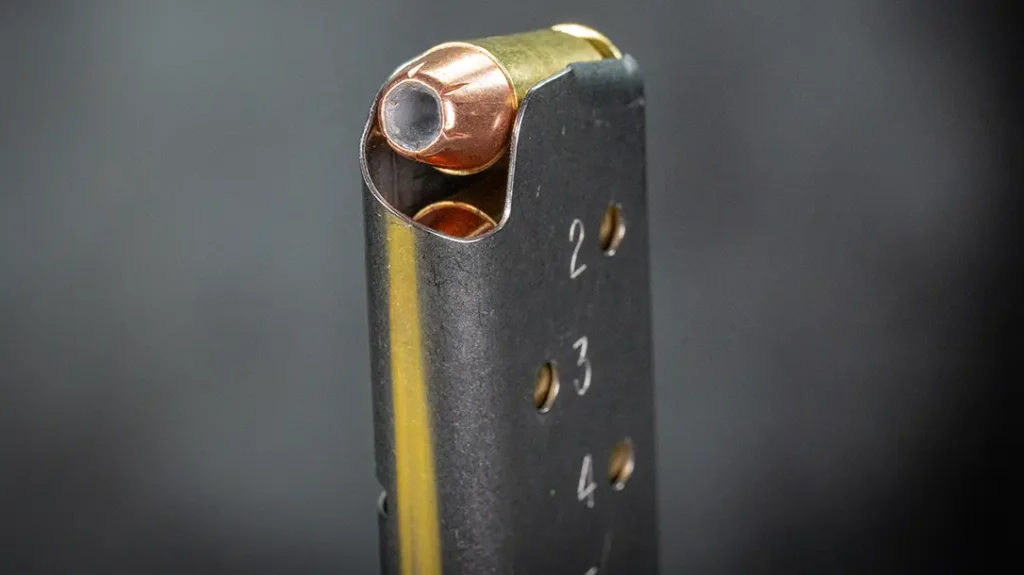
Check-Mate’s preferred eight-round offering for me is the CM45-1911-8-S. It features a steel follower with a reinforcement lip that stabilizes the cartridge stack under spring pressure. The magazine body uses large windows from top to bottom, and the base pad is generously radiused and wide in the palm. That wide surface area makes seating exceptionally predictable.
The base pad retaining pin is visible and finished in bright stainless, which simplifies visual inspection during cleaning and maintenance. In terms of how the magazine feels during reloads, the Check-Mate often strikes shooters as the most forgiving under stress. It simply locks into place with less subconscious effort than many others.
10-Round Variants
All three of these manufacturers also produce 10-round variants of their magazines. Those designs work in the same mechanical framework as their eight-round counterparts but with longer bodies and adjusted spring systems.
When I carry a 1911 defensively, my second magazine is often a 10-rounder from one of these makers. Capacity has value. When the magazine is engineered properly, that value does not automatically come at the cost of reliability.
The Deeper Lesson of the 1911 Magazine
This may feel like a narrow topic, but the lesson applies far beyond 1911 shooters. Inform yourself about the quality of the components that feed your firearm. Do not assume that all magazines are equivalent simply because they hold the same number of rounds. Magazine selection is a mechanical decision with real performance consequences.
Training and working with your firearm is not a celebration of harm. It is an acknowledgment of responsibility. Learning and gaining experience tend to stick best when they are approached with curiosity and even a bit of enjoyment. Quality equipment allows that learning to happen safely and consistently.
What becomes dangerous is uninformed selection. Buying the first high-capacity magazine that appears in a display case because it promises more rounds without understanding how it achieves that capacity is gambling with feed geometry. That gamble may never surface during casual range use. It may appear only when the stakes are highest.
The 1911 remains one of the finest mechanical pistols ever designed. Its strengths are magnified when it is fed by magazines that respect its geometry instead of fighting it. Whether you choose seven, eight, or ten rounds, make sure the magazine you trust was designed to work within the limits of the system rather than merely stretch it.
Shoot safe.

WHY OUR ARTICLES/REVIEWS DO NOT HAVE AFFILIATE LINKS
Affiliate links create a financial incentive for writers to promote certain products, which can lead to biased recommendations. This blurs the line between genuine advice and marketing, reducing trust in the content.