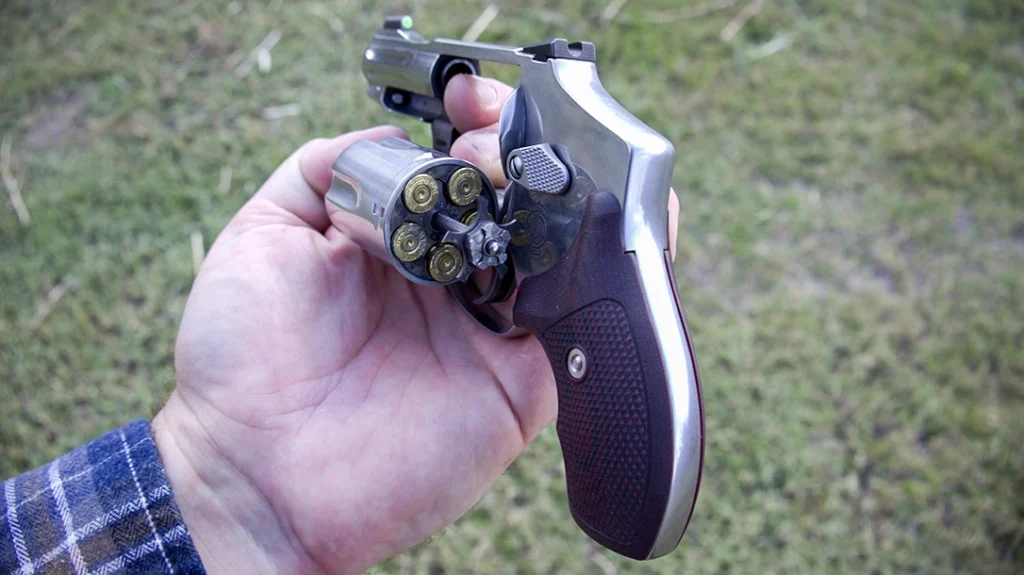
There are two potential downsides to carrying a revolver instead of a semi-automatic pistol: low capacity and slow reloading. Most service-caliber revolvers hold five or six rounds, though some hold more. But once expended, reloading requires more steps than simply dropping an empty magazine and inserting a new one. The process can be streamlined by using various speed loaders and strips. Another workaround is to get a revolver that uses moon clips.
Moon Clips and Revolvers
Some revolvers in traditional cartridges like .38 Special and .357 Magnum are factory-cut for moon clips. Revolvers chambered in semi-auto cartridges held by moon clips have been around for over a hundred years and are on the rebound. Here are some pros and cons of the moon clip system as it pertains to a concealed carry setup.
What Is a Moon Clip?
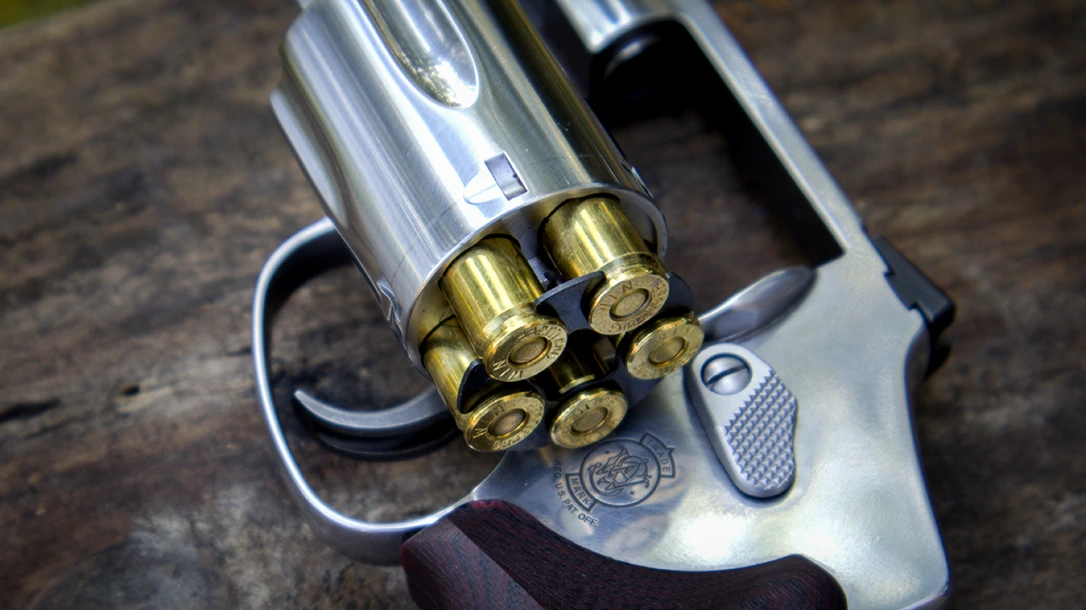
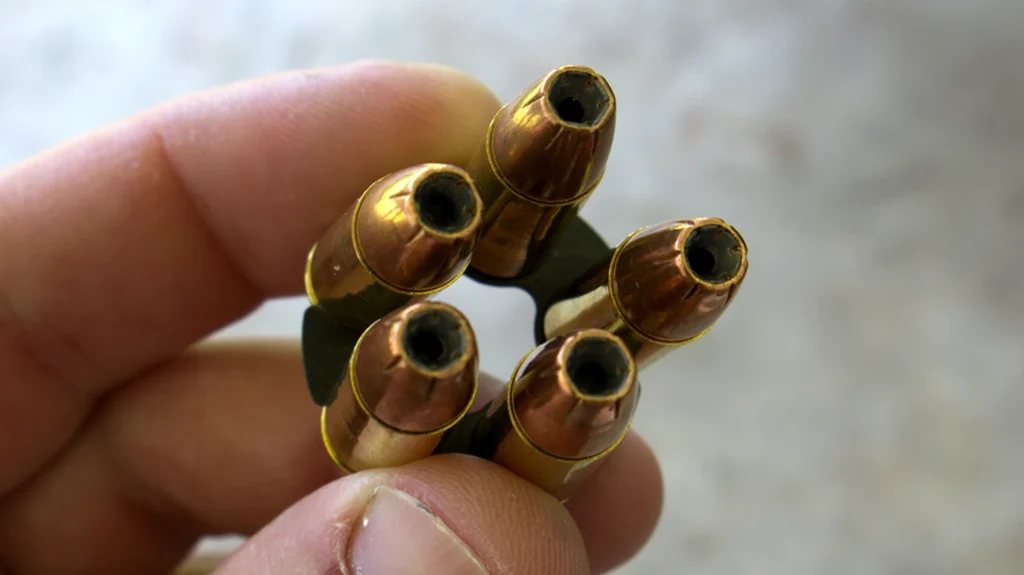
Moon clips are flat, spring-steel units with semi-circular recesses on the outside and a solid interior. The recesses hold the ammunition by a groove in the case head. Correspondingly, the center of the clip acts against the ejector of the revolver, allowing the cases to be ejected as one unit, as they were inserted.
Advertisement — Continue Reading Below
The History of the Moon Clip Design
Most double-action revolvers available today feature a swing-out cylinder and a hand-actuated ejector rod with an ejector star. Traditional revolver cartridges have an external rim at the case head that sits over the ejector star. After the handgun is fired, a wrap on the ejector rod forces the star out of its position, pressing against the case rims and knocking the cartridges out of the chambers.
But what happens if you use a cartridge without a rim? The short answer is that the ejector star will push past the cartridges, and they will not extract or eject from the cylinder. One way to give these cartridges a rim is to put them in moon clips.
Advertisement — Continue Reading Below
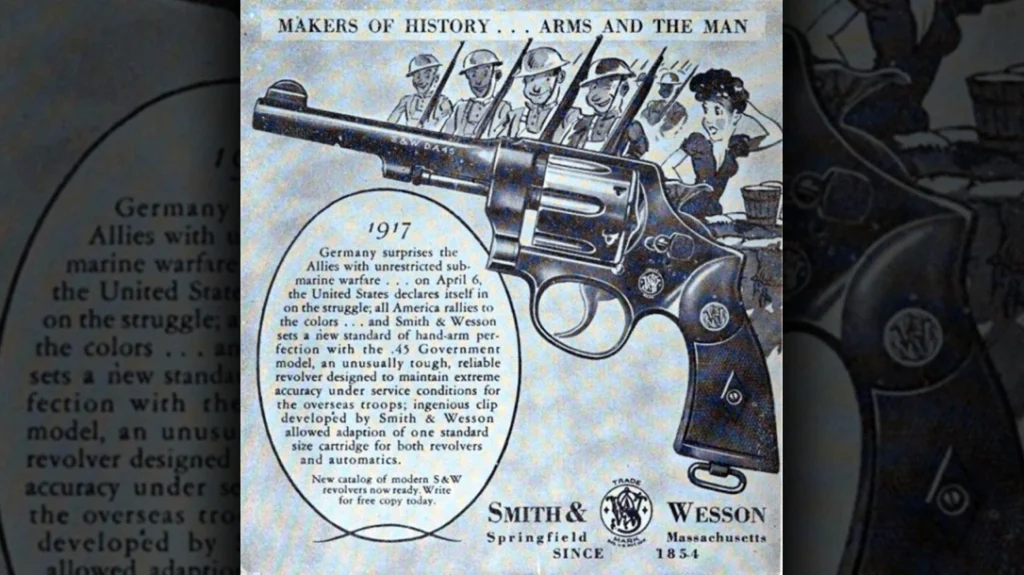
The first use of a clip-fed revolver was during the First World War (1914-18). The United States’ standard issue pistol was the Colt M1911 in .45 ACP. Unfortunately, there were not enough 1911 pistols to issue out to a rapidly expanding army when America went to war in 1917.
The government turned to Colt and Smith & Wesson to find a way to outfit their existing large frame revolvers in the rimless .45 ACP cartridge. Smith & Wesson came up with the idea of the half-moon clip that would hold three rounds of .45 ACP and eject as one unit using a conventional ejector star. For the duration of the war, Smith & Wesson allowed Colt to use the system.
Advertisement — Continue Reading Below
Post-War Designs
The Colt and Smith & Wesson Model 1917 revolvers served admirably. Post-war, Smith & Wesson doubled down on the design. In 1920, the firm debuted the full moon clip, which held six rounds instead of using two half-moon clips for the same job. One unit allows the user to use semi-auto ammunition and load six rounds as fast as one could load one round with a conventional revolver.
Smith & Wesson has continually cataloged the clip-fed successors of the Model 1917 and expanded the line to include other full-sized revolvers chambered in 9mm Luger. In 2025, Smith & Wesson reintroduced its 1990s era Model 940, a snubnosed J-frame revolver chambered in 9mm Luger. Ruger offers versions of their Ruger LCR and SP101 revolvers in 9mm. Both Taurus and Charter Arms offer small revolvers chambered in both .380 ACP and 9mm Luger.
The common link between these handguns is the use of rimless semi-auto cartridges. However, there are some models that use traditional cartridges, namely Pro Series versions of the Model 640, 642, and 442 snubbies and the TRR8 service revolver.
Advertisement — Continue Reading Below
Why Carry a Revolver That Uses Moon Clips?
Revolvers that use moon clips are relatively uncommon but growing in popularity. This is due chiefly to the ease of loading and the availability of ammunition.
Loading and Unloading
The chief reason to use a revolver fed by moon clips, whether it is chambered for traditional or non-traditional cartridges, is ease of loading and reloading. Traditional speed loaders can be bulky and require a push, pull, or other motion to release the ammunition into the cylinder.
Moon clips sit flush with the case heads of the rounds and take up no extra room. There is also nothing to release, as the moon clip is meant to go into the cylinder and remain there until it is ejected with the ammunition.
Advertisement — Continue Reading Below
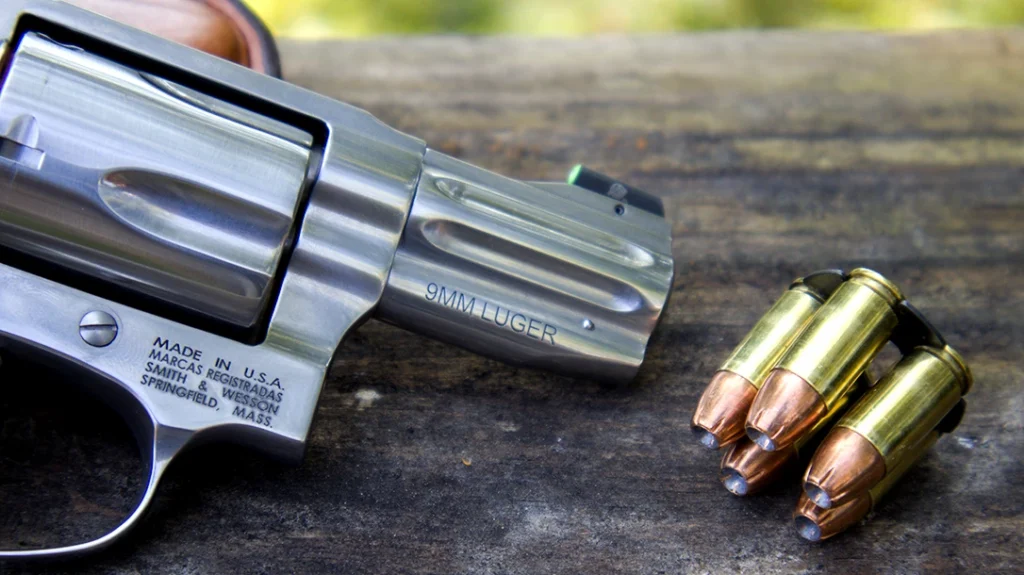
Unloading is also cleaned up as the clip will be ejected with the ejector rod, and all the ammunition will come out at once. Traditional revolver cartridges eject in the same manner, but the individual cases will not necessarily all come out at once.
If the ejector rod is short or the revolver is particularly dirty, it is possible to get a case that will not come out in unison with the rest. In revolvers chambered for semi-auto pistol cartridges, the reloading process gets even faster thanks to the use of shorter cases that make loading and ejection even easier.
Advertisement — Continue Reading Below
Economics
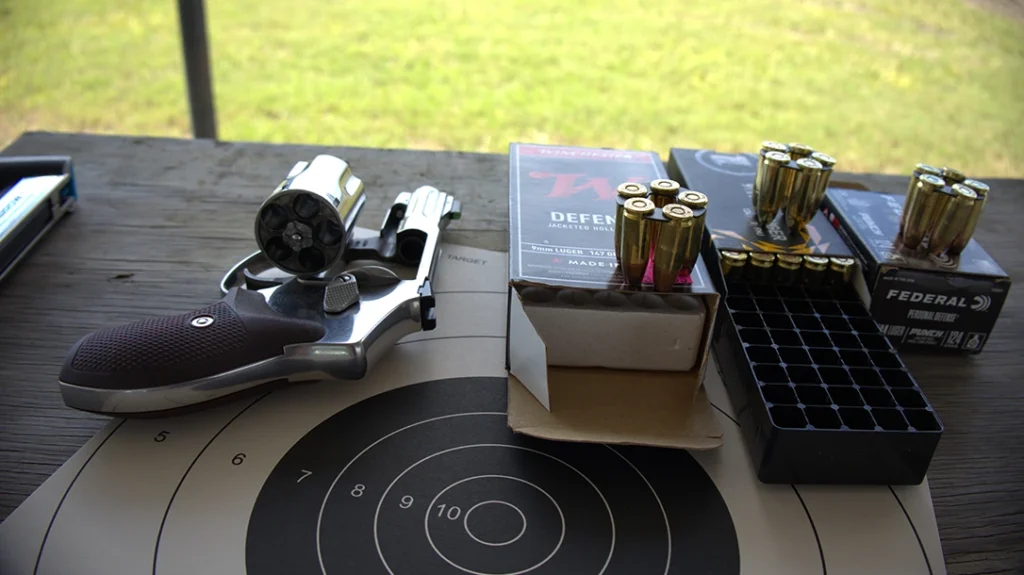
Another advantage of the moon clip option is the use of semi-auto rounds like 9mm and .45 ACP. In addition to their shorter length and ease of ejection, rounds like these are more popular than traditional revolver rounds. In terms of logistics, rounds like these are easy to find in enough variety and generally less expensive.
What Competition and Range Shooting May Not Tell You
For dedicated competition work and relaxing weekend days at the range, clip-fed revolvers are a hoot to shoot and a fast-shooting oddity. It can be tempting to forget the drawbacks or choose to ignore them. These lie mainly with the clips themselves.
Clip Fragility
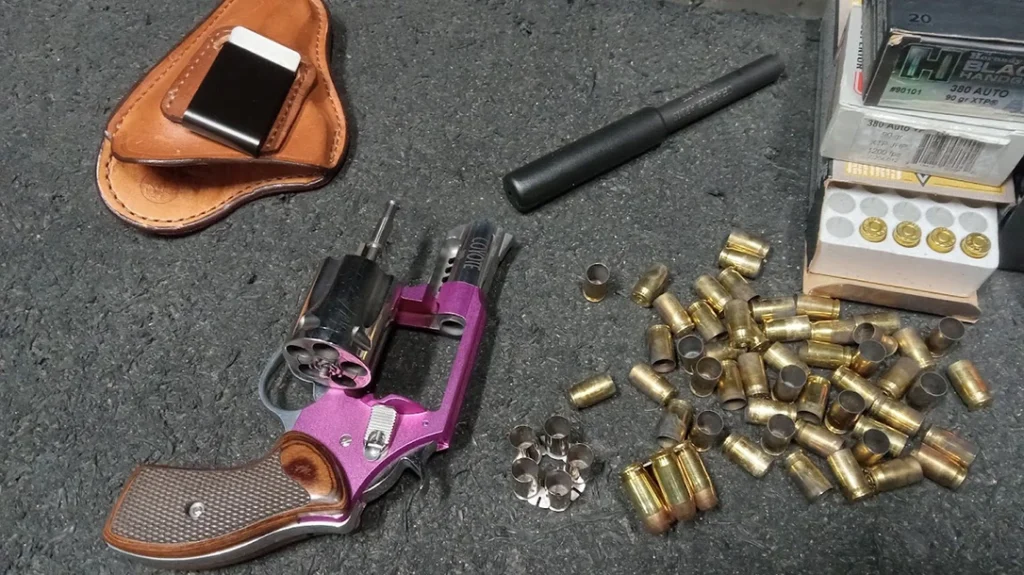
Moon clips are hardened spring steel meant for repetitive use. But their thin dimensions make them liable to bend. This is unlikely to happen when they are being carried. However, it can happen on the range if you happen to step on a clip with empty cases that you may have ejected onto the ground. The same can happen when moon clips are in your pockets, and you take a good fall. The clips can incur damage.
The problem of clip fragility truly arises when you go to use them again. It may not be obvious that the clip that had been stepped on or damaged is truly damaged until you load fresh rounds in it and try to fire them through your revolver. The cylinder could bind, preventing you from firing the handgun.
Checking is generally simple with a DA/SA revolver, as you can thumb the hammer back slightly and spin the cylinder to ensure it flows freely. That is not something that can be done safely on hammerless revolvers.
The best solution is to reserve some clips for the range and some for serious work. But it is easy to get those mixed up. So, it is always best to ensure they work before putting them into service.
Clip Requirement and Use
Another issue with moon clip-fed revolvers is that you have to use the clip. This is definitely true with revolvers chambered for semi-auto cartridges. On their own, the rimless cases of .380, 9mm, or .45 will not eject and will require a cleaning rod or a sharp wrap to the butt of the pistol to get empty cases out.
Fortunately, most revolvers so equipped will fire the ammunition without the clip. The ammunition does not rely on the rim to headspace in the chamber and will usually fire. But in some handguns, the rounds will not fire at all or only fire some of the time.
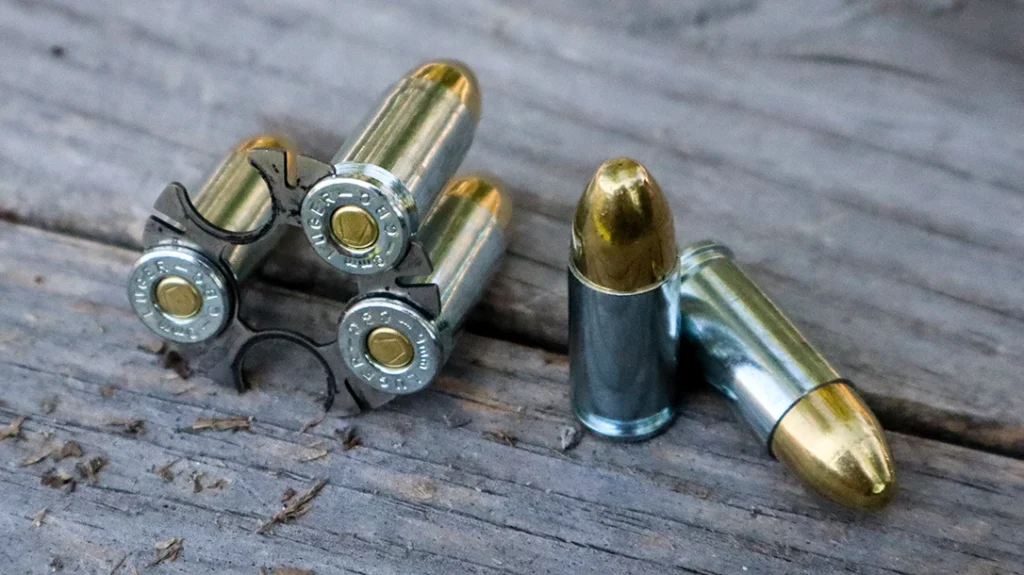
In my own experience, Smith & Wesson Model 1917s and Ruger LCRs fire 100% of the time and can be counted on. On the other hand, I have a Smith & Wesson 940 that will fire domestic ammunition half the time and foreign ammo one out of five. Not good for serious work.
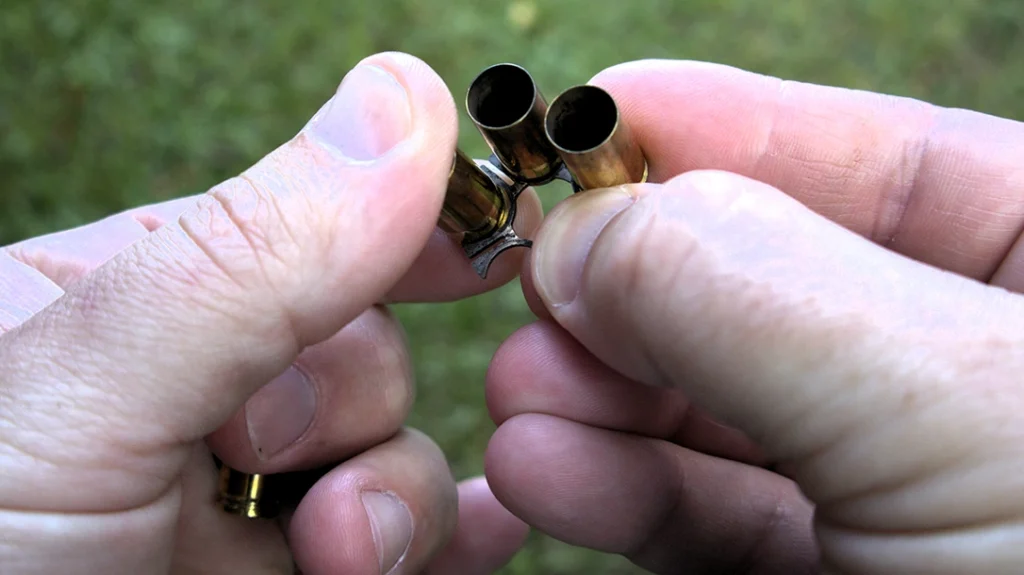
Another issue related to clip use is loading and unloading the clip with ammunition. It is done by snapping the case heads of the ammunition into the corresponding recesses until the clip is full. This is easily done with finger pressure.
However, unloading the fired cases by hand can be difficult. There are various tools for unloading clips that make the experience much more pleasant. It is a pain to forget those aids in the shooting bag if they are necessary.
Crimp Jump
Clips have their advantages and disadvantages. However, there are inherent problems with using cartridges not originally intended for a revolver platform. Revolver cartridges tend to be rimmed. They also have a thicker bullet jacket, a cannelure, and a good roll crimp to prevent the bullet from migrating from the case under recoil.
This is generally not the case with semi-auto rounds. They are not subjected to recoil forces and are crimped with a light taper crimp to ensure the rounds don’t come apart in the magazine.
Crimp jump, or bullet eruption, happens when the revolver recoils. When forced back into the hand, the rounds loaded in the cylinder, weighed down by the projectiles, tend to want to stay in the same place. Recoil forces can separate the bullet from the case’s crimp, and the projectile can walk out. But in my own testing, the dangers of crimp jump are possible but overblown.
First, very lightweight heavy-recoiling revolvers are more prone to it than all-steel models. Even some conventional scandium-framed revolvers in .357 Magnum are marked for lighter bullets, as heavier loads in these ultra-light guns can produce the problem.
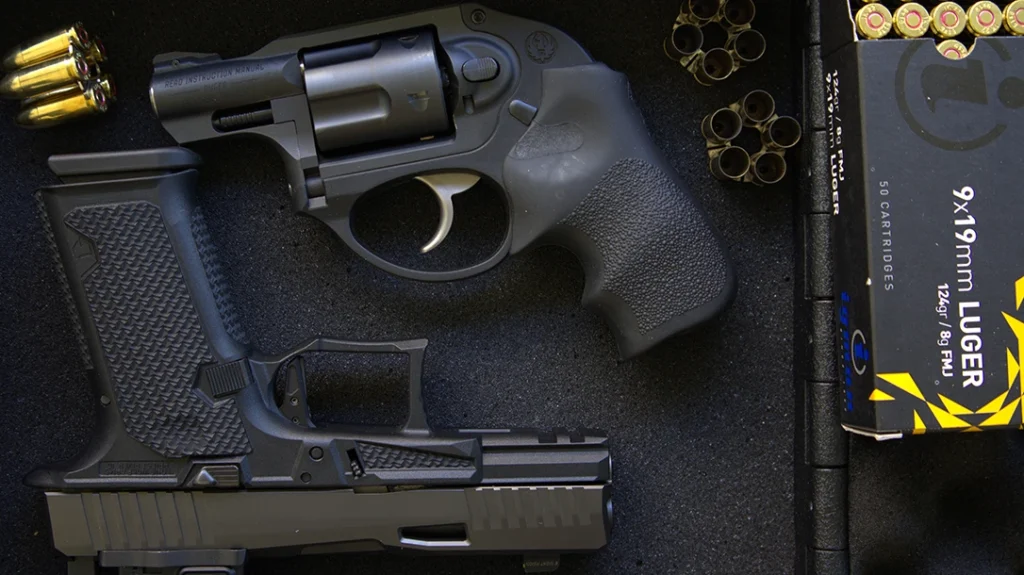
Second, it takes some repetitions to get a bullet to walk out. With my Ruger LCR in 9mm, I had to save one round in a clip and fire fourteen rounds to see any eruption. How likely is it that you will save one round and reload the rest of the clip repeatedly?
The only instance I have seen of bullet creep occurred with an acquaintance’s revolver. One .45 ACP round walked out of the case completely. The shooter in question had a habit of being stingy with his personal protection ammunition and tended to save his rounds instead of firing all six rounds at a time.
Moon Clip Revolvers: Worth the Metal?
Revolvers cut for moon clips represent the platform at its most and least convenient. Revolvers so equipped excel at loading and reloading, though some clips have more slop than some revolver cartridges in conventional speed loaders. Add in the requirement of clips for effective ejection, the issue of crimp jump, and the pain of unloading them without tools, and the detractions can outweigh the benefits.
However, when properly set up, a moon clip-fed revolver is the fastest and most economical to run. It was true when the US Army figured it out in 1917, and it is still true today.