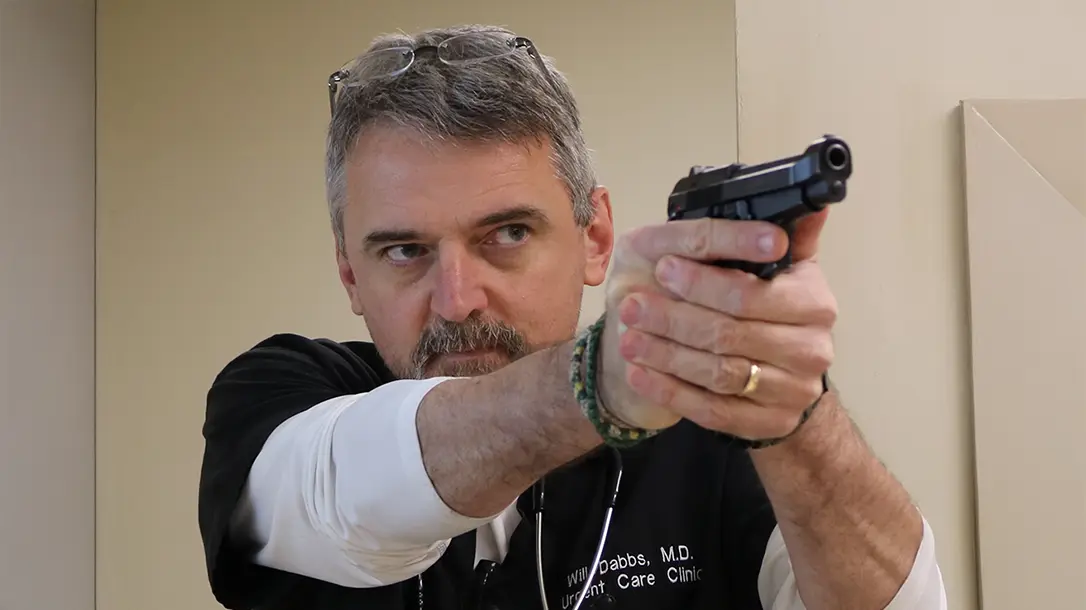
Georg Luger designed the 9mm Parabellum round in 1901 to feed his P08 Luger pistol. This compact, efficient, spunky little cartridge typically pushes a bullet that weighs between 100 and 147 grains to somewhere around 1,100 fps, give or take. These rounds strike a superb balance between compact size and downrange thump. Even 124 years after its introduction, the 9mm Para remains the most popular centerfire pistol cartridge on Planet Earth. The global arms industry turns them out by the billions each annum. However, is it worth considering downsizing to the .380 ACP for defense? Let’s discuss.
Practicalities of the .380 ACP for Defense
The 9mm is popular because it represents the elusive successful tactical compromise. Particularly when stoked with high-tech expanding bullets, the 9mm will expeditiously stop an attacker. So long as attention is paid to proper shot placement.
At the same time, the round is sufficiently small as to allow a dozen or more to be packed into a handgun that will comfortably hide underneath a pair of shorts and a t-shirt.
Advertisement — Continue Reading Below
That’s all great. When fired through a full-size Glock, SIG M17, or Springfield Armory Echelon, the 9mm Para is accurate, comfortable, and fun. However, shrink those guns down to something that will ride in the front pocket of a pair of 5.11’s, and the subsequent recoil can become a handful.
In some of the newest palm-sized heaters flooding the concealed carry market today, the 9mm flirts with unpleasant. If shooting is miserable, that’s a disincentive to train. Packing a gun without adequate experience is a serious liability.
.380 ACP: The Obvious Alternative
The illustrious John Moses Browning developed the .380 ACP cartridge in 1908. Where the 9mm Para cartridge is 9mm wide and 19mm long, the .380 ACP sports the same diameter only 2mm shorter. .380 ACP cartridges typically push bullets ranging from 85 to 100 grains to around 1,000 fps plus or minus. Everything about the .380 ACP is just a little bit smaller and a little bit tamer than the corresponding 9mm.
Advertisement — Continue Reading Below
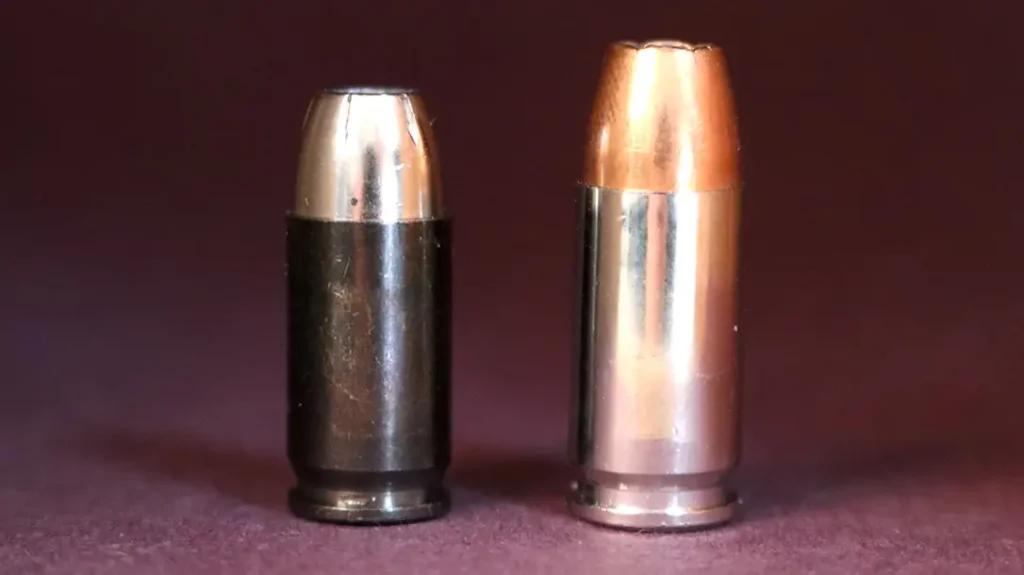
Smaller and weaker means less effective downrange. However, actually connecting with a target with a smaller, weaker round is infinitely preferable to missing with something larger and more formidable. Under certain circumstances, choosing the smaller caliber makes a great deal of practical sense.
Nobody Lives Forever
I’m 59 years old. In my prime, I thought myself a steely-eyed killer who was both bulletproof and immortal. I could leap over tall buildings and was stronger than a locomotive. Reality, tragically enough, never quite lived up to my press releases. Six decades of hard use on these old bones have not made that any better.
Advertisement — Continue Reading Below
Osteoarthritis is the doctor word for the inevitable degeneration that occurs in your joints over time. We live in a fallen world. Stuff invariably wears out and breaks. Responsible living will mitigate that to a degree, but it comes for all of us.
Practically speaking, that means hand strength diminishes, and aging muscles get weaker. Eventually, it can become difficult to rack a slide or manage stiff recoil. If any of that applies to you, it might be time to consider a more reasonable carry gun.
Advertisement — Continue Reading Below
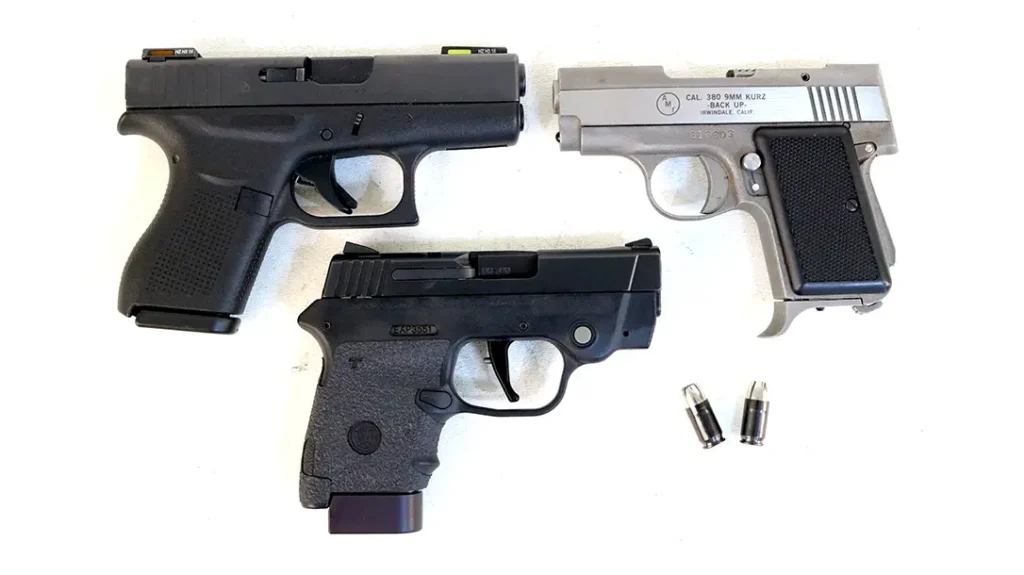
Guys and girls are different. The average American female currently weighs some 30 pounds less than her male counterpart. There are lots of cool things that girls can do that men cannot. However, sometimes a concealed carry pistol that is a bit smaller and a bit more readily managed has a place among female shooters, particularly those of a certain age.
Practical Tactical
Patient 1 was a young, jacked gladiator in his late teens who rolled into the ER having been recently shot through the right chest with a .380 ACP pistol. The cops recovered the gun at the scene. He was covered in gang tats and indescribably violent.
Some would say he was a child who fell victim to gun violence. In reality, this kid was a warrior. He got sideways with one of his fellows over drugs or a girl and got plugged for his trouble.
Advertisement — Continue Reading Below
There was no exit wound and very little external blood. Despite our best efforts, he bled out into his chest and died in my arms in short order. A subsequent study of his chest film demonstrated the retained bullet to have been a simple FMJ slug that perforated his pulmonary vasculature. Caliber and bullet design are important, but nothing beats shot placement…ever.
Patient 2 was a surprisingly pleasant young woman in her early twenties. Her boyfriend claimed he had an accidental discharge with his .380 ACP pistol and inadvertently shot her in the left temple from across the room. However, the actual stigmata of the injury—powder stippling into the surrounding skin—intimated a contact gunshot wound. I left adjudicating those sordid details to the cops.
The FMJ bullet transected her left optic nerve, wrecking that eye forever. It then transited her left maxillary sinus and came to rest behind her rearmost upper molar on the right. The oral surgery residents popped it out without difficulty.
Advertisement — Continue Reading Below
This indestructible woman inexplicably stood by her boyfriend’s ludicrous story and left the hospital with him arm-in-arm the following day. Love conquers all, I suppose. Once again, mechanical details are important, but shot placement is everything.
Mechanics of .380 ACP Pistols
There are basically two broad categories of autoloading handguns. The first operates via unlocked blowback. In this case, the slide’s mass, combined with the recoil spring’s stiffness, balances the cartridge’s recoil. Physics dictates that these guns be relatively hefty. They can also sport a surprisingly snappy recoil impulse, even in the abbreviated .380 ACP chambering. Examples include the Walther PPK and the Hi-Point CF 380.
Most everything else employs some form of the Browning-inspired short recoil action. There are a few outliers, but not many. John Browning and Dieudonné Saive pioneered this design in the Browning Hi-Power in 1935, and it went viral from there.
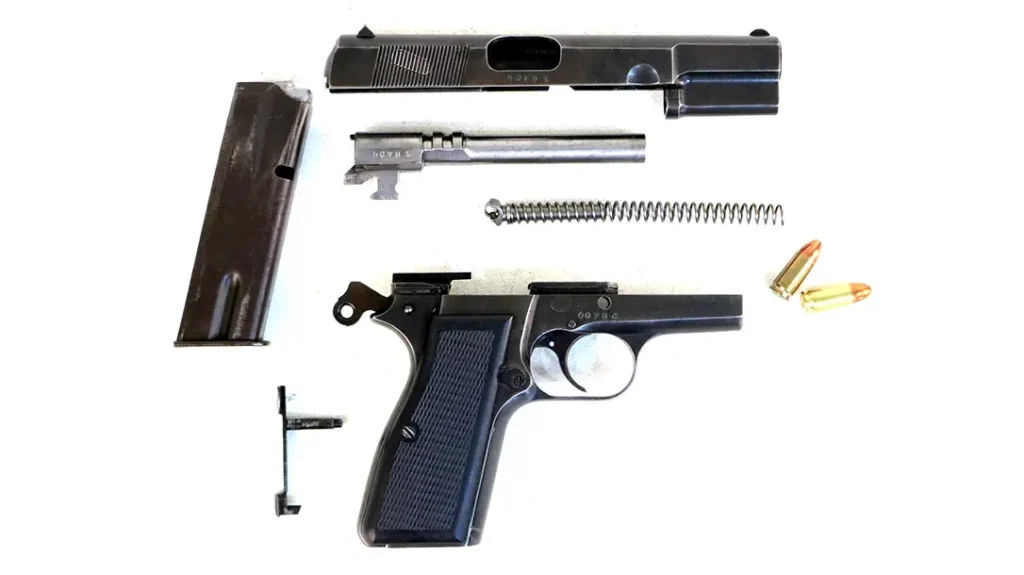
In this case, the barrel and slide recoil briefly as a unit before a cam disengages the two. Momentum carries the slide back to extract and eject the empty cartridge. The return spring then puts everything back together again. This curiously perfect mechanism makes for a gun that is slimmer and more compact than the unlocked blowback sort. It also mitigates felt recoil substantially.
.380 ACP Pistols Worth Note
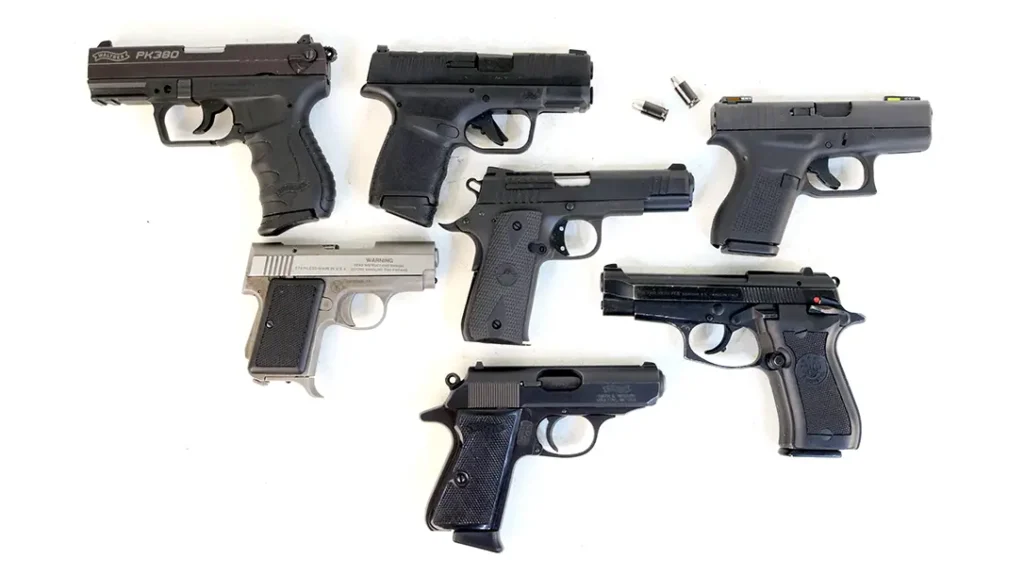
Walther has been producing the basic PP/PPK pistol since 1929. The fictional MI6 agent James Bond famously carried a PPK throughout his illustrious career. Walther recently announced that they were ceasing production of this iconic weapon.
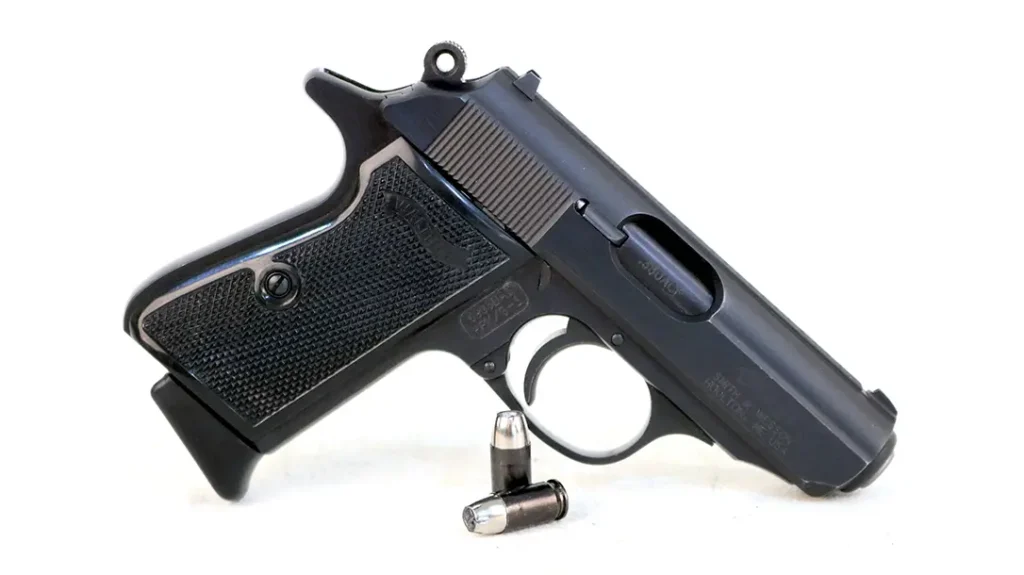
As the gun is cut from big blocks of steel and finished to an immaculate standard, it is also inordinately expensive. Amidst a crowded field of cheaper competitors, the PPK likely struggled as a result. There are hints that it will be coming back eventually. I just hope it doesn’t have a plastic frame.
Walther PD380
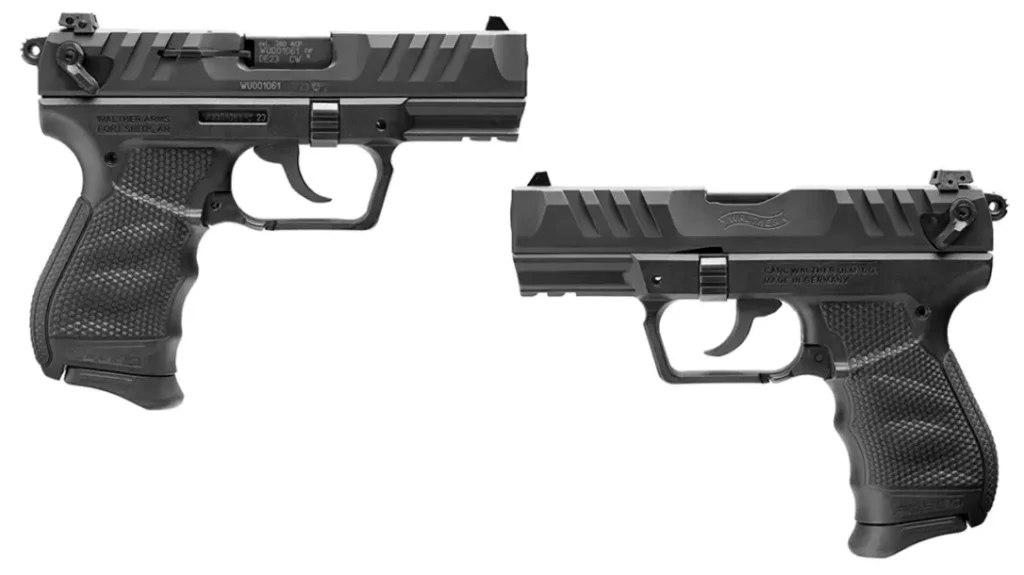
The Walther PD380 is an improved version of their previous PK380. Think of this as a Walther P22 chambered in .380 ACP with some fresh new bells and whistles. The PD380 is comfortable and reliable while offering a nice intermediate size that balances ease of carry with shootability.
Springfield Hellcat .380 ACP
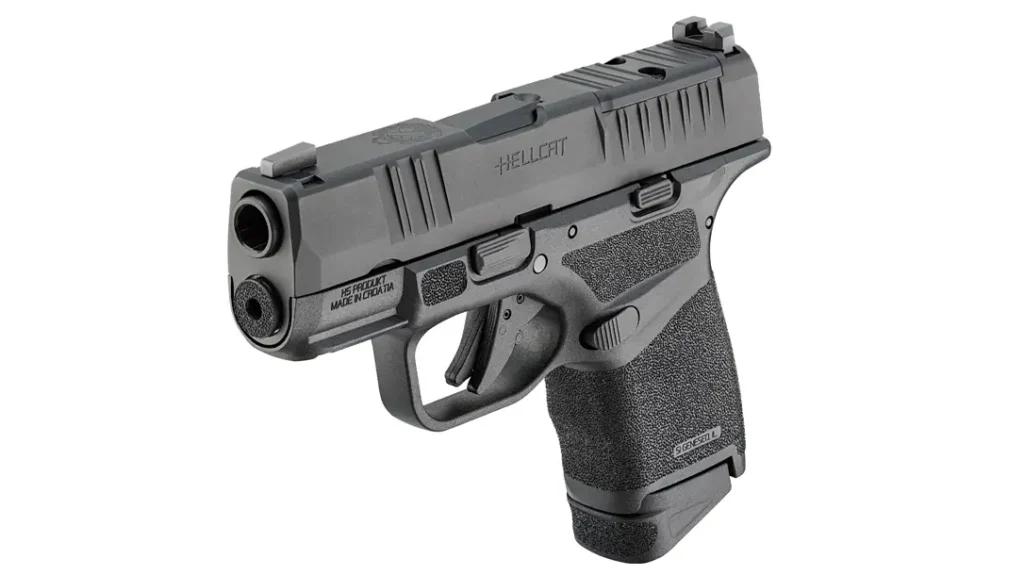
Springfield Armory recently released a .380 ACP version of their magnificent Hellcat concealed carry pistol. It is a bit smaller and a bit thinner than their 9mm version. This top-end defensive gun has all of the bells and whistles and is somewhat more expensive than its competition as a result. The .380 ACP Hellcat is a breeze to carry, is easy to rack, and shoots great.
Rock Island Armory Baby Rock
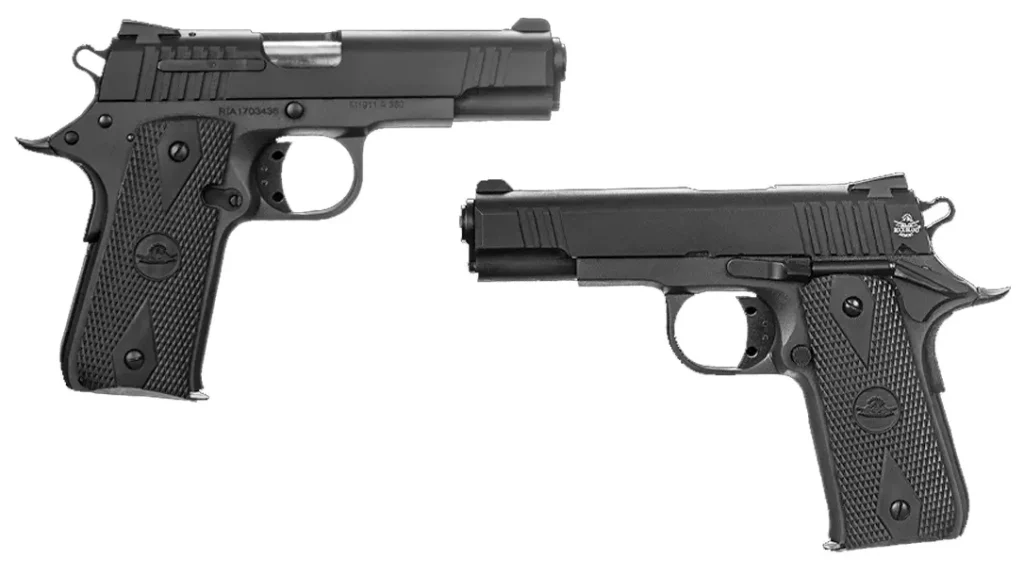
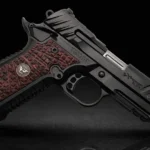
The Baby Rock from Rock Island Armory is a .380 ACP miniaturized concealed carry version of the storied 1911 pistol. This single-action, all-steel gun is cute as a button and features the same classic manual of arms as any conventional 1911. The Baby Rock is small enough for easy carry while satisfying even the most old-school of old-school shooters.
Ruger LCP
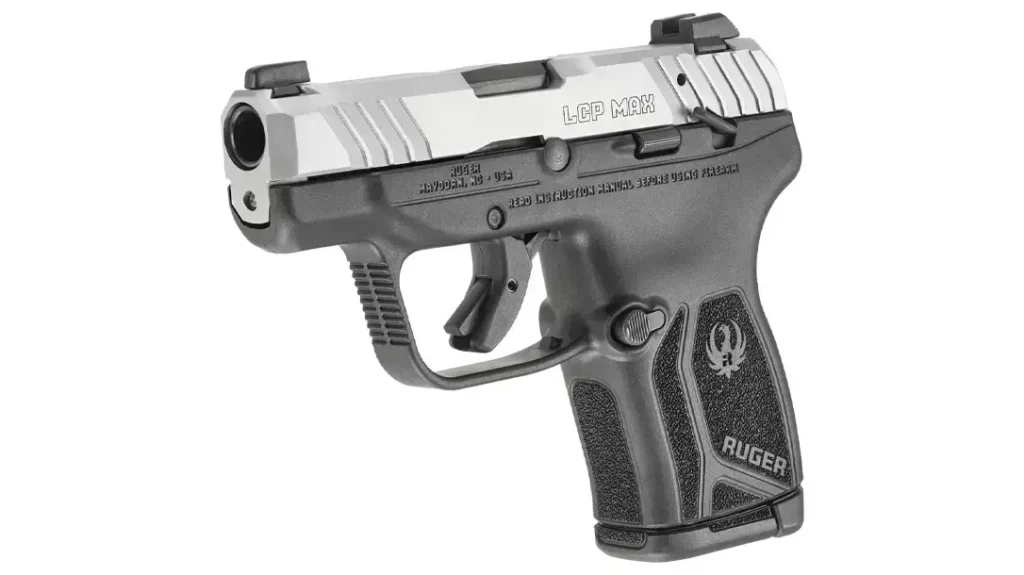
The Ruger LCP comes in several flavors and is optimized for ease of carry. The basic LCP is just crazy skinny and features a 6+1 capacity. It operates via the Browning short recoil system and features a long, heavy double-action-only trigger. The LCP Max is the same gun, only a little fatter with a 10-round mag.
The LCP is small enough to ride comfortably in the front pocket of a pair of jeans. However, the thin architecture and beefy trigger conspire to make the LCP a bit less pleasant on the range than some others. With an MSRP of $259, the basic LCP is also quite reasonably priced.
This list is far from exhaustive. Lots of folks make quality .380 ACP defensive guns. I left them off due to lack of space rather than some innate disdain for their designs. Glock, SIG Sauer, Smith and Wesson, Beretta, Colt, and others offer superb examples.
Ruminations
Truth be known, all handgun cartridges, even massive ones like the .44 Magnum and .45 ACP, are really suboptimal fight stoppers. You’re always better off with a rifle or a shotgun. However, long guns are mighty tough to conceal underneath a t-shirt in the summertime. As a result, a compact handgun is most likely the weapon you will have handy when life goes all pear-shaped.
Stoke a .380 ACP with quality social bullets and practice like your life depends upon it. That compact little carry gun will still reliably do the deed. If you are a small-statured shooter or if the years have made full-figured heaters uncomfortable, downsizing to a .380 carry piece might be a sensible option. The flower of modern firearms engineering has littered the landscape with superlative options.
WHY OUR ARTICLES/REVIEWS DO NOT HAVE AFFILIATE LINKS
Affiliate links create a financial incentive for writers to promote certain products, which can lead to biased recommendations. This blurs the line between genuine advice and marketing, reducing trust in the content.