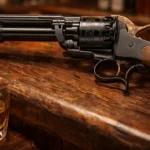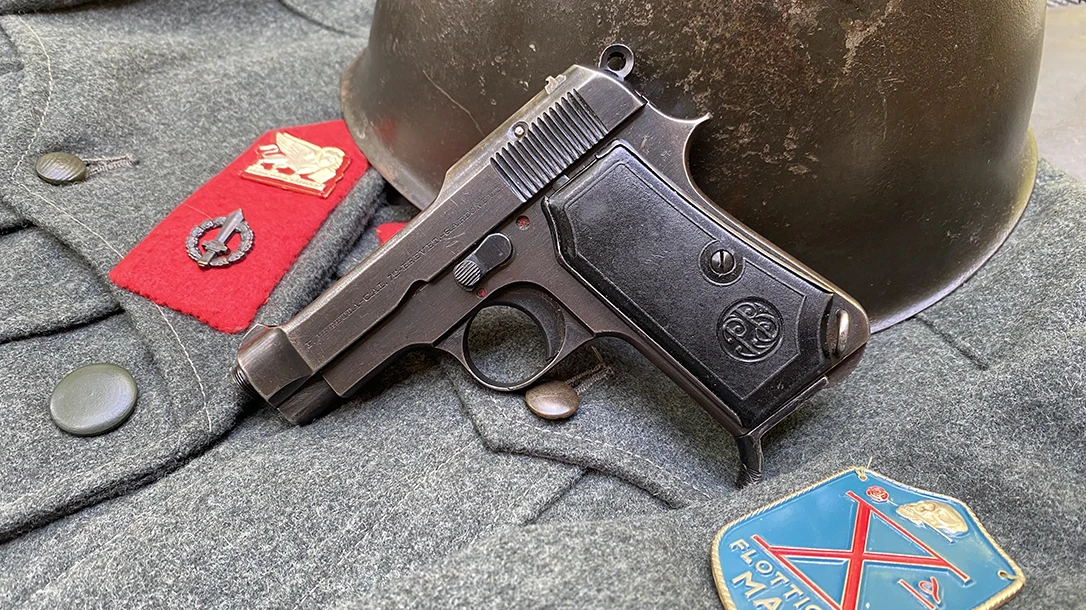
Surplus military and police guns are fun for collectors and a source of real value for shooters. The key thing to remember about buying government surplus guns is to buy them in the best condition you can afford while they are still surplus! I was fortunate enough to be the beneficiary of such a find—the Beretta M1935.
The Surplus Beretta M1934 and M1935
When the supply runs out, surplus guns have a way of transforming into collectables, and their prices skyrocket. As of this writing, the Beretta Model 1934 (.380 ACP) and Model 1935 (.32 ACP), two of the most successful and popular Beretta handguns of all time, are available for a comparative pittance of $299 plus shipping from Royal Tiger Imports.
The Model 1934 and 1935 were developed for military service and adopted by the Italian Army, Navy, and Air Force. They are essentially identical except for their caliber. Likewise, both were battle-tested in the Spanish Civil War, the Second Italo-Ethiopian War, and World War II. They proved themselves to be reliable, solidly engineered designs.
Advertisement — Continue Reading Below
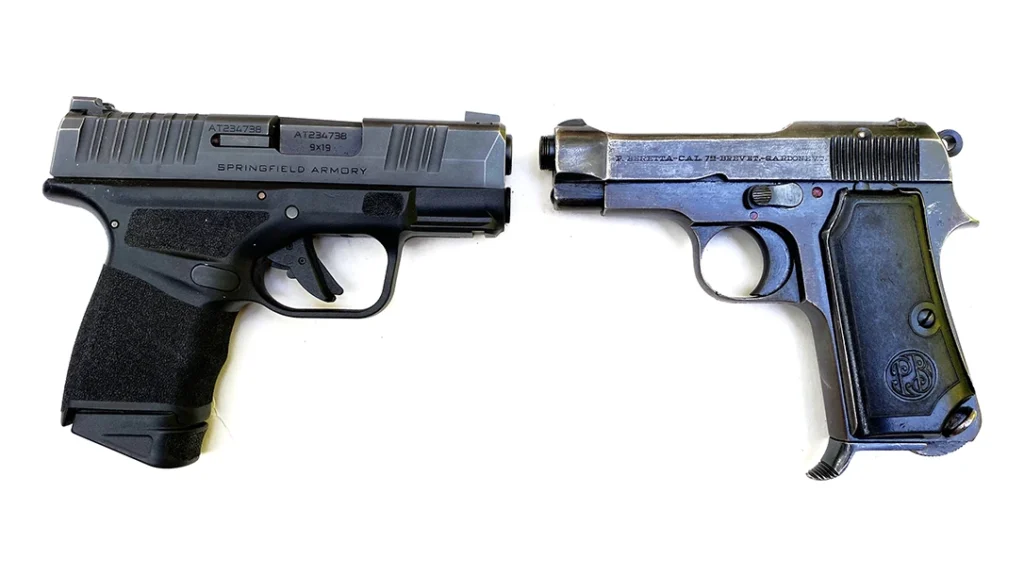
Their post-war military and police service was extraordinary in duration. The Italian Navy and some national police organizations (e.g., the Carabinieri) replaced them in the early 1950s with the 9x19mm Beretta M1951. However, the Italian Army and other police agencies used them well into the late 1970s and early 1980s before finally retiring them for the Beretta M92.
Overall, in excess of a million M1934 and half a million M1935 pistols were produced by Beretta. They were popular among civilians, too, and many post-war manufactured pistols were imported and sold in the United States. This augmented the large number of war-trophy guns brought home by returning veterans.
Advertisement — Continue Reading Below
New guns were still being made at the Beretta factory into at least the early 1970s.
The M1934 and M1935 in Detail
Recently, Royal Tiger Imports bought the whole lot of retired Italian police M1934 and M1935 Berettas. Conditions ran from good to excellent.
These all steel pistols are blowback-operated, hammer-fired, and have a single-action trigger. They weigh about 1.5 pounds empty, have a magazine capacity of eight rounds in .32 ACP and seven rounds in .380 ACP.
Advertisement — Continue Reading Below
In addition, they are especially compact, measuring only 5.9 inches long, 4.84 inches tall from the top of the drift adjustable rear sight to the bottom of the magazine’s pinky extension. Correspondingly, they are 1.05 inches thick across the grips.
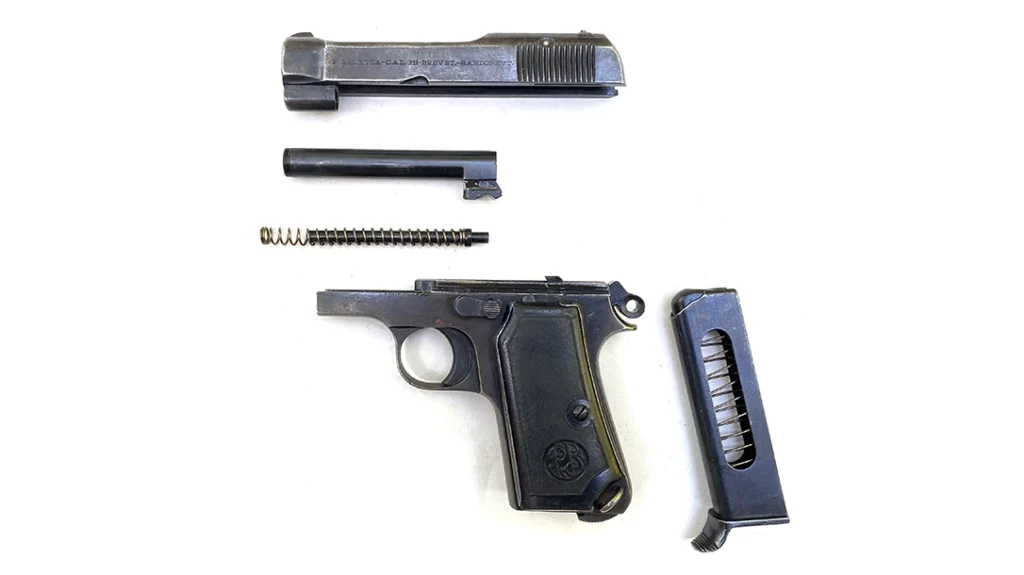
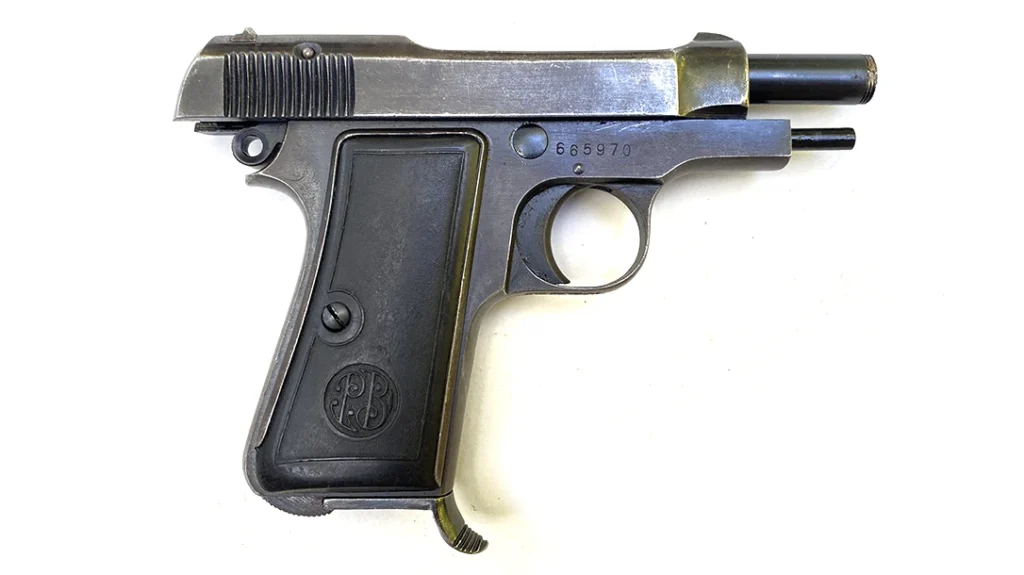
With 3.34-inch barrels, the pistols needed to be lengthened to qualify for importation. So, a threaded barrel extension was installed and later removed. Unfortunately, the threads on the barrel remain, but other than disqualifying them for C&R consideration, they don’t negatively affect function in any way.
Advertisement — Continue Reading Below
If a little threading bothers you, Royal Tiger Imports had new .380 ACP barrels produced for the M1934 pistols. Excellent condition guns with the new barrel installed are available for $349.
For this article, I tested a typical $299 M1935. For a small cartridge, contemporary factory .32 ACP ammo is surprisingly expensive, averaging around $24 for a 50-round box.
Royal Tiger added to the appeal of its M1935 guns by offering excellent condition, non-corrosive, surplus, 73-grain FMJ Sellier and Bellot ammo at less than a quarter per round. The smallest quantity you can purchase from them is 500 rounds for $119. This is more than twice the ammo for your money.
Advertisement — Continue Reading Below
At that price, there’s more encouragement to practice. You should practice regularly with any pistol intended for self-defense use. It’s particularly important with these early Berettas because their dated European manual of arms is alien to most American shooters.
Running the Diminutive Beretta
For the price, these Berettas are a great value. They are simple, rugged, easy to shoot, and of exceptional quality. Not to mention, their small size makes them easy to conceal.
Their pinky rest magazine provides a full four-finger hold around the grip for my medium-sized hands. The rather light recoil and reduced report of .380 and .32 ACP are less intimidating to novice shooters than those of the other, usually recommended, bigger calibers for self-defense.
Advertisement — Continue Reading Below
The heavier-than-average overall weight and lighter-than-average slide weight of the M1934 and M1935 pistols further mitigate the already mild recoil of their comparatively low-energy cartridges. This makes them very controllable in rapid fire. It is really apparent with the .32 ACP M1935.
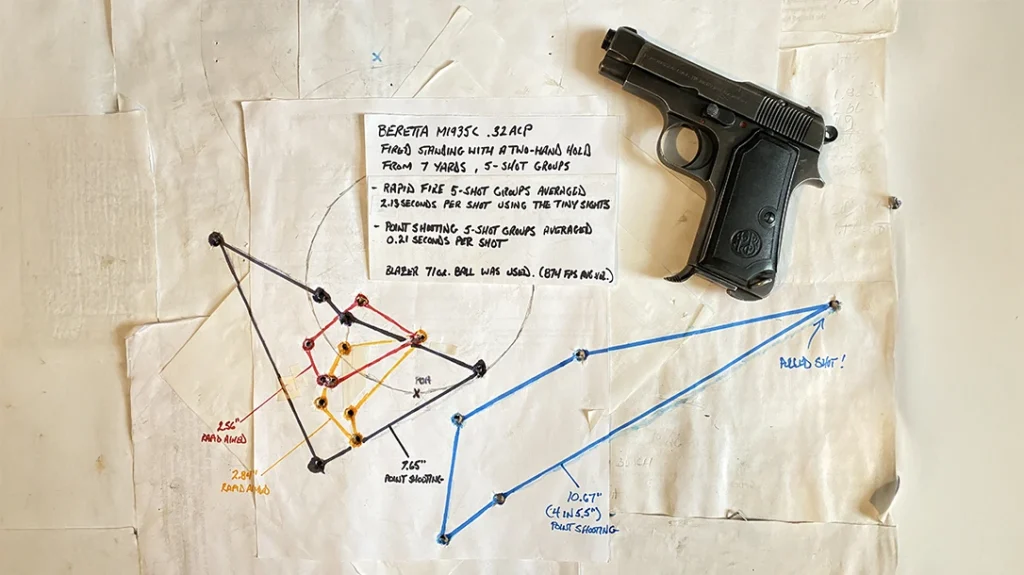
I performed rapid-fire point-shooting exercises at 7 yards, standing and using a two-hand hold without using the sights at all. It took me 2.13 seconds on average to fire a five-shot string (0.21 seconds per shot) with acceptable combat accuracy. When I slowed down enough to use the absurdly tiny sights, my group size tightened considerably, and I still shot the pistol faster than any 9mm.
The .32 ACP is often maligned as underpowered. However, for shooters with limited arm and hand strength, it is much easier to control than heavy calibers.
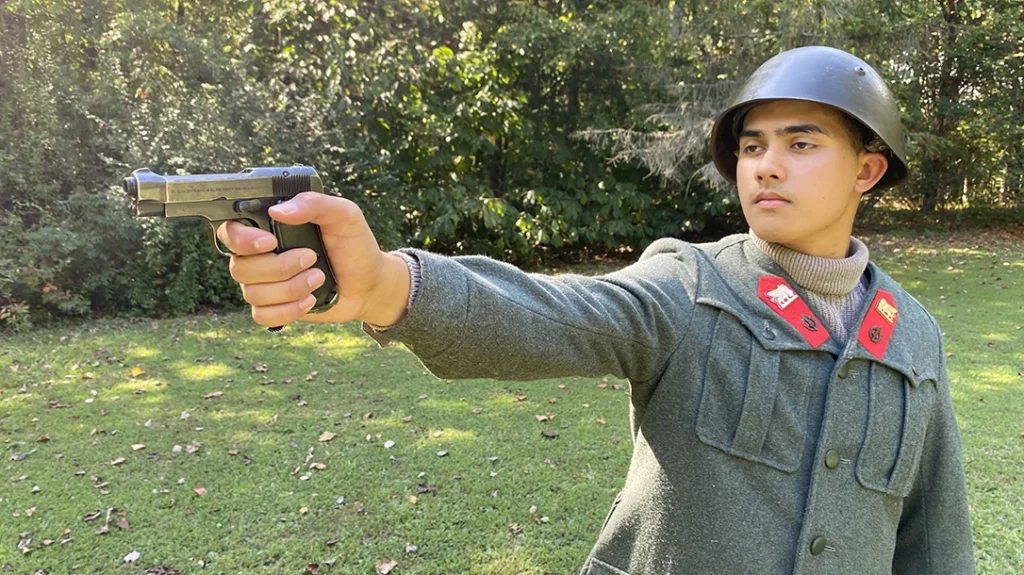
Single-action autoloaders, even when their triggers are a bit creepy, as this one was, can be shot faster than many modern striker-fired autoloaders that require the trigger to travel farther to the break.
With the light recoiling .32 ACP, even an inexperienced shooter can make quick work of dumping the little Beretta’s 8-shot magazine into their target’s torso at the ranges violent encounters typically occur at. That’s probably why the .32 ACP was so popular for self-defense for so long. It still holds plenty of merit today.
Feeding the M1935
Another point in favor of the .32 ACP M1935 for self-defense is the advancements in bullet design. They greatly increased this caliber’s lethality.
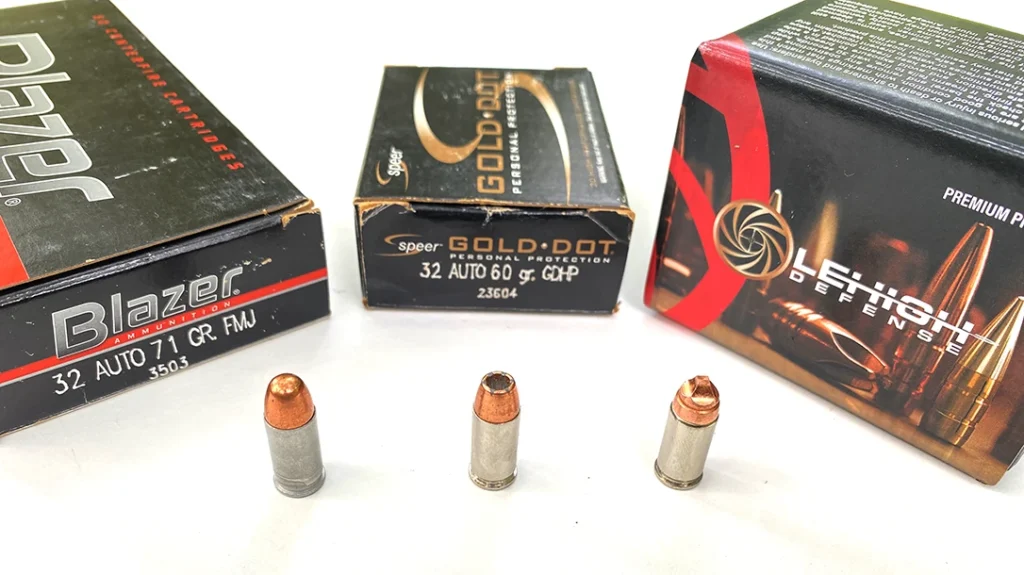
Lehigh Defense makes three solid copper alloy bullets for .32 ACP. They have uniquely sculpted noses that are barrier blind and penetrate ballistic gelatin to the 12-18 inch depth specified in FBI guidelines for law enforcement use.
Unlike conventional hollow points, they can’t clog. They retain their destructive potential in tissue after penetrating wood, wallboard, metal, or clothing. Likewise, they aren’t significantly deflected when firing through auto glass either. They use hydraulic action to violently disrupt tissue, maximize energy transfer into the target, and minimize the risk of over-penetration.
Black Hills Ammunition and Underwood Ammo offer finished factory ammunition using the fluted, Phillips screwdriver-like, Lehigh Defense Xtreme Defense bullet in 50-grain and 55-grain weights, respectively. These premium factory loads are around $1.75 a round.
Lehigh Defense also offers its Xtreme Cavitator 50-grain bullet for .32 ACP handloaders. To continue with the screwdriver analogy, this bullet’s nose looks like a Robertson (square) bit. It operates much the same way as the Xtreme Defense.
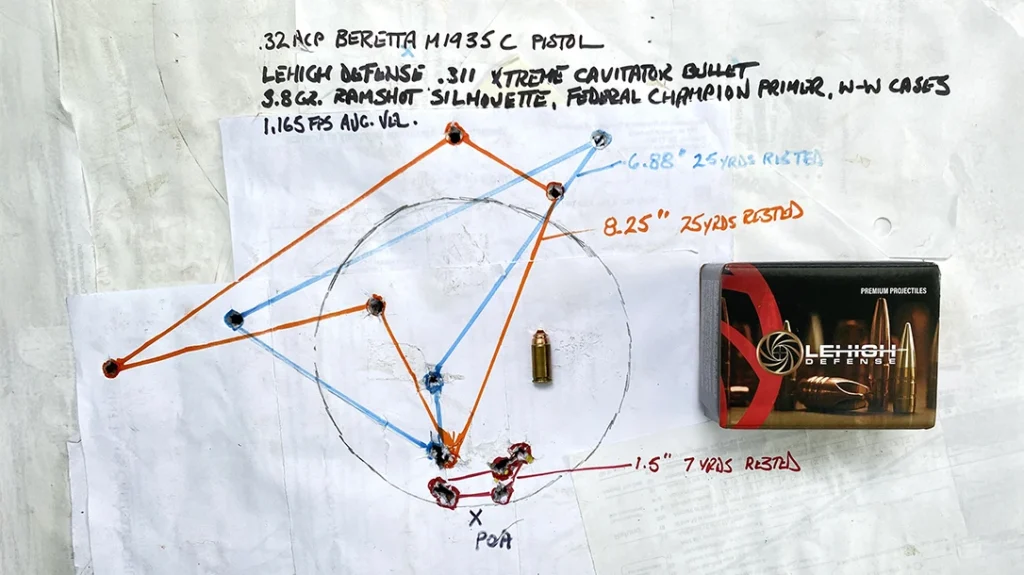
I loaded some for this story using the loading data posted at Lehigh Defense. It called for exactly 3.8 grains of Ramshot Silhouette powder, which I paired with Federal Champion small pistol primers and Winchester Western (W-W) cases.
Velocity, and by extension pressure, was higher than expected, but nothing an all-steel pistol couldn’t handle. Accuracy was acceptable, producing groups at 7 yards that averaged 1.5 inches and 25-yard groups averaging 7.60 inches from the bench. This load is my choice for self-defense in this caliber.
The Mouse Gun in Hand
Shooters today will likely find the M1934 and M1935 pistols somewhat awkward to use for several reasons. The tiny sights are almost useless in less-than-ideal light. They have no slide lock release, so the magazine must be withdrawn by hand to drop the slide.
Their manual safety lever was designed for right-handed shooters and must be swung through a 180-degree arch to engage/disengage. The magazine release, though technically ambidextrous, is mounted on the heel of the grip.
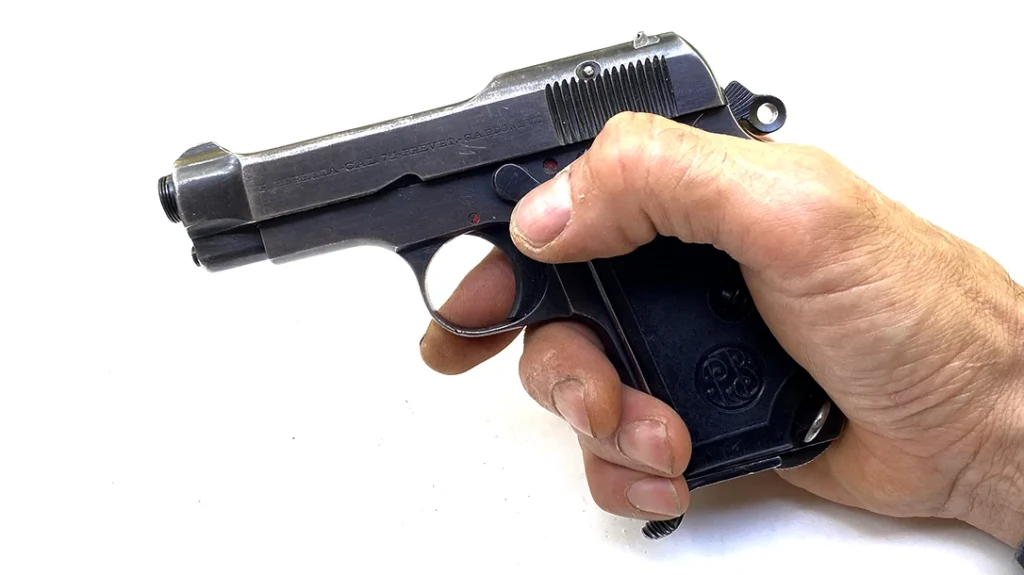
These pistols are slower to reload than modern autoloaders. Withdrawing the magazine is a two-handed job. Correspondingly, once the full magazine is inserted, the slide must be manually racked to chamber the first round and cock the hammer.
The pistols come with only one magazine, so perhaps this won’t be an issue for most budget-minded shooters. Fortunately, Triple K makes reproduction magazines, complete with pinky rest, for both calibers. They cost $48.
Parting Shots
Holster selection is very limited for these vintage guns. However, they’re small enough for concealed carry in the pants or coat pocket with or without a generic pocket holster. The Triple K #640 Urban Defender pocket holster (MSRP $42) and the inside-the-waistband #314 Insider Holster (MSRP $62) are leather and are readily hand-molded to these vintage Berettas.
Royal Tiger Imports has a nice reproduction of the World War II flapped Italian military holster in brown leather (rather than Italian military green) for $35. Looking at the cost of accessories compared to the cost of these pistols really highlights how bargain-priced they are. Nobody ever regrets getting in on a good deal.
Beretta M1935 (surplus Italian police pistol) Specs
| Manufacturer | P. Beretta, Gardone, V.T. |
| Caliber | .32 ACP |
| Capacity | 8+1, five-round detachable magazine |
| Operation | hammer-fired, simple blowback |
| Barrel | 3.34 inches, muzzle threaded for importation |
| Overall length | 5.9 inches |
| Weight | 1 pound 6.5 ounces empty |
| Finish | blue |
| Stock | black plastic, steel-backed |
| Triggerpull | 6.5-pound pull, single stage |
| Sights | drift adjustable rear with rectangular notch 0.025 inches deep and 0.050 inches wide, fixed inverted “V” shaped front sight approx. 0.050 inches wide |
| MSRP | $200 to $349 |
Performance
| Speer Gold Dot | |
| Bullet Weight and Type | 60 Gold Dot JHP |
| Velocity | 874 |
| Best Group | 4.49 |
| Blazer (aluminum case) | |
| Bullet Weight and Type | 71 FMJ |
| Velocity | 942 |
| Best Group | 3.68 |
| Lehigh Defense Handload | |
| Bullet Weight and Type | 50 grain Xtreme Cavitator |
| Velocity | 1,165 |
| Best Group | 6.88 |
Performance was tested with a series of five-shot groups fired at 25 yards from the bench with the gun’s tiny iron sights in bright light that made the front blade visible. A Competition Electronics Pro-Chrono Digital Chronograph was set 15 feet from the muzzle. Bullet weight is in grains, velocity in feet per second, and the group size in inches.
WHY OUR ARTICLES/REVIEWS DO NOT HAVE AFFILIATE LINKS
Affiliate links create a financial incentive for writers to promote certain products, which can lead to biased recommendations. This blurs the line between genuine advice and marketing, reducing trust in the content.