As the leaves start to fall and temperatures start to drop, others are looking forward to pumpkin spice everything or preparing for the holiday season.
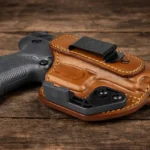
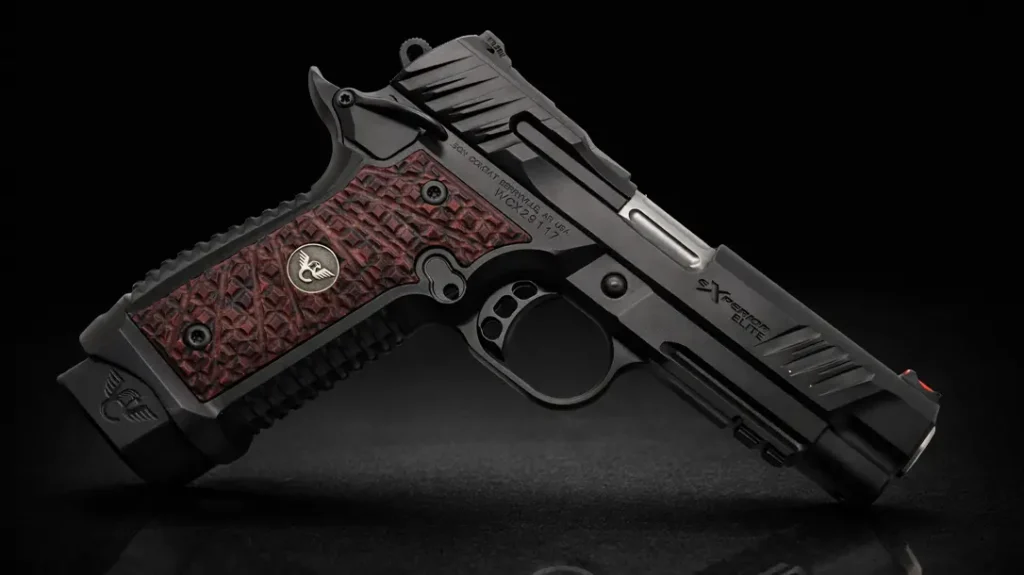
Instead, I’m looking forward to another colder weather benefit–the ability to conceal and carry larger handguns more easily. Where I live in Indiana, half of the year is jacket weather, and I couldn’t be happier. Jackets obviously make it much easier to concealed carry larger pistols. I tend to do so with a solid outside the waistband (OWB) holster with a duty-size handgun such as Walther PPQ, Glock 17, IWI Masada, etc.
Although the colder weather may allow for easier concealment, there are other issues to consider beyond just swapping out carry gear and guns.
Advertisement — Continue Reading Below
General Thoughts On Defensive Carry
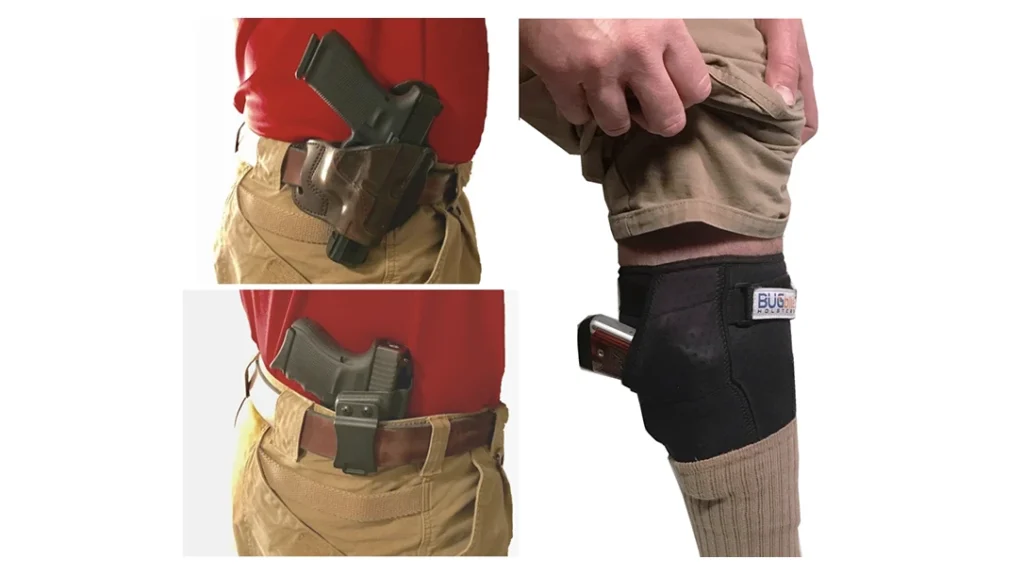
I typically carry 365 days a year. However, since I live in a state with hot summers, I opt to carry smaller guns to match my lighter summer clothing. Likewise, as the seasons turn, I often return to full frame guns easily concealed under jackets. I always tell my students that if they are limited in training time, the best strategy is to carry the same gun in the same way while simply adjusting their wardrobe to support that.
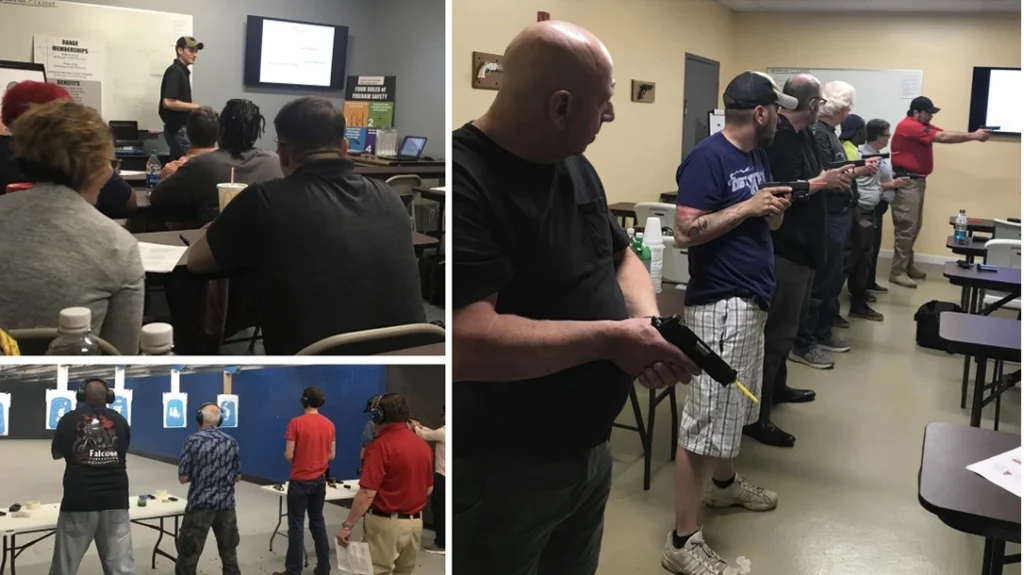
I also recognize that this advice is often ignored. My concealed carry pet peeve is when students show up to my defensive classes, and switch from their carry sub-compacts to their larger guns. They always participate in class with the larger, easier to shoot guns and at the end of class they revert to their smaller carry guns. When asked, a few mention that they take the classes to work on their competition skills. I find that to be a reasonable and acceptable answer. However, many students will also admit they use the easier gun solely to do well in class.
Advertisement — Continue Reading Below
My general thought is “train how you carry.” If you’re training for tactical engagements in a “excrement hits the rotating ventilator” situation, by all means gear up. But if your training is based around building your skills for everyday carry defensive use, use the holster and gun you would normally carry. My advice to always carry the same way, with the same gun is based on my knowledge of how much time the average gun owner spends practicing and training. Realistically, this isn’t a large amount of time. Thus for those who don’t practice, changing guns and carry methods can be counterproductive.
Assessing Your Own CCW Loadout
My decisions of carrying a specific gun, gear, and extra magazines are based on personal decisions based on my own assessment of risk. But the reality is that we can never be sure what any day may bring. A good friend uses the following adage to guide his carry choices: “If I die, I want it to not be because I could not shoot back.” He routinely carries extra magazines, and a larger capacity gun based on this outlook.
Advertisement — Continue Reading Below
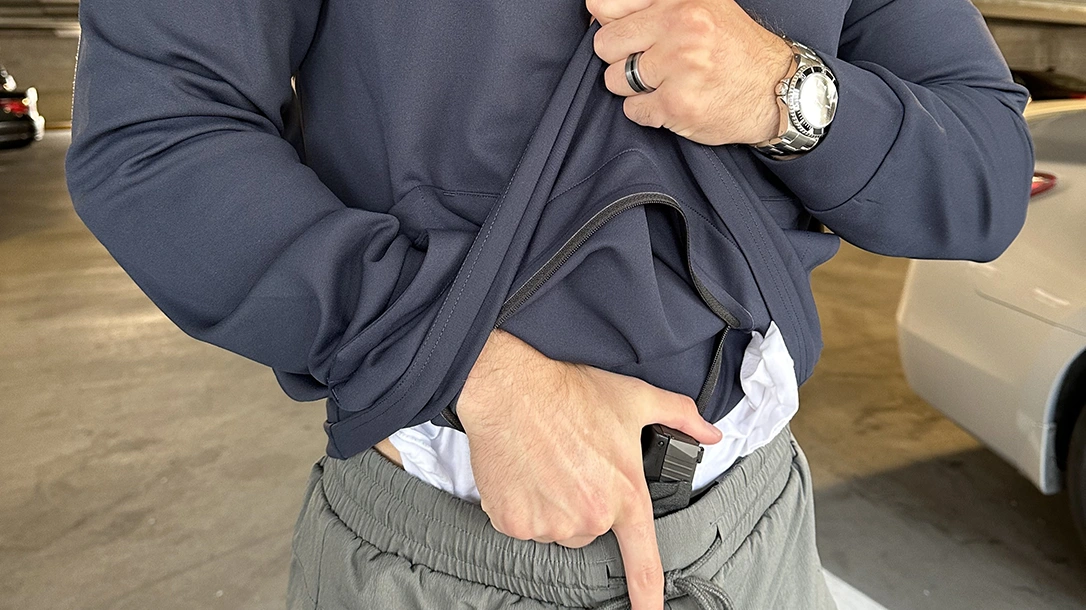
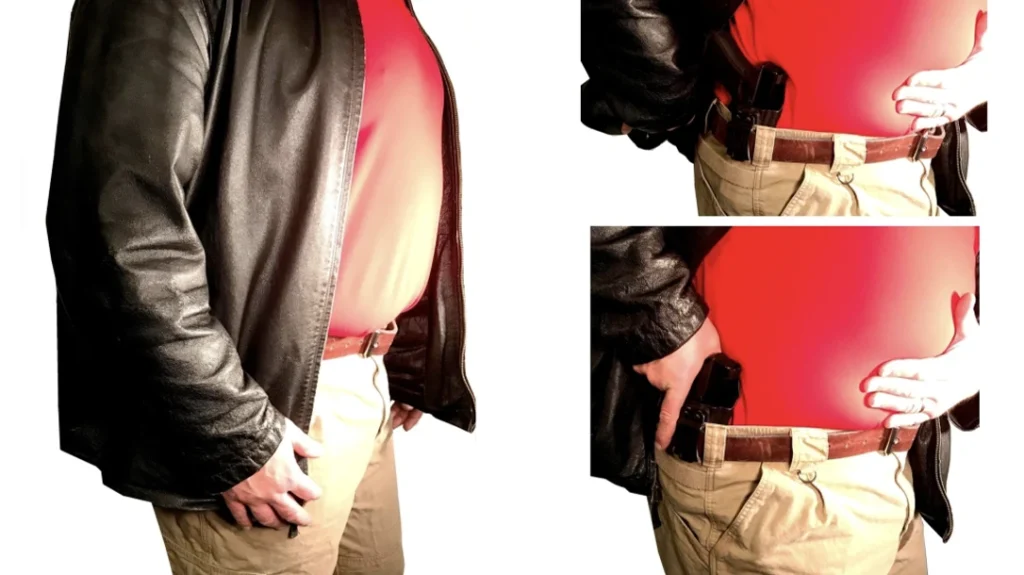
“Accessing and presenting a concealed firearm is an essential skill. The first steps include exposing or gaining access to the gun, getting a firm firing grip with your dominant hand, and staging your support hand in a safe position.”
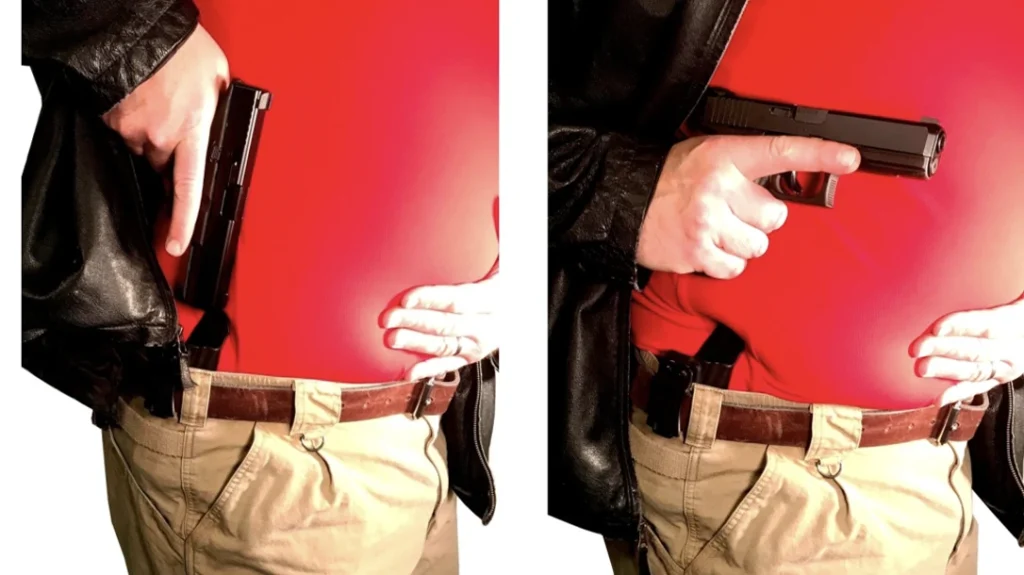
“The next two steps are clearing the gun, without getting fouled by clothing and/or holster, and then rotating the firearm to where it is on target and capable of firing if needed.”
Advertisement — Continue Reading Below
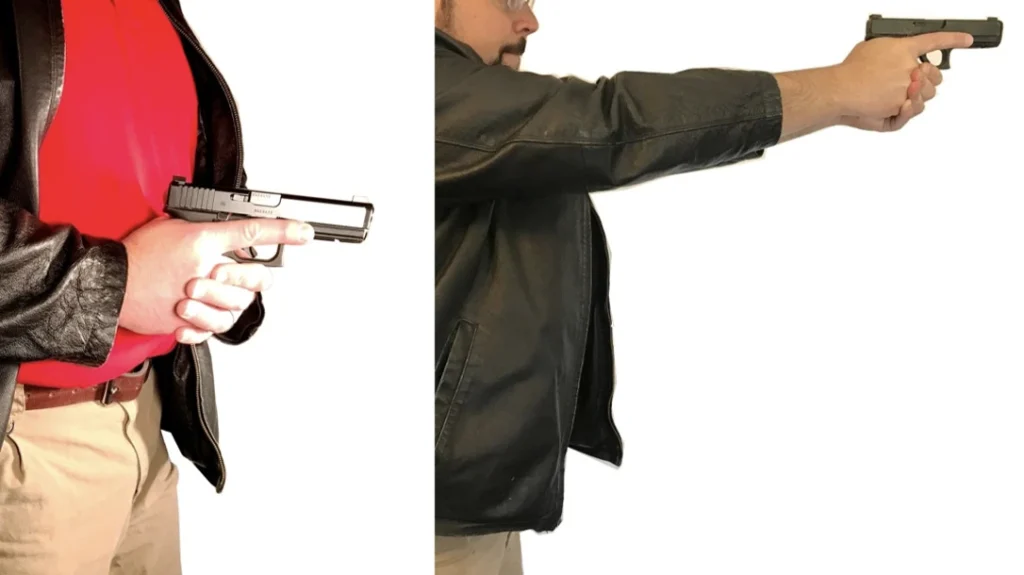
“The last phases are engaging the support hand into a traditional two-handed grip and, while the muzzle never leaves the target, ‘punching’ out to full extension.”
Warm Weather Concealed Carry
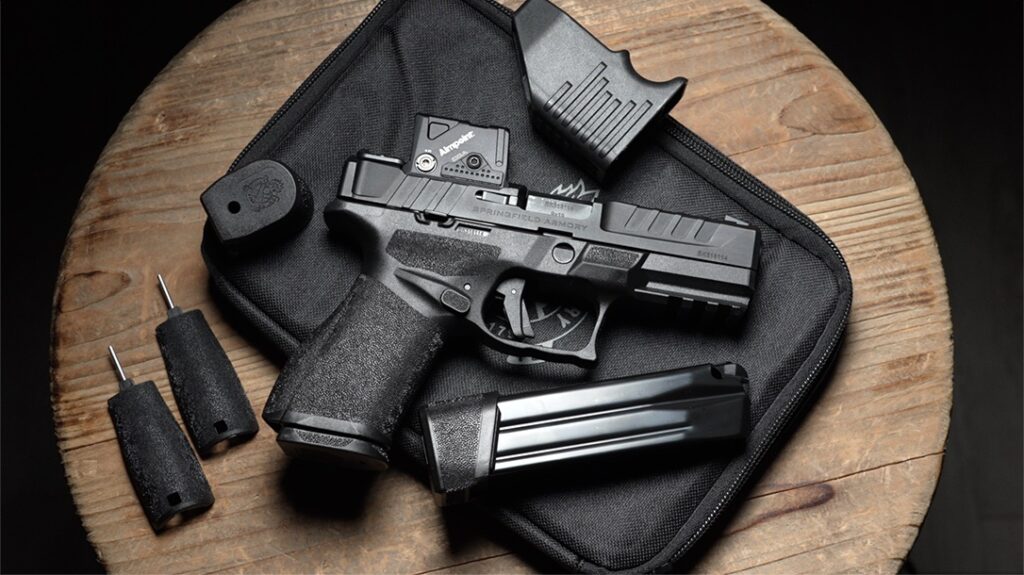
Summer wardrobes typically consist of smaller garments with thinner, more breathable fabrics. For this reason, many turn to smaller pistols that are easier to conceal. I tend to wear shorts and light shirts during the summer with a smaller IWB holster carrying a sub or micro compact handgun. This is also the reason why I focus on training with smaller pistols during this part of the year. Pistol accuracy is always worth focusing on, but I find my accuracy varies more the smaller the gun. The gun’s make and model does not seem to impact my ability to get defensive hits with most full frame handguns. But I find that the grip and sight picture needed for good hits with a Kimber Micro 9, a Sig Sauer P365 or a Glock 43 require a little more effort.
Advertisement — Continue Reading Below
Cold Weather Carry
Colder weather naturally changes the carrier’s wardrobe in the opposite direction of warmer weather. With more clothing, it is easier to conceal larger framed guns under multiple and/or thicker clothing. However, more clothing may make it more difficult to have clear access to the pistol. Since I tend to work with duty-sized guns year-round, I am generally more comfortable with my defensive accuracy from this type of gun as winter rolls in.
I do like to spend time working on drawing and accessing the gun around my winter wardrobe. Even if I shift from an IWB to OWB holster, the procedure to get to the gun can often become more involved having to sweep aside a heavy jacket compared to pulling up a thin shirt. If it is open jacket weather this is easy, but as it gets colder the need to practice increases. I want to make sure I can easily access and present a gun if needed–regardless of the number of layers that I may be wearing to combat the cold.
Colder weather does provide you with many carry options. Depending on the temperature, you may decide to move from a concealed waistband holster (now under multiple layers of closed clothing) to a belt holster that sits on the outermost jacket. Again, practicing the mechanics of presentation is key.
Advertisement — Continue Reading Below
A final point to consider is gloves. Can you reliably access the firearm with your gloves and operate the gun (grip and trigger) while gloved?
Conclusion
Regardless of your personal choices when carrying a defensive concealed firearm, the first rule is to be honest with yourself. Asses your skill and comfort level with your gun, holster and its positioning.
If you are changing how and what you carry with the changing of the seasons, make sure you have the skill set to support doing so. If you have little time to train and practice, keep things simple and carry the same gun the same way every day. Even if you don’t change carry methods or guns, make sure to practice accessing your firearm when you have heavier clothing on. If you decide to change gear and guns with the seasons, make sure you have trained (recently) with your current carry options