There comes a point where every shooter’s training routine can begin to feel boring or even redundant. This makes the urge to try something fresh and new a top priority. For some, that means experimenting with a different shooting drill on the range or registering for a new tactical program. For me, it meant practicing drawing from a holster for the very first time. Here is everything I learned and what new shooters can expect from this type of training.
The First Priority When Drawing from a Holster
Since I have never drawn from a holster before, my first step was to educate myself on the topic. Rather than jump straight into dry firing, I decided to spend time reading blog posts and watching numerous step-by-step ‘How to Draw From a Holster’ videos until my head was nearly spinning with information.
Throughout my research, I quickly learned that everyone has their own style. However, the steps of drawing from a holster were universally the same. Today, my main priority was learning the basics and becoming comfortable with the task.
Advertisement — Continue Reading Below
Gearing Up
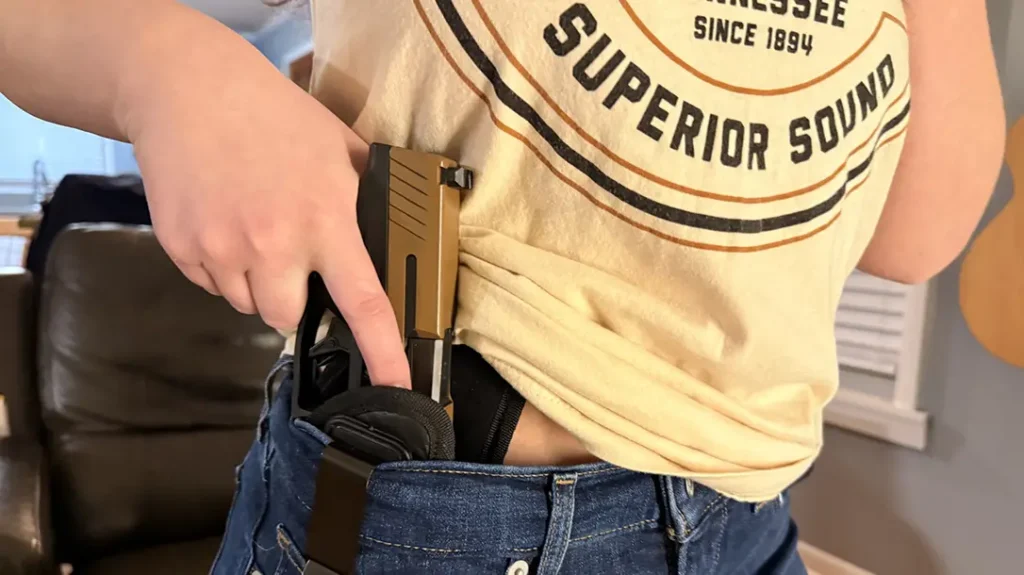
The holster I used in today’s practice session was the Houston Holster Eco Leather Black IWB Holster. It was durable, fit my Taurus GX4 snugly, and most importantly, was extremely comfortable to wear. When I first put it on, the added weight felt foreign, but after walking around, the holster began to feel like second nature.
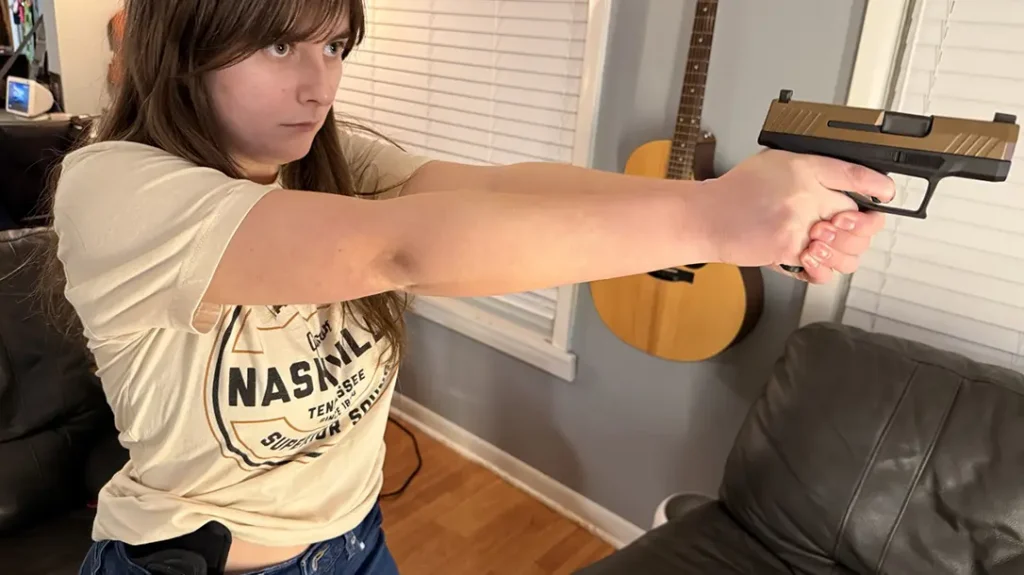
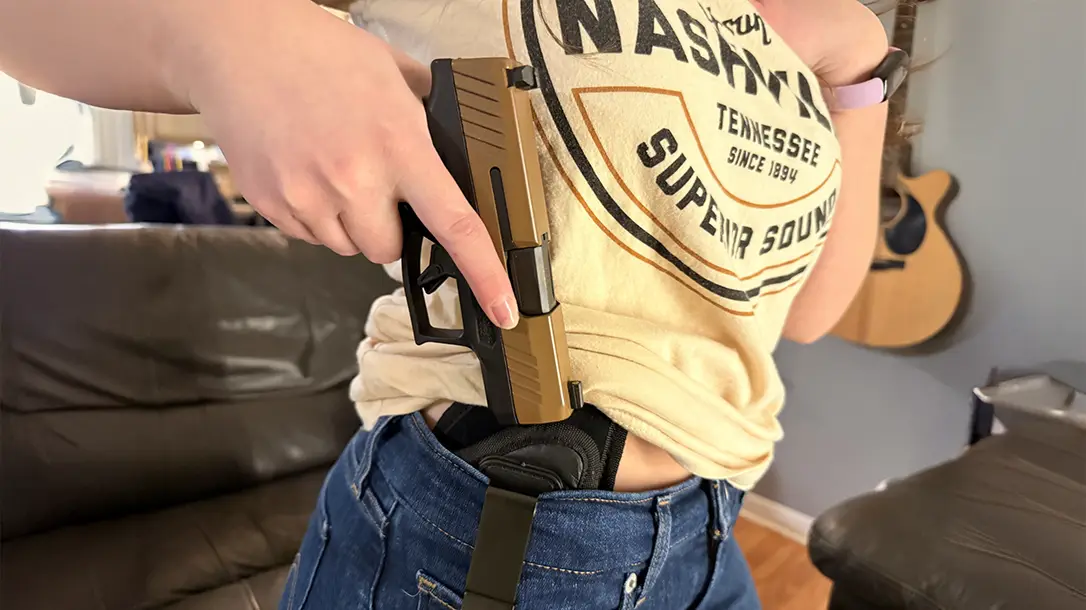
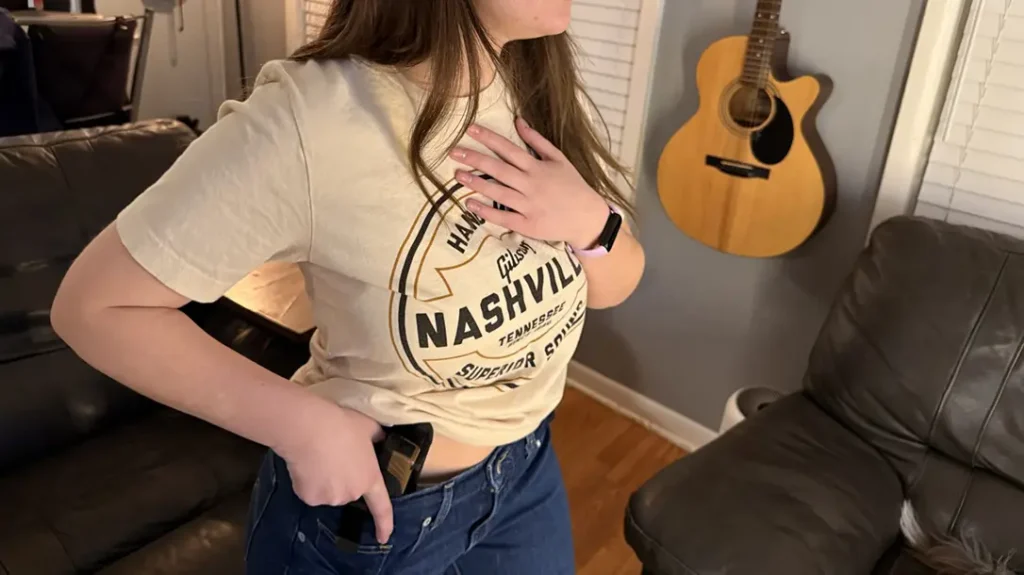
Moving into position, I adjusted my feet to stand shoulder-width apart, allowing my dominant foot to step back a couple of inches. My dominant hand moved to establish a firm grip on my pistol in the holster, while my support hand positioned itself against my chest.
Advertisement — Continue Reading Below
Through my small research session, the main thing I learned was to do everything slowly while practicing. By slowing down, you allow yourself to notice details, gain muscle memory, and better control your movements. Ultimately, you have to crawl before you can walk, and you have to walk before you can run. Without a doubt in my mind, I was at the crawling stage.
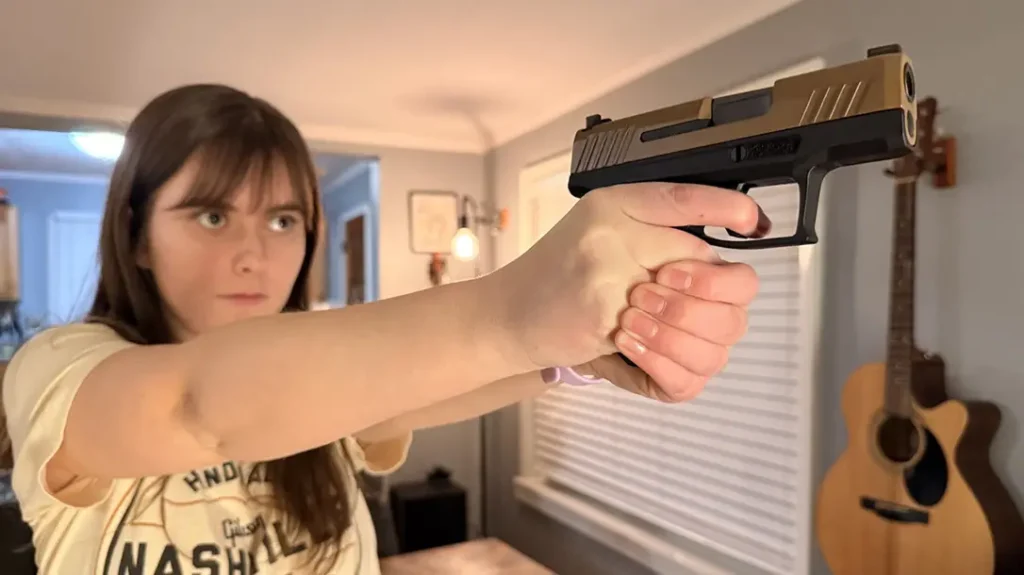
Pulling the pistol straight up, I made sure to keep my finger off the trigger. Once my pistol was fully out of the holster, I slowly moved my muzzle towards the target, guiding my support hand to create a firm, two-handed grip. As I pressed the pistol forward, I brought my sights up to eye level and aimed at my target, allowing my index finger to move onto the trigger and fire. My first draw was a success, and I could not have been happier.
Advertisement — Continue Reading Below
Re-Holstering
Just like training to draw is important, learning to properly reholster your firearm is equally important. Many individuals can fall into the habit of rushing this process, which can result in accidental discharge of their handgun.
As I reinserted my pistol into the holster, I made sure to watch my movements and keep my eyes on my firearm the entire time. If I felt any resistance, I stopped what I was doing, cleared any clothing obstacles, and tried again.
Training & Difficulties
At first, the idea of drawing from a holster seemed intimidating. In every video I watched, there were many step-by-step instructions that I feared I would not remember or follow correctly. It was not until I actually practiced that I realized drawing from a holster was not as nerve-racking as I originally made it out to be.
Advertisement — Continue Reading Below
It was surprisingly fun and not overly difficult. After my first drawstroke, I practiced a few more times, letting myself get used to the movements, and catch mistakes I was beginning to make.
One of the greatest difficulties I faced was getting a firm, stable grip on my pistol while it was in the holster. Gripping a firearm from a table versus gripping it from your body was incredibly different. It took me a few practice rounds to familiarize myself with the process. However, I found that breaking down the steps one by one and focusing on each individually helped tremendously.
Advertisement — Continue Reading Below
Spending several minutes training my support hand to come to my chest while my dominant hand establishes a firm grip may have seemed redundant. However, it allowed me to slowly build the muscle memory necessary to draw effectively. By the end of my session, I am happy to report that I not only gained a boost of confidence but also developed a newfound respect for those who carry concealed.
If You Carry, Practice Drawing from the Holster
My first time drawing from a holster was educational, fun, and incredibly rewarding. This presentation training helped me to better familiarize myself with my firearm. Likewise, it highlighted the importance of trusting myself when I am using my tool.
For any new shooter who plans to carry concealed in the future, I highly recommend and encourage practicing the drawstroke at home beforehand. This will not only set you up for success, but is an easy and effective way to spice up your training routine. From start to finish, I loved my experience drawing from a holster and cannot wait to practice this skill again.
Advertisement — Continue Reading Below