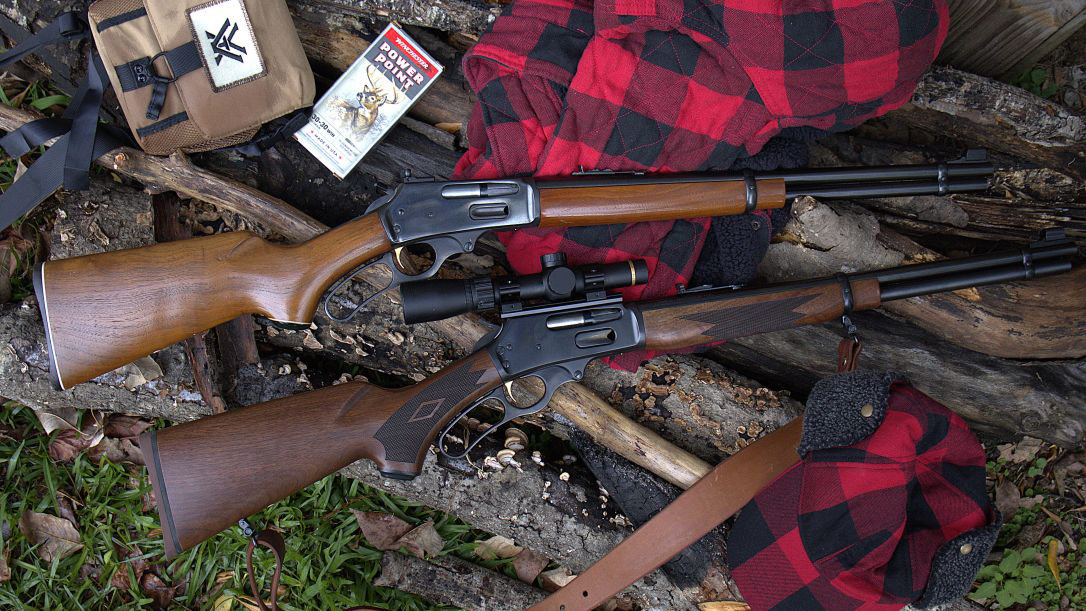
Few lever action rifles are as iconic as the Marlin 336, particularly when paired with the .30-30 Winchester cartridge. Marlin has produced a rifle in that cartridge since it debuted all the way back in 1895. First there was the Model 1893, then the Model 36 from the 1930s which was finally superseded by the Marlin 336. The 336 has been in almost continuous production since 1948 with over 4 million produced. Production was briefly cut after when the holding company for Marlin Firearms Company folded in 2020. But in 2023, the 336 made its return thanks to the intervention of Ruger.
The return of the Marlin 336 was a welcome sight as it hit close to home. I like a good .30-30 lever action rifle for its mix of power, sedate recoil, and quick handling. One of two deer rifles my grandfather owned was a 336 with more kill notches than I could count. More recently, I’ve been shooting a 1972 vintage JM Marlin and learning to forget the ’94 Winchester. With the return of the Marlin 336, I needed to see how Ruger is upholding the classic design.
The Marlin 336 Classic
Late in Marlin’s production run, the number of flavors you could pick in a Marlin 336 was various. The .30-30 Winchester chambering was most popular but not the exclusive domain of the 336. You could also spring for longer barrels, finishes, and wood grades. The 20 inch barreled carbine is back in production with the same variety of looks but is currently only available in .30-30. This review concerns the new 336 Classic, whose blued steel and walnut stocks come closest to the classic 336.
Advertisement — Continue Reading Below
The 336 Classic is a six-shot tubular fed lever action rifle with a solid steel receiver that is tapped for a Weaver 63B footprint optic mount and a side ejection port. As per tradition, the 336 Classic comes with a hooded and drift-adjustable front sight and a semi-buckhorn rear sight. The 336 Classic retains the same cylindrical steel bolt that defined the initial look of the rifle over its predecessors. A small lever loop that that drops anchor behind the back of the bolt in its locked position is retained.
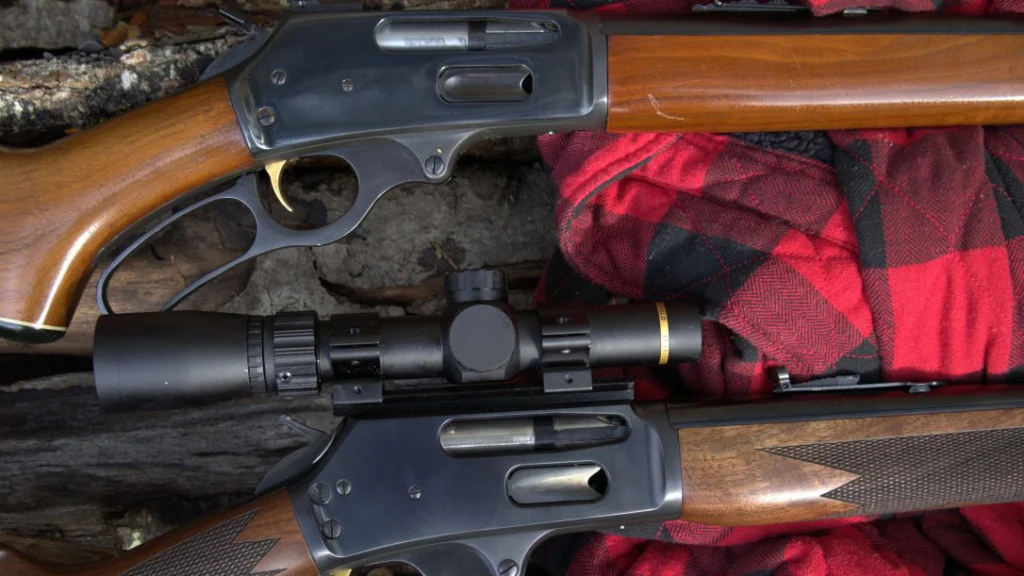
In a homage to its past, the 336 Classic uses the gold trigger and red bullseye logo forward of the rear sling stud. There are two safeties on the Classic. It inherits the crossbolt safety at the rear of the receiver that came on Marlin rifles from the 1980s onward. The hammer can also be lowered into a half-cock position for safe carry.
Advertisement — Continue Reading Below
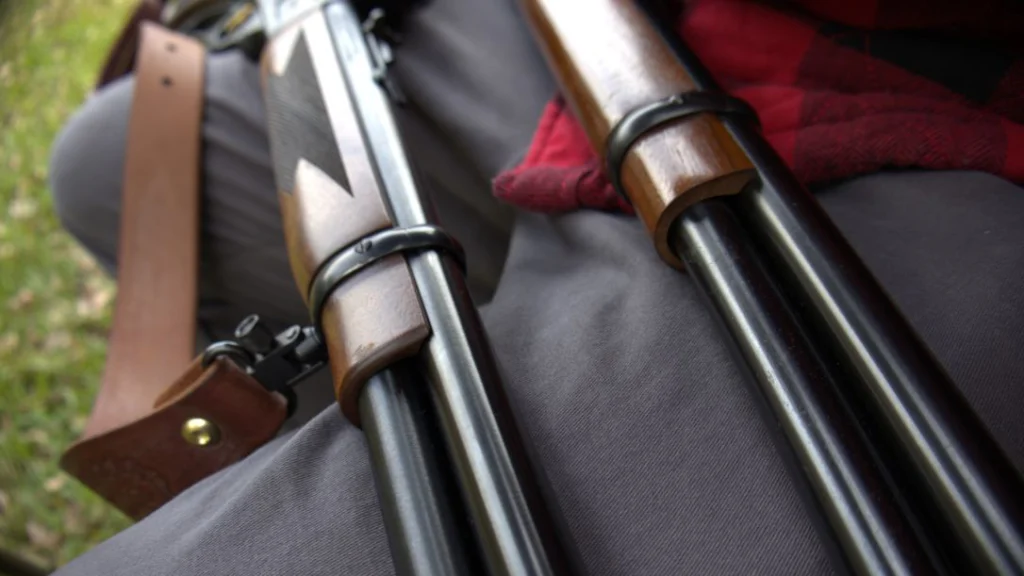
The 336 Classic buttstock has a semi-pistol grip that is cut checkered and plated with a Marlin endcap. The fore-end is likewise checkered and retains both the barrel band and a forward steel sling stud.
JM Marlin: The Legend
My JM Marlin 336 was made in 1972 and it saw enough abuse to get pitting on the left side of the receiver; but it is otherwise mechanically and aesthetically right. Functionally, both the old and new 336 rifles are lever actions with the same distinctive side ejection and solid frame. Both have 20.5 inch barrels. Both have six round magazines. Both are in .30-30 Winchester.
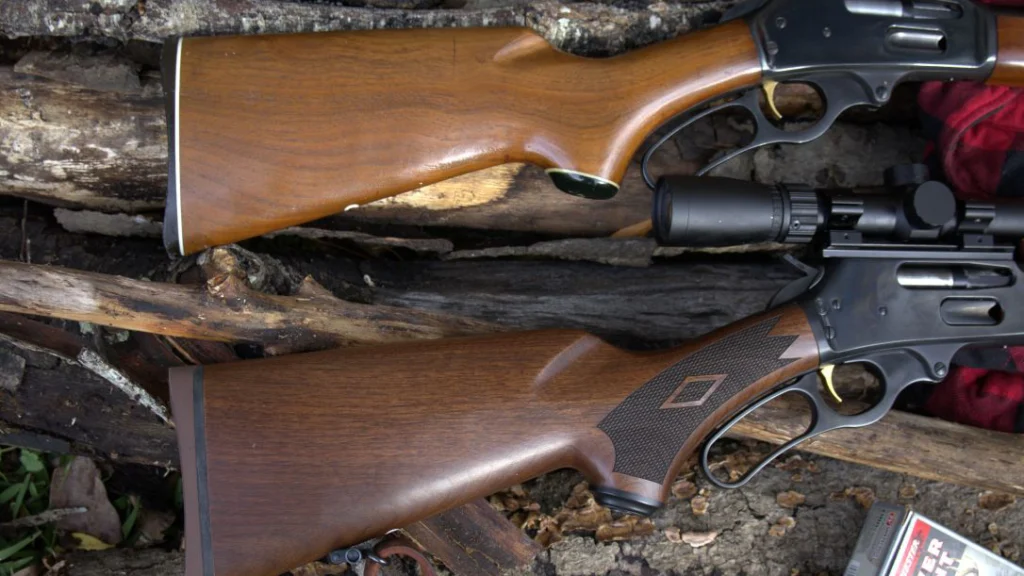
The chief differences are cosmetic. My 336 wears plain birch stocks, which was the most common type. Some later Model 336 rifles use a rubber buttpad, but this one has a checkered plastic unit instead.
Advertisement — Continue Reading Below
Mechanical differences are few, but noteworthy. The old 336 wears a Marlin Microgroove barrel with a 1:12 right hand twist. The new 336 has a faster 1:11 inch twist rate and a traditional six-groove rifling. Old 336 rifles will have a pair of small screws parallel to one another on the left side of the receiver near the ejector. These are fill screws for mounting a William’s style peep sight. This useful afterthought has been eliminated with the new model. The Ruger Marlin 336 relies on the Weaver footprint for mounting optics or peep sights in line with the existing iron sights. The most obvious mechanical difference is that my particular JM Marlin rifle is so old that it lacks a crossbolt safety. Only a half-cock safety is used.
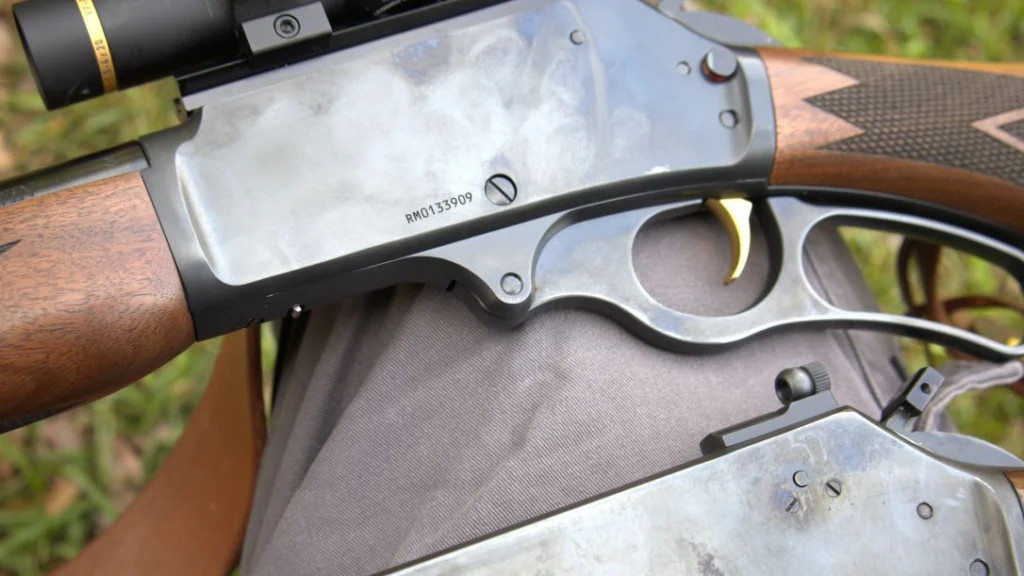
Fit & Finish
You can sample anything. It can be firearms, appliances, cars,and it can even be people. If you have enough revolutions around the sun, it is tempting to believe the products we use and the people who make them and consume them are not make like they used to be. But nostalgia also blinds us to some of the limitations of what was available. In the case of the Marlin 336, the past is not always a blueprint. Indeed, it is something of a price-point rifle, whereas the new models are not.
Advertisement — Continue Reading Below
Stocks
Side by side, the new Ruger Marlin 336 is better compared to a more deluxe version of the old 336. Its checkered walnut stocks set off the appearance compared to the plain birch of my original. Blue is not a popular finish in the 2020s, but it is well done on new Marlin 336 Classic. It is on par with the old model. My particular JM Marlin does not have sling studs, though others do, and the 336 Classic certainly does. The sights on the old rifle are also on the cruder side but mechanically operate the same as the new ones.
Inletting & Machine Work
The price point of the vintage Marlin 336 also shines through with the wood to metal fit. The inletting from buttstock to receiver and from fore-end to barrel is noticeably wider, whereas the new rifle lacks any gaps. The new Marlin has an enlarged and deburred loading gate, making it easier to load without pinching fingers.
Advertisement — Continue Reading Below
It was clear that the old 336 had looser tolerances. The machines and handwork were not as precise and modern CNC machining offers the best repeatability. Metal finishes are a more even game with neither rifle exhibiting burs or visible machine marks. As good as CNC work is, the old hands that put together those old 336 rifles knew what they were doing. The fit is such that I was able to swap bolts from the old rifle into the new and the reverse.
On the Range
I have had my JM Marlin 336 for a few years and it is a good shooter with a crisp, fast action. It balances right at the receiver and, at 7.5 pounds and carries all day. I also know it as a rifle that can put shots inside of a 2-inch pattern at 100 yards. But I dug out the old 336, cleaned up the new 336, and took both to the range to see what I could learn.
Advertisement — Continue Reading Below
Accuracy Test
From the bench, both rifles performed similarly. Both have glassy trigger pulls with weights of about 4.5 lbs. Both are wearing identical optics and have identical barrel lengths. I equipped both rifles with a Leopold VX-Freedom 1.5-4x riflescope. Rifling twist was the only mechanical difference, but I was surprised how the accuracy test devolved.
I started with three-shot groups at 100 yards, taking five minutes for a cool down before proceeding with each load. I started with the aforementioned Winchester and Remington 150 grain soft point loads. The old Marlin consistently grouped at 1.5 inches. The new Marlin came in at 1.75 inches.
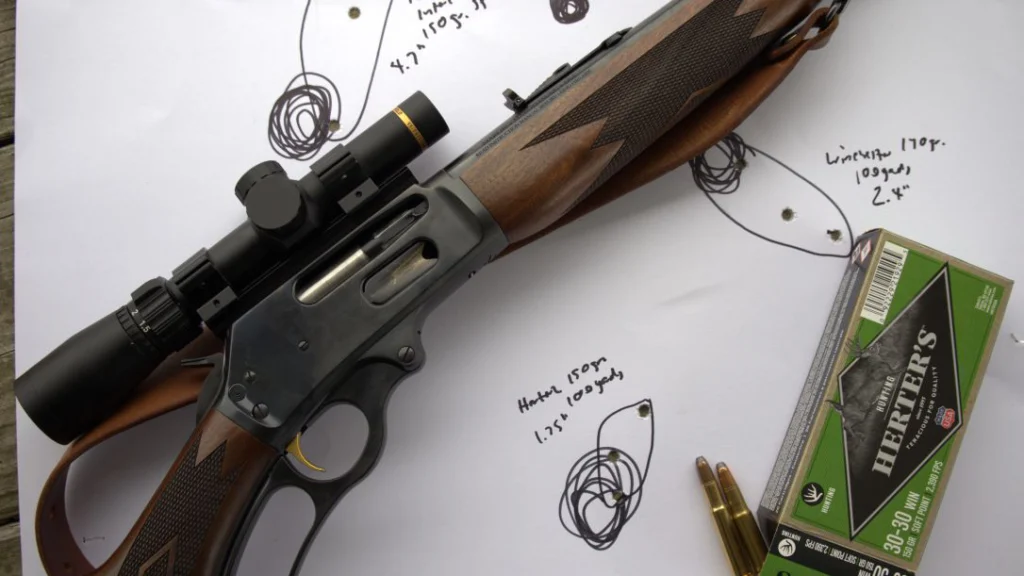
I repeated with Winchester 170 grain Super X soft points as well as Hornady’s 160 grain FTX LeverEvolution load. The JM Marlin strung them into a clean two-inch pattern, while the Ruger Marlin’s pattern opened to a 2.4-inch group. The Hornady LeverEvolution load, touted for its higher velocity and flatter trajectory at distance, was the worst performer. The JM Marlin cast them into a 4-inch pattern. The new Marlin gave me consistent horizontal stringing and groups ranging from 4.4 to 4.7 inches. I tried Hornady Interlock 150 grain soft point loads and achieved similarly abysmal results.
Offhand Impressions
The Marlin 336 Classic was subjected to a two-hundred round test. This includes the aforementioned 100 yard benchwork and offhand shooting at targets ranging from 50 to 200 yards. Shooting from the bench gives us an idea of mechanical accuracy with some ammunitions, but going offhand brings the other features of each rifle into focus.
Although it is easy to criticize modern manufacturing over hand fitting, both rifles have identically smooth and near-effortless actions. The only resistance in the stroke comes from the bolt re-cocking the hammer with a brisk flip of the wrist. Both have triggers that break on my Lyman scale in the ballpark of the 4.5 lb. range without any play. These trigger are not match grade but neither are they onerous. Both rifles feature an excellent half-cock safety and a serrated hammer that was easy to manipulate to de-cock the rifle.

The gap between the old and new grew when it came to overall handling. The old Marlins have a more distinct fore-end belly that is gives more to hold onto. The new model’s streamlined and checkered stocks give all hand sizes more to grip. This is inconsequential off the bench, but when shooting offhand, particularly when going quickly, the slicker and wider fore-end tended of the old gun moved around more in the hand and slowed me down a bit. The new Marlin gets its lumps because of its longer buttstock and grippy butt-pad. The pad absorbs some recoil forces but tends to snag on the jacket as the rifle comes into the shoulder.
Old vs. New: Which Marlin 336 to Pick?
The new Marlin 336 Classic is a solid rifle, but there are material reasons to find a used JM Marlin. Between sample sizes of one per era, both rifles handle similarly though imperfectly. In a shock to purists, the new Marlin boasts superior fit and finish and is easier to load. Handling is more of a mixed bag. The old Marlin is more slippery in the hand, while the new model has a buttstock that airs on the longer side. The old JM Marlin pulls slightly ahead in the accuracy department, but is more cost effective. The new Ruger Marlin, despite its traditional styling, is more up market. Either will satisfy, whether you are an old hand or looking for your very first lever action rifle.
WS DO NOT HAVE AFFILIATE LINKS
Affiliate links create a financial incentive for writers to promote certain products, which can lead to biased recommendations. This blurs the line between genuine advice and marketing, reducing trust in the content.