Most of what you see in hand-to-hand combat these days is influenced by mixed martial arts. And much of MMA’s stand-up fighting is based on the sport of muay Thai. While a brutal striking art, Thai boxing is still bound by certain niceties. It’s rules prohibit things like headbutts or groin strikes. But it’s cousin, Burmese boxing, is bound by none of those restrictions, called “fouling tactics.”
Though such “fouling tactics” are widely recommended by self-defense instructors, few have any actual experience employing them in fights. Burmese bare-knuckle boxing expert Phil Dunlap is an exception, however.
Introduced to the sport called “lethwei” by his grandfather, Dunlap grew up fighting across Myanmar (formerly Burma) throughout the 1980s. What he used in the ring, he was easily able to translate into the real world.
Advertisement — Continue Reading Below
“One time, I got attacked in Manhattan by a guy with a razor. I automatically slapped his hands down and launched myself like a missile to headbutt him in the face,” he said. “I believed it would work because I’d already won a number of matches in Burma with that exact same technique.”
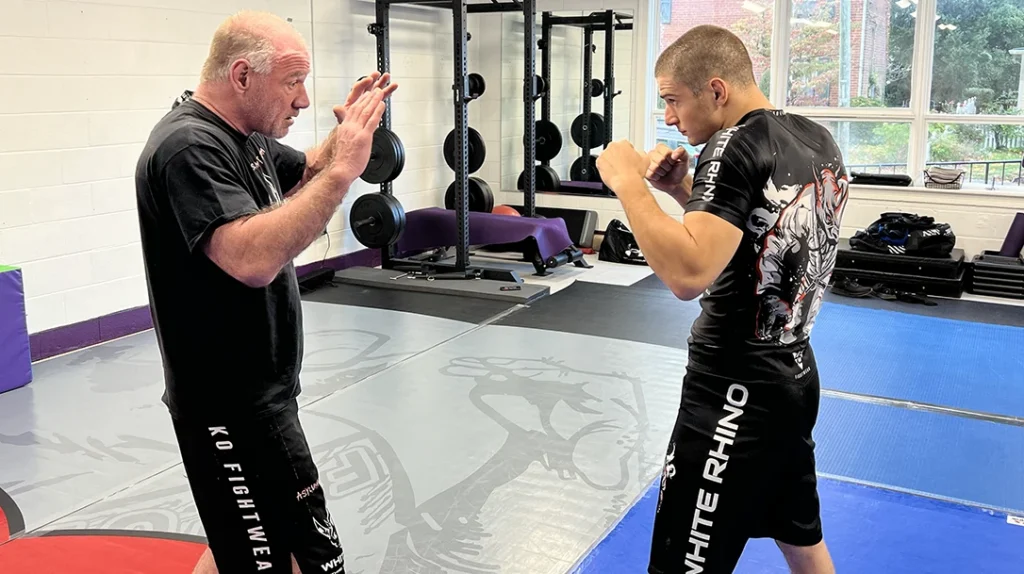
Some Fouling Tactics
Use Your Head
While a strong opponent might withstand a punch, a headbutt to the face can often drop even the sturdiest foe. But there’s an art to using your head.
Advertisement — Continue Reading Below
“Think of your head like a cinder block. The upper edge of that block, which runs from your hairline around your skull, is what you want to use. Lower than that risks a cut above your eyes that effects your vision,” said Dunlap.
Being careful where you aim your headbutt is also critical. The ideal targets are the softer areas of your opponent’s face, like his cheeks.
Headbutting can be done at long range or close in. The headbutt Dunlap used to end the razor attack was the long range method. To execute it, slap your opponent’s hands down and spring forward using your legs to generate power striking with that upper part of the skull.
Advertisement — Continue Reading Below
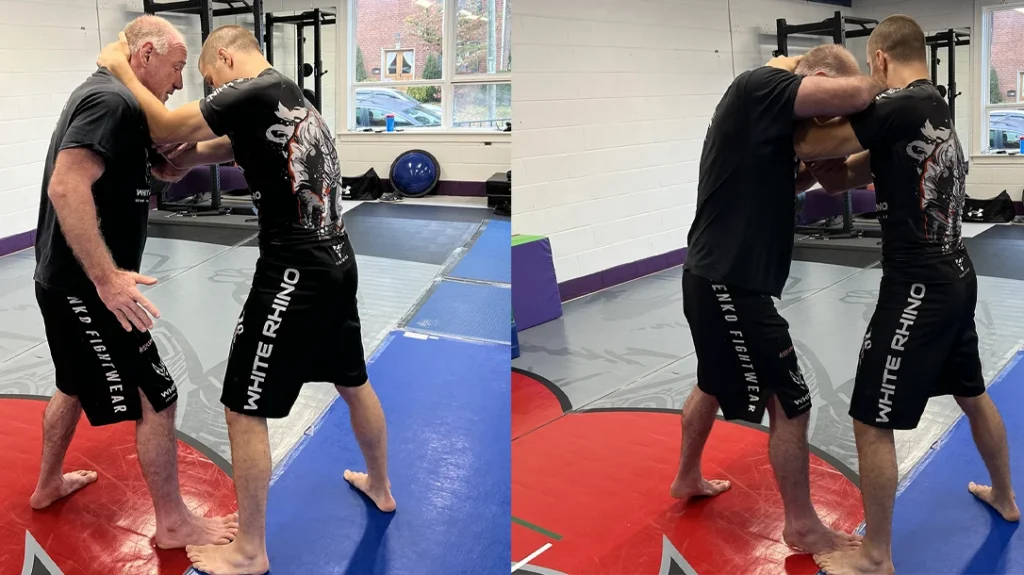
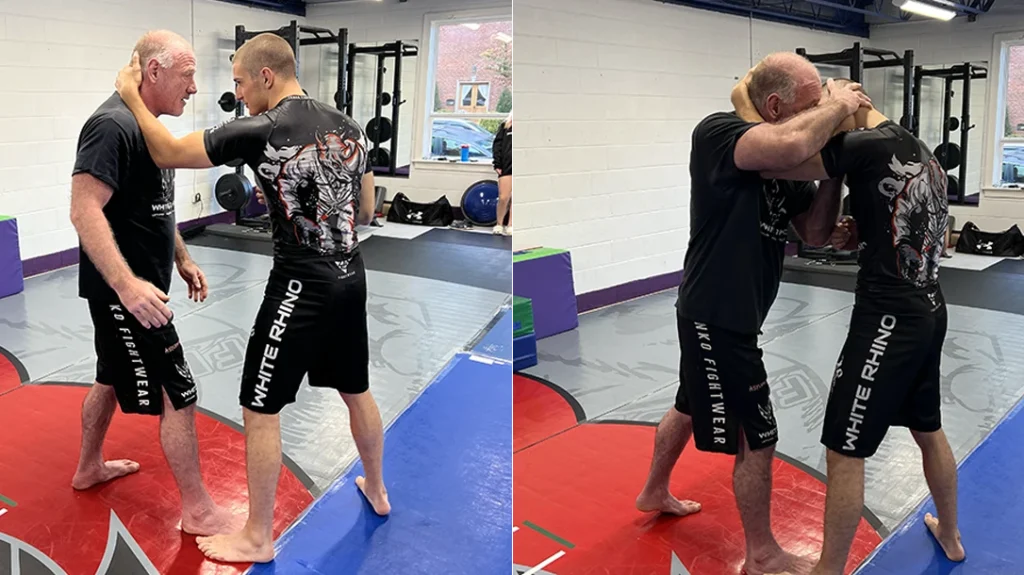
The close in method is done from a clinch. Unlike muay Thai, which places both hands behind the opponent’s head, lethwei often favors a collar and elbow tie up. One hand is placed behind the opponent’s head but the other controls his arm. Controlling the arm prevents its use as a shield to defend against the headbutt. Fighters typically keep their own head tight to their opponent until deciding to create some space between them. They then launch themselves back into that space with a headbutt.
South of the Border
Besides headbutts, groin strikes can change the tenor of a lethwei fight. Though no longer widely allowed, when Dunlap was competing in the 1980s, groin shots were perfectly legal.
Advertisement — Continue Reading Below
“It’s tough to land one from the outside because even an untrained fighter will flinch away when you kick at their groin,” he said. “It works best from outside when one fighter steps in to attack and the other catches him in mid strike.”
In close, though, groin strikes become effective weapons that are difficult to stop. Most combat sports don’t worry about dealing with groin strikes. So their stances tend to be somewhat squared up to the opponent leaving a vulnerable gap between their legs. In the old-fashioned version of lethwei Dunlap practiced, fighters took a much more bladed stance in clinches. They rotated their hips toward the side while almost placing their legs on a straight line. Besides protecting your groin, that position makes it relatively easy to attack with your lead leg to the opponent’s groin. You just lift your knee or instep up between their legs to strike.
Though a trained fighter may battle through the pain, Dunlap said they’ll at least be distracted for a few seconds. This creates an opening for a follow up attack.
Advertisement — Continue Reading Below
Don’t Let it Come Back to Bite You
If butting and groin shots change the dynamics of a stand-up fight, another technique Dunlap employed competing in Asia can change a ground battle.
The Kachin region of Myanmar, where Dunlap frequently fought, featured a unique type of grappling which allowed biting. While there was typically a gentleman’s agreement not to employ bites in matches, this was sometimes disregarded. Dunlap recalls this once occurring as he attempted an arm lock.
“He was defending the arm bar and tried to bite my calf. So I bit his thumb. You do that and the person instantly gives you the arm bar,” he said.
Advertisement — Continue Reading Below
Like groin strikes, biting can be a means to an end. Even if it doesn’t stop the opponent, the pain can force them into vulnerable positions. And many people will be stopped simply by the pain of a hard bite.
“Look at Evander Holyfield. He was as tough as any boxer ever. But when Mike Tyson bit his ear off, he freaked out and temporarily stopped fighting,” said Dunlap.
Not as Easy as it Looks
Like any other fighting method, there’s a technique to biting. Dunlap suggests when biting down on soft areas, make a quick bite and turn your head to rip the flesh. But when biting on a harder area, keep biting down. However, you want to do the latter method with the molars on the side of your mouth.
Besides containing less strength, biting with the front of your mouth makes you vulnerable to the primary defense against bites. Namely, grab the back of your opponent’s head and pull in, while forcing whatever he’s biting deeper into his mouth. That will spread their jaw apart threatening to dislocate it.
All of these techniques require not just training but practice in sparring exchanges with an opponent. But they should be done safely using protective gear and only in very light sparring situations with partners you trust.
“It bothers me when someone says, ‘In a fight I’d just bite him or hit his groin,’ without having practiced it,” said Dunlap. “You have to practice these techniques like any other.”
WHY OUR ARTICLES/REVIEWS DO NOT HAVE AFFILIATE LINKS
Affiliate links create a financial incentive for writers to promote certain products, which can lead to biased recommendations. This blurs the line between genuine advice and marketing, reducing trust in the content.