When a major manufacturer puts their productive thumb on the scales of a design, that product tends to become more diverse, more available, and less expensive.
Smith & Wesson did this for the AR-style rifle when it launched the original M&P Sport series in 2010. Sport models cut back on extra features, but they had a name and a price-point that was difficult to ignore. The Sport II that followed the original M&P Sport came as a fully-featured AR-style rifle.
By all accounts, Sport II rifles turned into one of Smith & Wesson’s best-selling products in the United States. As a long time user of the old Sport II, I wanted to get my hands on the Sport III to see if the upgrades are there and justified.
Advertisement — Continue Reading Below
While the original 2010 M&P Sport notably lacked a dust-cover and forward assist, those parts found their way on the M&P Sport II. Continuing on that path, the M&P Sport III inherited many of the Sport II’s features.
Introducing Smith & Wesson M&P Sport III
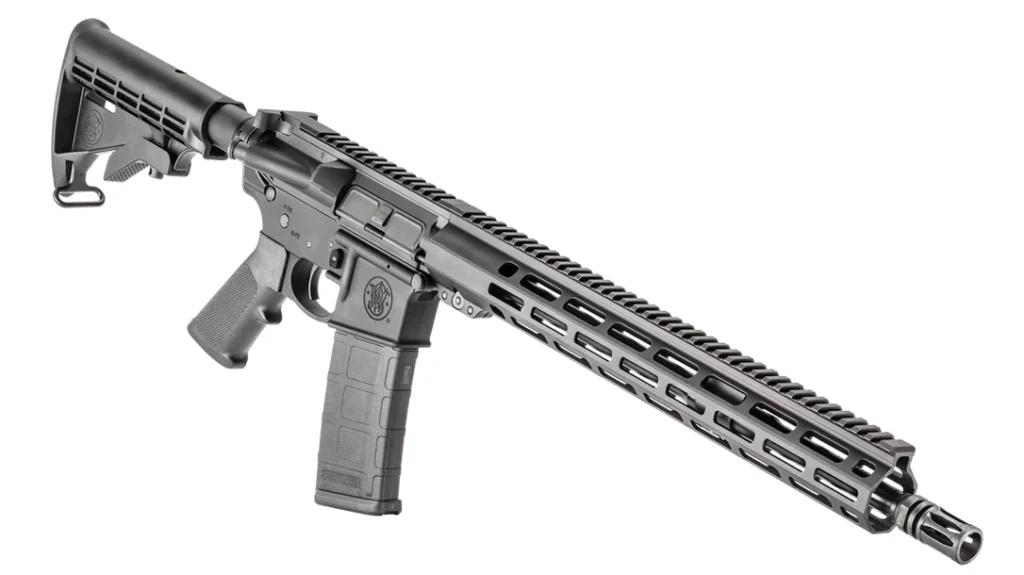
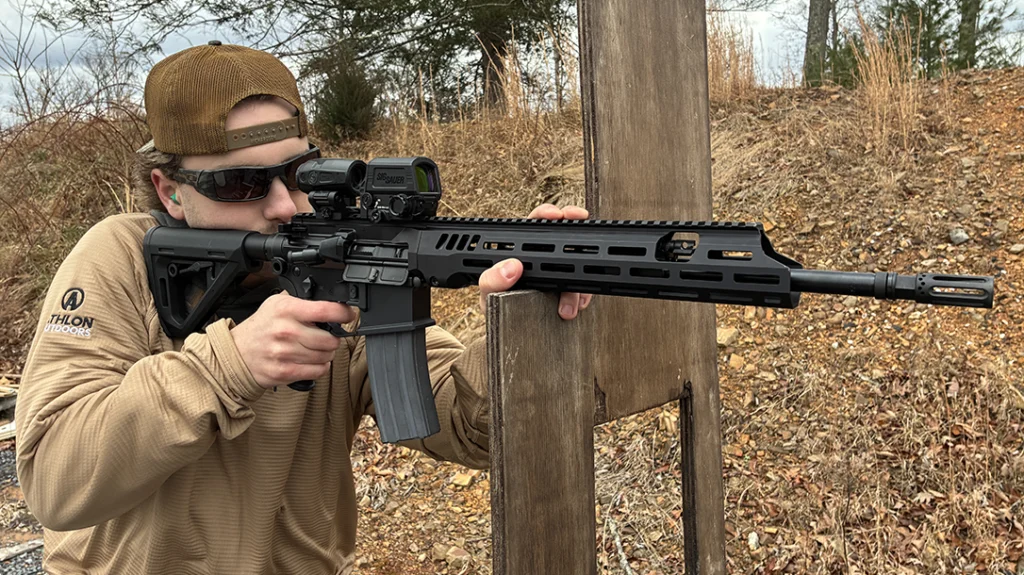
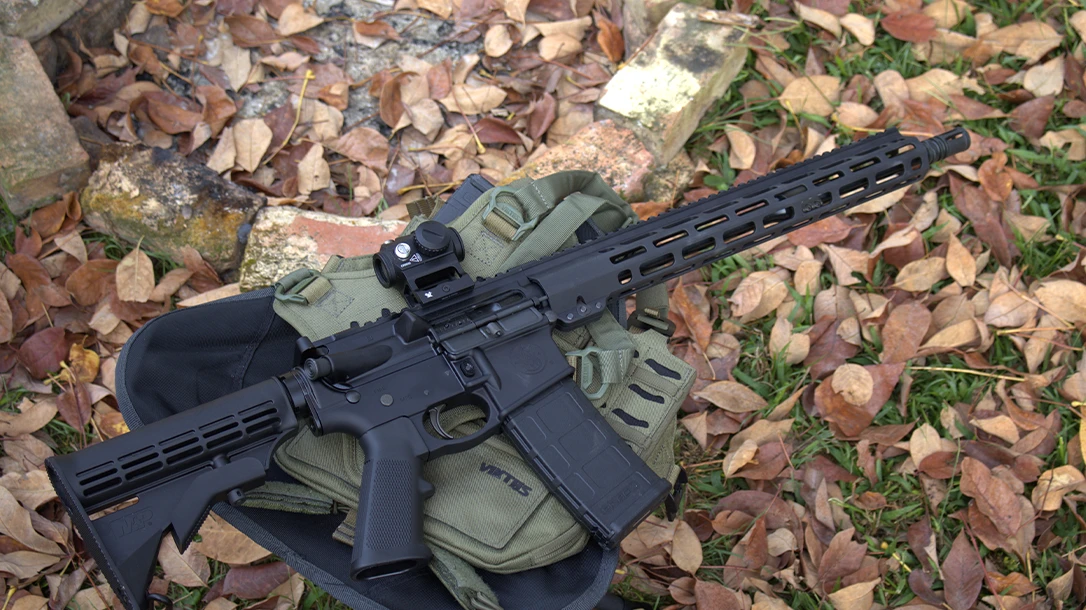
Like its predecessors, the Smith & Wesson M&P Sport III is a direct-gas impingement rifle chambered in 5.56 NATO. It features a 16 inch barrel and wears a standard A2 flash hider. Likewise, the Sport III ships with basic AR furniture like the standard six-position telescoping buttstock and A2 pistol grip.
Advertisement — Continue Reading Below
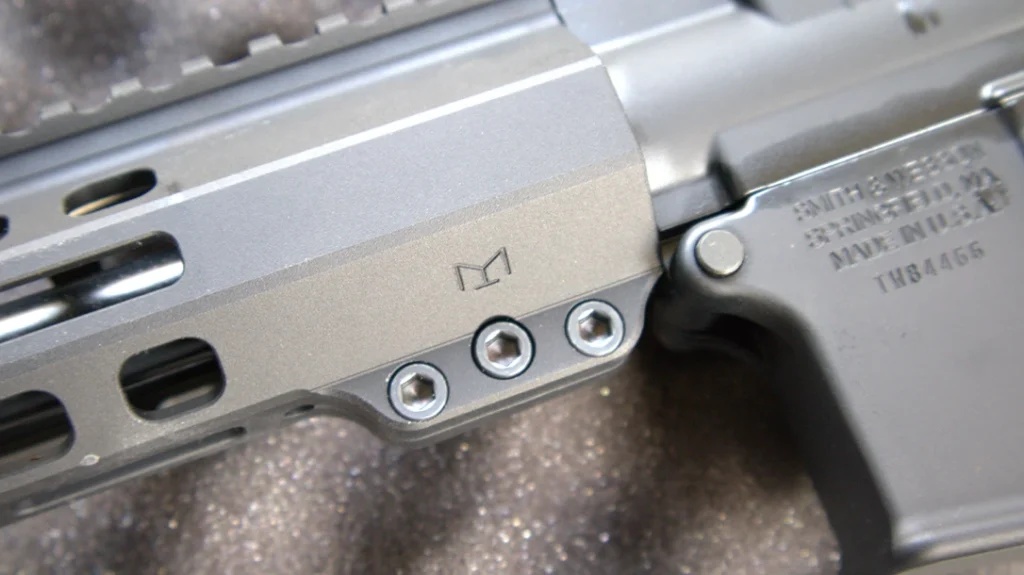
M&P Sport IIIs also inherited the original Sport’s integral oversize trigger guard. The first appreciable difference is the Sport III uses a Midwest Industries aluminum handguard. It is fifteen inches in length with a Picatinny rail along the sighting plane and M-Lock slots at the sides and bottom for any attachments. It is also free floated, unlike the polymer slick-sided M4 handguards of the Sport II.
The Sport III ditches the iconic A2 front sight base in favor of a low-profile gas block. Smith & Wesson updated the Sport III’s barrel tool. Where the Sport II featured a heavier barrel with a slower 1:9 twist-rate that worked best with 55 grain projectiles, the Sport III’s barrel is lightened up with a lighter profile .630-inch barrel with a faster 1:8 twist. Increasing the barrel twist to better stabilize heavier bullets. In addition, the Sport III’s gas block sits further out from the action, making it mid-length. It replaces the Sport II’s carbine-length gas tube and the extra length provides a smoother recoil impulse.
Advertisement — Continue Reading Below
With its upgrades, the Smith & Wesson Sport III provides more versatility. You can easily mount more accessories on it straight out of the box. Thanks to its increased gas tube length and barrel twist, the Sport III is able to shoot a wider variety of ammunition more smoothly.
M&P Sport III: 300 Round Test
I took the Smith & Wesson M&P Sport II and Sport III rifles out together. My goal was to see how the changes in the latter model are reflected on the firing line. I set up the Sport III initially with a Vortex Crossfire 1x red dot optic. After the first hundred rounds downrange, I switched over to an EoTech Vudu X 2-12 rifle scope. The Sport II originally came with an A2 front sight and an MBUS rear sight. The rear sight has long been replaced by a Primary Arms SLx 3x prism sight, which I ran in this test.
In the interest of fairness, I kept the Vudu X on Sport III at 3x magnification for the comparative part of the test.
Advertisement — Continue Reading Below
Accuracy: Sport II vs Sport III
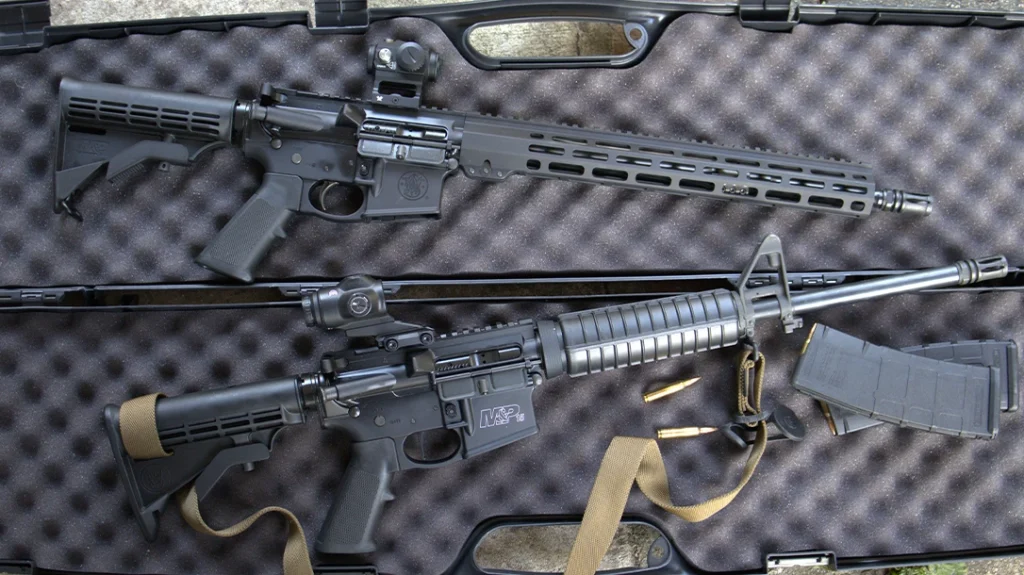
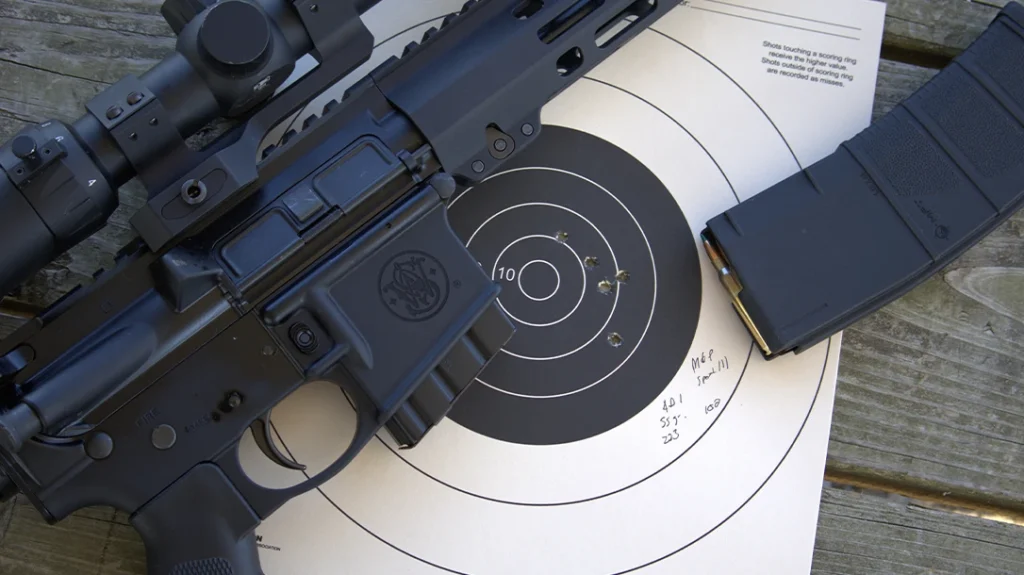
The Sport III proved capable of 1-inch groups using several 55 grain .223 Remington and 5.56 NATO loads I tried at 50 yards. With heavier bullets those groups opened up to 1 ¼ – 1 ½ inches. I was slightly surprised since the carbine is equipped with that 1:8 twist barrel that should provide better stabilization for heavier projectiles.
The Sport II can go toe to toe with the Sport III at 50 yards. And at the same distance, the Sport II can hold a 1 ½ inch group with heavier loads like ADI’s .223 69-grain Matchkings or Hornady’s Frontier Match 75-grain hollowpoints.
Advertisement — Continue Reading Below
After mounting the EOTech VuduX, I took both rifles out to 100 yard line. Here are my results.
| Sport II | Sport III | |
| ADI .223 55 gr. Blitzking | 2.5″ | 1.5″ |
| Win. .223 55 grain FMJ | 2.5″ | 1.8″ |
| Fed. Amer. 5.56 62 gr. FMJ | 3.1″ | 2.2″ |
| ADI .223 69 grain Matchking | 3.0″ | 2.4″ |
| Hornady Frontier 75 gr. HP | 3.3″ | 2.5″ |
In spite of my Sport II wearing an excellent TriggerTech 3.5 lb. flat faced trigger, the Sport III proved to be more accurate overall. Honestly, I was surprised at how narrow the gap is between both rifles–particularly with the heavier rounds. A 1:8 twist barrel appears to be a modest improvement, but perhaps a 1:7 twist can tighten those slow pill groups up.
Advertisement — Continue Reading Below
Off the Barricade
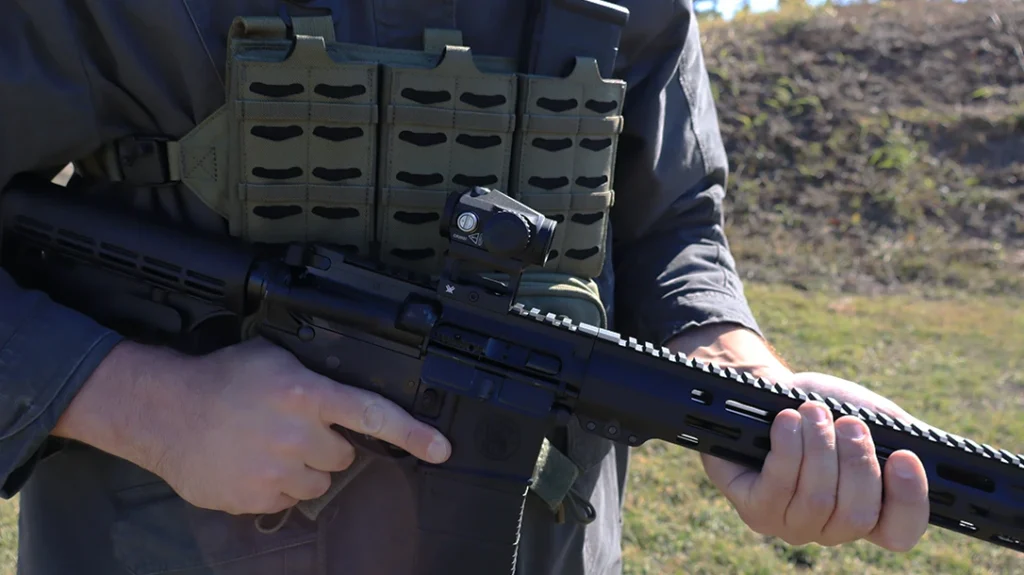
After shooting for accuracy, I remounted the Vortex Crossfire to the Sport III and exclusively shot my remaining two hundred rounds off-hand. In hand, the Sport III feels lighter to carry and more nimble to bring to the shoulder. No doubt, the medium weight barrel plays a role in this.
Most controls are identical between both models, are easy to use. Beware they’re not entirely southpaw friendly. The M-LOK handguard lacks the slipperiness of the default M4 handguards and feels secure in the offhand.
Offhand, mobile and unsupported, the Sport III feels like a different rifle despite its relatively few changes. It is nimble and grabby, while the Sport II has a classic look but has a somewhat front heavy feel. That attribute makes the Sport II a touch slower to shoulder offhand. However, if you get into the prone or a sitting position, the Sport II will feel steadier when engaging steel at 200-300 yards. Both rifles hit reliably, but I was a little faster with the old Sport II. Maybe that’s due to my familiarity with it. Regardless, the newer Smith & Wesson M&P Sport III turned out to be quite adept
That either differs in its gas system arrangement turned out to be a nonfactor. A midlength gas system drags out the cycling of the rifle and reduces bolt velocity and gas pressures the bolt carrier group are subjected to. This reduces recoil and produces less wear on the parts over time. At least, that is the theory.
Locking The Bolt Back On Empty
This 300 round test of the Sport III proves nothing in the wear department. My Sport II has two thousand rounds through it with only some slight finish wear only. I can attest to recoil between the two rifles. Off the bench, I felt no difference in the shoulder or while on my sights. In the field, I can perceive that the Sport II’s bolt cycles more briskly, but in terms of recoil and getting back on target, there’s no difference. Perhaps in the equation of gas system, the use of a heavy barrel negates the Sport II’s carbine length gas system, where the medium-weight barrel magnifies the Sport III’s midlength system.
In terms of reliability, the Sport III fired what I fed it. Halfway through testing, one of my Mission First Tactical magazines finally lost magazine tension and I had a few failures to feed. After replacing the magazine and reloading the ADI 55 grain ammunition from the old magazine, the Sport III continued to function without issue.
Smith & Wesson’s lineup of AR-style rifles is rapidly expanding. It now includes some higher-end models like the Axe and the Volunteer. But the bread and butter of the product line is still the M&P 15 Sport series. This entry-level AR got Smith & Wesson back into rifle production. Not to mention, the M&P 15 Sport Series has seen meaningful upgrades while not going overboard on cost. The Sport II was hard to beat for what you paid, and the Sport III is even harder to beat.
Smith & Wesson M&P Sport III Specifications
- Caliber: 5.56x45mm NATO
- Capacity: 30+1
- Barrel Length: 16 inches
- Overall Length: 35 inches
- Weight: 6.5 lbs. (unloaded)
- Twist Rate: 1:8 5R rifling
- Barrel Type: Medium 4140 CM Steel
- Receiver: 7075 anodized aluminum
- Bolt Carrier Group: 8620 Steel (chrome lined)
- MSRP: $799.00