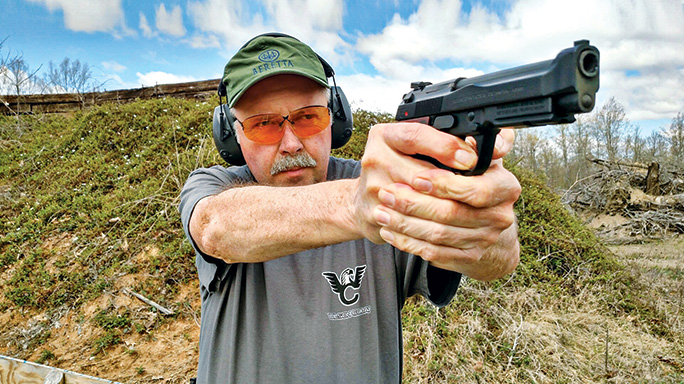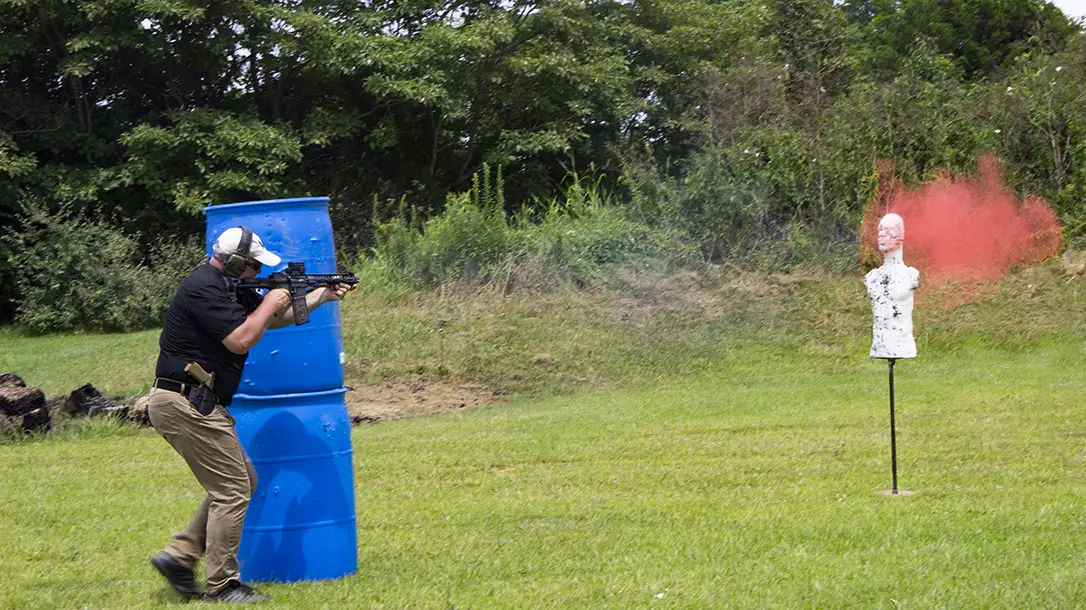
When it comes to defensive shooting, getting rounds on target is crucial. Our ability to effectively place good shots on a threat can be the determining factor in whether we walk away from the encounter. For many new gun owners, the question is “what is considered a good group?” How tightly together should all of my shots be on my training target? Today, we’re going to dive into what I consider to be a solid defensive group.
Speed and Accuracy – The Fundamentals of Effectivness
Training on a range is very different from defensive shooting. Even with stress-induced exercises, you can’t simulate the reality of shooting another person. As a rule, your paper target groups will almost double in size during a real-life encounter. Stress disrupts fine motor skills and shooting technique. You may shoot tight groups at the range, but in a crisis, your shots may scatter.
Advertisement — Continue Reading Below
Another factor that we must consider is speed. Shooting super-fast has become the new cool thing in the shooting world. It obviously has benefits, but it also has a downside. In my opinion, each trigger press should be a conscious decision. These decisions can be made very quickly. In short, I believe many people shoot faster than their decision-making skills. Now, once again, we need to be very fast on the trigger, but don’t outrun your mind.
What is a Good Group?
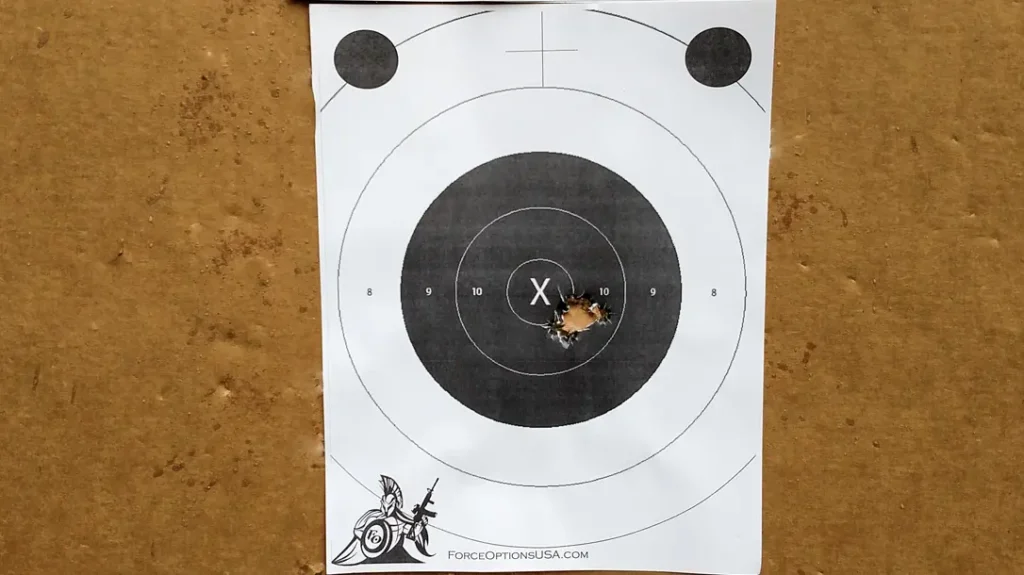
So, it comes down to what is a good group? This group is the combination of two basic things. A mix of speed and accuracy. When I teach, I encourage students to strive for a fist-sized group on target. This group is still small enough to work well on center mass shots while allowing them to focus on speeding the trigger press. If you’re shooting tiny groups, they may be impressive, but more than likely, you’re taking too long to press the trigger. On the other hand, if your groups are as big as a basketball, you need to slow down. If we assume our groups double in size, a fist-sized group will still be effectively within the center-of-mass region.
Advertisement — Continue Reading Below
When you are working on balancing your speed and accuracy, I encourage you to use a bullseye-style target. The reason is that, out of the box, you start with a smaller target to focus on. In the past, I found that using large silhouettes with beginners often results in shots all over the target. I do believe there’s a place for silhouette training, but I have found bullseye style targets more effective for true marksmanship and speed.
You Must Train
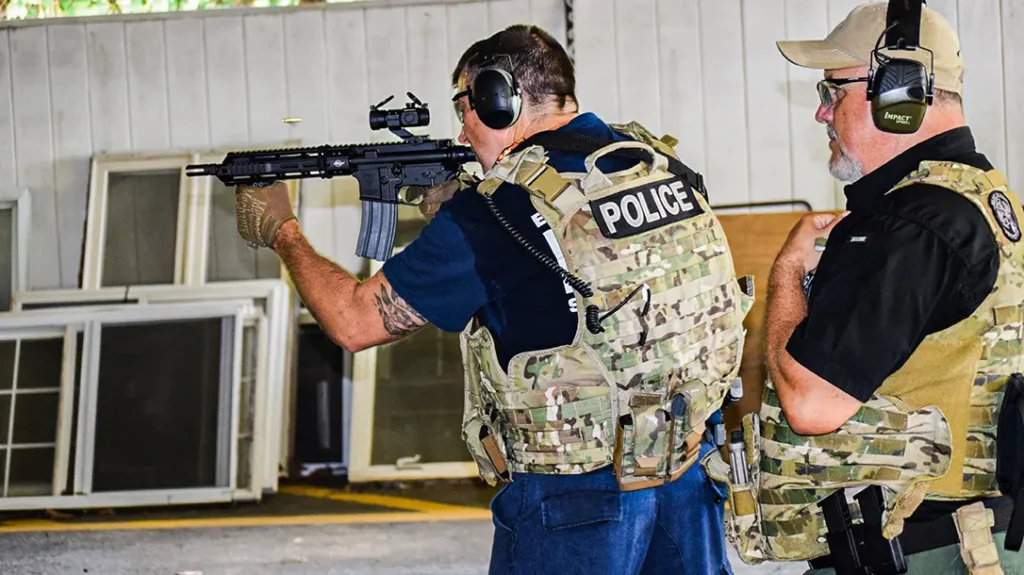
Using a firearm in a defensive situation is the absolute worst scenario we can face. However, if you end up having to cross that bridge, you need to be prepared. If you carry a defensive firearm, you absolutely must train with it. Drilling down on the fundamentals is essential. Marksmanship is one of the ultimate essentials. Get set up on the range. Mount your target, then begin to see what your personal speed limit is. Shoot your groups at a slow speed to begin with, and then, with the next evolution, pick up your trigger speed. Continue this until you find your rounds are grouping too far apart. That will tell you your current shooting speed level. You can use that information as a baseline and train to improve.
Advertisement — Continue Reading Below
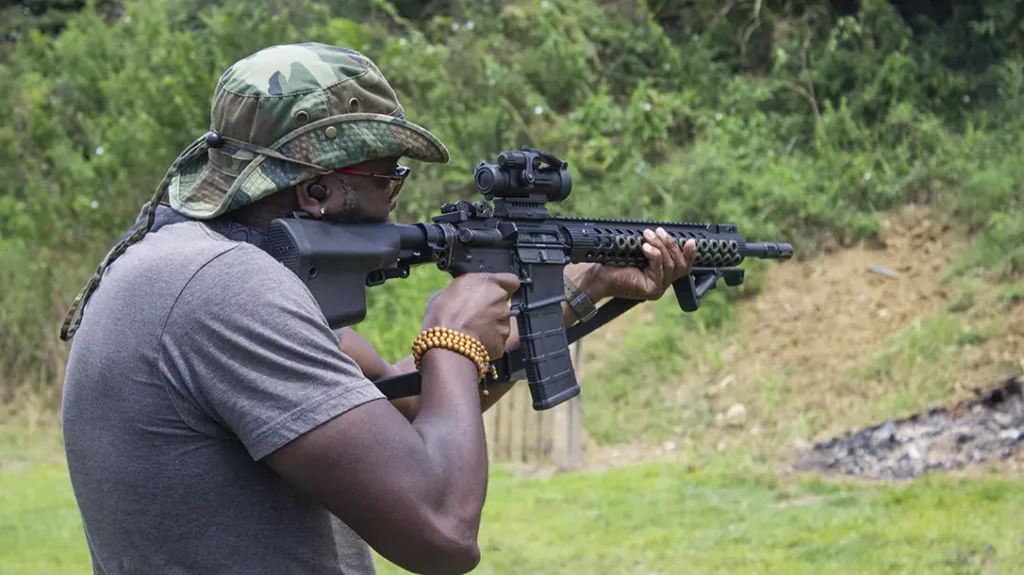
Speed and Accuracy
There’s a saying that only hits matter. While that’s true, I would expand on that and say only good hits matter. Train yourself to produce excellent groups at speed. This will give you the best chance of surviving a dangerous encounter if it’s forced upon you.
WHY OUR ARTICLES/REVIEWS DO NOT HAVE AFFILIATE LINKS
Advertisement — Continue Reading Below
Affiliate links create a financial incentive for writers to promote certain products, which can lead to biased recommendations. This blurs the line between genuine advice and marketing, reducing trust in the content.