The events on “Bloody Christmas” would shake everyone in LA, serve as a turning point, and expose police corruption. Though the process would be long, it would ultimately result in justice prevailing.
In 1951, on Christmas Day, seven civilians were beaten severely by officers of the Los Angeles Police Department. Were these attacks warranted? Ego, rumor, alcohol, and animosity fuel this fight. Some were left with broken, shattered bones; others had internal turmoil, including organs that had ruptured during the beatings.
But don’t worry, there is justice in this story. For now, let’s step back into LA in 1938.
Advertisement — Continue Reading Below
A Very Bloody Christmas
This is the year that marked a movement for reform in the LAPD. The mayor at the time, Frank Shaw, began investigating the LAPD and cracking down on corrupt cops. He also raised the bar for becoming a police officer and began implementing many training programs he felt law enforcement needed.
Despite the mayor’s best efforts to make the LAPD better, there was a constant struggle between Mexican Americans and the LAPD. During World War II, several riots occurred due to strained relations between this part of the LA community and local law enforcement.
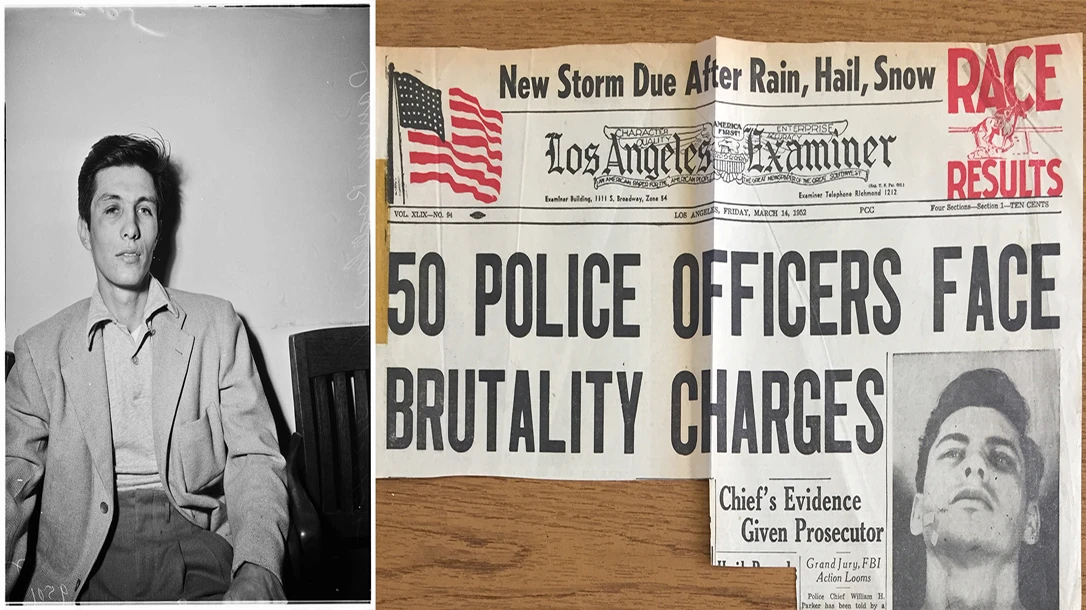
In 1950, William H. Parker was named LAPD police chief. Parker continued to reform the PD and wanted police to remain professional while maintaining a “war on crime” approach to policing. Some officers took the war on crime to extremes, causing angst within the community.
Advertisement — Continue Reading Below
In addition, there was an increase in racial profiling at the time. This was still at the helm of many of the officers’ minds, which made these officers have a close-minded opinion when it came to Mexican-Americans in the community. Due to this animosity, most of the encounters between Mexican Americans and police ended up in violence as both parties assumed the other would use force to control the situation. Since neither side trusted the other, the tension continued to grow both for law enforcement and the Mexican-American community. The atmosphere between LAPD and the community was at odds and growing worse.
The Call Goes Out
On Christmas Eve of 1951, two LAPD officers, Julius Trojanowski and Nelson Brownson, responded to a call involving alleged minors drinking at a bar. The bar, called the Showboat Bar, was located on Riverside Drive. When they arrived, they found seven civilians:
Advertisement — Continue Reading Below
Daniel Rodela, Jack Wilson, Elias Rodela, William Wilson, Manuel Hernandez, Raymond Marquez, and Eddie Nora.
Each civilian was identified, and each individual was able to prove they were of legal drinking age. All of the civilians answered the officers’ questions, too.
The police officers decided the seven civilians still needed to leave the bar, so they began to escort them out. They refused to leave because they had not done anything wrong. This prompted the officers to use force to make them leave the premises. Finally, once they were in the parking lot, the fight escalated. After all, there had been no crime committed. The civilians fought back, and both officers sustained injuries.
Advertisement — Continue Reading Below
Several hours went by, and then the LAPD decided to have all of the men arrested at their homes. Six of the seven were taken straight to jail. However, the seventh was not so lucky. Daniel Rodela was dragged to a cop car by his hair, driven to Elysian Park, and beaten so badly that he needed blood transfusions and had many facial fractures.
Daniel Rodela would not be the only one of the seven men to receive more punishment. The situation would get much worse.
Party Time
On Christmas Day, 1951, numerous police officers were at a Christmas party, having a good time and getting drunk on duty. This was, of course, against LAPD policy.
Advertisement — Continue Reading Below
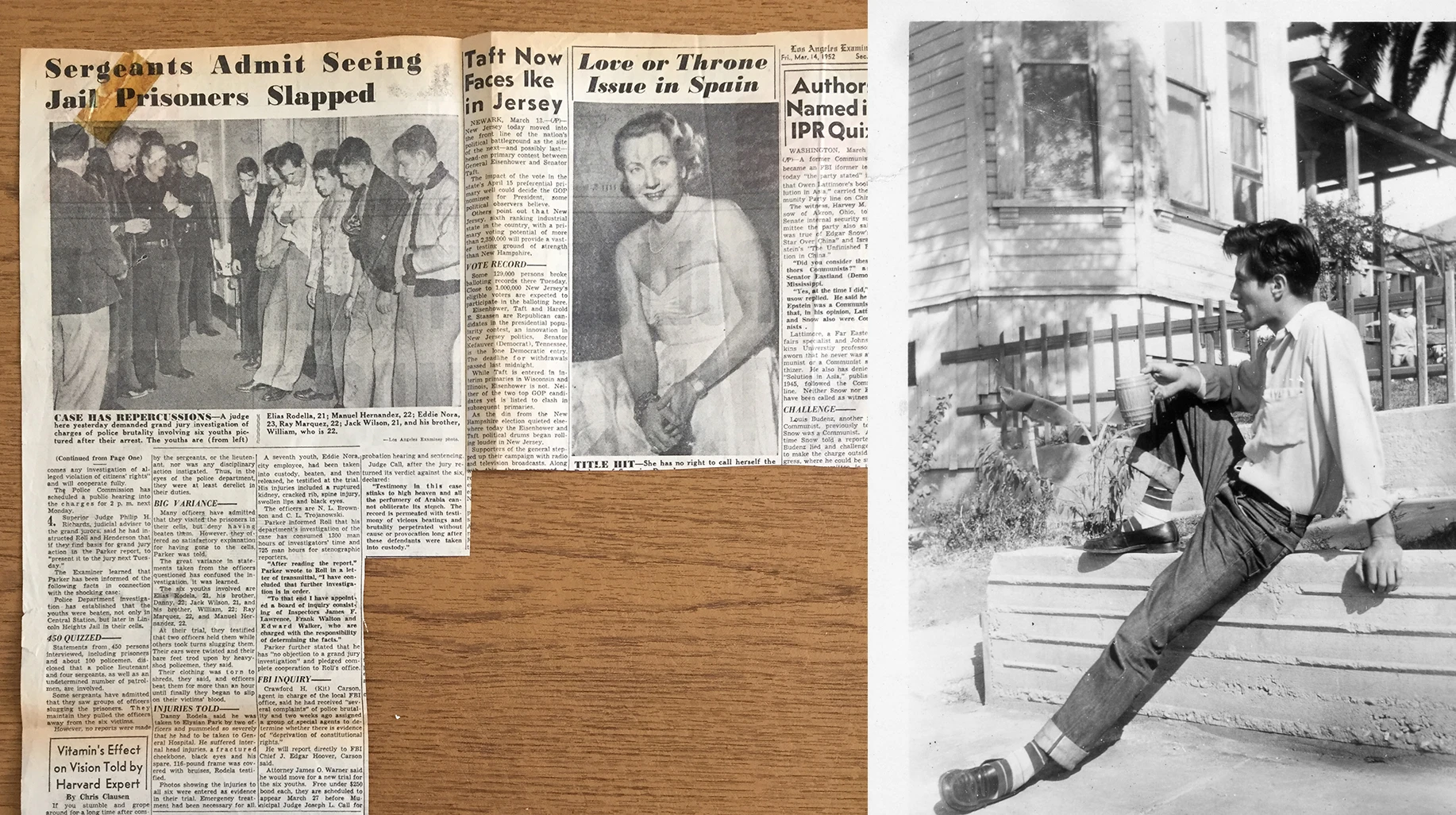
Drinks got the best of these officers, and they began to talk about the fight in the parking lot with seven men. A rumor circulated that Officer Trojanowski had lost an eye in the fight at the Showboat Bar. Wanting to avenge the officer, the drunk policemen paid a visit to the Central City Jail. The six prisoners, Jack Wilson, Elias Rodela, William Wilson, Manuel Hernandez, Raymond Marquez, and Eddie Nora, were lined up in the jail. Remember, Daniel Rodela was still in the hospital. Once they were lined up, they were then beaten for 95 minutes. The injuries were terrible, and 100 other prisoners had witnessed this horror.
This terrible story does have more to it and a just conclusion. The process would take time. For three entire months, the attack on the prisoners was covered up. A lot of the brass or higher-ups in LAPD at the time did their best to keep the story out of the news.
An interesting aspect was that the newspapers glossed over the beatings but concentrated on the fight the night before outside of the bar in Riverside. One of the original headlines in the news read: “Officers Beaten in Bar Brawl; Seven Men Jailed.” Funny how the fact that drunken LAPD officers (drunk while on duty, remember) went to the jail to beat the seven men silly did not make it into the papers. Much of the backlash on the department was left out of the media for some time.
Advertisement — Continue Reading Below
Community Outcry
The community itself was not going to give up, and finally, the media decided to turn and tell the story about the acts of police brutality that the LAPD committed.
In the early part of 1952, six out of the seven men were charged with battery and disturbing the peace. During the trial, prosecutors made it a point to say Jack Wilson, one of the civilians, started the fight.
However, the defense came back saying that LAPD Officer Trojanowski started hitting Wilson with a baton and suggested that this may have initiated the fight. The gruesome details of how the young men were beaten after already being arrested and in custody were stated in court.
Though the civilian men were found guilty of battery and disturbing the peace, the judge began to reprimand the LAPD officers for their use of force and the brutality on the prisoners. The judge also decided to have an investigation into the beatings.
The police chief, Chief Parker, claimed that the officers were defending themselves and said it was part of the “war on crime”. He also suggested that the public needed to back the police and suggested the claims of police brutality were a ploy to get him fired.
The Use of Excessive Force?
As the investigation continued, more and more complaints about the police using excessive force came up. The final report of the internal investigation was 204 pages long. There were interviews from over 400 witnesses, and many LAPD officers tried to disrupt the investigation or throw it off course. This was done through perjury and unclear testimony. The beating of the seven men, which kick-started the investigation, was also described differently by many LAPD officers. Again, an attempt to cover up what truly happened.
Finally, a decision was made. A grand jury heard the information, and this resulted in eight officers being indicted for assault. The grand jury also reported that the LAPD’s senior officers at the time allowed the situation to escalate. They also said this did not help the public.
Those eight officers were tried over a period of four months. In November of 1952, five of the officers were convicted of assault. One of the officers was given a one-year prison sentence.
After that, it appears the LAPD tried to clean up the department. 54 officers were transferred, and 39 were suspended without pay. Most of the victims of the beatings went on to live long, happy, full lives. The exposure of the Bloody Christmas incidents led to the department’s corruption being exposed, motivating LAPD to clean up corruption and adopt a different outlook within the community.