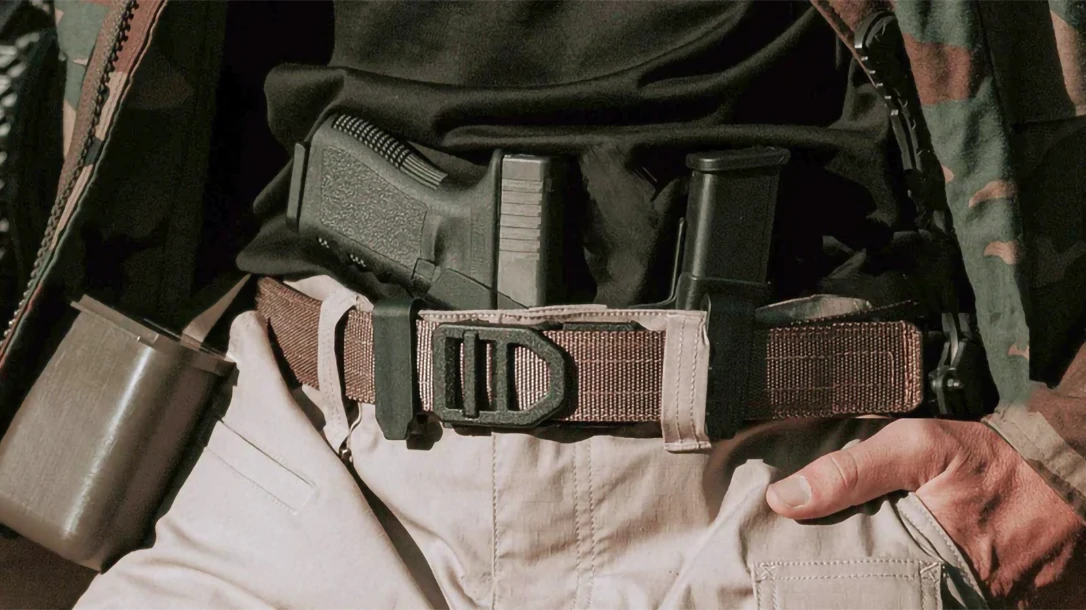
If you carry a handgun with any regularity, you already know this truth, but it bears repeating: a good EDC belt is the foundation. A great holster on a flimsy belt is like a race tire on a bent rim. So, picking the right belt is essential to safe and functional concealed carry. These four options offer a solid starting point.
Picking the Right EDC Belt
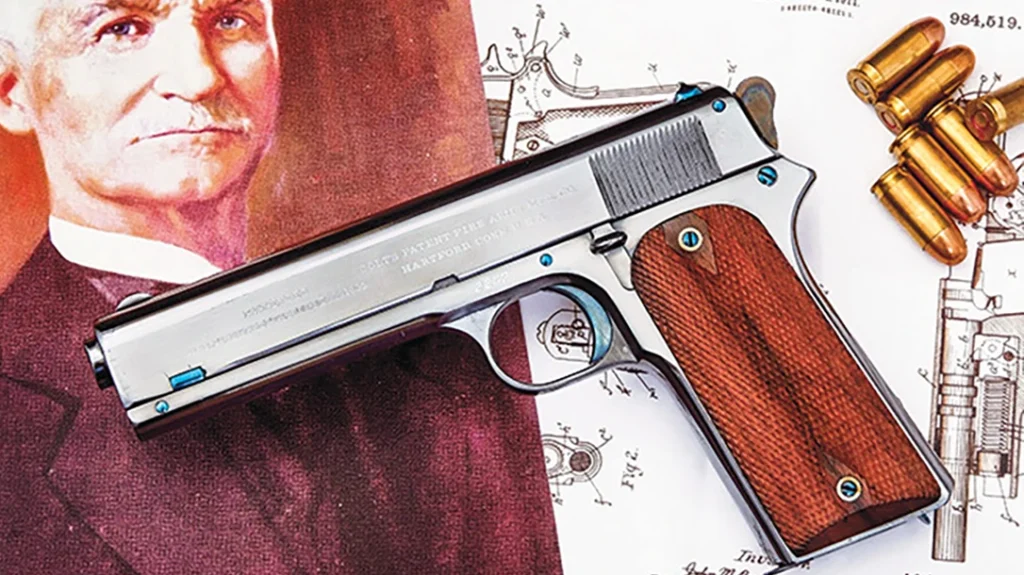
Over the last six months, I lived with four very different belt systems through hot, humid days, range sessions, and camping trips with my boys. I carried an S&W Model 19 Carry Comp, a Kimber K6XS, and a Colt Commander-length 1911. These accompanied the usual knives, lights, and small tools.
I wanted to come back with a clear winner and a few “never again” entries. That is not what happened. What I found instead were distinct personalities, genuine trade-offs, and four belts that I can recommend for various missions and body types.
Advertisement — Continue Reading Below
How I Tested and What Matters
I am six feet tall and about 240 pounds. I can hide most full-size pistols without drama. However, kayak days and quick day hikes often push me toward smaller guns. That context matters because belt performance changes with gun weight, carry position, and how much support gear you hang on the waistline.

My baseline questions were simple. Does the belt keep the holster in the same place through movement, draws, and long days? Does it resist roll and sag? Can I fine-tune tension between a standing draw and a seated drive? Does it conceal or print when paired with realistic clothing?
Advertisement — Continue Reading Below
Under that umbrella, I paid attention to stiffness versus comfort, micro-adjustment, buckle geometry, how the belt interfaces with common holster clips, and how it behaved with both smaller revolvers and heavier autoloaders, including the Colt Night Commander with support-side spare magazine.
I also noted subjective quality of life items. Specifically, “does it dig under a pack waistbelt?” or “does it feel like overkill with a snub revolver?”
Blue Alpha Hybrid 1.5 EDC
The Blue Alpha felt the most like a duty-adjacent EDC belt. The core is a heavy reinforced weave that measures about .175 inches thick. It uses a Cobra-style buckle up front for quick on and off and a Velcro tail for sizing. There is no ratchet track here, yet the adjustment range is broad enough to get properly snug.
Advertisement — Continue Reading Below
What stands out is rigidity. Even though it is not the thickest belt in this group, it is the most resistant to rolling. That rigidity is a gift with heavier pistols or when you start stacking mass with a light, optic, and spare magazines.
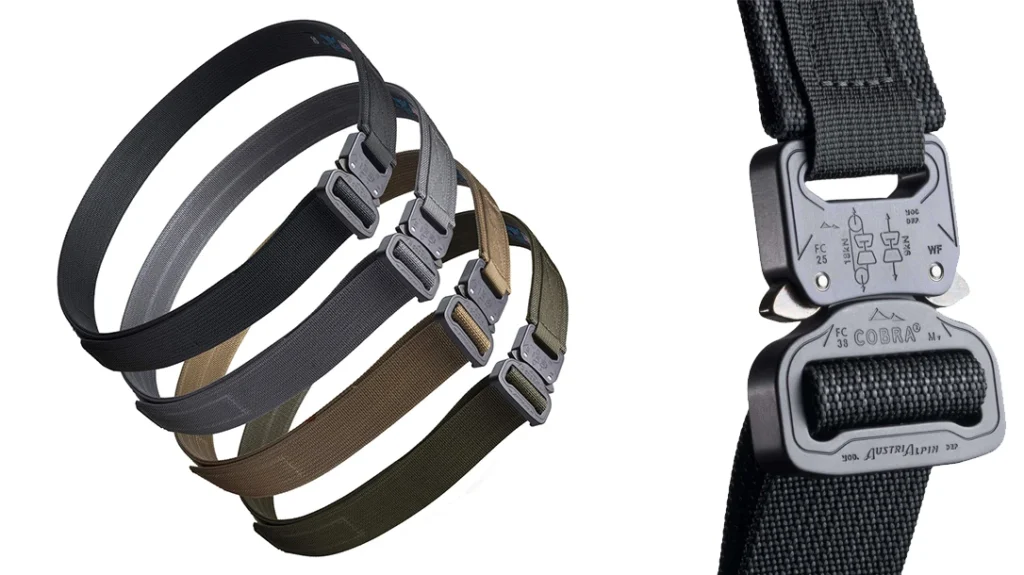
The Colt Night Commander rode on this belt like it was born there. The weight is dispersed across the waistline instead of pulling at a single point. Concealment stayed consistent because the holster never tilted or sagged.
Advertisement — Continue Reading Below
There is a flip side. With very light setups, especially a small revolver, the Blue Alpha can feel a little too stiff for casual wear. The gun almost “floats” because the belt does not flex or conform much. You may perceive more belt than gun.
If your everyday reality involves a medium pistol with a weapon-mounted light, perhaps a second magazine, and you value set-and-forget durability, this is your belt. The Hybrid 1.5 EDC retails for $78.97. This is strong value for a belt that can shoulder a serious loadout without complaint.
Kore Essentials Ratchet Belts
Kore wins on aesthetics and adjustability. I ran two of their systems: a 1.5-inch leather belt with an X3 buckle and their slim 1.25-inch EDC option with a nylon weave. Both share Kore’s micro-adjust ratchet track.
Advertisement — Continue Reading Below
Instead of jumping a full belt hole, you click in tiny increments. That translates to an exact fit, whether you are standing, seated, or wearing different base layers. The tradeoff is that you set the size each time you put it on. If you bounce between settings, you may find yourself tilting your head to read the clicks and wondering if yesterday’s lunch is to blame.

Both belts have a rigid inner that adds spine without feeling like a plank. At .200 inches thick, the Kore builds are a touch thicker than the Blue Alpha. However, they bend a bit more through the torso, which is a nice middle ground for concealment with normal clothes.
Advertisement — Continue Reading Below
They played well with the entire test battery of pistols. Holster stability was excellent for an IWB Commander and equally good with the smaller revolvers. The 1.25-inch belt, in particular, made “dress up” carry easy while still supporting a real gun. Likewise, the 1.5-inch leather option gave me a classic look with modern guts.
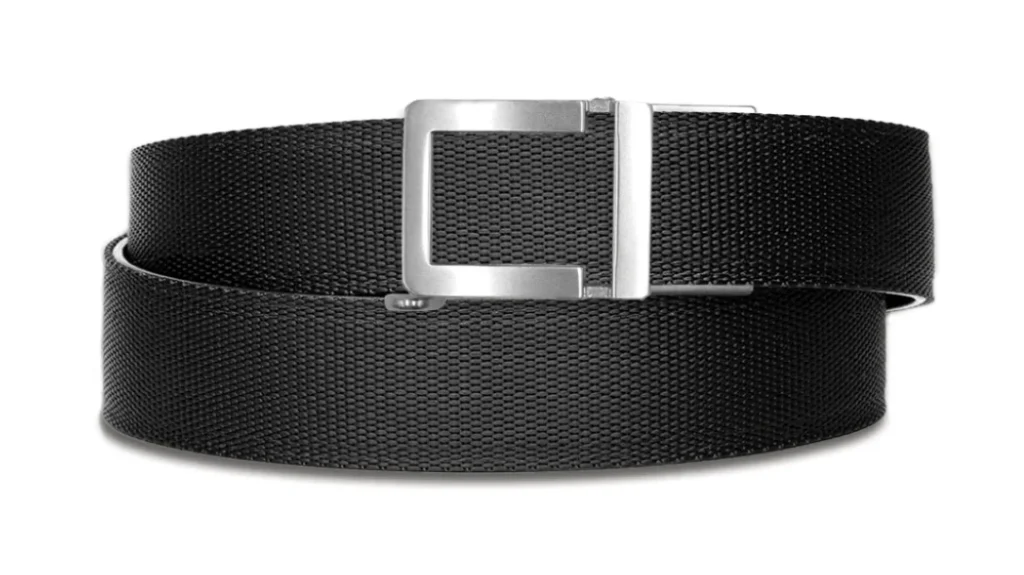
Kore is a great solution if you need one belt that works at the office and at the range. It looks sharp, adjusts in fine increments, and has enough internal structure for real carry.
Belt combinations as tested retail for $112.95.
Hunter Constantine Hybrid
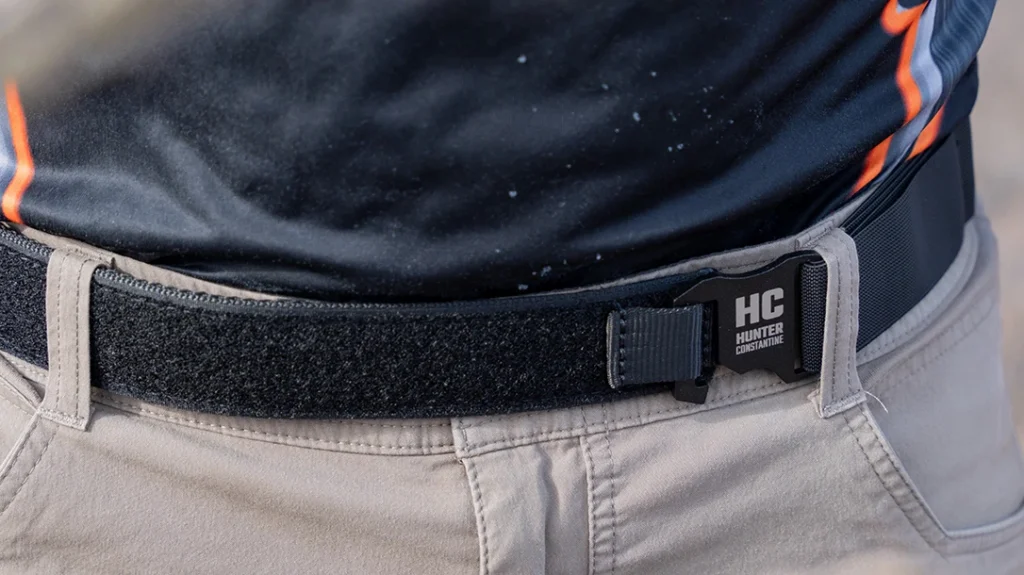
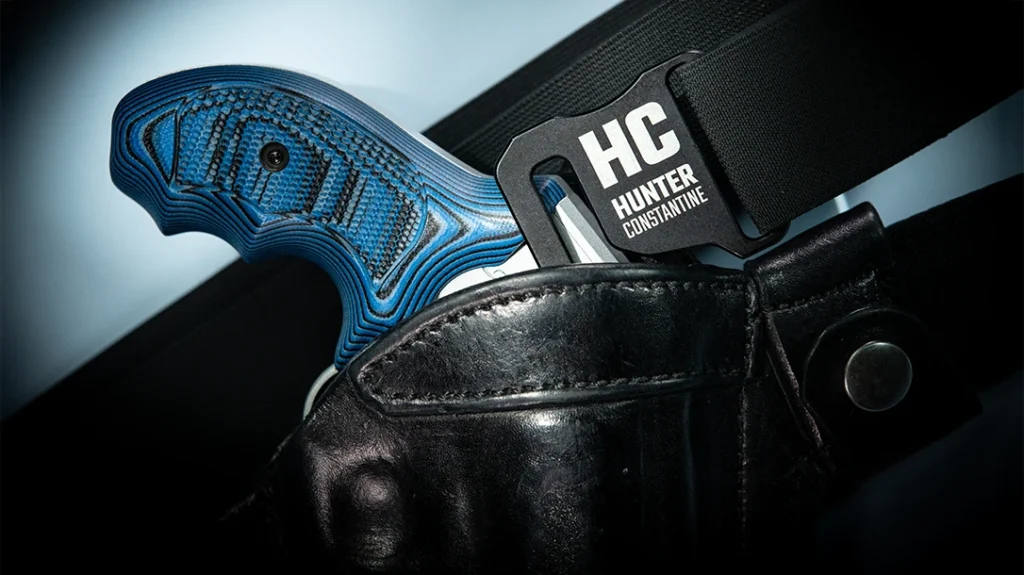
This was the surprise of the group and my personal favorite for all-day comfort. The Hunter Constantine is odd until you wear it. One half of the belt is a structured nylon-reinforced web that measures about .220 inches thick. The other half is nylon goring, which is a stretch textile.
Two low-profile aluminum clasps handle sizing and closure. The main clasp is around .100 inches thick and keeps the belt flat under shirts and pack straps. There is no mechanical ratchet. You set the diameter with one clasp, then close the loop with the other.
On the body, the stretch section breathes and moves with you, which is why this belt disappears during long days. I expected it to be too compliant for heavier rigs. It was not.
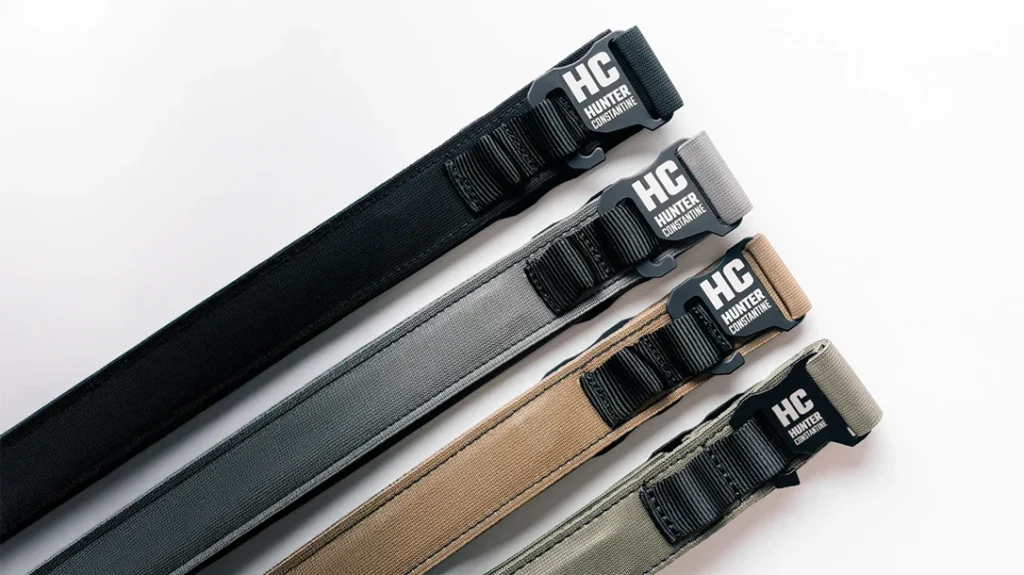
I carried a Colt Commander with an IWB holster and a support-side spare magazine. The package weighed in at about 3lb 8.2oz altogether. The Constantine handled it without rolling or letting the holster wander. With lighter guns, the belt felt perfect because the stretch buys you comfort without giving up stability.
If there is a question mark, it is longevity. Elastic components can relax with time. I cannot answer that yet. I can say that even if the goring softens down the line, I will likely buy another one because the comfort payoff is real.
The design is also very travel-friendly because the hardware is minimal. I did not get to run it through an airport, but the construction suggests fewer issues at detectors than a large steel buckle.
Retail is $115, and colors include black, brown, and gray.
First Manufacturing Leather Belt
There is still a place for a good leather belt. Mine is from First Manufacturing, and it has been with me for six years. It is not marketed as a gun belt. It is simply a well-made leather strap that measures about .125 inches thick and starts life reasonably rigid. However, it will soften with age. Saddle soap and conditioner help, but time wins.
Honesty time. This belt has held every holster I have owned and never truly failed. However, I was often pulling up my pants or fiddling with tension, especially when the activity changed throughout the day. Traditional holes force larger adjustment jumps. That means sometimes too tight at the wrong moment and too loose an hour later.
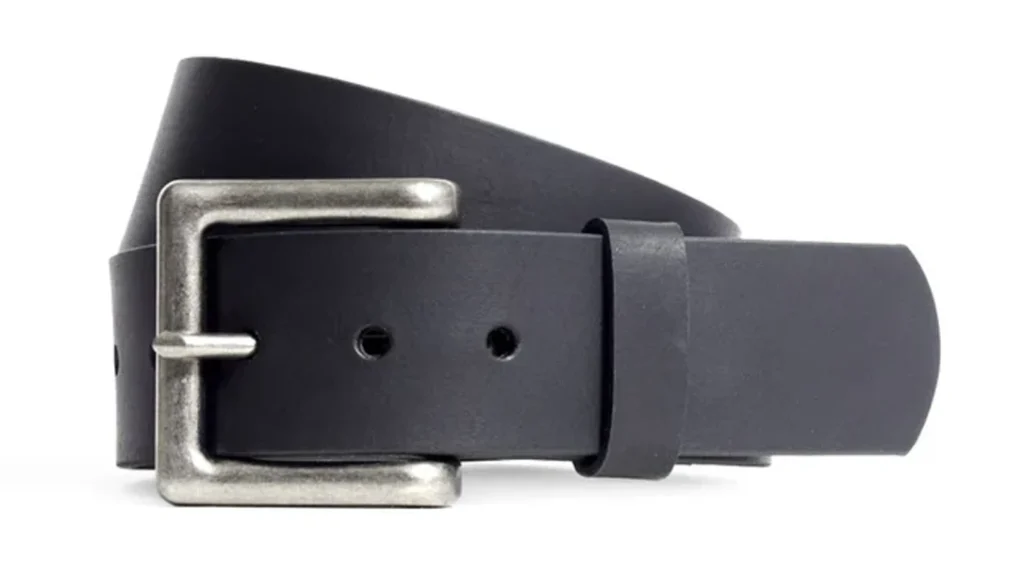
For lighter rigs, small revolvers, or a casual day around town, it still works. As mass goes up, performance flattens. That is not First Manufacturing’s fault. They make a solid belt for the money. It is a reminder to anyone still clinging to leather out of habit that modern materials do a better job at keeping a gun planted.
The 1.75-inch belt I used retails for $29.99.
Which Belt Fits Your Day
Here is the simplest way to choose. If you routinely carry a heavier pistol with a light and optic, and you add a spare magazine on the belt, pick the Blue Alpha. Its stiffness resists holster roll, keeps the draw angle consistent, and prevents the telltale sag that prints through a shirt.
If your life toggles between jeans and a collared shirt and you want micro-adjustments that track your day, the Kore is ideal. It dresses up easily, and the ratchet makes it easy to fine-tune for seated or standing work without loosening concealment.
If you value comfort above all and your day can stretch from errands to an impromptu hike, the Hunter Constantine is a joy to wear. It’s the only belt in this group I forgot I was wearing, and it still supported a legitimate carry setup.
If you insist on classic leather because it matches your wardrobe or you are just easing into EDC, the First Manufacturing belt will get the job done with lighter guns and conservative setups. Just recognize the limits and pay attention to tension throughout the day.
Holster clip compatibility deserves a quick note. Many clips are happiest on 1.5-inch belts, while narrow dress clips can work with 1.25-inch.
The Kore 1.25-inch played nicely with slim clips. The Blue Alpha and Kore 1.5-inch locked in most standard loops. Finally, the Hunter Constantine’s low-profile hardware avoided the hot spots some buckles can create under a waistband.
Pair the width and hardware to the clips you actually use, and you will avoid most fit headaches.
Comfort, Concealment, and Training
There are no free lunches in this space. Stiffer belts control the gun better, but can feel overbuilt when carrying only a snub-nosed revolver and a penlight. Softer or stretch belts feel great for twelve hours yet demand honest construction so they don’t collapse at the holster.
Ratchet systems give you micro-adjustment, but you must set the size each time. Hook-and-loop tails are quick to size, and they hold fast when they are built well. Classic holes are simple to live with, yet they lack granularity.
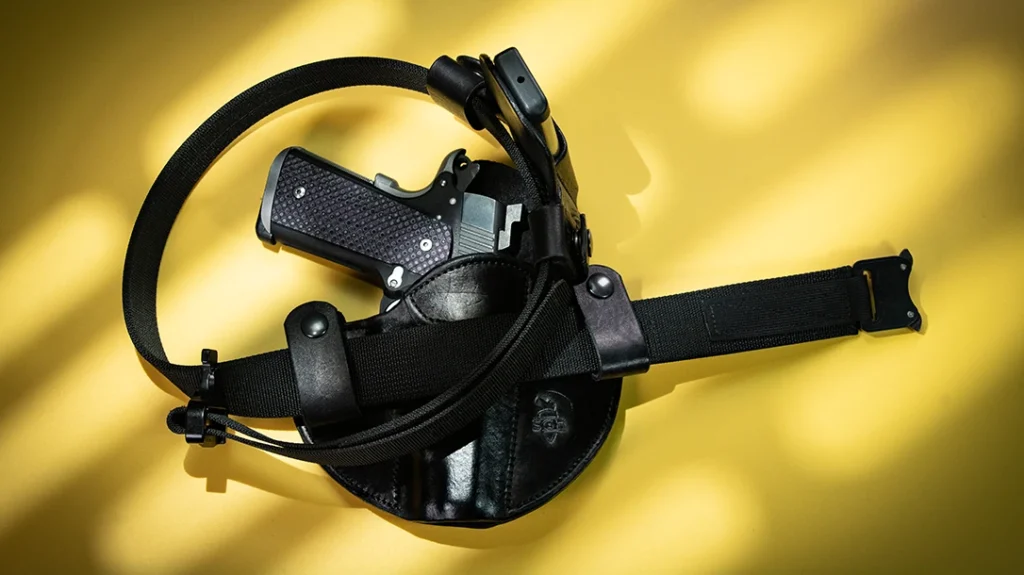
Match the belt to the day, then commit to the reps. Dry practice your draws, seated and standing. Run reloads with your actual belt and cover garments. Check whether your holster shifts under pressure from a car seat belt or a pack waistbelt.
Little things like that are where belts prove their worth. The first time you catch your shirt on a buckle corner while reholstering, you will wish you had tested it at home.
Last Notch
I went looking for a blowout winner and a few brands to bury. Instead, I found a set of tools that each shine for different reasons.
The Blue Alpha is the load-bearing champ that keeps a heavier system honest. Similarly, the Kore is the handsome workhorse that dials in perfectly and looks at home anywhere. The Hunter Constantine is the sleeper that redefines comfort while still doing real work. Finally, the First Manufacturing leather belt is the old friend that still has a place with lighter rigs, even if modern designs perform better under weight.
Whichever way you go, remember that none of this matters without training. Belts and holsters are there to support consistent, safe, and accurate gun handling. Put in the dry fire, take a class, and keep your fundamentals sharp. Skills are perishable. Gear is only as good as what you do with it.
Shoot safe.