I will break with literary tradition and answer this question in my opening section. Should you change your defensive ammunition to something with better penetration during winter months? Does the clothing worn by a potential attacker such as thick heavy winter coat or layers matter? The answer differs depending on your source of information.
Should You Have Seasonal Ammo?
Looking at it from a controlled ballistics review of what bullets do (under controlled tests) when penetrating barriers (including thick coats) the answer is “No.” As we will discuss under controlled testing there is very little difference in the depth of penetration after a defensive round penetrates a barrier (whether it is a car door, and interior wall, or thick clothing). This may seem counter intuitive at first. However, it is based on what happens to a hollow point round when contacting an interviewing barrier that it then penetrates.
Advertisement — Continue Reading Below
Looking at it from a ‘what could happen’ viewpoint and based on multiple personal stories that permeate gun owner conversations the answer could be a qualified “Yes.” Ballistics are rarely controlled in real life and many things can happen in the real world that would not happen on a testing range. Ballistic tests are usually performed using a known (measured bullet weight, velocity, distance, barrel length) rounds, shooting perpendicular (straight on) to a known barrier (specific set of clothes), and then into ballistic gel (simulating soft human tissue).
In The Real World
Real world shootings may vary any and all of these factors including gun fires, ammunition used, range, angle of impact, and what gets in the way. For instance, a round may hit someone wearing a heavy jacket at 100 yards, at a steep angle and impact a metal zipper altering the round’strajectory resulting in a miss.
The bottom line is there are very likely outcomes, but when it comes to ballistics almost anything, in some situations, may be possible. The question becomes are you wanting to adjust your carry ammunition on word of mouth, your personal experiences, or to be prepared for unlikely ballistic events? For some the answer may still be yes. But with any change in gear there are the perceived advantages and disadvantages.
Advertisement — Continue Reading Below
Evidence for Answering “No”
When the idea of needing special ammunition for thick cold weather self-defense has been put to the test multiple sources have found little to no evidence. These controlled ballistic tests look at the impact and depth of penetration of various rounds on ballistic gel after penetrating no clothing, light clothing, or thick clothing. Some tests have gone as far as presenting depths of clothing that would likely render the wearer immobile. In all cases in a controlled environment the depth of penetration was not significantly impacted by depth of clothing.
Differences do exist between calibers and types of rounds, but each round performed relatively similarly regardless of the clothing between it and the gel. In fact, in some cases the defensive rounds penetrated deeper when shooting through thicker clothes, presumably as the clothing initially retarded the flowering effect of the hollow point rounds. Additionally, more clothing generally resulted in more fabric also dragged into the wound channel. The author found similar results when shooting through modern car doors and interior sheet rock in previous tests. The door specifically often resulted in defensive rounds penetrating further and including shards of metal from the door compared to unobstructed shooting of the gel.
Advertisement — Continue Reading Below
Setting Up My Own Test

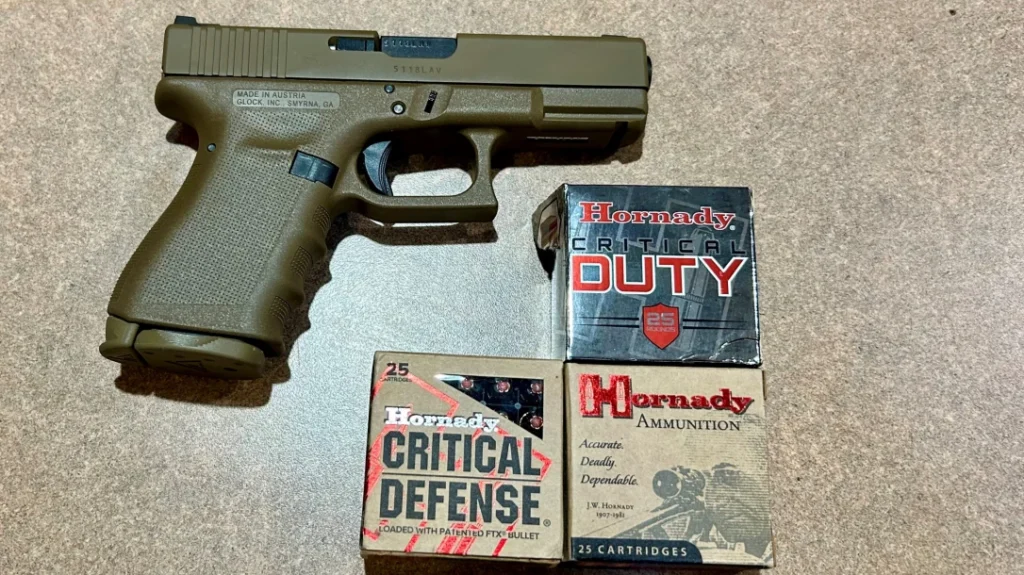
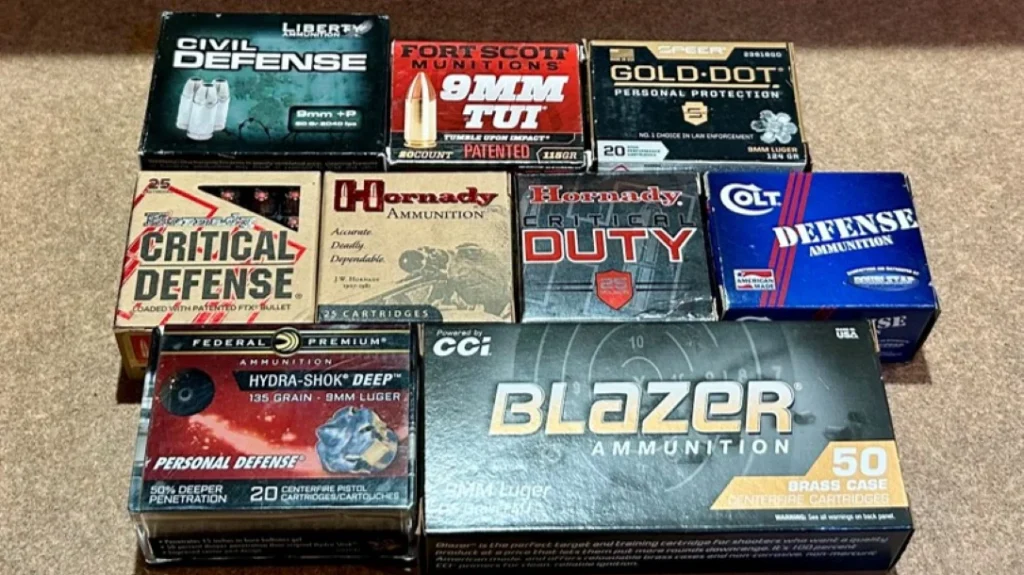
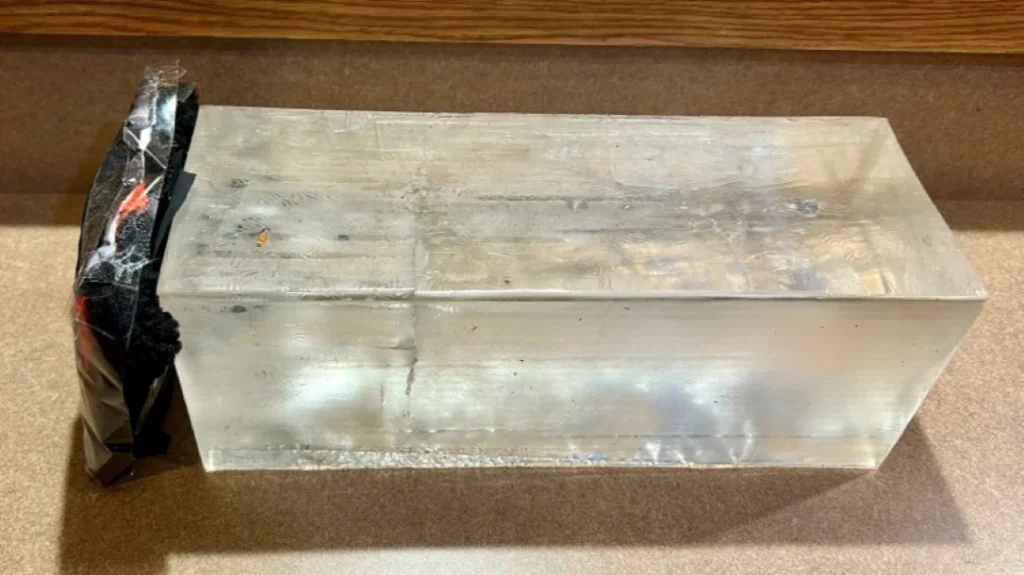
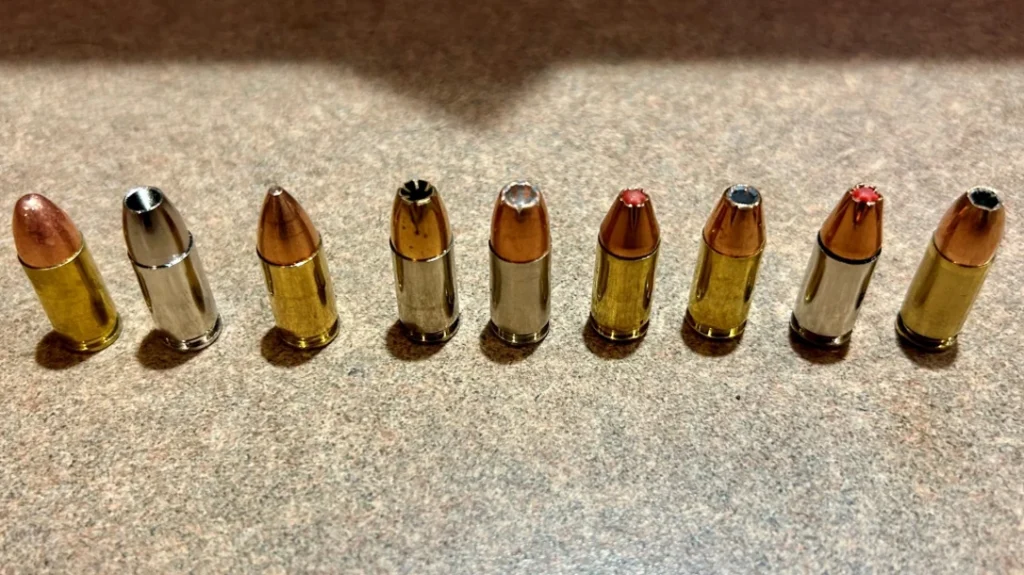
I conducted my own tests shooting 16” ballistic gel blocks with either a single layer of a t-shirt (summer: condition one) or 1” of layered jackets (winter: condition two). The winter clothing was acquired from Goodwill and included a quilted jacket, a Thinsulate jacket, a leather jacket, and a sweater. Various rounds were shot from a 9mm Glock 19 at 15 feet. Each round was fired multiple times into the two blocks (condition one and two). The results mirrored previous studies. The amount of penetration varied 1-5+” across different rounds (varying in bullet weight and velocity), but did not significantly differ when the same round was fired into the two different conditions (summer and winter). Additionally, all the 9mm rounds tested in either condition penetrated at least 12” into the ballistic gel.
Advertisement — Continue Reading Below
Based on these and previous tests there seems to be little evidence of the need to adjust caliber, bullet type, or velocity of rounds as the weather changes. There were fluctuations in penetration across rounds (not conditions), with a few rounds penetrating all 16 inches even in the winter clothing condition (effectively over penetrating). All the traditional hollow point rounds showed similar wound channels and depths (12 to 14 inches stopping in the gel).
Evidence for Answering “Yes”
Body armor has a history as long as the history of warfare. Throughout much of that time quilted or padded armor was a cheaper option used by many armies and cultures. The idea of wearing thick layers of densely packed cotton, linens, paper, or ropes did offer some protection from arrows or spears. However, generally most traditional armor quickly gave way with the advent of gunpower weapons. Though generally shooting heavier and slower rounds, military muskets introduced in the 16th century through rifles in the 19th century generally rendered such armor relatively useless. Yet, the stories of such primitive protections remain.
Advertisement — Continue Reading Below
I grew up with my father (a Korean War veteran) relating stories of how his .30-06 rounds shot from his M1 rifle wouldn’t penetrate the thick winter clothing of the Chinese troops during the early parts of the Korean War. The Chinese attacked in winter and wore thick quilted cold weather clothing. As I became a student of weapons and warfare, I came across examples of indigenous African warriors wearing thick clothing made of ropes to defeat English Martini-Henry rifles (Average muzzle velocity of 1350 feet per second (fps) with a 480-grain bullet). The Martini-Henry rifles bullet compares to a .30-06 fired from a M1 Garand (~150 grain, ~2500 fps) and a modern 9mm defensive round (~115 grain, ~1200 fps).
Personal Experiences
Even as I was talking in a local gun store about doing some of the ballistic testing for this article multiple people referred to what we call in the sciences as a “N of 1” case (untested personal experiences often related second hand). These stories generally involved police officers reporting 9mm rounds bouncing off heavily clothed individuals in the winter. When I went looking for detailed information or articles examining these factors, I generally came up empty, except foroccasional articles repeating similar stories without citations. I do not dispute something like this could happen. However, considering the situations related in many of these stories, including low lighting and long distances, I would suggest an alternate explanation. Many of these stories could be the result of a confused encounter where the rounds did not hit rather than bounced off heavy clothing.
Advertisement — Continue Reading Below
Thus, there are personal experiences and possibly some of them are true, though many may be just oft repeated tales. However, the danger of over penetration seems to be well supported, suggesting changing to ball ammunition or other rounds meant to over penetrate due to winter clothing is not recommended. Excess lost power of a round that does not stop in an attacker as well as potential danger of the round impacting something beyond the target are issues regardless of the clothing worn. Defensive rounds that specifically are designed to penetrate barriers and then expand may be called for in some situations. However if that is a potential concern, as the tests show such rounds are still unlikely to over penetrate why not carry them year-round?
Final Thoughts
I am a big believer for most people in not varying their defensive carry choices, falling into the “same gun, carried the same way” camp. To this I would add “same gun, carried the same way, with the same ammunition.” The better trained we are with our defensive gun, our method of carry, and the ammunition we would use, the less we leave ourselves open to issues with our gear. In a defensive situation I tend to rely on averages (ballistics, risks, situations, assailants, ranges) to guide my choices and training. It is not about covering every situation but making choices that cover the widest range of probabilities. As such I personally carry the same ammunition from hottest summer to coldest winter.