Jake Vibbert has won several national PRS championships. Observing as he shoots a stage is like watching a video in slow motion. His pace from position to position is almost leisurely. He’s so casual, in fact, that you wonder if he’s going to run out of time before he completes the course of fire. The rhythm of his shots has an even, almost musical cadence. The head games are in play.
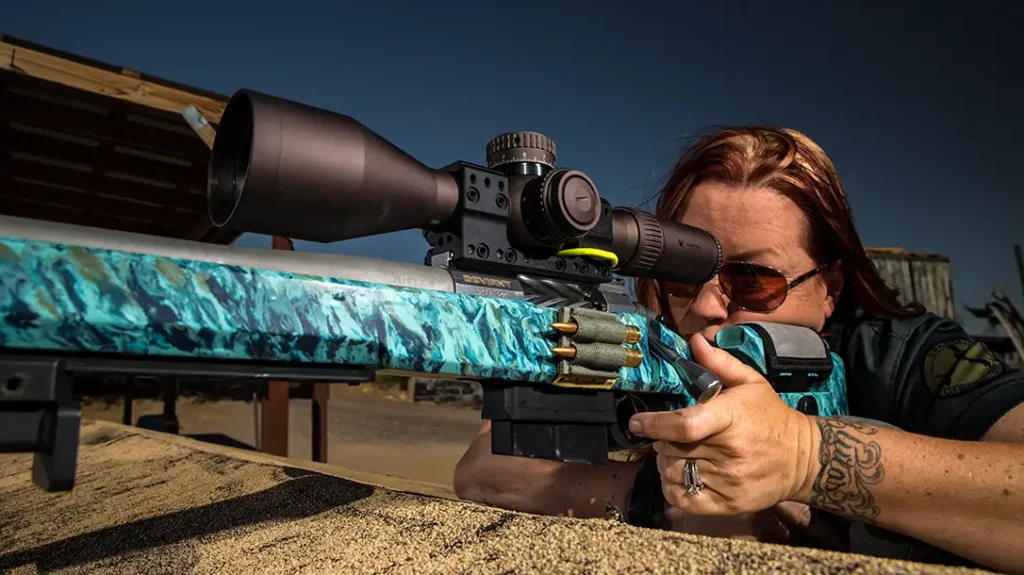
Head Games – Master the Mind
These were my thoughts while watching Vibbert clean yet another stage at the 2019 Rifles Only Brawl. We won’t even discuss my run on the same stage (I timed out). But when I have the opportunity, I watch shooters of Vibbert’s caliber because I know I’ll always learn something. I watch him in particular because he’s a fellow left-handed shooter. Top-tier competitors can teach you more than just the mechanics of shooting. Most enter competitions with a different attitude. For lack of a better term, let’s call it a winning mindset.
Advertisement — Continue Reading Below
Going For Gold
Lanny Bassham’s With Winning in Mind is a brilliant book about how to change your thinking in a competitive environment. Bassham, a small-bore shooter with loads of wins and titles to his name—including an Olympic silver medal in 1972 and an Olympic gold medal in 1976—wrote his book based on conversations and interviews with winners. Of all the books related to mindset, this one actually focuses on the shooting sports.
According to Bassham, somewhere around 90 percent of success at competitive shooting is mindset. In other words, you could have the best gear in the world, but if you’re not mentally prepared, you’ll find yourself lower on the podium than the top spot. Exactly how does one gain this mindset?
Have you ever known someone who focused only on their mistakes rather than their accomplishments? We’ve all known people like this, who talk endlessly about why they missed a target or what they forgot to do. Listen closely to see what they say about things they did right. More often than not, the good shots will be blown over in conversation in order to focus on the errors. The first step in allowing yourself to progress is to recognize a mistake, solve it, and then forget it.
Advertisement — Continue Reading Below
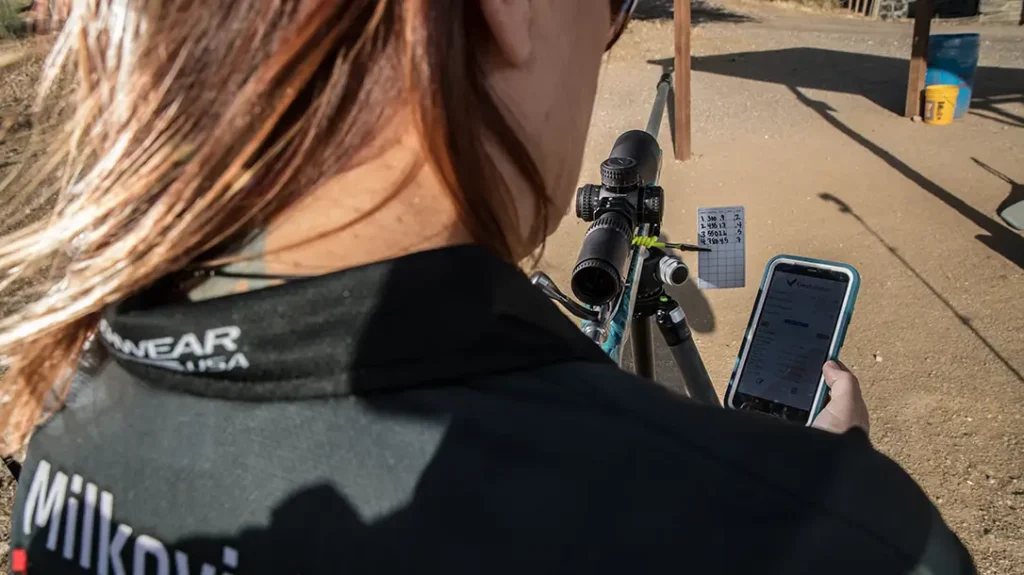
Focus on the Positives
Focus instead on the positives. What did you do correctly? Even a missed shot can be a winning moment—if you recognize the parts that went correctly. Perhaps you needed to hold a little more for the wind, but were stable and pressed the trigger without slapping. Congratulate yourself on the positives, and your likelihood of repeating those successes will increase. Recognizing mistakes, correcting them without berating yourself, and moving on will help you stop repeating the same mistakes in the future. Whether you’re succeeding or failing, you’re consciously noticing patterns and behaviors, which makes them more likely to happen in the future.
Setting appropriate goals for the end result you wish to see is the next important task. When thinking of goals, none is too large. The pitfall is setting a goal without having a plan to achieve the end result you want. Goals need to be specific, measurable, achievable, realistic, and have set timeframes for completion. For example, let’s say you’d like to win a local competition. Every competitor wishes to do the same. What is going to set you apart from the rest? How will you prepare? Just wishing you would win isn’t going to make it a reality.
Advertisement — Continue Reading Below
Manage Your Goals
Start with goals within that larger goal. Look at the areas where you are the weakest. Do you run out of time on stages? If so, identify why and start working on those areas in practice. If you aren’t sure why, have a friend film you on a few stages. If you practice a similar stage design every time you go to the range, film your first run every time, and compare your performances to identify areas for improvement.
Are you having difficulty identifying targets? Create an action plan to help you identify targets more quickly. Ask more experienced competitors how they’ve solved similar problems, and then actually try their suggestions. If they don’t work, try something else. Perhaps what will work best is a combination of ideas. Anyone can win a competition. Having the right plan to get there is key.
Advertisement — Continue Reading Below
Pushing Boundaries
When you go to the range to practice, do you practice the skills you’ve already perfected, or do you push yourself to improve in the areas where you need to get better? Starting a range session and closing out a range session with skills you’ve already honed will keep the mood positive. In between, work on the areas that need improvement. While doing so, identify what you did correctly and congratulate yourself. It’s OK to be your own champion and cheerleader.
Before any live fire, spend some time dry firing. For example, in this practice session, you’ve set aside time to practice moving through transitions on a barricade prop. Using everything you would normally use, with the exception of live ammunition, go through the motions with no set timeframe in mind. Practice dry firing until you feel relatively comfortable with the positions you’ve chosen. Add a par time and start over, but adjust your goal to complete the positions within that time. Once you’ve done so, add live fire and start over. And don’t be afraid to miss! If you miss, quickly identify why you missed (a bad wind call, yanking the trigger, forgetting to breathe, rushing a shot, etc.), make the correction, and move on.

Advertisement — Continue Reading Below
Train at Home
If you aren’t able to get to the range, create a practice area in your home, garage or yard and dry fire. Having a solid foundation will strengthen those neural pathways and help when you can get to the range.h
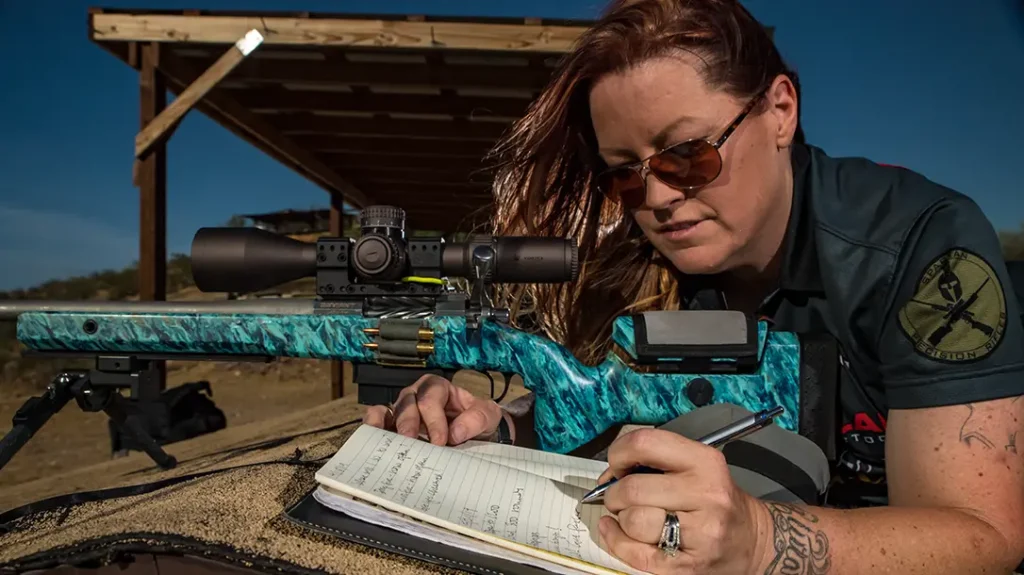
Our brains are tricky to figure out. We can talk ourselves out of feeling confident in a second. If you find yourself doubting your abilities, start writing out your goals by hand. Write them out as if they’ve already happened. Then, in detail, write out the steps you took to get there. Don’t just say you want to win a match. Write out that you did, in fact, win a match. Write out what match you won, and include the date.
Document what you did to prepare to win that match with as much detail as possible, including things like how much practice time you’ve devoted, what you worked on, and any other influences that might be beneficial, such as exercise and diet. The more positive you can be in your goal setting, the more likely you are to accomplish the tasks you set for yourself. If performing consistently well is 90 percent mental, then these exercises are just as important as dry and live fire.
Advertisement — Continue Reading Below
Talented Enough?
Another book to read is called The Talent Code by Daniel Coyle. Essentially, Coyle states that no one is born with talent. All talent is developed. “Overnight sensations” have been working in the background to excel for years and sometimes decades. All of the practice done on a smaller scale (dry fire, visualizing stages, and more) helps to create the platform to perform well on a larger scale at competitions, exhibitions, and other events.
What happens if you’re doing all these steps and have found some success, but are now finding yourself dreading going to the range or practicing? Some people will push themselves through and keep on going. Other people need a break. With any practice done to excess, burnout is always possible.
Recognize it for what it is and take a short break. Perhaps give yourself a weekend to relax and not think about competing or shooting. There’s a good chance you’ll come back with renewed vigor and maybe even have solutions to problem areas that came to you when you were least expecting to find an answer. Most of all, remember that for most of us, this is a hobby and not a full-time job.

Head Games
Focus on having a winning mindset in all your practice and goal setting—the rest will follow. Any successful competitive shooter will tell you that they are constantly improving and practicing toward new goals. You cannot have consistent success without practice. Tangible written goals assist in your success. Bassham said, “The more we think about, talk about, and write about something happening, we improve the probability of that thing happening.” With that in mind, be consumed with the idea of your successes and think about the ways to turn those dreams into reality.
WHY OUR ARTICLES/REVIEWS DO NOT HAVE AFFILIATE LINKS
Affiliate links create a financial incentive for writers to promote certain products, which can lead to biased recommendations. This blurs the line between genuine advice and marketing, reducing trust in the content.