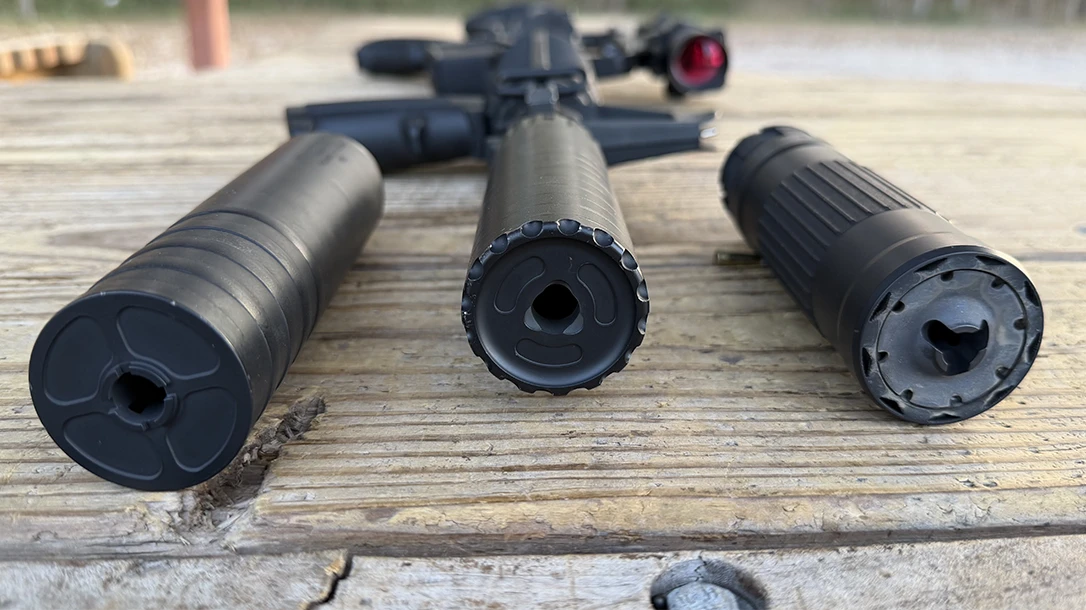
Silencers. Suppressors. Cans. Moderators–they’ve got many names. Whether technical or slang, silencers also carry a lot of myths and lore. Their biggest one, of course, is their being “Hollywood quiet” or only being assassins’ tools.
Leave those myths for the movies. In the real world, these shooting aids are far more useful for today’s diverse array of shooters instead of the fictional James Bond types.
Roles Of Silencers
It’s true that silencers primarily reduce noise. Besides dampening harmful sound levels, silencers also elevate the shooting experience and make it smoother. Without getting into literal rocket science, since silencers trap expanding gasses and vent them at a much slower rate, they modify recoil impulse to the benefit of the shooter and help potentially “pacify” guns. Though this is a byproduct of containing the muzzle blast and keeping the sound lower, this pacification is especially noticeable on lightweight guns that otherwise feel jumpy.
Advertisement — Continue Reading Below
Cans are conceptually rather simple. They amount to nothing more than metal cylinders that attach to the end of a firearm’s muzzle for the sole purpose of trapping the expanding gasses that push bullets out of bores. Expanding gasses, after all, are what makes all gunshots loud. These fast-moving, high pressure gasses create loud sounds due to the fact that they’re displacing air molecules extremely quickly. Car mufflers work off the same concept. Have you ever heard a car with straight pipes [no muffler]? It’s loud.
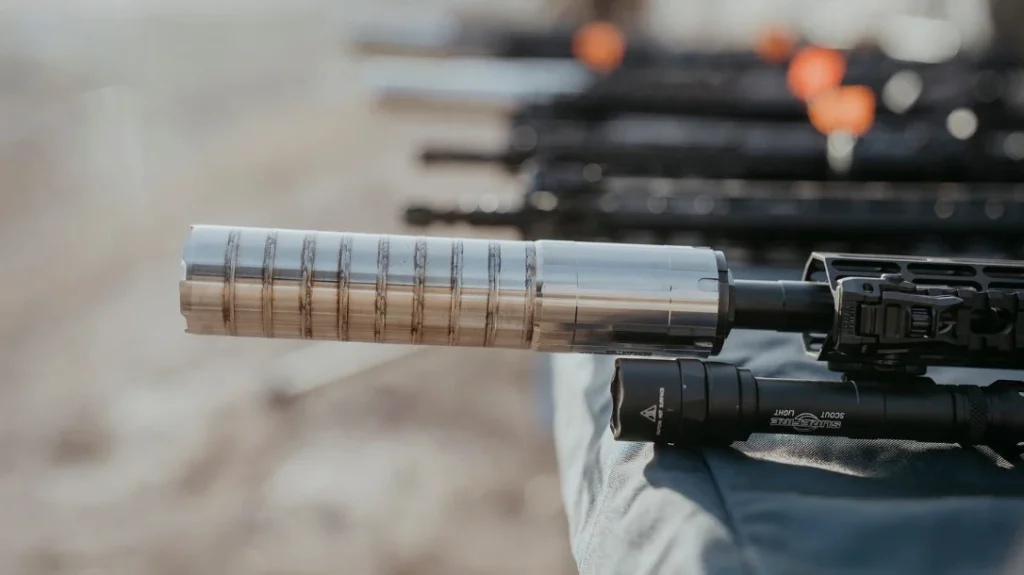
In order to trap and reduce noise correctly, silencers need to be manufactured from sturdy metals that can withstand both the high heat and extreme gas pressures they’re subjected to. Their materials can range from lightweight titanium, to sturdy grades of stainless steel and next-generation nickel-based superalloys like Haynes 282 or Inconel.
Advertisement — Continue Reading Below
Baffle Stacks Vs Low Backpressure
The topic of sound suppression in firearms can fill entire books and get really into the weeds. But this “101” article is intended to give the beginner a reasonable overview into the suppressor universe by covering the basics.
Don’t forget, silencers have been in use and in existence for over 100 years.
I’ve already mentioned that silencers are actually very straightforward because they just trap and redirect rapidly expanding gasses. To do so, silencers of all types have an arrangement of internal chambers that fill up with gasses to slow down their flow. These internal circular chambers are known as baffles, and they typically stack in series. Baffle suppressors are proven and are generally considered to be the quietest type of suppressor. Depending on the design, baffle stacks are either welded in place or can be removed as a sub-component for cleaning and servicing.
Advertisement — Continue Reading Below
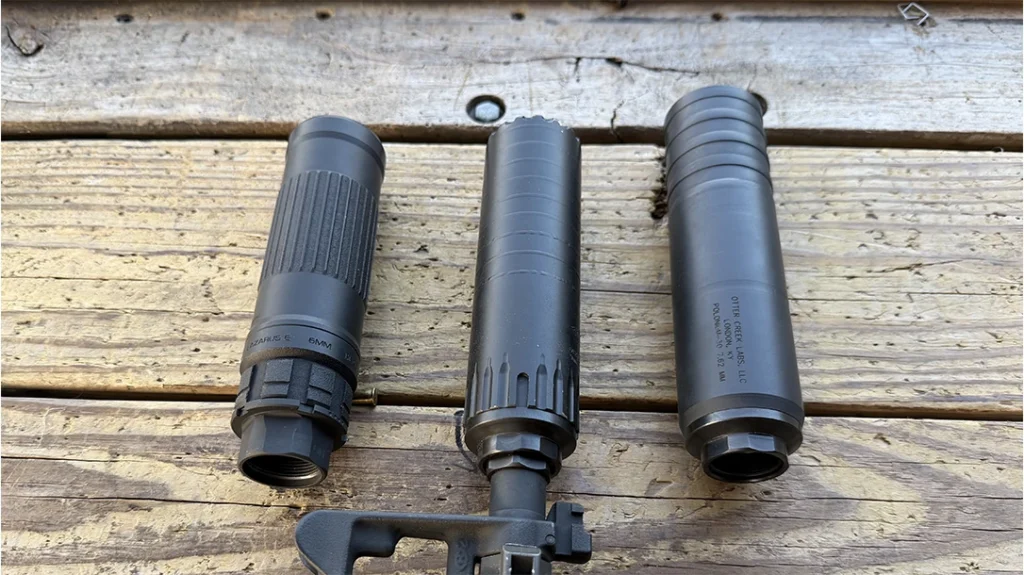
Thanks to the advent of additive manufacturing technologies (metal 3D printing), low back pressure silencers are now another popular option. Instead of having a traditional baffle stack, low back pressure units have maze-like ducts and tunnels that twist about and capture gas in order to vent them forward and out. Their goal is to reduce the backpressure and excess gas that blow back into the breech and the shooter’s face that typically happens as a result of conventional baffle stack designs. Like conventional cans, some low backpressure models also have removable “stacks,” but they’re referred to as cores.
Comparing conventional silencers versus low backpressure units, the main trade-offs generally revolve around cost, noise reduction levels and backpressures, of course. Low backpressure models tend to be more expensive due to their sophisticated manufacturing techniques. On the other hand, conventional silencers are most cost-friendly [and quieter]. Their downside is the excess gas that gets blown back towards the receiver.
Advertisement — Continue Reading Below
Mission Dictates The Material
In the introduction to this article, I also mentioned how different silencers are made with different materials, depending on their purpose.
One end of the silencer spectrum has rimfire and lightweight hunting models made from materials like titanium. Such units are built for slower rates of fire and/or lower pressure rimfire ammunition. Their construction makes them lightweight. The other extreme are hard-use suppressors made of heavier steels or superalloys. Besides being heavier, some of these models can withstand fully-automatic bursts and/or high pressure rifle cartridges.
Advertisement — Continue Reading Below
The superalloys that are present in silencer additive manufacturing made their way from the aerospace world. These specialized metals have properties that give them excellent resistance to high heat and pressures within jet turbine propulsion systems. And what is a silencer but a regulator of extremely hot gasses and high pressures?
Similar, in order to manage different pressures, silencers also include barrel length restrictions for safety reasons. You wouldn’t put a lightweight titanium hunting model on a short-barreled .308 machinegun. The volume and pressure would burst the silencer.
Mount Up
All those fancy mentals, sophisticated 3-D printed venting schemes or rock-solid baffle stacks are worthless without a way to securely attach them to the host firearm. Most silencers and their attachment accessories rely on threads to connect.
Advertisement — Continue Reading Below
In the silencer world, there are three important dimensions to keep in mind:
- ½ x 28 threads per inch (TPI): common for rimfire, pistol and smaller caliber centerfire firearms
- ⅝ x 24 TPI: commonly found on larger caliber or thicker barrels
- 1.375 (1 ⅜ ) x 24 TPI: HUB* dimensions
Going through a comprehensive description of all available mounts warrants its own separate article–again, welcome to the silencer rabbit hole. To keep things simple, the most basic models screw-in directly to the gun’s threaded barrel, no different than a muzzle brake or flash hider. Direct thread units are commonplace for pistol or rimfire silencers. Many standard hunting rifles also follow this approach.
However, most heavy-duty or hard-use silencers forgo direct threading because of the risk of cross-threading or concentricity issues. (Having a bad connection between a host firearm and a silencer can lead to a baffle strike, which can be dangerous and costly). Not to mention, removal is more practical off mount that also doubles as a brake or flash hider.
It’s why many of the established silencer brands and models have always had their own mounts. Two longtime examples would be Surefire’s SOCOM and classic HK Tri-Lug pattern. It’s commonplace for most brands to have their own ½ x 28 or ⅝ x 24 flash hider/muzzle brake/mounting adapters that are directly compatible with their own silencers.
The HUB Era
The problem with brand-specific formats is that you’re locked-into their respective system. Depending on the end user, it may not be an actual “problem.” However, for many private individuals, it does limit how they can use their silencers. Keep in mind, you can’t just buy or return these things over the counter like other accessories.
This is where “HUB” compatible silencers come in. Brand-dedicated mounts haven’t gone completely away. Instead, they’re evolving–alongside silencers themselves. If you’ve looked at ads, product pages or sales sheets lately, you’ve probably noticed the HUB acronym.
“HUB” simply refers to the silencer itself having a rear end with 1 ⅜ x 24 TPI threads. This universal thread dimension allows for a wide degree of adapters to be screwed-in to the rear of the unit. Think of M-LOK, but for silencers.
HUB Adapters: Xeno, Plan-B & Beyond
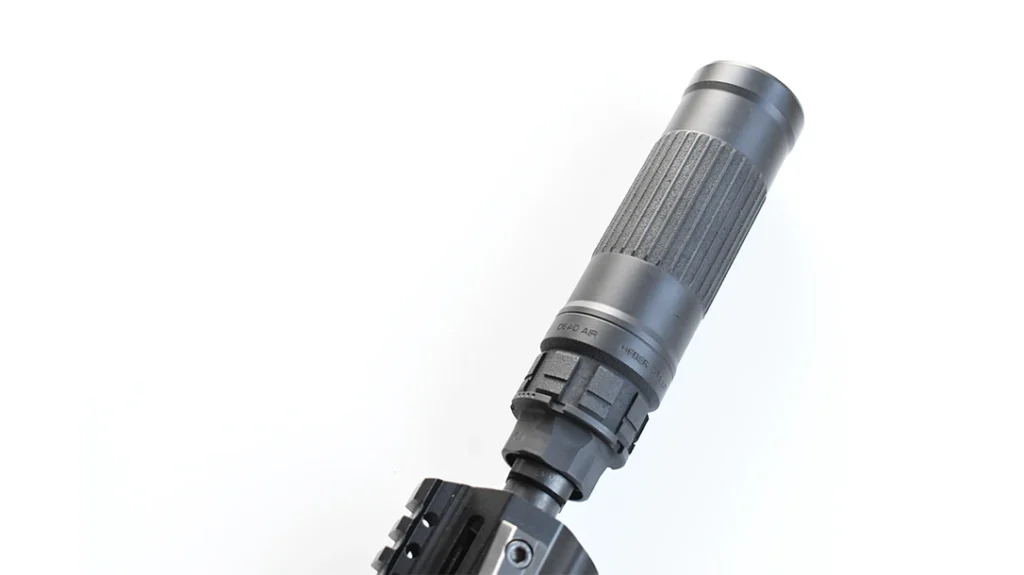
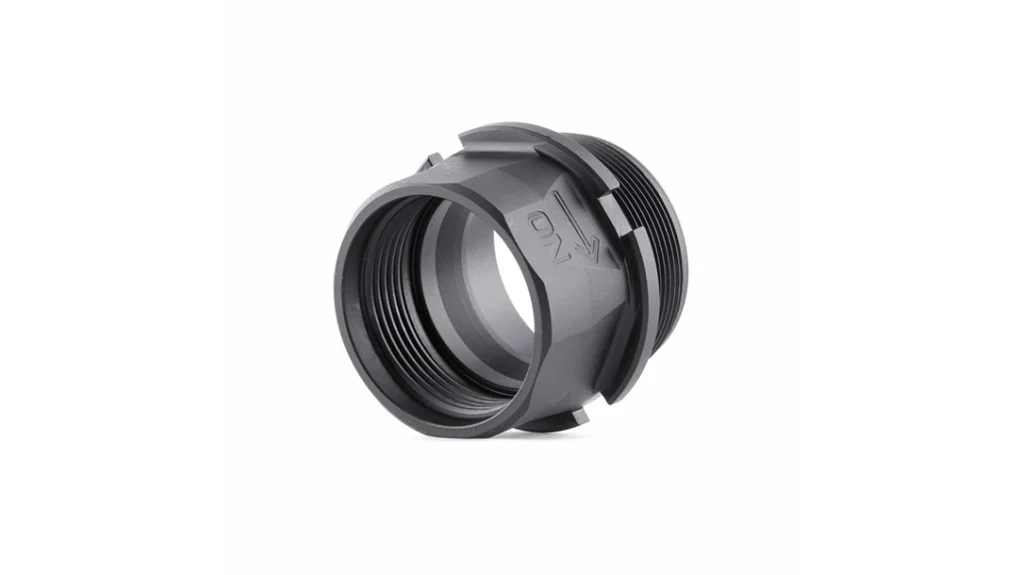
My 12.5-inch AR Pistol serves as a suppressor host to my Dead Air Lazarus 6, a modern 6 mm low backpressure HUB compatible unit. By default, the Lazarus 6 includes Dead Air’s Xeno mount. There’s two parts to the Xeno: the flash-hider that connects to the muzzle and the double-ended adapter that wrenches onto the Lazarus 6 rear HUB threads. This adapter has the requisite HUB-spec threads in addition to Xeno-specific threads. It’s the key to connecting the silencer to its rifle.
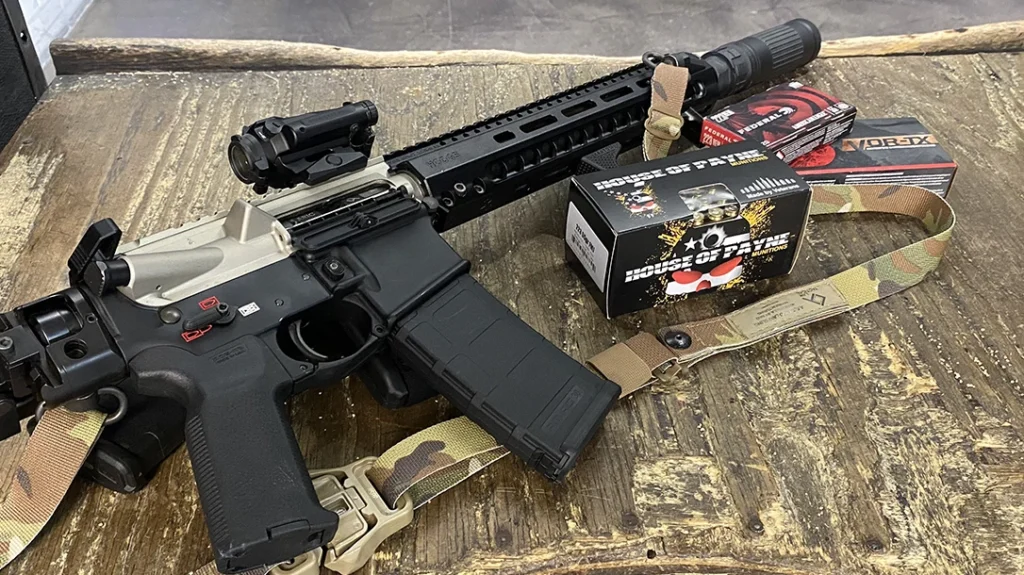
Thanks to this setup, if I wanted to use the Lazarus 6 on a different AR, I wouldn’t have to do much. I’d just screw another Xeno brake or flash hider and I’d be set. It would work for any other rifles, as long as they’re up to 6mm in caliber.
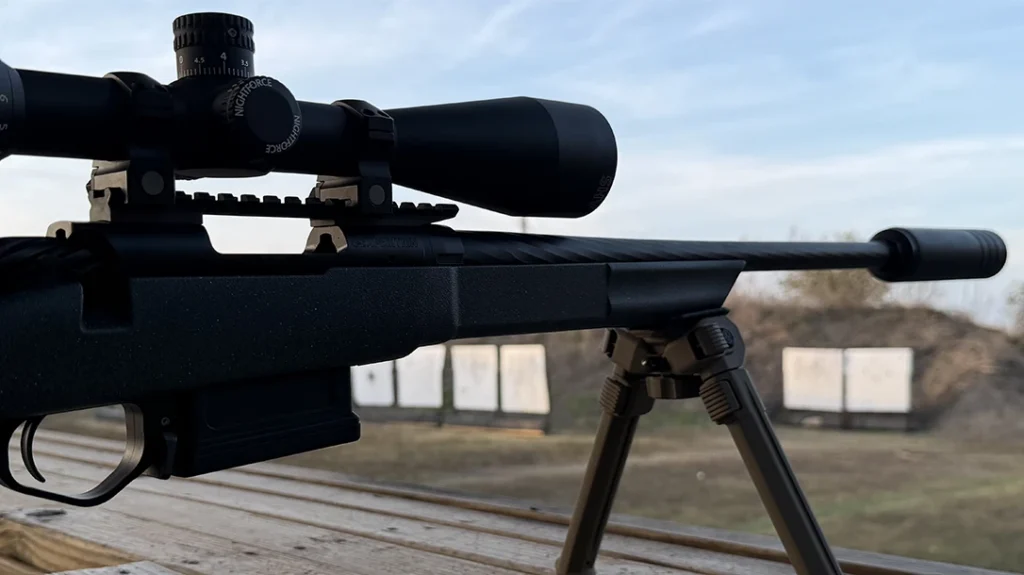
I use the Xeno as an example because it’s what I have, but there’s other HUB friendly formats. The Rearden/Plan-B is another great example. The Otter Creek Labs Polonium 30 suppressor that I’m currently reviewing is another HUB-friendly model. At the range, we shot through my .308 Winchester Taurus Expedition bolt-action rifle that was equipped with a Comstock Plan-B muzzle brake. As soon as I was done shooting, we mounted the same silencer to a 5.56mm Colt 727-inspired retro build and started shooting with it. Thanks to the HUB system and modern mounting patterns like Xeno or Plan-B, swapping suppressors is no longer a big deal.
Life With Cans
Hopefully the information contained within this article helps the new silencer consumer to gain some basic understanding of silencers, how they work and how they mount. Shooting with silencers can really make things more enjoyable and pleasant by cutting down on noxious blasts and reducing the sound. Personally, shooting suppressed bolt-action rifles was the straw that broke the camel’s back and got me interested in the topic. After a lifetime of putting up with blasts and jumpy guns, they really do change the experience for the better.
Just remember, cans get and stay extremely hot. Mind yourself to avoid burns.
WHY OUR ARTICLES/REVIEWS DO NOT HAVE AFFILIATE LINKS
Affiliate links create a financial incentive for writers to promote certain products, which can lead to biased recommendations. This blurs the line between genuine advice and marketing, reducing trust in the content.