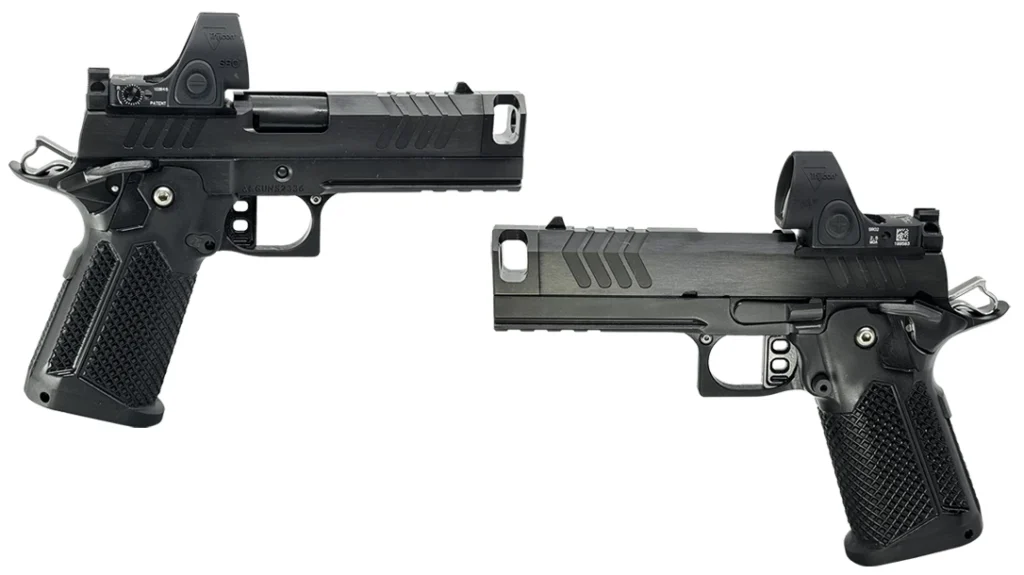
Unless you have been living under a particularly wide, heavy rock, the 2011 has become one of the most dominant handgun platforms in modern shooting culture. It is the natural evolution of the 1911. Some companies take the platform to the next level, like Akai Custom Guns and its Ripsaw 2011.
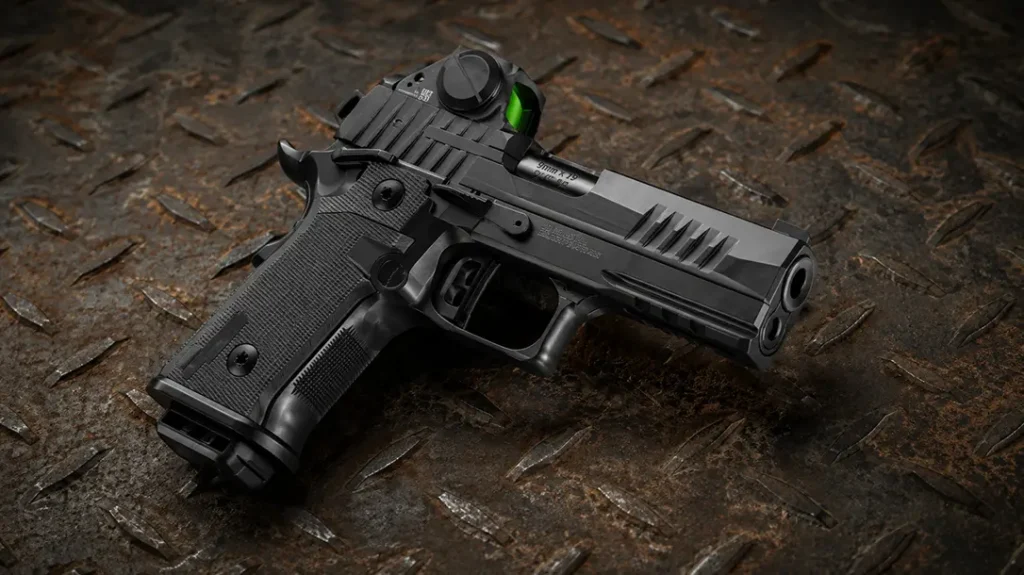
The Akai Custom Ripsaw 2011
The 2011 is a design that keeps Browning’s single-action trigger and ergonomics while widening the grip frame to accept a double-stack magazine. That change alone brought capacity into parity with modern service pistols. But the more important departure is conceptual rather than dimensional. The modern 2011 is built around the 9mm cartridge from the outset, not retrofitted to accept it.
The 9mm has over a century of service behind it. A proven balance of recoil control, terminal performance, availability, and mechanical efficiency. Browning himself recognized that balance when he designed the Hi-Power around it. The 2011 simply carries that thinking forward using the 1911’s trigger geometry, grip angle, and manual of arms as the foundation.
Advertisement — Continue Reading Below
The 2011 platform did not appear in a single year. It emerged gradually through competitive shooting in the late twentieth century. Builders searched for ways to combine speed, shootability, and capacity in a single action pistol.
Early wide-body 1911 frames began to show up in USPSA and IPSC. Builders like Strayer Tripp International (STI) refined the idea into something repeatable and reliable. Over time, what started as a competition solution became a legitimate service and defensive architecture.
Advertisement — Continue Reading Below
The name “2011” eventually became shorthand for a family of pistols that combine classic mechanics with modern performance.
Within that early world of builders was Shay Akai.
Shay Akai
Akai Custom Guns developed a reputation in the late 2000s and early 2010s for competition pistols. They were built with exceptional attention to fit, timing, and feel. His pistols were known for smooth slide travel, thoughtful ergonomics, and reliable function in a world where reliability is never optional.
Advertisement — Continue Reading Below
While Shay himself has remained relatively quiet publicly, his pistols circulate in collector and competitor circles with a reputation that has only grown over time. He is one of the builders who helped shape what the early 2011 could be.
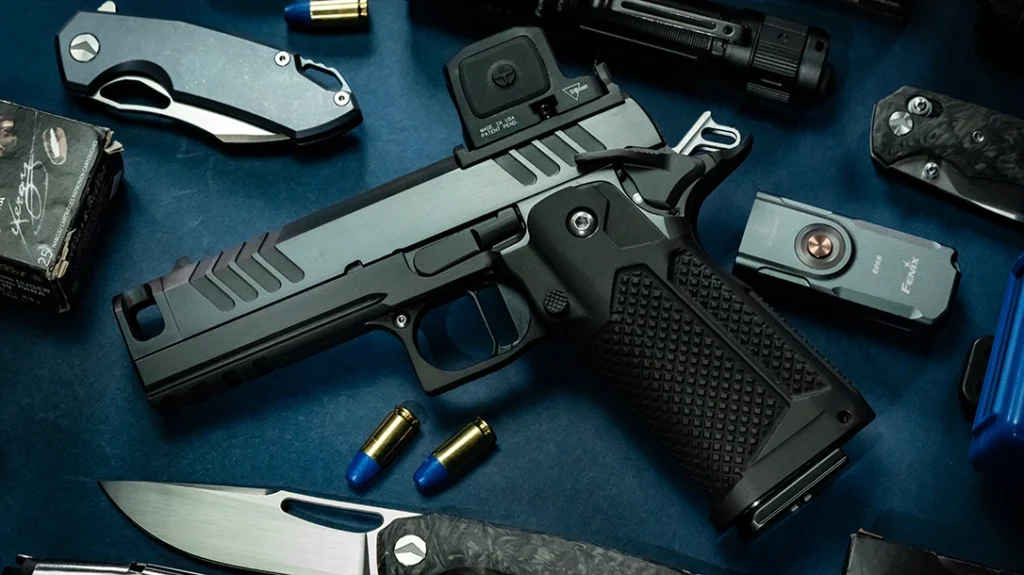
For several years, I have wanted time behind one of his pistols, not as a collector but as a shooter. I wanted to understand what his choices looked like when filtered through modern carry and defensive thinking. I finally had that opportunity with a 4-inch Ripsaw equipped with a compensator, a configuration Shay considers his ideal concealed carry 2011.
Advertisement — Continue Reading Below
The Ripsaw 2011
The Ripsaw is not a competition pistol that happens to be carried. It is a carry pistol built by someone who understands racing pistols.
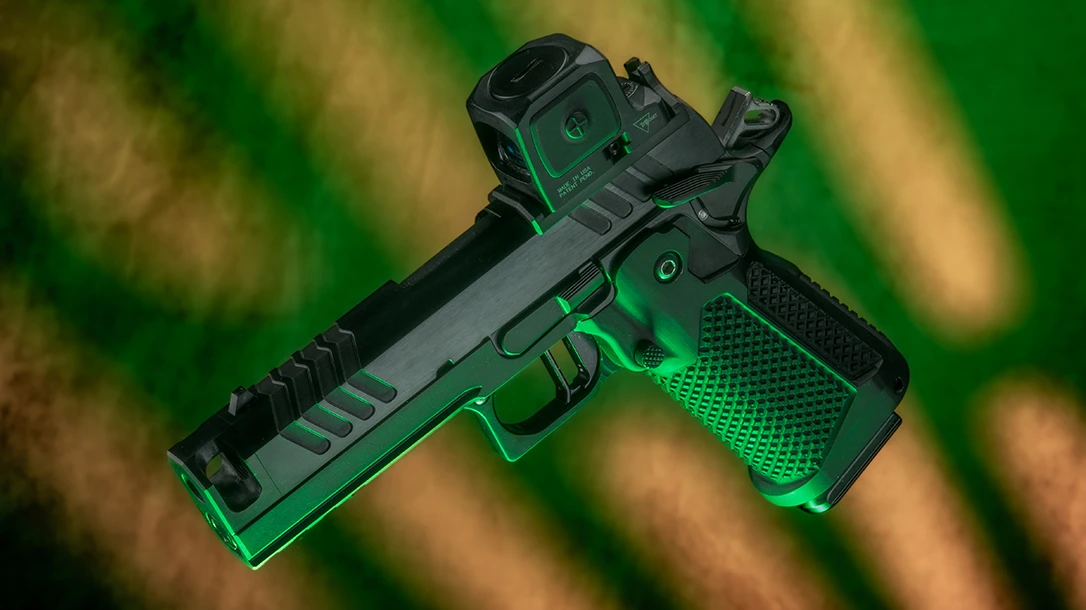
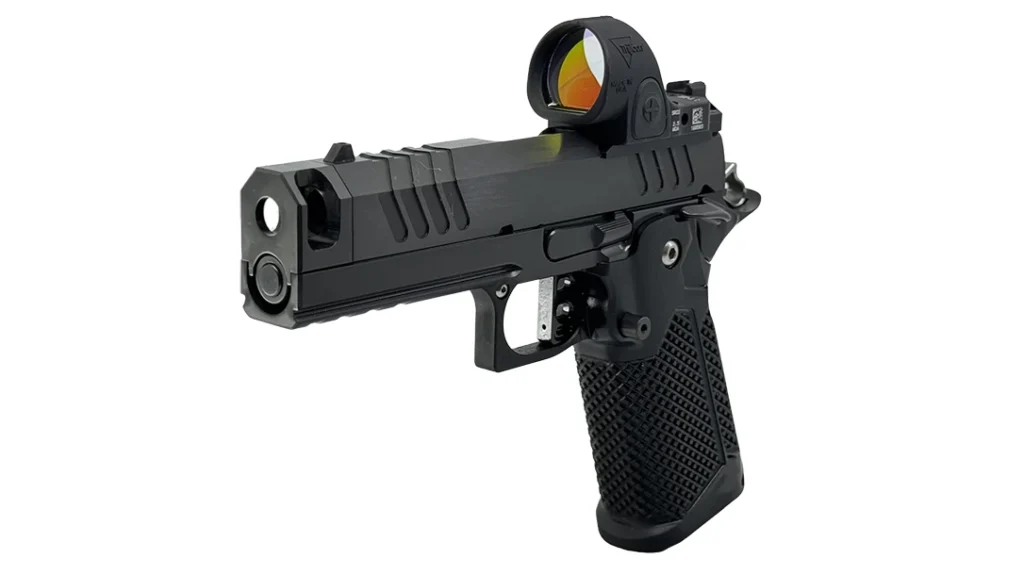
The frame and grip module are aluminum, and the slide is steel. The compensator directs gas almost a full 180 degrees upward and out from the muzzle. Correspondingly, the recoil spring is light, which works in concert with the compensator to reduce perceived recoil and return the dot quickly.
Advertisement — Continue Reading Below
The entire pistol, as configured, weighs 2 pounds 7.4 ounces. This is light for a full-sized handgun and very comfortable inside the waistband. After carrying a steel 1911 for months, the difference is noticeable in the best way.
The philosophy behind the gun is simple. Carry something light enough to live with every day but capable enough to trust completely. It is a pistol designed around confidence rather than compromise.
Optics & Controls
This pistol was configured for Trijicon’s RCR, their enclosed emitter pistol optic that uses the RMR footprint. The RCR uses a patented screw design that captures the optic and prevents shear forces on the mounting screws. It shares the same deck height as the RMR, which means suppressor height sights co-witness exactly where they should. Akai’s plate system maximizes slide real estate and positions the optic correctly without sacrificing rear iron visibility.
Advertisement — Continue Reading Below
The front sight is a Glock-style screw post, which means replacing it is trivial. The aftermarket is enormous, and you can tailor the sight picture easily.
The hammer and trigger are skeletonized. Detents are tuned. The thumb safeties are extended. The magazine release is slightly taller than standard. There is a slim magwell built into the grip module that makes reloads feel like a race gun while remaining compact enough for concealed carry. The grip safety is deleted, leaving only a manual thumb safety. I agree with this choice entirely. For a concealed carry pistol, simplicity and consistency matter.
The grip texture is matte and aggressive without being abrasive. Palm scallops increase control without increasing discomfort. It is one of those designs that looks subtle until you shoot it.
Running the Ripsaw 2011
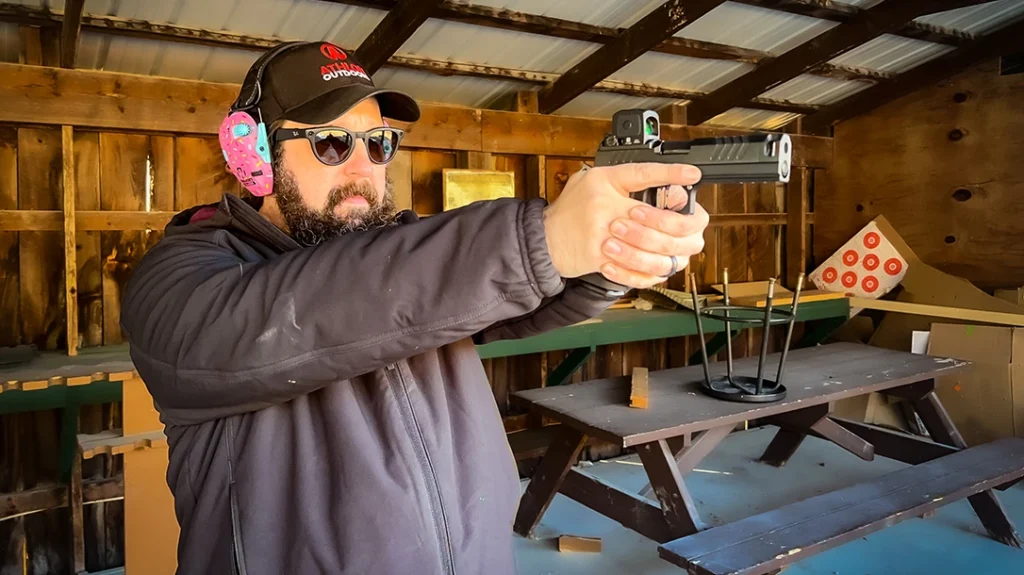
I ran Akai stock mags, which are Staccato-branded magazines, which are factory Check Mate magazines, and the gun ran extremely well. It feels eager. The slide cycles fast but butter smooth, and the dot tracks cleanly. The RCR adds a bit of mass, which actually complements the carry-oriented nature of the gun by adding stability without slowing the cycle.
I chronographed a wide variety of ammunition using a Garmin Xero.
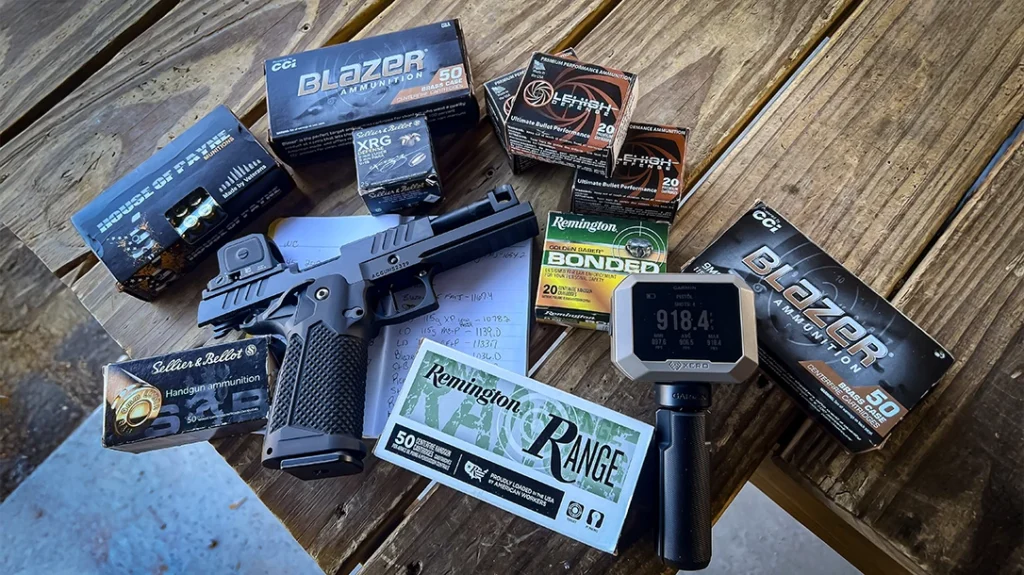
| Sellier and Bellot 100 grain XRG | 1334.2 fps |
| Blazer Brass 115-grain FMJ | 1167.4 fps |
| Lehigh Defense 115-grain XP Low Recoil | 1078.2 fps |
| Lehigh Defense 115-grain ME+P | 1139.0 fps |
| Lehigh Defense 115-grain CF+P | 1133.7 fps |
| Blazer Brass 124 grain FMJ | 1036.0 fps |
| Sellier and Bellot 124-grain FMJ | 1058.9 fps |
| Remington 124-grain FMJ | 1084.0 fps |
| Remington 147-grain BJHP | 980.6 fps |
| HOP Munitions 147-grain Poly | 906.6 fps |
Akai’s Accuracy
My standard test protocol is paper at 21 feet, an 8-inch steel plate at 50 feet, and a USPSA steel plate between 50 and 100 yards. This session included an 82-yard plate.
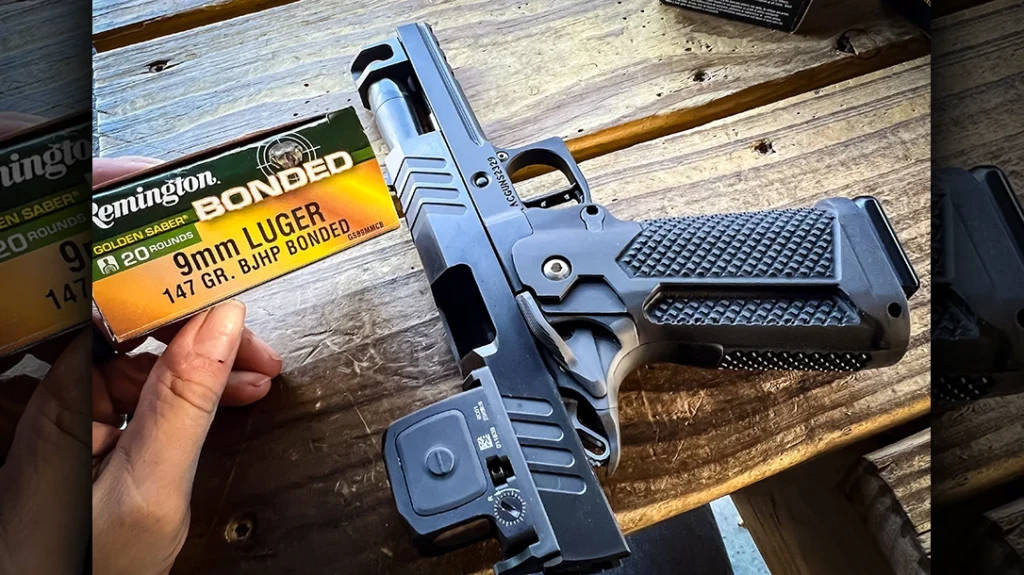
The gun produced a five-round group at 50 feet with two touching on fresh paint. I hit 7 out of 10 at 82 yards with the next magazine. The Remington 147-grain bonded hollow points stood out as the best overall performer in terms of consistency and shootability.
If I were to run a broader range of ammunition regularly, I would likely experiment with recoil spring weights to optimize timing. That said, the performance envelope here is very high.
The trigger breaks at 1 pound 7 ounces. That is light, especially for a defensive pistol. But, in this gun, it is not dangerous. There is clear take-up, a defined wall, and a crisp break that does not surprise you. It demands discipline but rewards it. It feels intentional rather than nervous.
Final Shots
At $6,495, the Ripsaw is expensive. There is no way around that. But price without context is meaningless. This is not a pile of premium parts. This is a fully integrated system with a very short aggregate stack of tolerances, timing, geometry, and mass.
The Ripsaw 2011 is a defensive pistol built by someone who understands how competition guns fail and why. It is light where it matters. Heavy where it needs to be. Fast without being violent. Precise without being fragile.
The person who sees value here understands manufacturing, tolerances, and mechanical relationships. They understand that a gun you trust is not just one that fires. It is one that behaves predictably under stress, recoil, and time.
Shay Akai does not cut corners. He builds pistols meant to be carried, trained with, and trusted. Which seats him in the crazy but not stupid section. My favorite kind of people.
This particular example must be returned, which is unfortunate but understandable. I will be speaking with Shay about future projects and including something from him in my 2026 lineup.
The Akai Custom Ripsaw is one of the most recommendable 2011 pistols I have ever tested. I’m not sure I can give it a higher compliment.
Shoot safe.
WHY OUR ARTICLES/REVIEWS DO NOT HAVE AFFILIATE LINKS
Affiliate links create a financial incentive for writers to promote certain products, which can lead to biased recommendations. This blurs the line between genuine advice and marketing, reducing trust in the content.