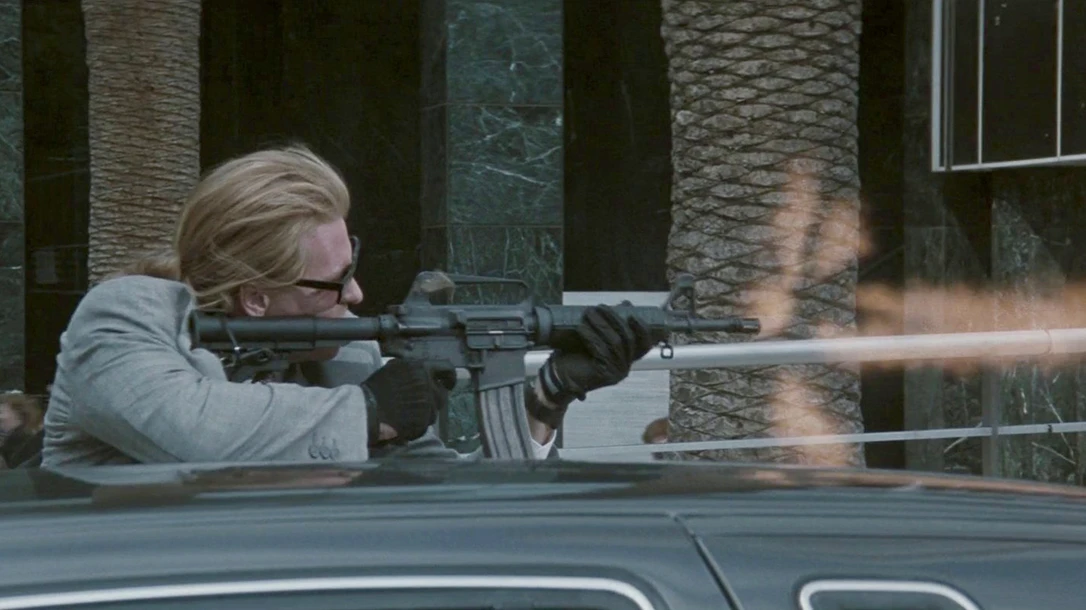
If writer/director Michael Mann’s original plan came together, we’d have never had one of the greatest (if not the best) epic crime dramas in cinematic history. Fortunately, his vision for a television series, L.A. Takedown, didn’t pan out.
In the late 1980s, Mann, who had been executive producer of the popular Miami Vice, had sought to create a crime procedural like no other. It was to feature a complex story from the perspectives of a professional criminal crew looking for their next big score and the police officers chasing them. Based on a real world criminal and the detective who chased him, it was pitched to NBC years before the wave of prestige shows ushered in by The Sopranos and The Wire.
As a network show, it probably wouldn’t have worked. And it didn’t.
Advertisement — Continue Reading Below
The pilot wasn’t picked up, and instead it was reworked as a TV movie. It received mixed reviews and could have been forgotten.
However, after directing The Last of the Mohicans in 1992, which became a huge commercial success, Mann opted to return to the mean streets of Los Angeles. Seeing L.A. Takedown as a dry run, he then created an even more complex, multi-layered crime drama.
That was Heat, which hit theaters on December 15, 1995. In the 30 years since, it has become a genre-defying film, inspiring dozens of movie knockoffs, video games, and, notably, a few real-world criminals!
Advertisement — Continue Reading Below
Heat — A Star-Studded Film
L.A. Takedown followed the common trend in TV of hiring largely unknown actors, given its large ensemble cast, but with Heat, Mann went big. The leads included Al Pacino as Robbery Homicide Lieutenant Vincent Hanna and Robert De Niro as the mastermind of a close-knit crew of professional thieves. Even as production began, the casting helped the film generate significant buzz, as it was the first time the screen legends had appeared together in a film since The Godfather II, in which they shared no scenes.
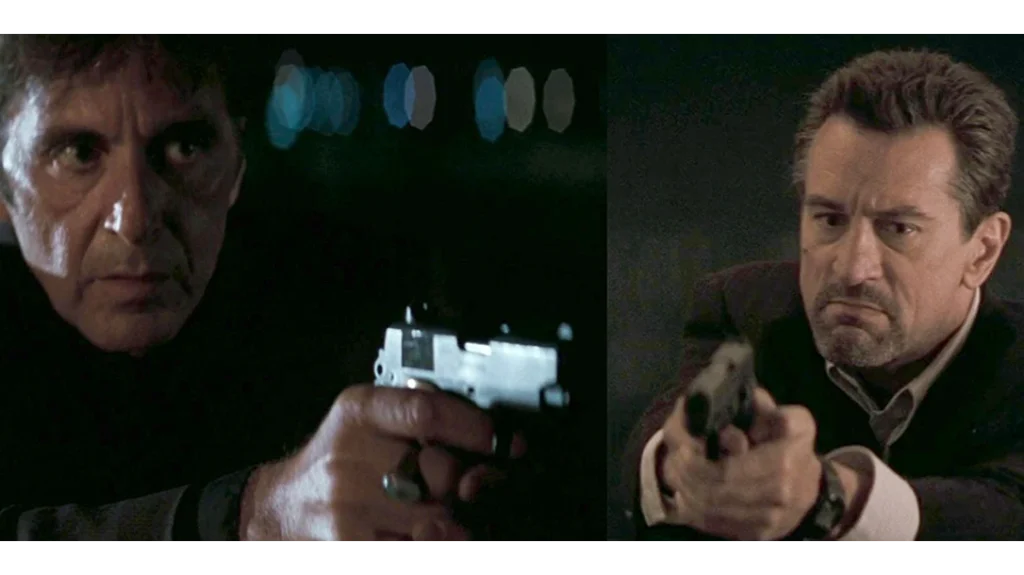
Instead of being a distraction or overshadowing the film, the two men were perfect in their roles. Pacino brought his over-the-top zeal to the role of the thrice-married workaholic detective who becomes obsessed with taking down the crew, even as it ruins his personal life. By contrast, De Niro is cold and calculating, a criminal who is ready to walk away from his ties only to find a new love interest while remaining duty-bound to his criminal family.
Advertisement — Continue Reading Below
The supporting cast included Val Kilmer, Jon Voight, Tom Sizemore, William Fichtner, Ashley Judd, and a young Natalie Portman. Punk rock poet Henry Rollins and rapper Tone Loc appeared in more minor roles. Each seemed tailor-made for the film.
In 2022, a prequel/sequel novel, Heat 2, was released, written by Mann and Meg Gardiner. The director has since said he was working on a follow-up film. Whether it comes out or not may not matter; Heat remains a genre-defining crime drama.
Films & Games Only Exist Because of Heat
In Hollywood, success often breeds similar films and knockoffs. The release of Star Wars in 1977 saw Hollywood jump on the science-fiction bandwagon for years. Yet, Heat left a different mark on the movie world.
Advertisement — Continue Reading Below
No film tried to be the next action heist thriller right away, but that’s because the genre was already well established. Instead, Heat simply changed the way crime films were made, arguably elevating action films in the process. For good or bad, criminals increasingly became anti-heroes rather than villains in movies to come, even as they committed violent crimes.
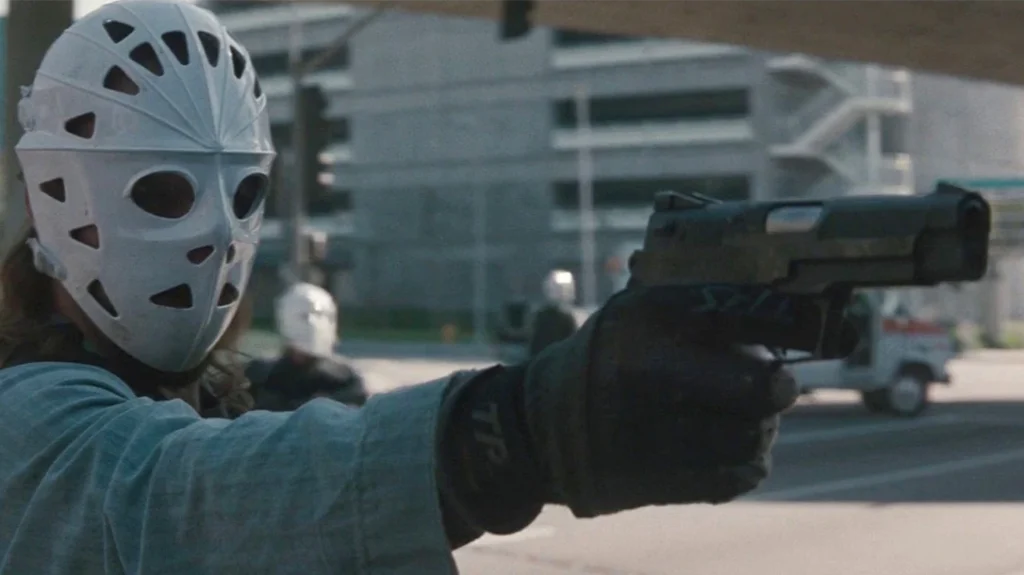
This is notable in films such as 2010’s The Town, where Ben Affleck is far from the gentleman thief of the 1960s heist capers, where violence was seldom. Such a level of mayhem is seen again in Den of Thieves, Dragged Across Concrete, and Wrath of Man. The latter film was directed by Guy Ritchie, who was long known for his hyped-up gangster films, and he is hardly alone in drawing on Mann’s crime masterpiece. The story building of Heat can be seen in films such as Christopher Nolan’s The Dark Knight, the centerpiece of his Batman trilogy.
Advertisement — Continue Reading Below
Beyond the big screen, the influence of Heat is front and center in video games, notably in titles such as Payday and, of course, the Grand Theft Auto series. There were even attempts to create a video game tie-in, notably one titled The Last Job, but it was never made.
Guns of Heat
Not wanting Heat to be compared to other films that came before it, nearly all the principal locations had never appeared on screen. In addition, the production hired British ex-Special Air Service (SAS) sergeant Andy McNab to serve as the film’s technical weapons trainer and advisor.
This helps explain why Heat is accurately packed with heat, yet there are no signature firearms or callouts to any particular handguns or rifles.
Advertisement — Continue Reading Below
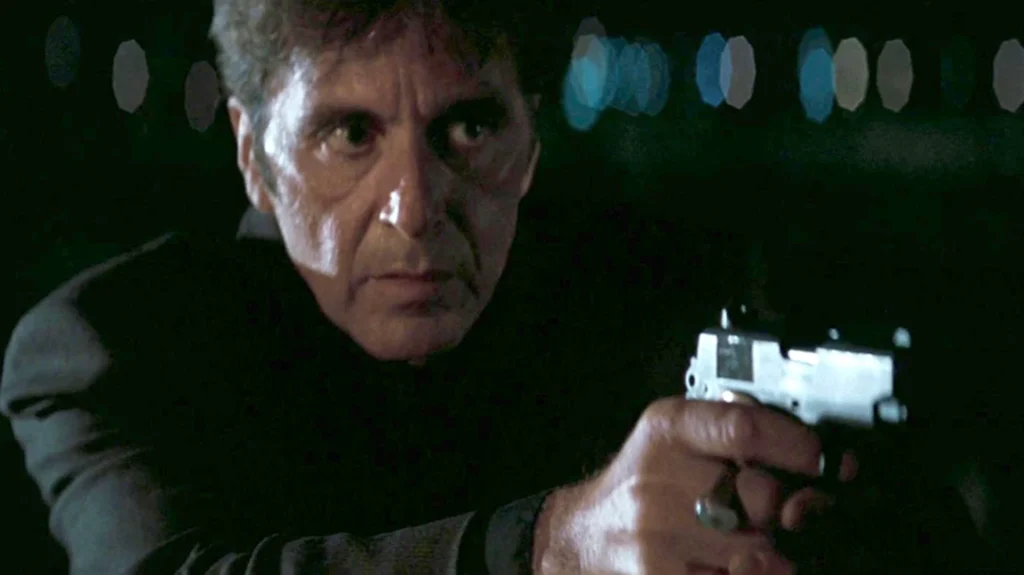
The closest to a standout gun in the film is the ivory-gripped Colt M1991A1 Series 80 Officer’s ACP carried by Lieutenant Vincent Hanna (Pacino). It has been suggested that it would be a fitting choice for the character, as Hanna is reported to have served in the United States Marine Corps and would likely have carried a Colt M1911 .45 ACP during his time in the service. The M199A1 would undoubtedly be the choice of sidearm for someone familiar with the M1911 – even as, in the 1990s, polymer-framed pistols from Glock and Sig Sauer were being adopted by law enforcement across the country. Several LAPD officers can be seen with the Beretta 92FS.
Professional thief Neil McCauley (De Niro) has no favored firearm, likely in keeping with his advice, “Don’t let yourself get attached to anything you are not willing to walk out on in 30 seconds flat if you feel the heat around the corner.”
Other Firepower
During the film, McCauley carries a Heckler & Koch USP, likely chambered in 9mm, while later he has a Sig Sauer P220 in .45 ACP. De Niro was just the second Hollywood star to be seen with a P220, following Steven Seagal’s use of one in 1988’s Above the Law.
The only other handgun of particular note is the heist crew’s unstable newbie, Waingro (Kevin Gage), who carried two different Star Megastars. Early in the film, his pistol is gunmetal black; later, it’s nickel-plated, but the change isn’t explained. According to the Internet Movie Firearms Database (IMFDb), this is the Megastar’s only screen credit.
Multiple shotguns can be seen in Heat. These include a Benelli M3 Super 90 used by thief Michael Cheritto (Tom Sizemore), while Detective Casals (Wes Studi) and Sergeant Jamal Drucker (Mykelti Williamson) carried the same Mossberg 590. Other LAPD officers are seen with Mossberg 500s or Remington 870s.
Shoot-Out Scene
Heat is now remembered for its intense 10-minute long shootout following the bank robbery on the streets of downtown Los Angeles. It featured a mix of long guns, notably a Colt Model 654, which McCauley first used during the armored car heist, while his partner Chris Shiherlis (Val Kilmer) carried a Colt Model 733. Both men carry the latter gun during the bank robbery.
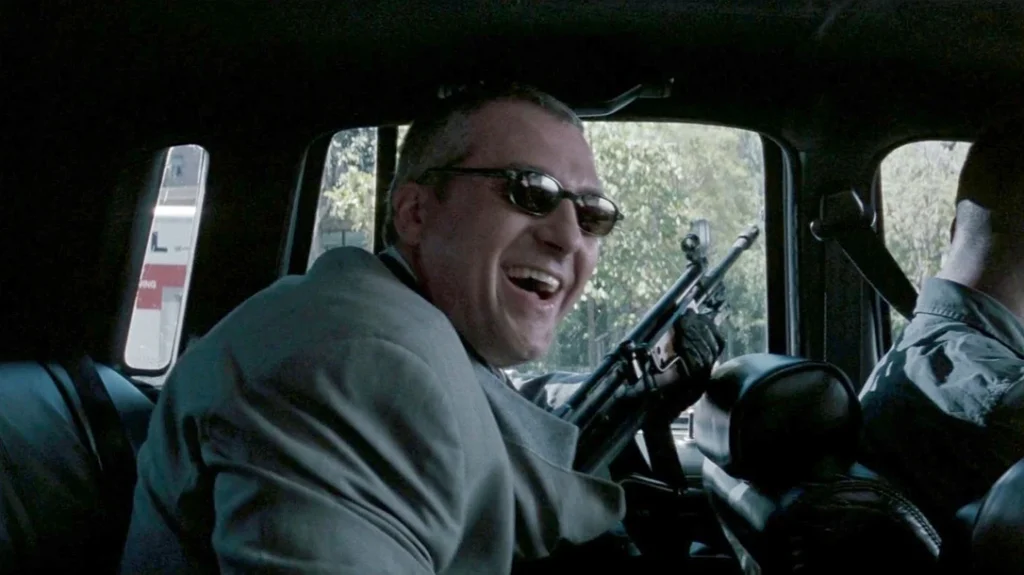
Cheritto’s choice of weapon was an Israeli IMI Galil ARM Model 372. However, the folding stock is missing during the robbery, yet is present when he is later in the car (an obvious continuity error). Apparently, even Mann was confused about the firearms, as experts agree that the weapon in the film is chambered for 5.56x45mm NATO. Yet, the director in his DVD commentary called it a 7.62, perhaps mistaking it for the Norinco Type 56-1 carried by Trejo (Danny Trejo) in the opening armored car heist.
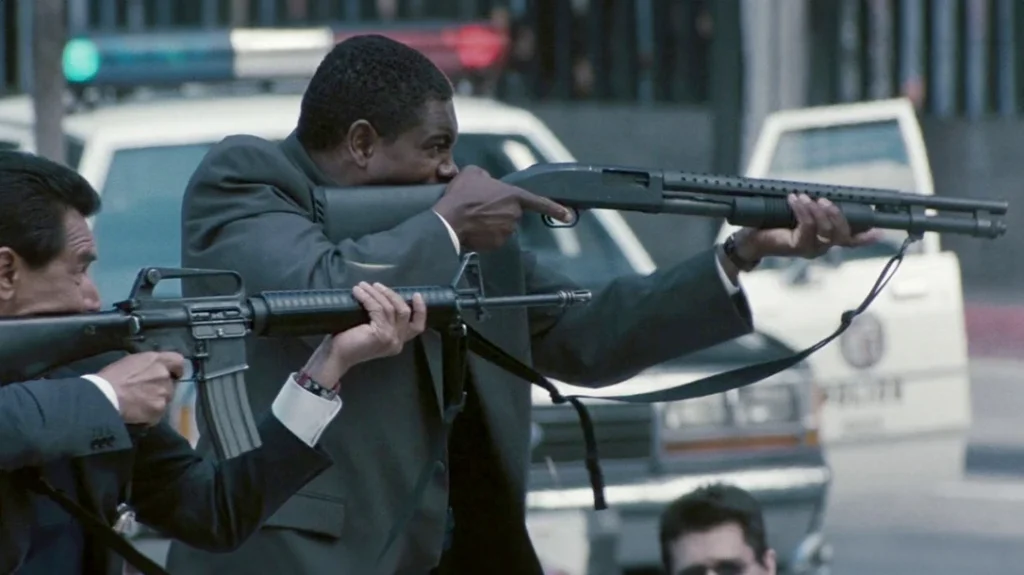
By contrast, the LAPD, including Detective Casals, Detective Mike Bosko (Ted Levine), and Detective Schwartz (Jerry Trimble) – as well as some SWAT officers – are seen armed with M16A1 assault rifles. The presence of the M16A1 is notable, as the rifle may not have been as widely available to the LAPD as the film suggests.
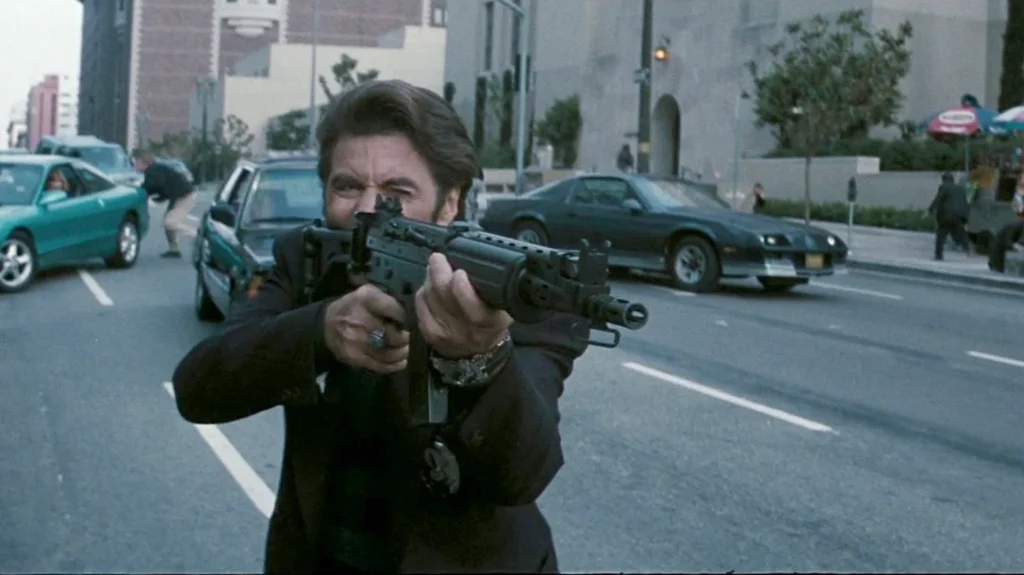
In the downtown shootout, Hanna is armed with an FN FNC, a rifle weapon that the LAPD never used. This was likely made to allow Pacino to stand out. Mann instructed Al Pacino, along with all the actors who played members of the LAPD, to fire only on semi-automatic, as the police would be concerned about the possibility of shooting an innocent bystander.