Revolvers are known for their reliability. So much so that some shooters still prefer them and accept their downsides well into the age of modern, semi-automatic pistols. But that reputation is built on the revolver’s forgiveness towards user-induced and ammunition-induced malfunctions. In this article, we’ll discuss what revolver timing is and how to check it so that you can tote your wheelgun with confidence.
Understanding Revolver Timing
It has nothing to do with mechanical reliability. In fact, as semi-auto pistols have their own issues that do not affect revolvers, revolvers have problems that do not apply to semi-autos. The most important and least understood are timing problems.
What Is Timing?
Revolvers have a fixed barrel and a rotating cylinder with multiple chambers that hold the ammunition. When a revolver is timed correctly, each chamber aligns with the barrel and is locked in place before it will fire.
Advertisement — Continue Reading Below
When a revolver is out of time, the chambers do not perfectly align or lock in place. If the ammunition is then fired, the misaligned rounds will leave the chamber and shave off lead and copper as they hit the barrel.
Deformed bullets and lead buildup in the barrel lead to poor accuracy. Worse, the shooter or bystanders can be hit with particulate matter as the revolver fires.
If timing is particularly bad, pieces of the projectile can lock up the cylinder and prevent the revolver from firing again. Alternatively, the misalignment may be severe enough that the firing pin strikes the case rather than the primer. In that case, nothing happens at all.
Advertisement — Continue Reading Below
Timing problems can occur due to factory quality control issues, misuse, or normal wear and tear over time or with age. Thankfully, when timing issues do occur, the solution is usually a new cylinder stop or hand that ensures the cylinder indexes fully and locks in place without undertravel or overtravel.
Revolver Brands Will Vary
There are some universal pearls of wisdom when it comes to timing issues that are half-truths. When using a universal function check, some revolvers will appear out of time when they really are not, while others will appear in time when they are not. That is because across all domestic and foreign revolver brands, the lock work of each will differ.
How To Check Revolver Timing
Smith & Wesson and Clones
Smith & Wesson revolvers are perhaps the most popular worldwide and have inspired clones, like those from Taurus, Armscor, and Alfa Proj. These revolvers have a hand in the back of the frame that turns the cylinder on a ratchet, while a bolt stop runs up from the bottom of the cylinder window to lock into stops in the cylinder as the hammer is cocked.
Advertisement — Continue Reading Below
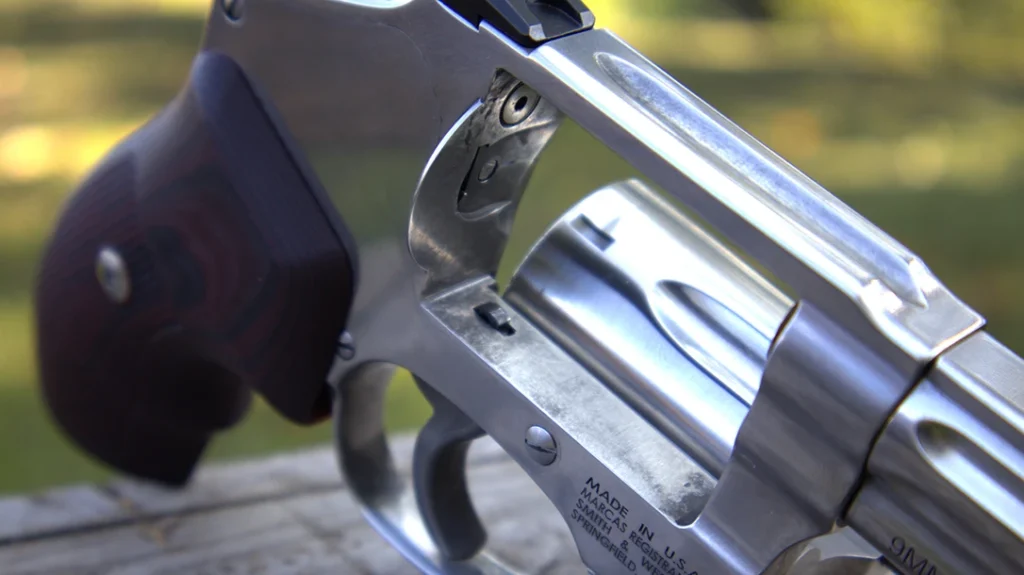
An easy way to check the function is to slowly cock the hammer until the cylinder bolt locks into place. Repeat this process for each chamber. The bolt should lock into place shortly before the hammer is completely cocked.
If the cylinder stop is not locked in place when the hammer is fully rearward, the revolver is out of time. No matter what revolver you are checking, the cocking motion must be slow and smooth. Some amateur handlers and gun shop employees will try to cock the hammer quickly and rely on the momentum of the cylinder’s travel to make the cylinder stop work. However, that disguises the truth.
Advertisement — Continue Reading Below
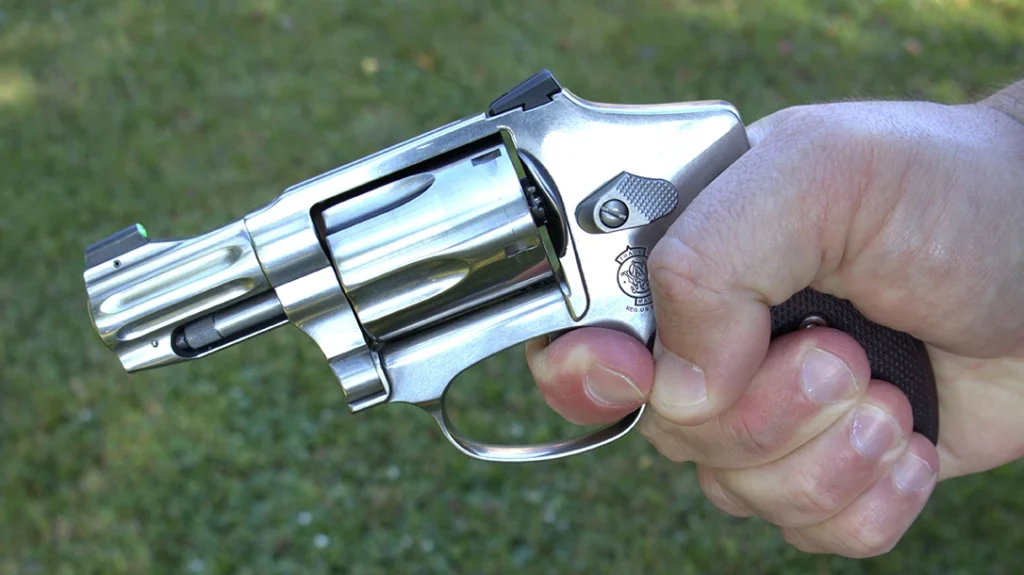
For Smith & Wesson-style revolvers without an exposed hammer, slowly pull the trigger to cock the internal hammer. For each chamber, the bolt should lock into each stop before the hammer reaches its full length of travel and falls.
Ruger
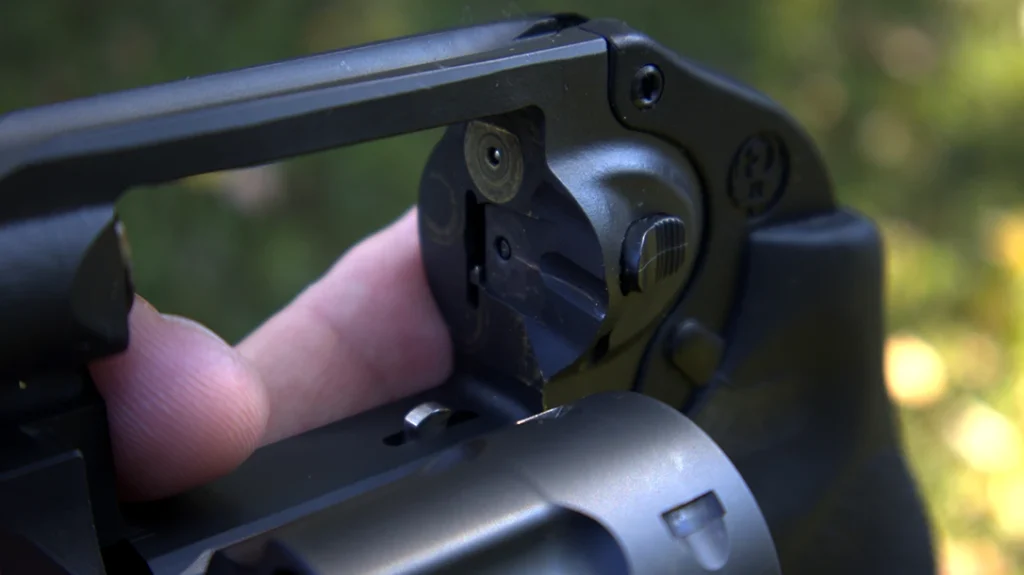
Ruger double-action revolvers use a solid frame and are mechanically different from Smith & Wesson revolvers. However, the ultimate lockup still relies on a cylinder bolt at the bottom of the frame to lock into cylinder stops in the cylinder before the hammer reaches the end of its travel. Checking the timing on a Ruger revolver is no different.
Advertisement — Continue Reading Below
Colt
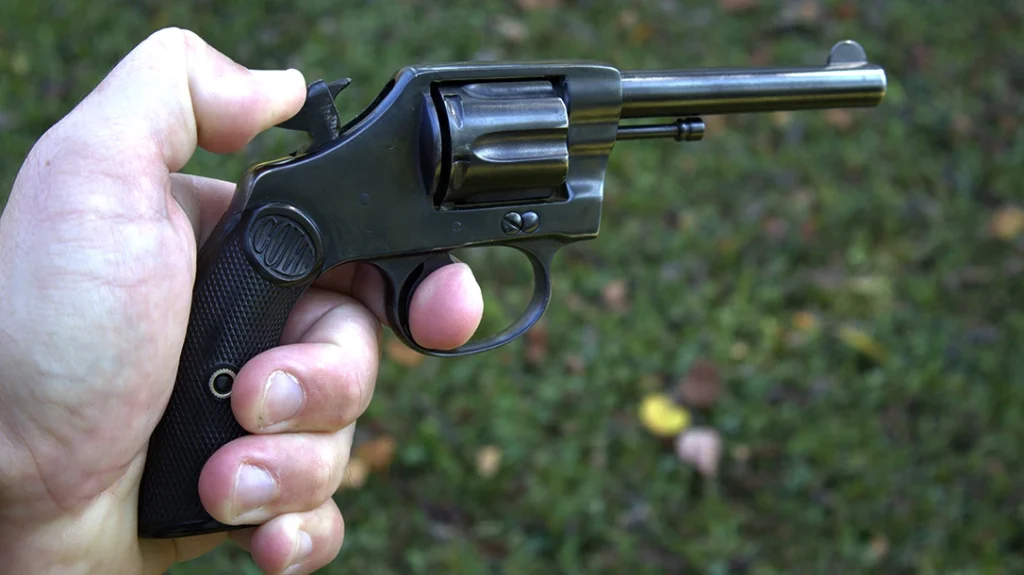
Colt revolvers are known for being somewhat more fragile and prone to going out of time than a comparable Smith & Wesson or Ruger. This is categorically false. However, Colt revolvers are designed to lock up differently. Many old Colts that would fail the typical test of a Smith & Wesson are still in time.
Colt double-action revolvers from old Model 1889 all the way to the 2020 Python and beyond lock up in substantially the same way. Like the other revolvers, the Colt uses a hand at the rear of the cylinder frame and a cylinder bolt at the bottom.
Advertisement — Continue Reading Below
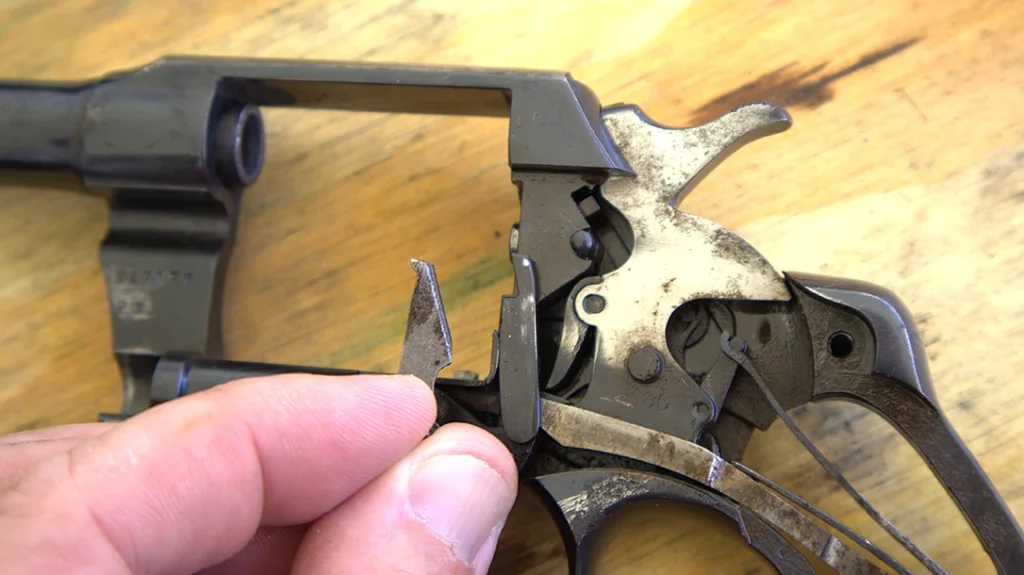
The difference is the hand that pushes against the cylinder ratchet as the trigger is pulled and the hammer falls. Smith & Wesson and Ruger revolvers have hands that do not actively engage the cylinder once the hammer falls.
The benefits of this lockup are that it is tighter as the hand will push the cylinder tightly into battery with the cylinder bolt, even if the bolt has not gone home into the stop on each chamber. This is what Colt used to call its “bank vault lockup.”
This gave Colt revolvers a well-deserved reputation for accuracy, but it also put more wear and tear on the hand. Colt hands are beefier than those of other revolvers and are designed to take more punishment. However, it is also considered a wear item to be replaced from time to time.
Here is a photograph of an old Colt Army Special revolver with the side plate removed. You can see how robust the hand is next to one from a Smith & Wesson M&P.
How Can You Tell if a Colt is Really Worn Out?
While the Colt is built differently, they can still go out of time. So how do you know if your Colt is really worn out?
Cock the hammer slowly and watch the cylinder bolt. Ideally, the bolt will hit the stop in each chamber right as the hammer is fully cocked. If it is not, thumb the hammer and pull the trigger.
If you look closely, the cylinder will move and the stop locks in place. That is the hand pushing the cylinder the rest of the way. While this outcome is not what you want with a Smith & Wesson, it shows the Colt is still in time.
Colt Single Actions and Their Clones
American single-action revolvers and their clones generally follow the Smith & Wesson school of timing. The hammer is slowly cocked, and the cylinder bolt should lock into each stop before the hammer reaches its rearmost position.
This is true for Colt Single Action Army revolvers and their Italian clones, as well as Smith & Wesson single-action revolvers like the No. 3 and Schofield. Rimfire single-action copies like the Heritage Rough Rider and Ruger Single Six also lock up this way.
Foreign Military Revolvers
Foreign service revolvers run the gamut from the Colt and Smith & Wesson style of lockup, and even in between. Some handguns, like the M1883 Reichsrevolver, have a free-spinning cylinder that does not lock until the hammer is fully cocked.
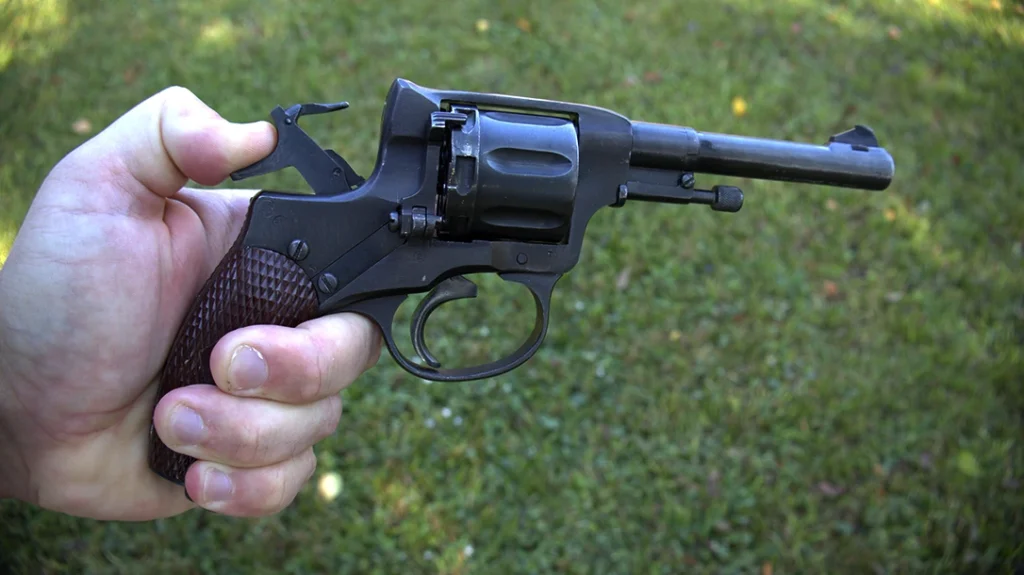
Nagant revolvers like the famed Russian M1895 operate similarly to a Smith & Wesson. The British Webley and Enfield revolvers tend to have more slop in their cylinder play until the trigger is pulled.
Percussion Revolvers
Black powder percussion revolvers like those pioneered by Colt and later Remington, among others, use the same hand and cylinder bolt assembly that would be used on other revolvers. Lockup should occur before the hammer has reached full cock. Failure to do so could be due to abuse or compromised hand or stop springs, like other revolvers. Alternatively, the hand itself may be misshapen.
Interestingly, Colt cap and ball revolvers can fail to lock up if the barrel wedge is overtightened. The simple fix is to back off the wedge to get back to function.
Revolver Timing Problems: Spin It Before You Buy
Whether you are looking at buying your first revolver or looking to press one you might have into service, it pays to know if what you put in your hand is in good working order. Loose side plate screws and bent ejector rods are often obvious problems you can observe by simply looking at the revolver or trying to load it.
Timing problems are potentially dangerous, as the issue is not immediately obvious until you try to put rounds downrange. Now you know what to look for before you put your beans in the wheel.