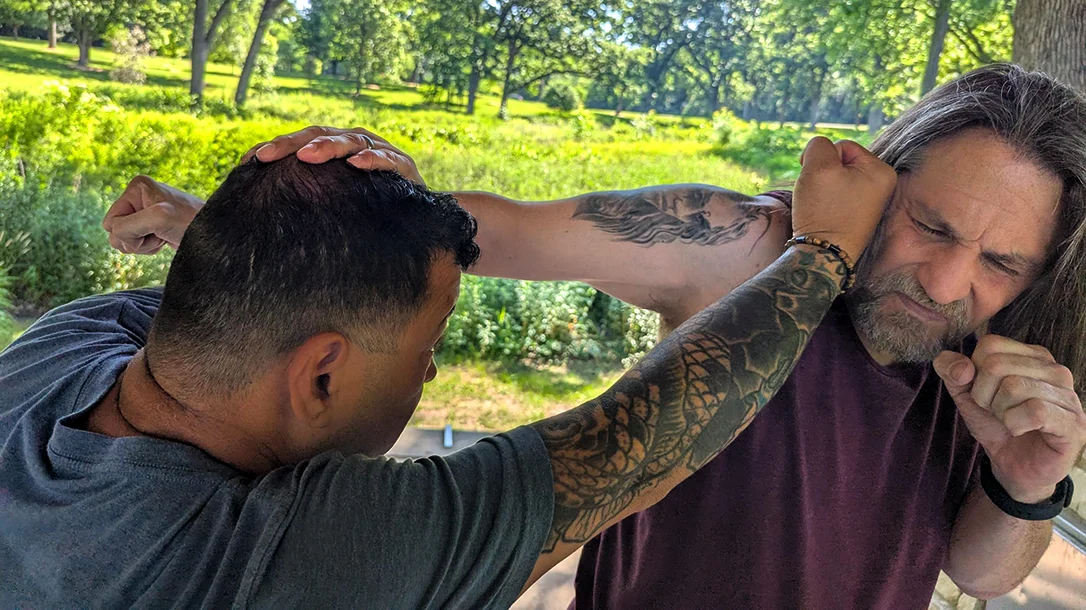
There isn’t much to dislike about a properly executed backfist. After all, there is a reason I call it “the Chinese jab.” The punch snaps in and out with lightning speed. It delivers pain and creates openings on an attacker for follow-up strikes and combinations. And like a boxing jab, a backfist can be used offensively and defensively.
The Backfist: Throwing the Proper “Chinese Jab”
There are a couple of variations of the backfists: the speed/snap backfist, the full power backfist, the spinning backfist, and the cutting backfist. However, due to word count constraints, we will just cover the first variation of the punch today—the speed backfist.
My goal is to be able to deliver follow-up articles on the other variations soon.
Advertisement — Continue Reading Below
Do Not Hit with the Back of the Fist
A common mistake that is made when throwing a backfist is hitting with the wrong part of the hand. Somewhere, someone started teaching people to hit with the center of the back of the hand, and that caught on.
The truth is, the center of the back of a hand is a target to strike for self-defense. For example, take the knuckles on your other hand and start knocking on the back of your hand. You won’t like it. It hurts, and that is how you break your hand punching someone.
The proper point of contact in your backfist is the back of your first two knuckles. Your knuckles should always be the striking area of your fist, unless your punch is a hammer fist. Yes, a part of the back of the hand will follow on contact. However, most of the force on contact will be your knuckle driving in.
Advertisement — Continue Reading Below
Demonstration
A Beginner’s Guide to Throwing the Speed Backfist
When throwing a backfist, it is important to aim your knuckles at the person you are about to punch. I see instructors giving tips on how to throw a sneaky backfist from having folded arms and such. Before you attempt such a cheap shot punch, remember that the instructor learned proper form first. You should, too.
Advertisement — Continue Reading Below
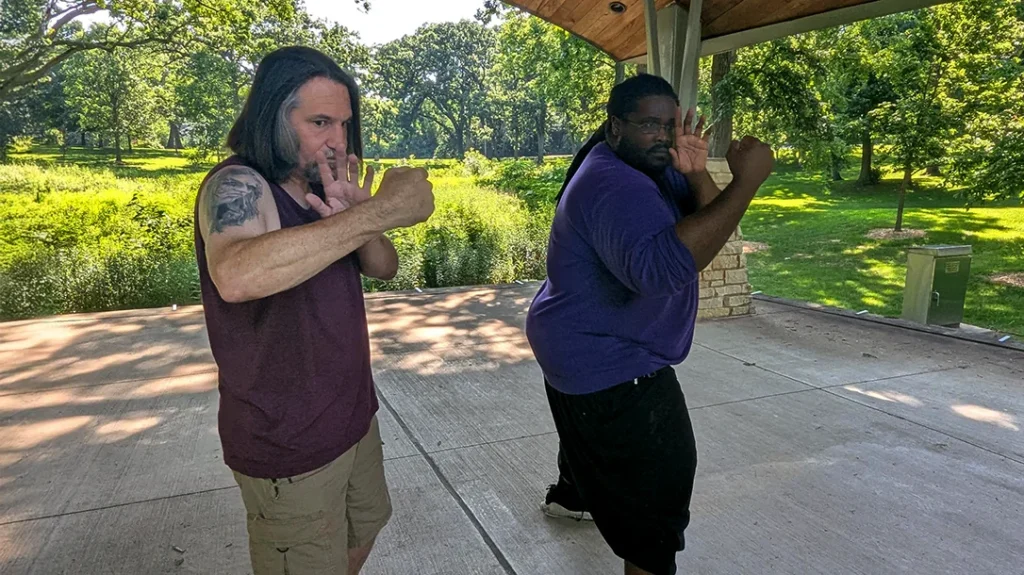
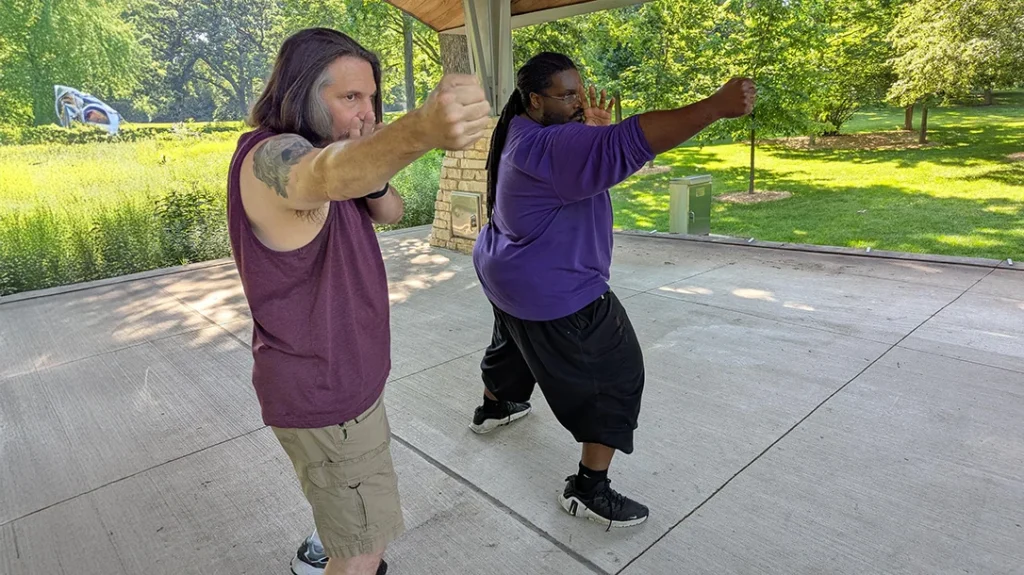
Begin in a basic fighting stance and relax your shoulders and arms. Remember, you want to explode into your punch and retract it just as fast as you threw it out there. When you launch your punch, aim at your target: temple, eye, or side of the jaw.
Shift your hips inward and snap-swing out your backfist to full arm extension, like a door. Again, retract it back at king cobra speed, in and out with snap just like a boxing jab.
Note that a boxing jab launches straight forward, a backfist swings open on an angle like a door. Watch how you throw your arm out there. Full extension is not hyperextension. I have seen a lot of people hyper-extend their arms when punching and painfully “pop” their elbows.
Advertisement — Continue Reading Below
From a martial artist’s perspective, you open your ribcage up as a target with the jab and the backfist. Another martial artist may train to sidekick you in the ribs when you throw your backfist. So, snap it back and guard those ribs. You want a Chinese jab, not Chinese spareribs.
Demonstration
Advertisement — Continue Reading Below
Understanding Your Reach
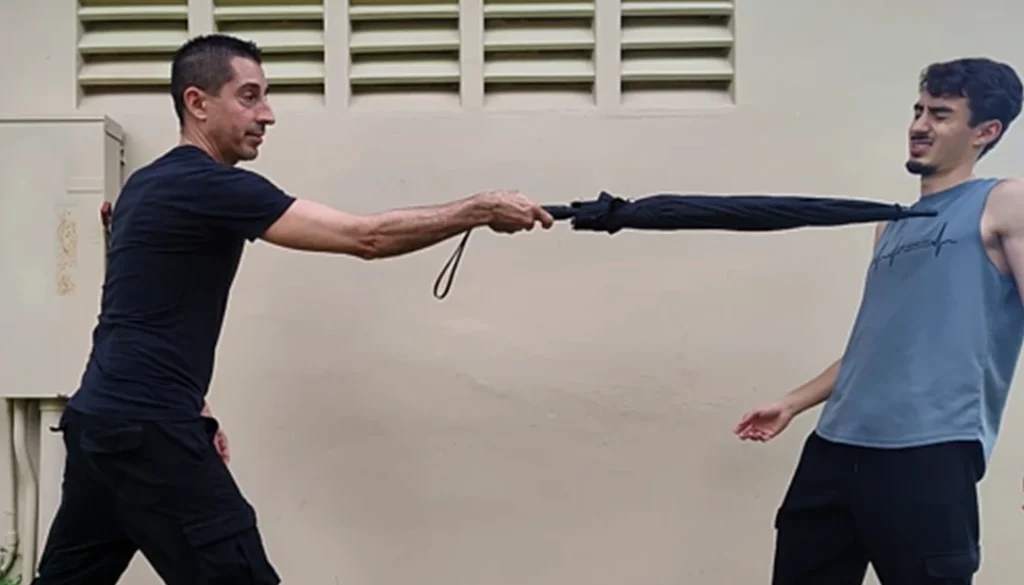
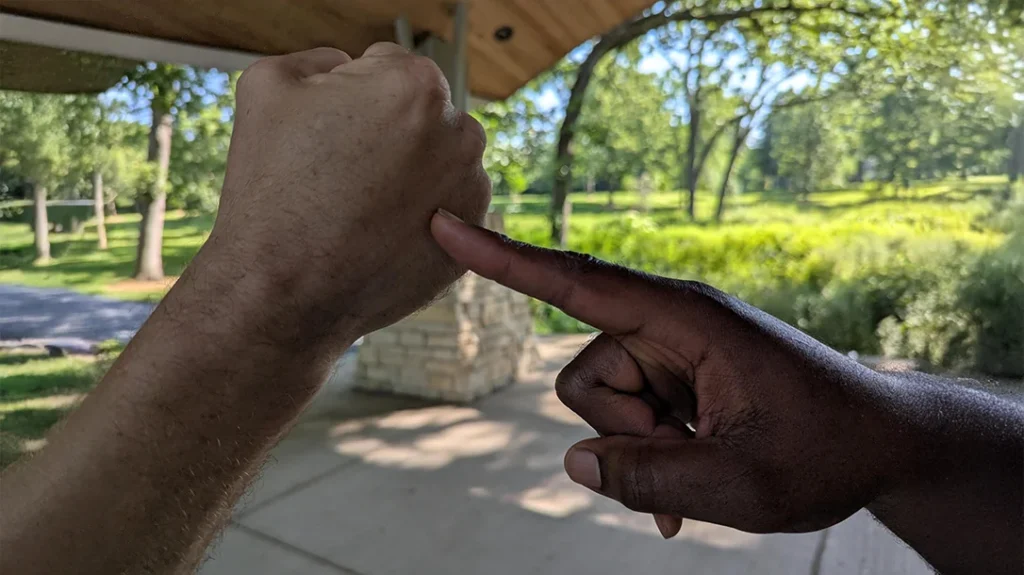
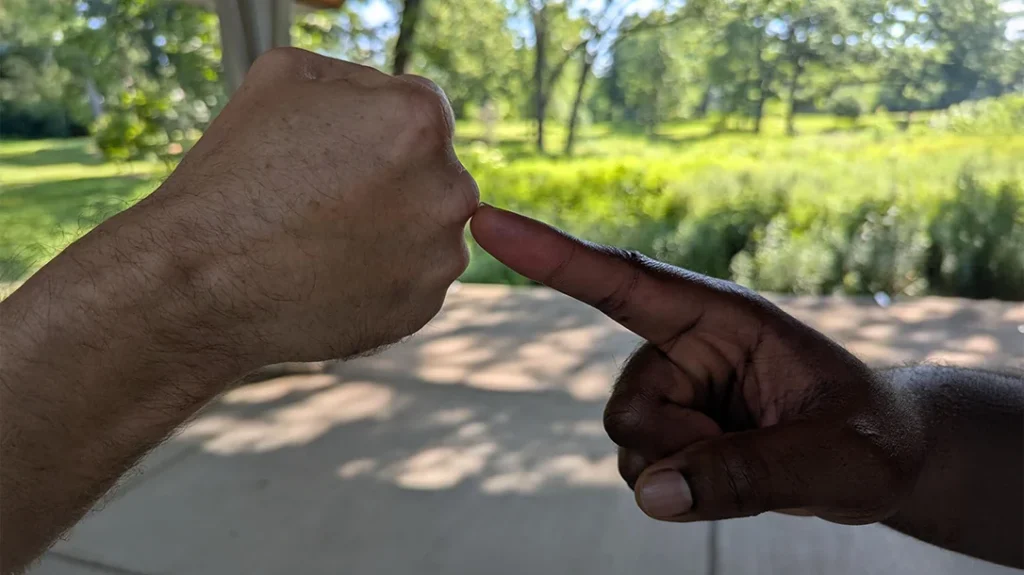
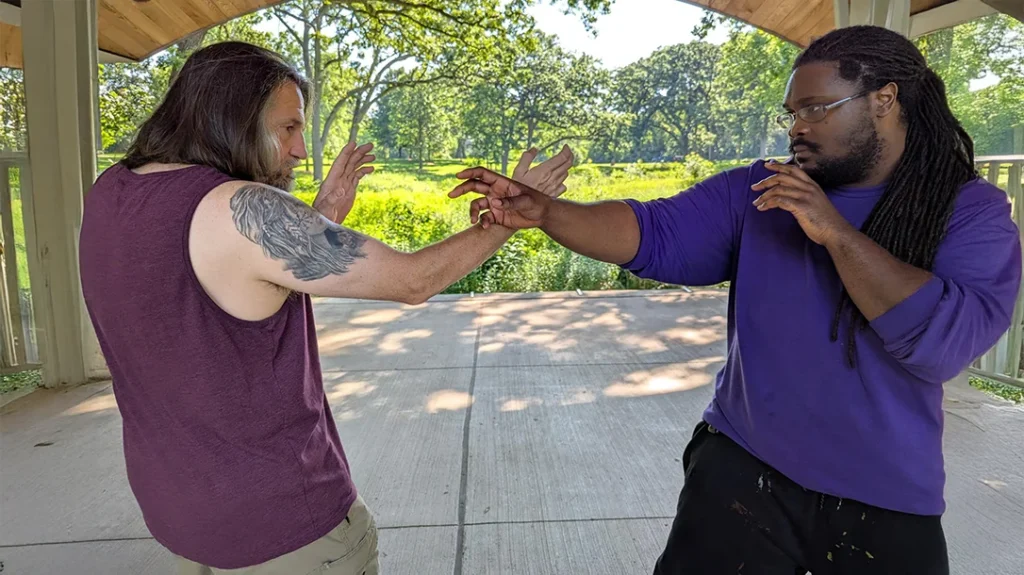
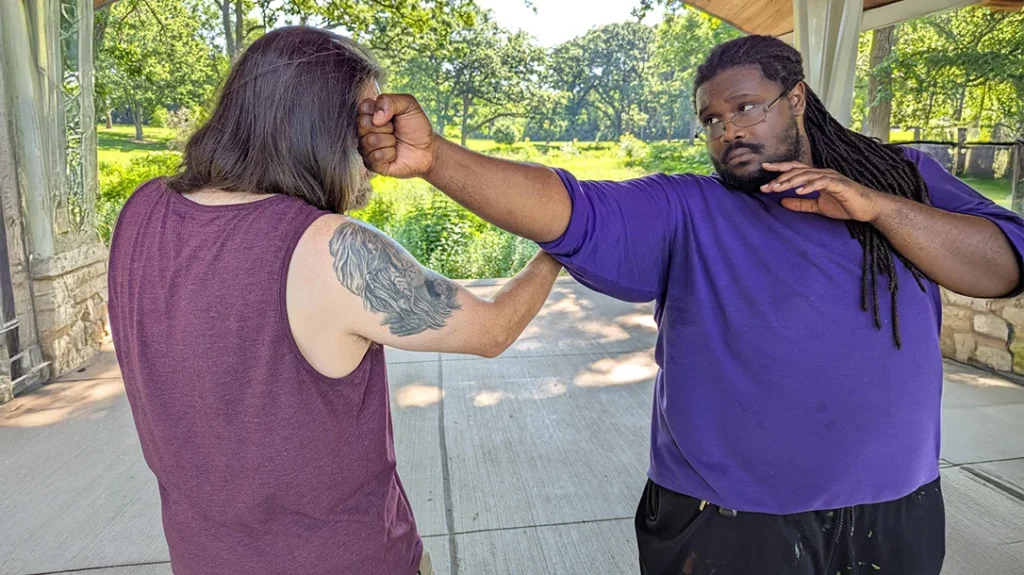
Your backfist can be extremely deceptive. If you can touch your aggressor’s wrist, you can touch their face when you throw your punch. Not everyone can block this sneaky punch when thrown fast.
Demonstration
Advertisement — Continue Reading Below
Practice Trapping and Rolling a Backfist
Once you understand your striking range with your backfist, find a partner. A good drill is trapping and rolling. One person delivers a strike and the other traps/slaps the attacking punch downward while rolling his backfist forward and out.
I like this drill because it develops gross motor skills and timing. Repetition is key, and you can literally repeat this drill hundreds of times within a couple of minutes.
Demonstration
Closing The Gap with the Backfist
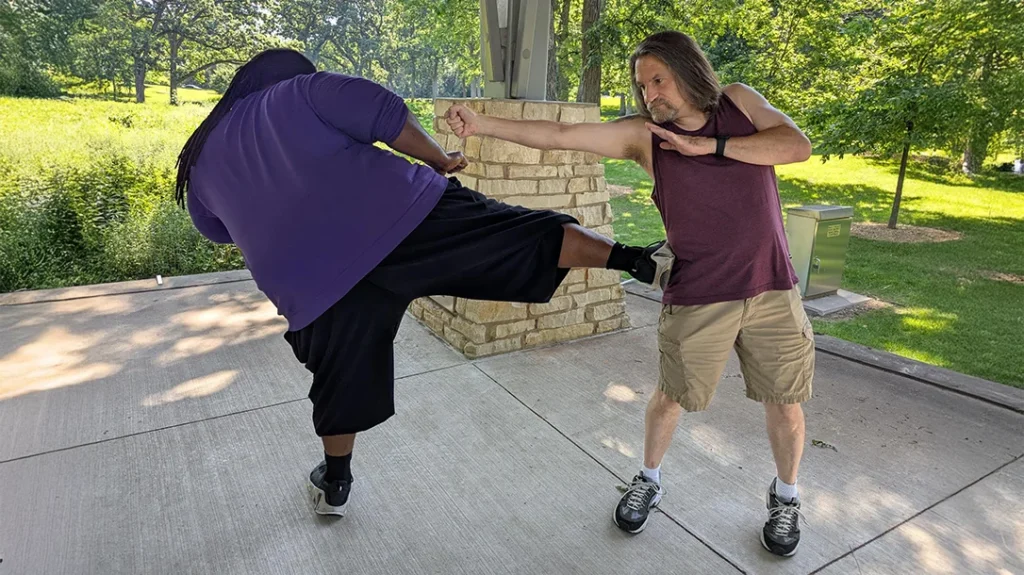
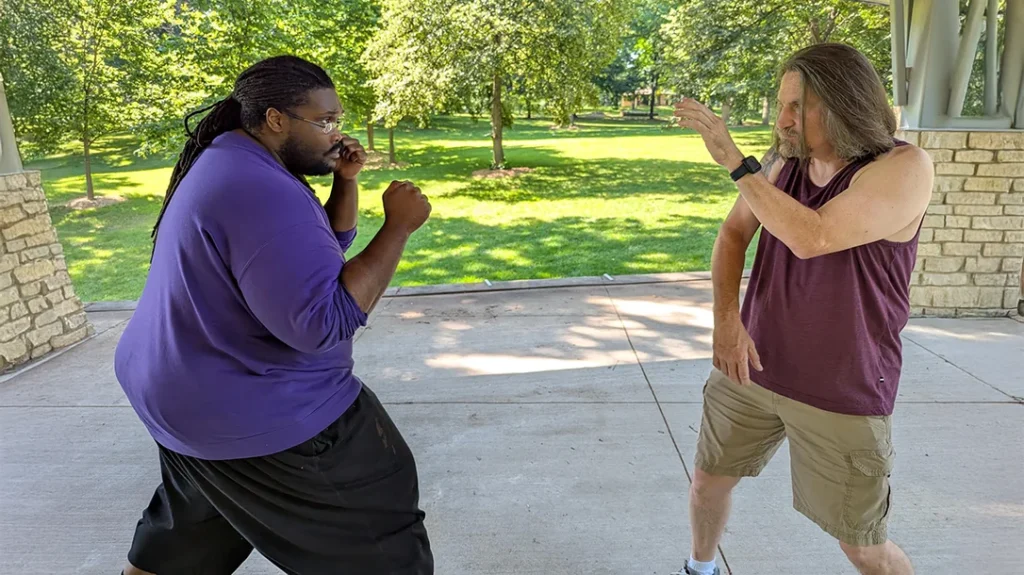
A leg is generally always longer than an arm. As a shorter person myself, I have always had to work a little harder to move in and close the gap between myself and whoever I am facing when I choose to engage. Especially when faced with someone taller who wants to fight from the outside.
I have always been a defensive fighter. So, I let my attacker come forward, into my striking range, closing the gap for me.
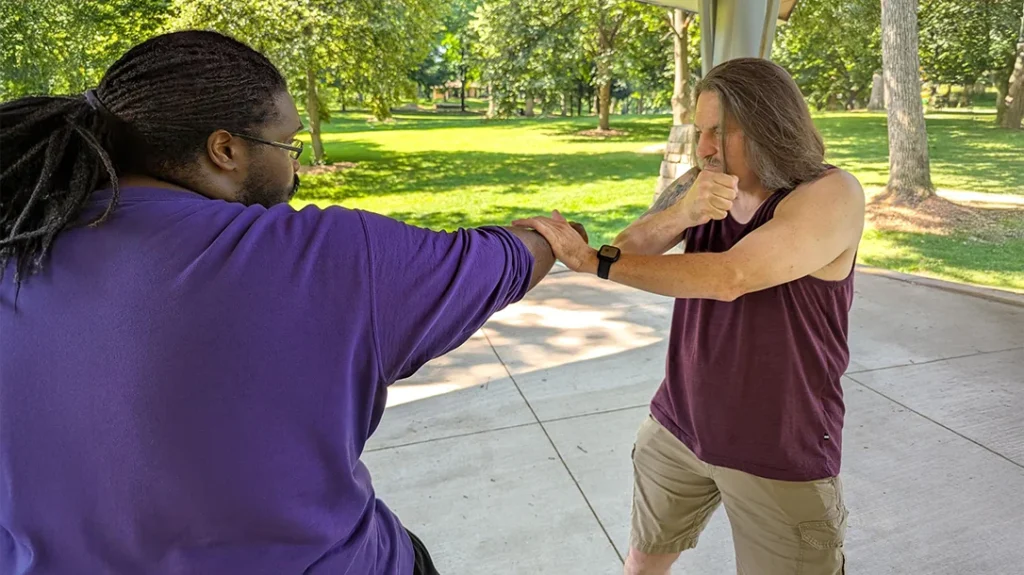
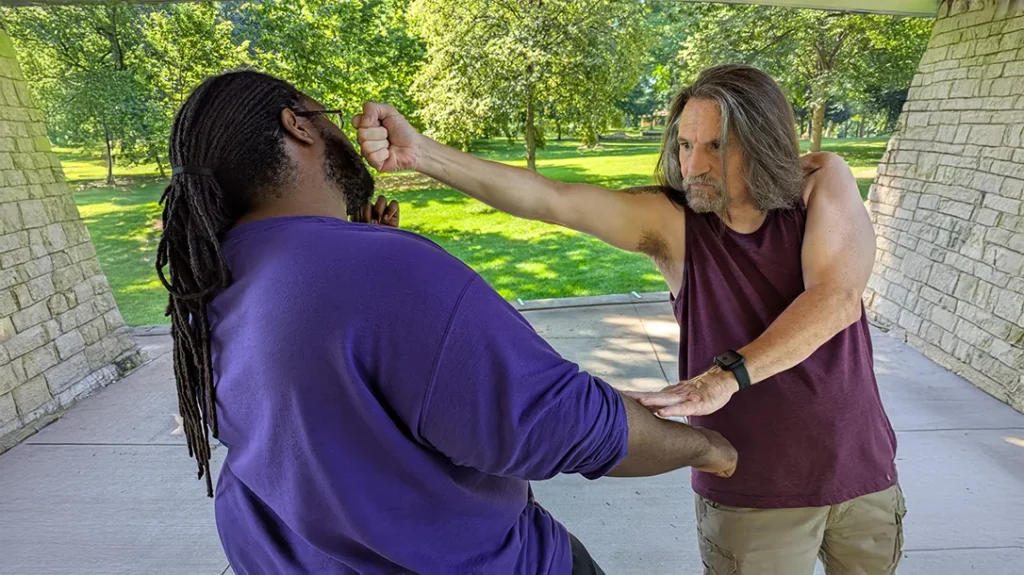
Even defensively, a backfist, like a jab, is a good way to move yourself into striking range. It can also keep someone from advancing and you out of your attacker’s range.
In this next series of pictures, you will see how a smaller fighter can face a larger fighter and use his backfist to advance past his longer striking limbs.
Demonstration
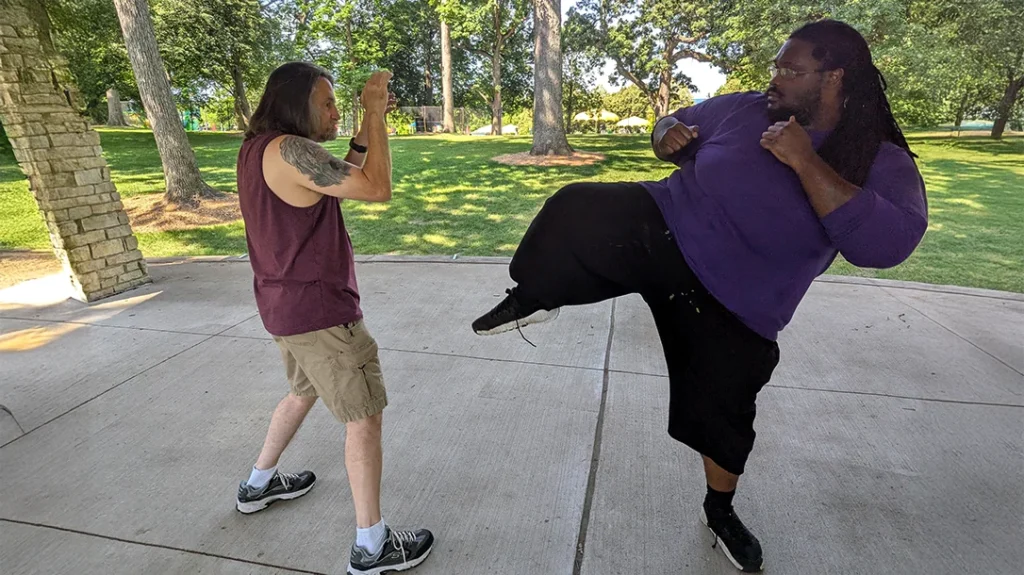
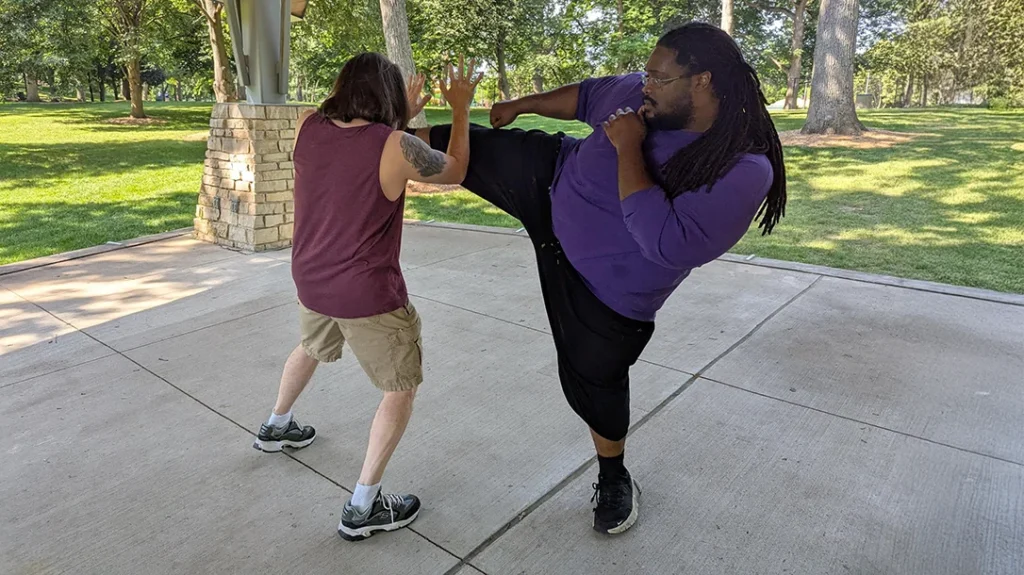
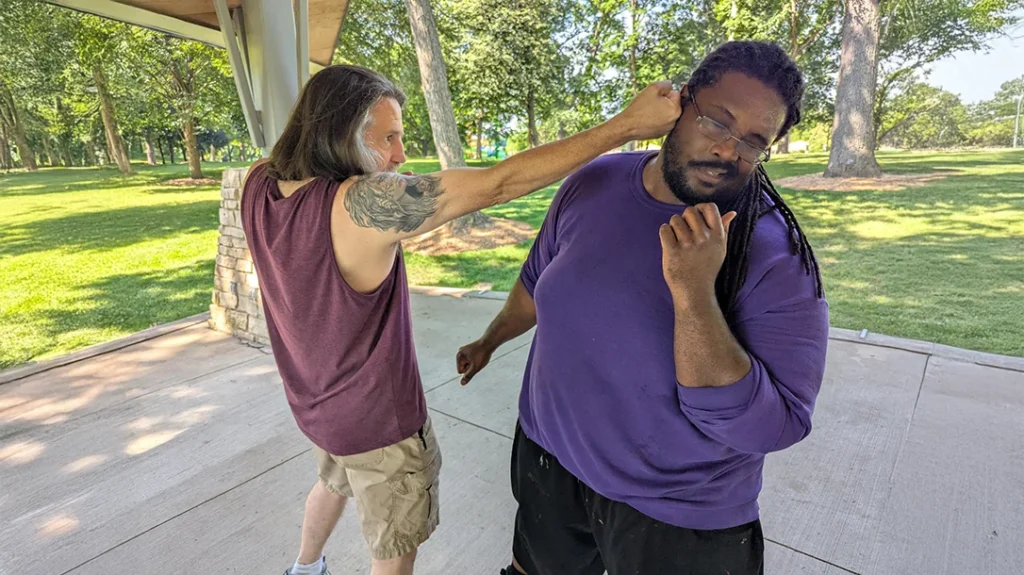
It Is Hard to Get a Good Backfist Reading About It
All of this seems great in these static pictures. However, the truth is, you cannot really get good speed, timing, and understanding of your striking range without a training partner feeding you good information. What I mean by “good information” is strikes/attacks that will connect and make contact unless you actually stop them.
Don’t practice with a partner missing targets. No one gains from that. You will never need to block a punch that completely misses you. Likewise, your training partner will never learn how to strike a target effectively if they are intentionally missing.
Make contact when you train. It does not need to be hard or full contact, but make contact even if it is just at 10%.
In short, train for real life.