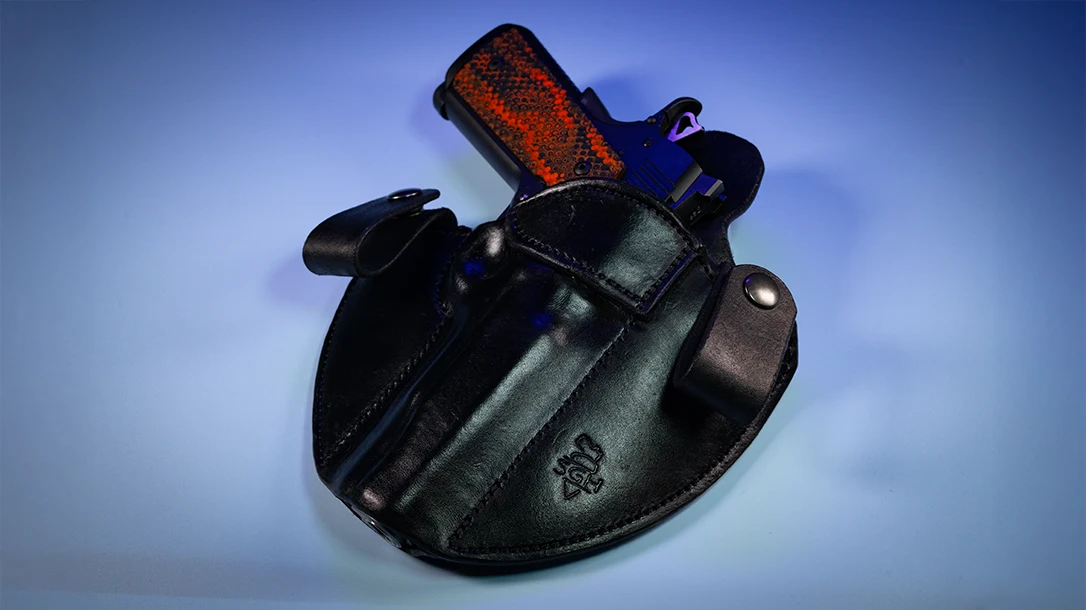
When we talk about concealed carry, we spend a lot of time on caliber, capacity, optics-ready slides, and pistol performance. But the truth is the holster matters just as much—maybe more. It’s the critical interface between your firearm and your body. And getting it wrong doesn’t just lead to discomfort—it can lead to injury, failure under stress, or simply leaving your gun at home. So, in this article, we discuss considerations when picking a CCW holster that works best for you.
Picking a CCW Holster That Works
One of the most important things anyone can learn about concealed carry is what doesn’t work for them. Holsters are at the center of that journey. We don’t always discover the perfect setup on the first try. Sometimes it takes wearing the wrong thing, struggling with draw angle or retention, before you learn what truly fits.
Advertisement — Continue Reading Below
As a firearms instructor, I see this firsthand every class. A student shows up with a universal fit holster or something that looked clever online. Then, halfway through the day, they’re adjusting, fumbling, or worse.
Holsters need to do two things perfectly: retain the firearm and allow consistent, safe access to it. If they can’t do both, they don’t belong on your belt.
The Landscape
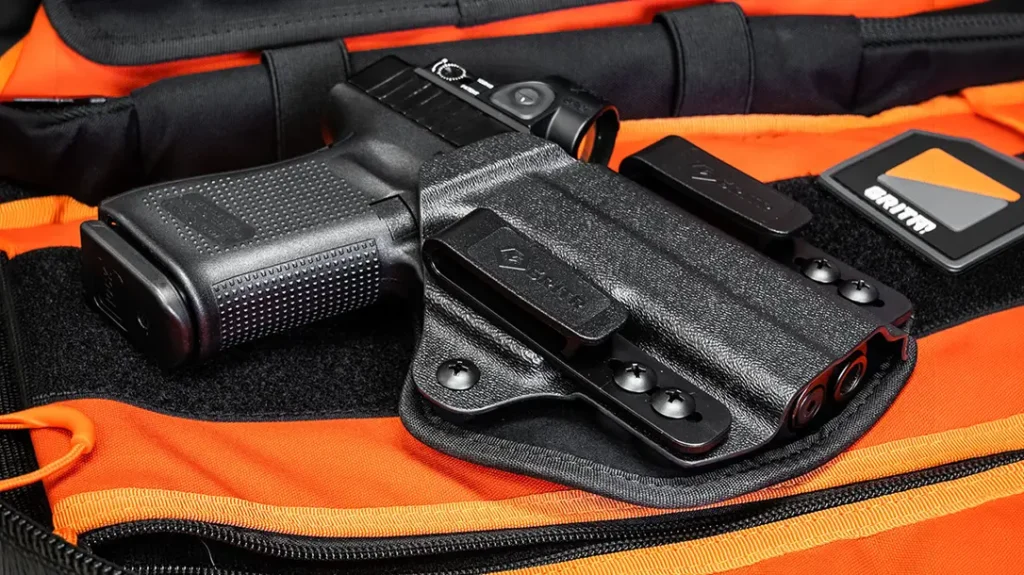
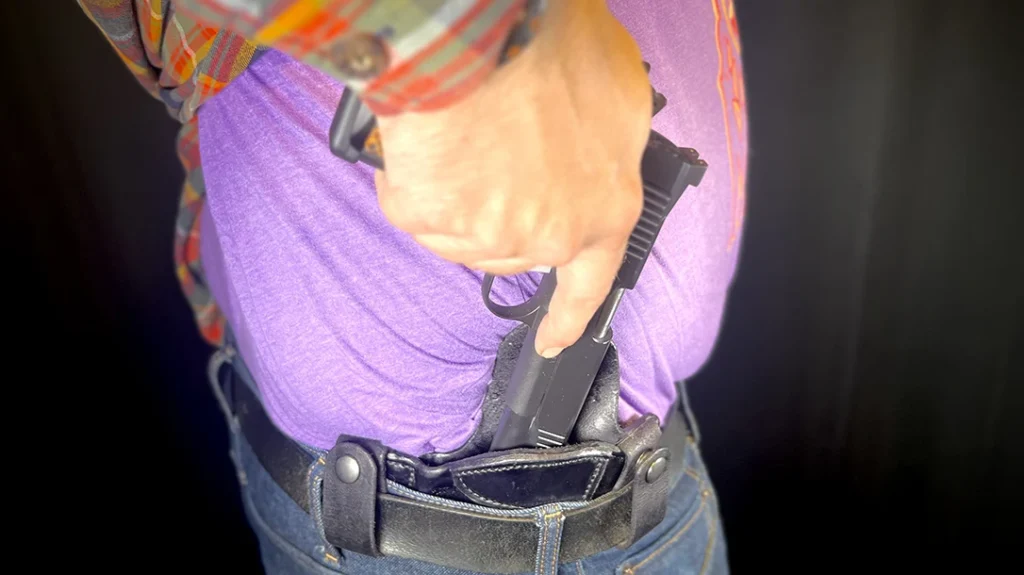
There’s a whole universe of holster styles. Inside the Waistband (IWB) holsters are the most common for everyday carry. Worn inside the pants and tucked close to the body, they’re great for concealment and comfort—especially when paired with a dedicated carry belt and good-fitting pants.
Advertisement — Continue Reading Below
Appendix carry (AIWB) is a subset of IWB that sits right around 1 o’clock. It offers incredible speed on the draw, especially while seated, but it requires a level of responsibility. The muzzle points toward vital arteries and soft tissue. If you’re not careful—or you’re in a hurry reholstering—you can do serious, even fatal, damage.
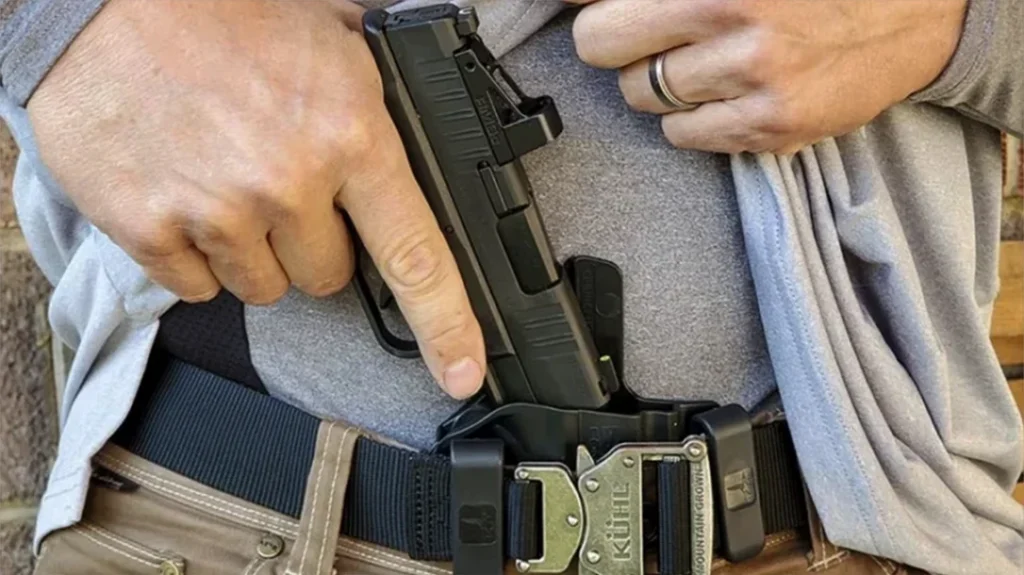
The average time to lose consciousness after the femoral artery is severed is under 15 seconds. That should sit heavy in your mind. And it should make you slow down every single time you reholster or when you consider AIWB at all.
Advertisement — Continue Reading Below
Outside the Waistband (OWB) holsters are the go-to choice for colder months, range days, or defensive training classes. They’re faster under layers of clothing, more forgiving, and easier to monitor as an instructor.
When teaching fundamentals, I often recommend OWB holsters because the gun is visible to both the shooter and the RSO (Range Safety Officer). It reduces the chance of a negligent discharge and supports better feedback to nurture skill development.
Other niche options like shoulder holsters, chest rigs, belly bands, ankle, and pocket holsters all have their place. But for the majority of concealed carriers, mastering IWB, AIWB, and OWB will cover 90% of your real-world use cases.
Advertisement — Continue Reading Below
Carry With Purpose
While not everyone needs a dozen rigs in the drawer, I recommend that serious concealed carriers eventually own four holsters per carry gun:
- A well-fitted IWB with a matching mag carrier.
- An OWB holster for colder weather and training environments.
- A minimalist or deep concealment rig for tucked shirts or lightweight clothing.
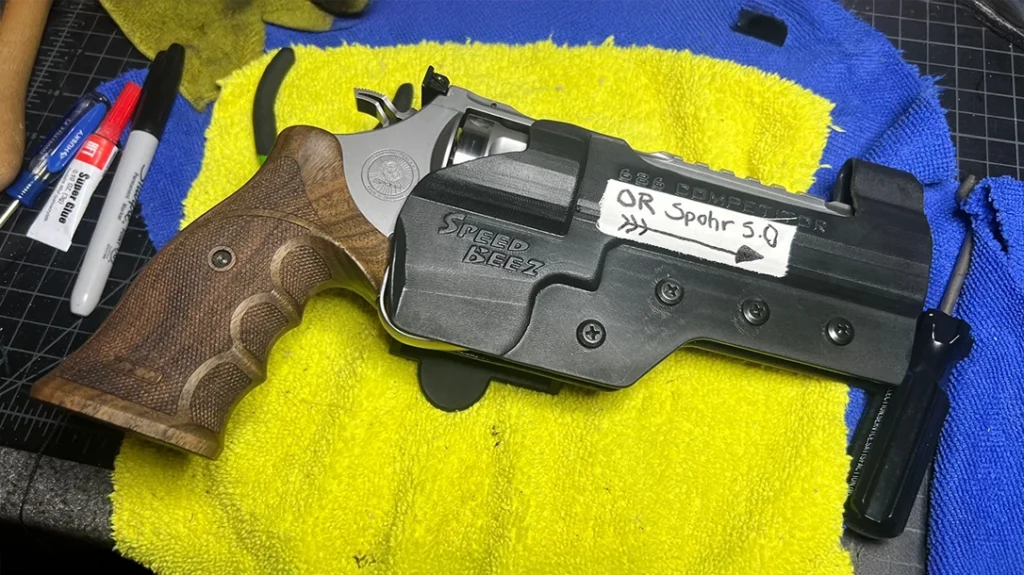
- A rigid speed holster and belt setup for structured training and competition-style practice.
Each serves a distinct role. Your IWB is your workhorse, and your OWB lets you layer up and stay fast. In addition, your deep concealment option answers the question: “Can I carry in gym shorts or swim trunks?”
And that speed holster? It’s not about looking cool—it’s about learning safely. Drawing from a rig that’s further from your body gives the instructor and shooter a clear view, reduces the chance of obstruction, and creates safer reps.
Advertisement — Continue Reading Below
Split Your Gear Properly
One of the most common problems I see in class is students showing up with combo holsters—gun and mag pouch fused into one piece of leather or nylon on the same hip. I understand the appeal. It’s neat. It’s symmetrical. But it doesn’t work.
Reloading requires your support hand. If your shooting hand is holding the gun, it can’t grab the mag from the same side. You’d be shocked at how many people lie to their instructor and say it works—until they try it on a live range in front of the class.
Advertisement — Continue Reading Below
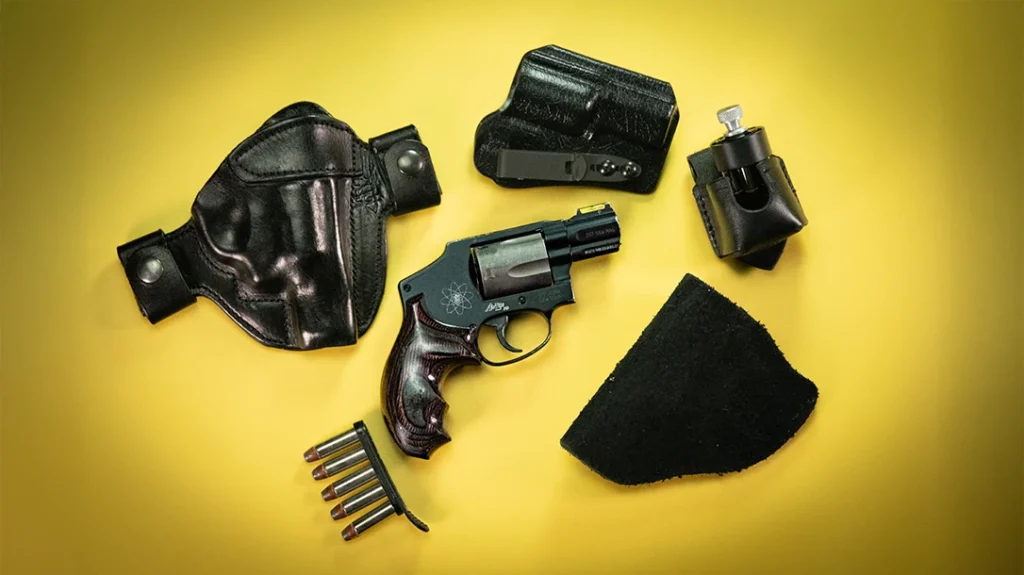
There is one exception to this: revolvers. In that case, the shooting hand moves to reload while the support hand manages the frame. But for semi-autos, split your gear. Gun on one side, mag on the other.
Material Matters
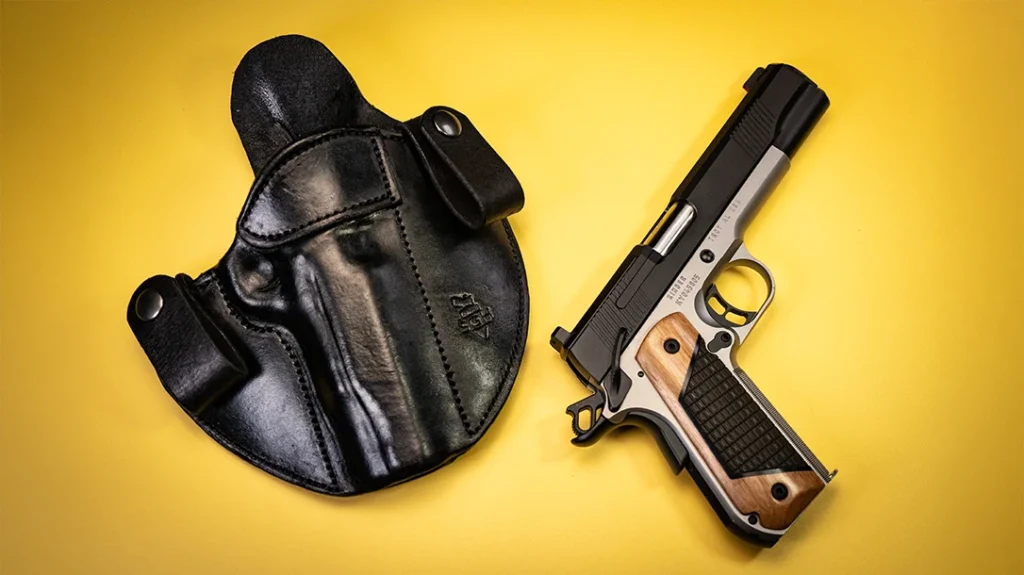
Kydex and injection-molded holsters dominate the market because they offer consistent draw retention, durability, and don’t collapse under pressure. Leather has its own charm—it conforms to the body, carries quietly, and ages with character. However, it must be well-maintained and often lacks the rigid security of plastic.
Hybrid holsters bridge the gap. A Kydex shell against the gun, backed by a leather or padded synthetic that touches your skin. They can offer the best of both worlds—if built correctly.
Avoid cheap nylon holsters. Just avoid them. They collapse, they float around, and they don’t retain shape or function. Even if you’re on a tight budget, saving a few bucks isn’t worth your life.
A Real-World Example
I once had a student in a fundamentals class who brought in a generic, soft-fit holster despite my prior recommendation. She struggled from the moment we started. The gun was never in the same place twice. So, her hand had to search for it on the draw.
Reholstering was a mess. And the retention strap clicked, but didn’t lock. More than once, I had to intervene before something dangerous happened. That holster was never going to work—and it never should have been on her belt in the first place.
Holster Safety and Discipline
Most negligent discharges happen during two actions: drawing or reholstering. If your holster collapses, catches a drawstring, or lacks retention, it’s no longer gear—it’s a liability.
Reholstering should never be rushed. In most real-world scenarios, there’s no urgency to put the gun away. The moment should be deliberate. Purposeful. Your eyes should be on the holster mouth. Your support hand should clear your garment. And your trigger finger should be high and straight. That’s how we keep training safe—and carry even safer.
I teach a simple rule in every class (I got it from Clint Smith): On, on. Off, off.
If your sights are on the target, your finger is on the trigger. If your sights are off the target, your finger is off the trigger. That includes during the draw and during the reholster. In general, your finger should not enter the trigger guard until the bore is level with the ground.
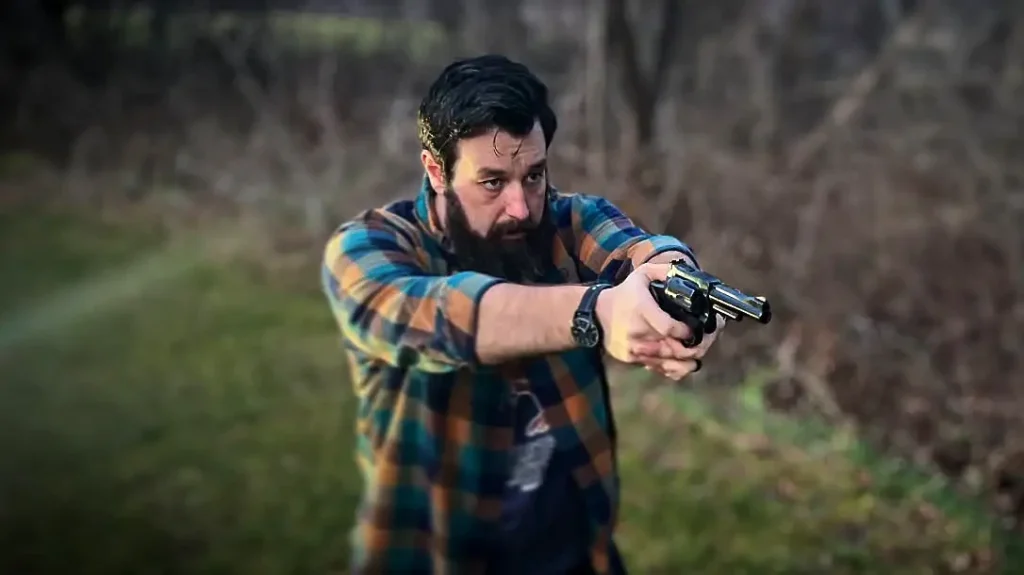
If you run a mechanical safety, it should be on the entire time you’re not actively firing. Safety ON going into the holster. Safety OFF when your gun is up and presented. Build the habit now, so it’s there when you need it.
The Belt
If your holster feels like it’s “always moving,” your problem might not be the holster at all—it could be the belt. A proper gun belt is the unsung hero of concealed carry. It supports the weight, keeps the holster fixed, maintains your draw angle, and increases all-day comfort.
If you’re serious about carrying, a good belt is non-negotiable. I’m currently working on a 5-belt shootout editorial. Look for that soon! (Current favorite is the Hunter Constantine EDC.)
Gear That Works
There’s someone out there carrying a micro 9mm in a sock holster tied up with a shoestring who thinks it’s perfect. And for them, maybe it is. But for the majority of us, gear needs to support the way we train and live.
The best thing you can do? Try a few. Buy four or five holsters. Wear them around the house. See what works and return the rest. You’re not just buying gear—you’re building a system. One that works for you, for your body, for your firearm, and for your environment.
If you’re looking for a custom holster shaped by someone who gets it, reach out to Erik at Side Guard Holsters. His rigs disappear on the beltline, hold tight to the body, and still draw fast when it matters. Tell him Mitch sent you.
Last Draw
Your draw is the bridge between your awareness and your action. Your holster is the gate. Train with it. Understand it. Respect it.
Because it’s not just about carrying a gun, it’s about carrying it right.
Shoot safe.