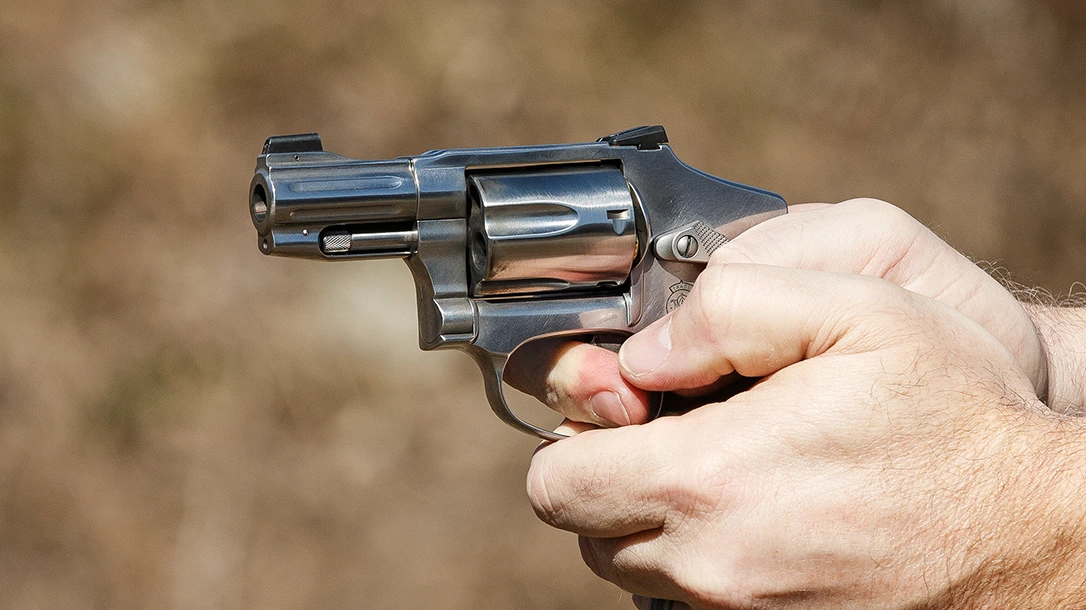
Back before the advent of high-capacity semi-autos, striker-fired monstrosities, and micro-compact marvels, revolvers ruled the defensive handgun roost. When it came to concealed carry, the snub-nose revolver was king, and .38 Special was the go-to caliber of choice. However, there’s a solid argument for changing things up and going with 9mm instead of the classic .38. That’s what we’ll talk about as we look at the new Smith & Wesson Davidson’s Exclusive 940 J-Frame revolver.
The Smith & Wesson Davidson’s Exclusive 940 J-Frame
There aren’t many complicated parts or bells and whistles to talk about when it comes to most factory revolvers. Even an absolute newbie can figure one out pretty quickly and get it into action.
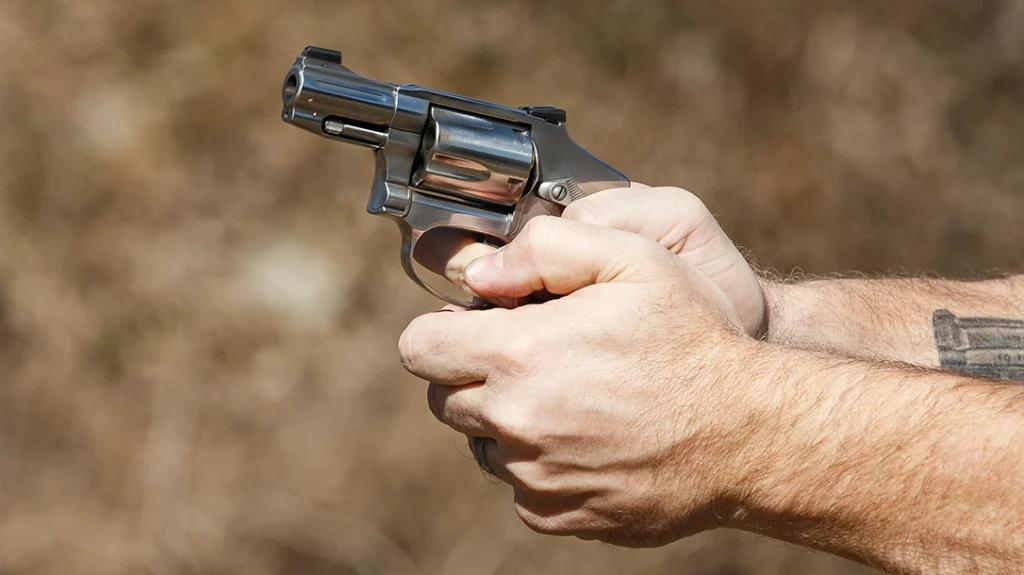
The Davidson’s Exclusive 9mm 940 is about as simple as it gets because it has an enclosed hammer. That means there’s no external hammer spur to get snagged on clothing during the draw. It’s much cleaner and snag-free to draw from concealment. But that also means there’s no hammer to cock for a single-action trigger pull when you want that extra-precise shot.
Advertisement — Continue Reading Below
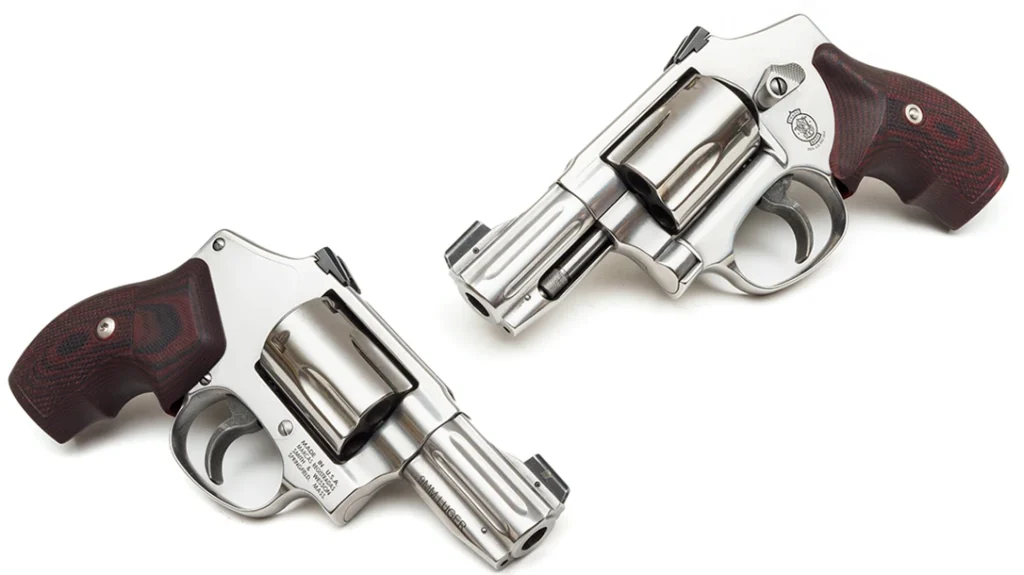
The lack of an external hammer makes the 940 a Double-Action-Only (DAO) revolver. That means, without a way to cock the hammer, every single trigger pull has a longer and heavier trigger throw. This requires the user to really focus on training to ensure a smooth trigger pull on each shot, since it’s a little more challenging to keep the sight on target during the longer, heavier trigger pull.
However, if you think about it, in a defensive encounter, most folks aren’t going to cock the hammer before they fire each shot anyway. A defensive encounter is nothing like a lazy afternoon at the range. Most folks are going to pull the trigger as quickly as they can when that adrenaline hits.
Advertisement — Continue Reading Below
The Davidson’s 940 J-Frame In Hand
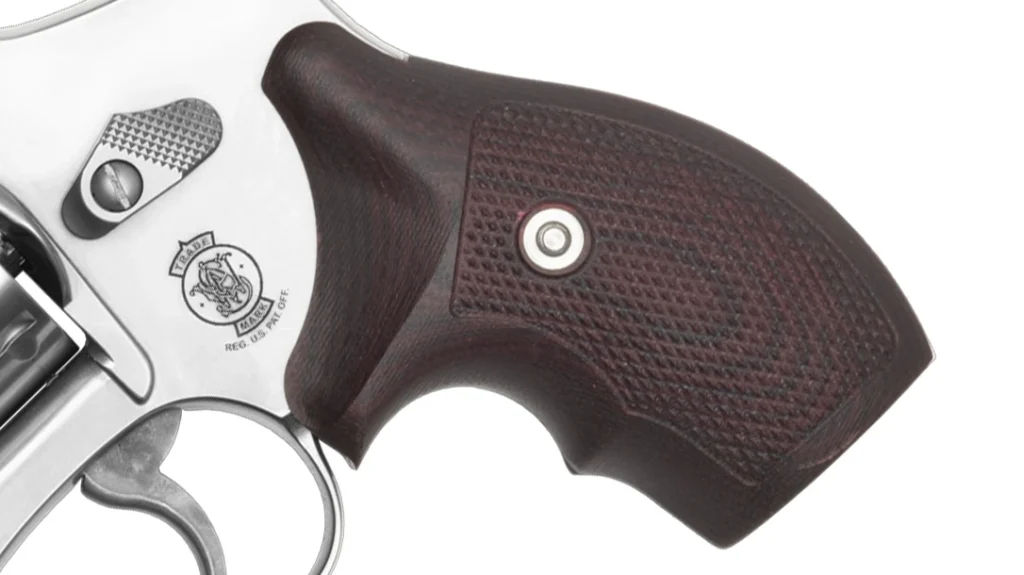
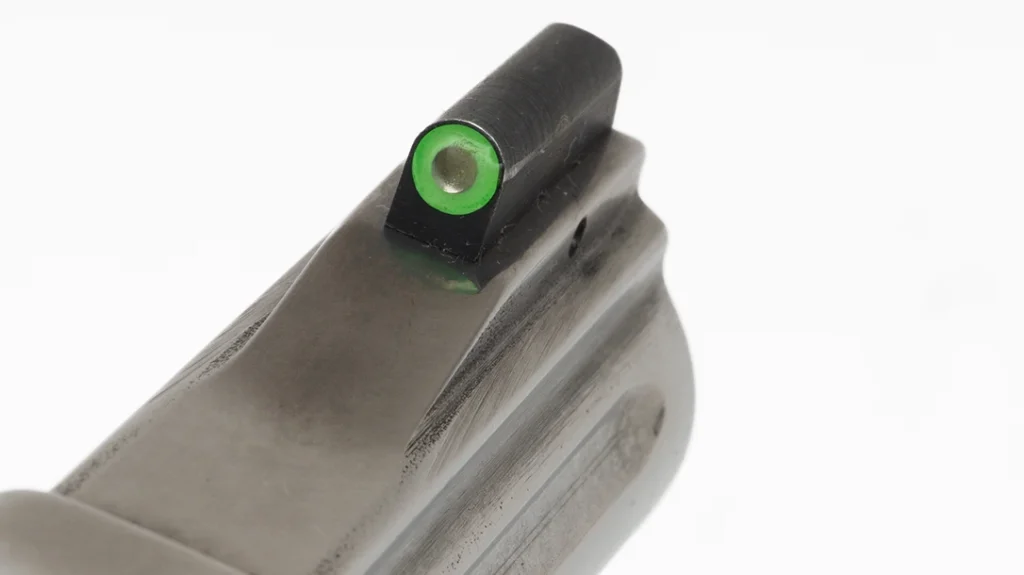
The Davidson’s Exclusive is a good-looking piece with its set of VZ grips and the fluted 2.17-inch barrel. However, it’s a functional piece, too. It wears a set of effective sights, including a high-visibility XS front sight with a tritium insert and a dovetailed, blacked-out rear sight where you often just get a sight groove instead.
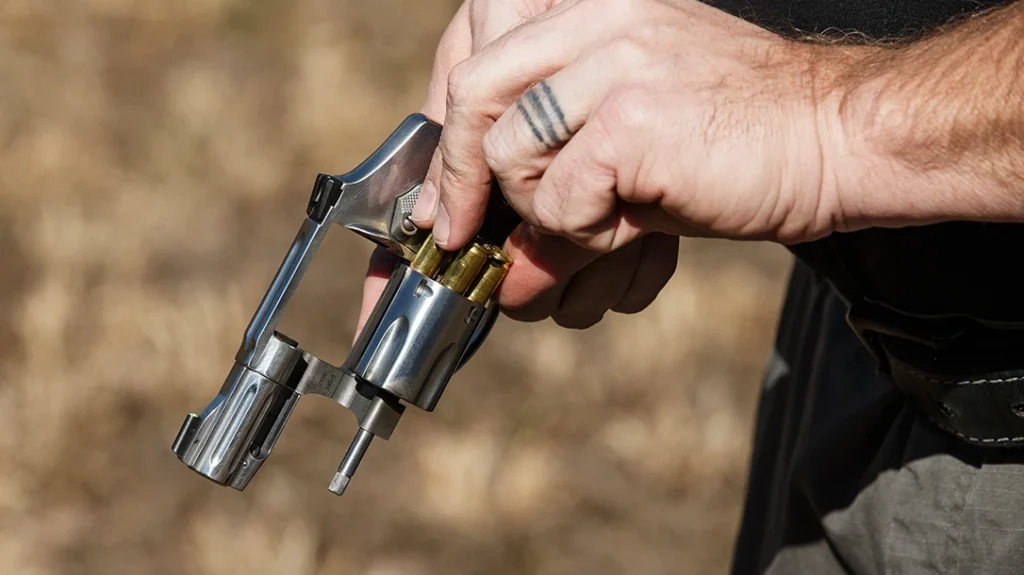
And since the 9mm is a rimless cartridge, moon clips are required to load the rounds into the cylinder. Moon clips are essentially thin, circular pieces of metal that you can snap the rounds into place for easy loading.
Advertisement — Continue Reading Below
The 940 features a stainless-steel frame and a stainless-steel cylinder. Some J-frames have an aluminum frame, making them lighter and easier to carry all day. However, the extra heft of a stainless-steel frame helps tame recoil for a more pleasant shooting experience overall.
So, it’s a trade-off between being easier to carry or easier to shoot. For me, the answer to that question depends on the caliber I’m shooting and how I’m carrying the revolver.
Advertisement — Continue Reading Below
For example, if I’ve got it in a good belt-and-holster rig, I’m okay with a steel J-frame because it’s compact. It’s not like carrying a full-size, all-steel 1911.
However, if I have a J-frame in an ankle holster, I might opt for the aluminum-frame or polymer-frame (Ruger LCR) version instead. Even a small chunk of steel can impact your stride after a full day. You’ll begin to notice the difference in how you’re walking quicker with a steel revolver versus an aluminum one.
A 9mm Snubbie
As for caliber choice, that’s where I think the 9mm version of the J-frame shines the most. Standard 9mm loads operate under a higher pressure threshold than .38 Special. So, there’s a bit more energy and velocity once the bullet leaves the barrel.
Advertisement — Continue Reading Below
In fact, 9mm has approximately double the pressure of a .38 Special load. That generally leads to better terminal performance with expansion and/or penetration, depending on the bullet type you are using.
Yes, I have heard about .357 Magnums. And I’m aware that there are J-frames in .357 Magnum with even more pressure, velocity, and energy. I have also fired many J-frames in .357 Magnum. They will definitely get the job done, but they’re painful to shoot, especially after the first few rounds.
Advertisement — Continue Reading Below
I like to train and practice with the gun and the exact load I am carrying. Shooting .357 Magnum rounds in a J-frame keeps me from wanting to train.
On the other hand, 9mm strikes a nice balance between .38 Special and .357 Magnum by offering more energy than the lower end and not being as abusive as the other end of the spectrum. Plus, I find that the older I get, the less tolerance I have for guns that hurt to shoot. So, sue me!
Considerations of the J-Frame
There are some pros and cons to a little revolver like the 940 that you’ll want to keep in mind before making your choice. Let’s discuss those before we talk about our experience at the range with the Davidson’s Exclusive 940.
Pros:
- Revolvers are generally more reliable and less likely to jam, especially because of a lack of cleaning or neglect.
- If there’s a misfire, you don’t have to rack the slide to clear the round. You simply pull the trigger again to move on to the next round.
- Since there is no slide to cycle, requiring extra room, a revolver can be reliably fired from within a coat pocket multiple times in an emergency, giving one an advantage of surprise and speed to the first shot.
- And since the revolver can be hidden in a coat pocket for effective use, in a dicey situation, you can have your hand on the revolver ready to rock and roll without anyone even knowing. That’s why LEOs don’t want people to have their hands in their pockets during a stop.
- Revolvers are much simpler to understand and use and can quickly be employed by even an inexperienced shooter.
- At contact distances during a defensive encounter, a revolver will not go out of battery when pressed directly against a target like a semi-auto will. The revolver will still fire.
Cons:
- Revolvers typically have a much lower capacity, in the case of the 940, just five 5 rounds.
- Revolvers are not as quick to reload as semi-autos for most people. Training with moon clips and speed loaders is a must to become proficient at quick reloads.
- The heavier trigger pulls of revolvers, especially DAO revolvers, make it harder to be accurate with shot placement versus lighter striker-fired or single-action semi-autos.
- In some cases, a revolver’s heavier trigger may be difficult, if not impossible, for the user to pull because of a lack of hand or finger strength. My own mother could handle the recoil of a handgun, but as she got older, she didn’t have enough strength in her fingers to pull the trigger of her Colt Lawman MK III.
- Revolvers are usually thicker than semi-autos of the same approximate length and height. This makes them a little harder to conceal, especially in the age of micro-compacts.
Trigger Talk
When I measured the DAO trigger pull of the Davidson’s 940 on my digital trigger gauge, I got an average reading of 9.93 pounds. That’s a heavier pull than most people are used to these days. However, the trigger throw was relatively smooth without any hitches or hang-ups during travel.
It’s not the heaviest DAO trigger I’ve encountered, but it’s not as smooth or as light as some custom jobs I’ve tried. However, those custom jobs cost big money. The 940’s DAO trigger is almost as good as you’re going to find in a standard production revolver.
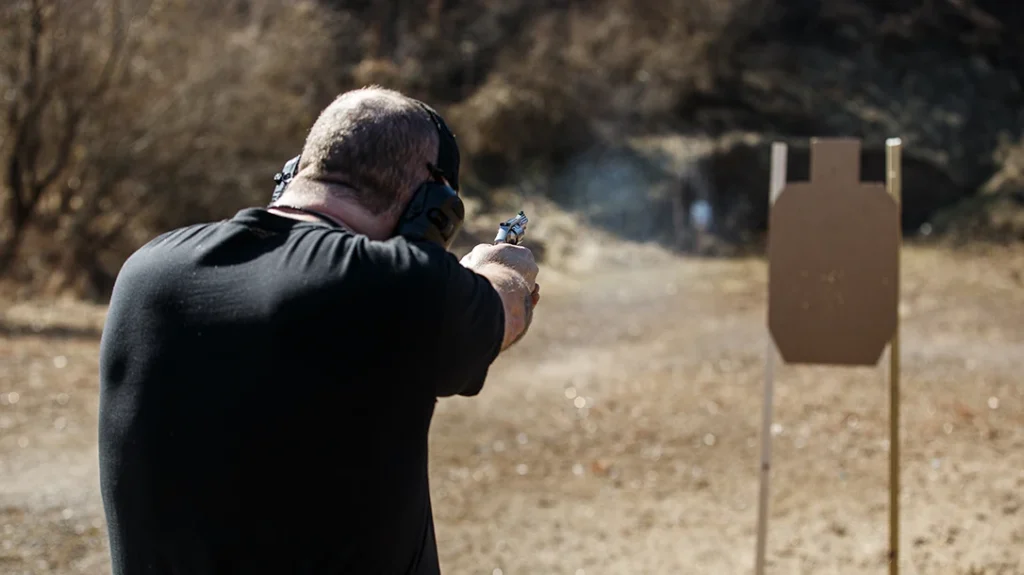
Even so, that relatively heavy trigger pull made it a little more challenging to shoot consistently accurate shots for the accuracy portion of my tests. With a barrel this short, we generally test accuracy at 7 yards from the bench to get a feel for a gun’s potential. However, getting that potential while shooting offhand is up to the shooter.
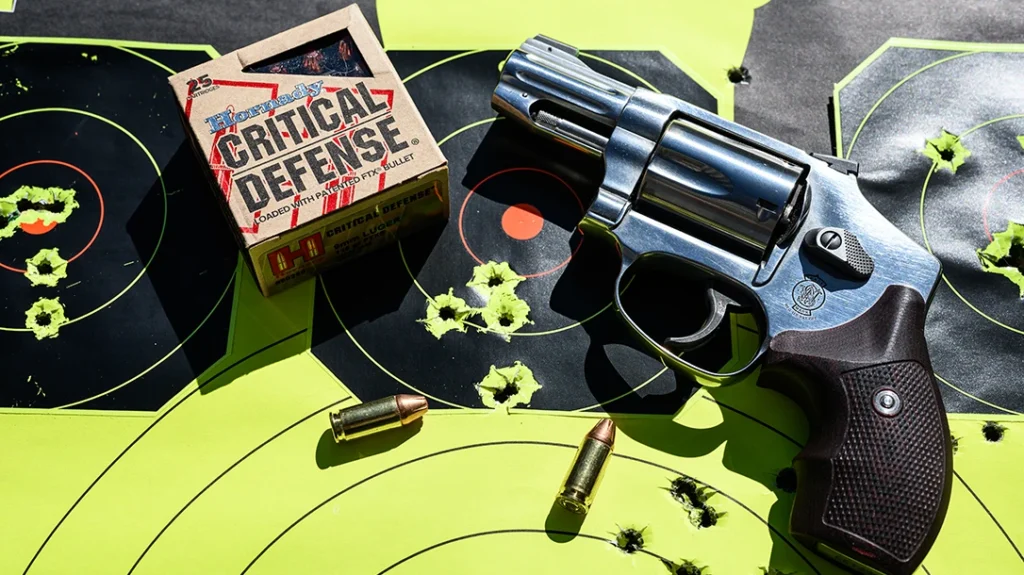
The results were about what I expected, with groups averaging 1.79 inches for all ammo types tried. Hornady’s 115-grain Critical Defense load turned in the best results. It had an average group size of 1.56 inches and a best five-shot group measuring 1.44 inches. With a DAO revolver with a heavy trigger and a short sight radius, the human factor weighs in more heavily than usual.
So, who knows? Another shooter might squeeze a little better accuracy out of the 940, or another load type might do the trick. Still, these results were more than good enough for a revolver of this type since it’s most likely to be used defensively within that 7-yard distance.
Shooting the S&W 940 J-Frame
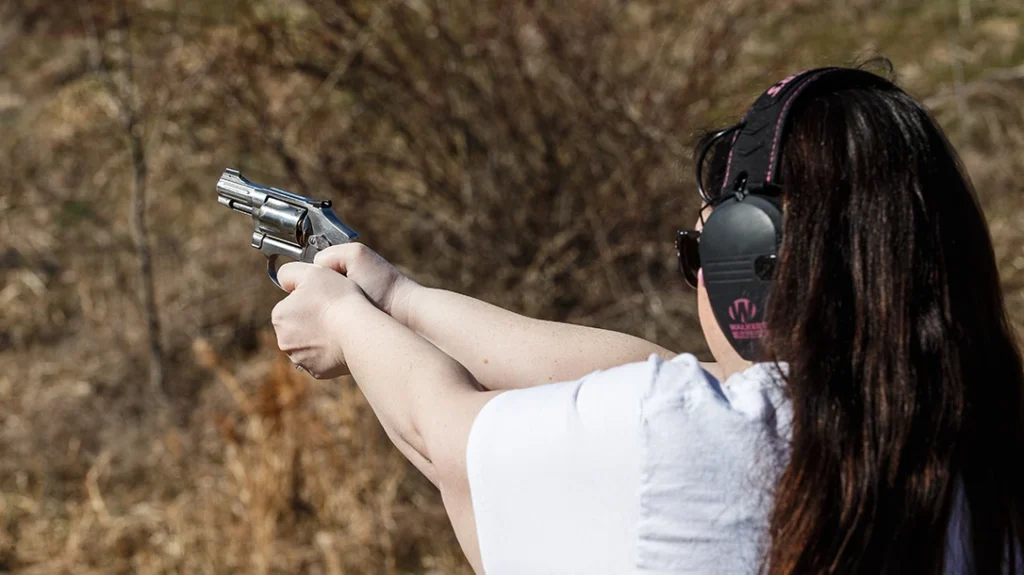
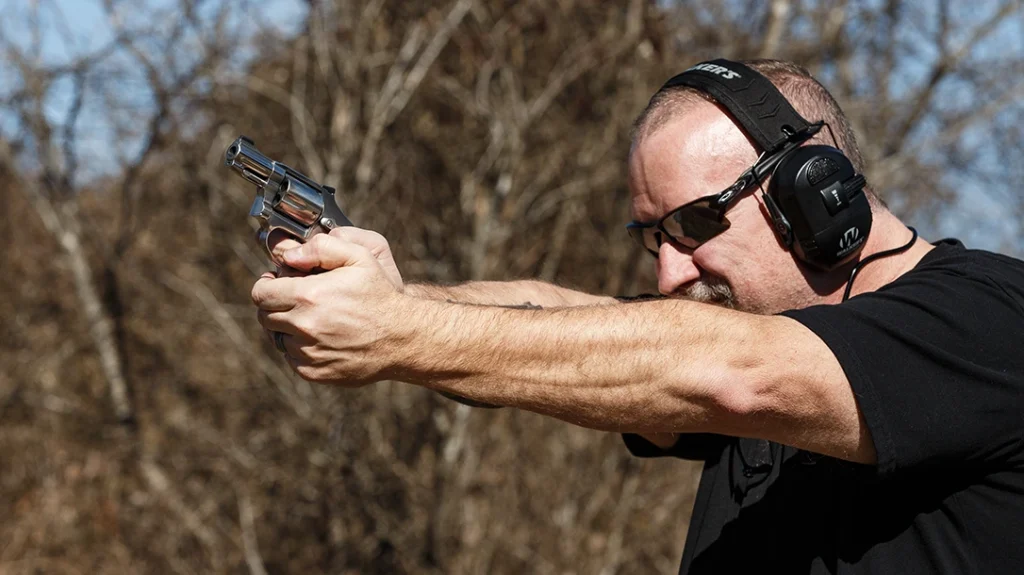
The extra heft of the steel frame went a long way to dampen the recoil of the 9mm loads we tried with the 940. Despite the extra energy and velocity bump we got over standard .38 Special loads, the 940 was still very comfortable to shoot. Likewise, the recoil was relatively easy to manage.
During our session, with drills and general practice, everyone practiced speed-loading the 940 with moon clips to familiarize themselves with the process and improve. The ability to quickly reload a revolver is just as, if not more, important than doing so with a semi-auto. Specifically, because a revolver has a much lower capacity.
No one had any issues employing the moon clips once they figured out how to finesse the rounds into the cylinder during the drills.
It almost goes without saying, but the reliability of the Davidson’s Exclusive 940 was perfect. Smith & Wesson has been making revolvers for a very long time, and pretty much has the process down pat. Though it doesn’t hurt to pay attention to what the revolver is doing during fire.
Revolvers can be pretty much neglected for years and still fire. However, they can still act up if they are shot extensively, sometimes with the cylinder getting out of time. So, if you’re spending a lot of time at the range with your revolver, keep an eye on what’s happening.
The Davidson’s 940 J-Frame Capitalizes on Extra Velocity
The big advantage of the 940 over most other J-frames is that it can capitalize on the extra velocity and energy of the 9mm round over the generally slower and less energetic .38 Special. Despite that extra velocity and energy, the 940 is still very comfortable to shoot and, more importantly, train with versus a more powerful option like .357 Magnum. The Smith & Wesson 940 sits in the sweet spot between power and manageable recoil control.
With all the various factors examined, I think the Smith and Wesson 940 is a fantastic compact revolver. You get the extra power of 9mm, the speedy loads with the moon clips, and the extra mass of the steel frame helps tame the recoil of the 9mm load in such a compact package. When you consider all of that, the MSRP of $1029 doesn’t seem too bad.
But if you’re a budget-conscious shooter, Smith & Wesson offers the 940-3. It is essentially the same gun but without the snazzy grips, polished finish, and fluted barrel. That model has an MSRP of just $899.
If you’re looking for something that looks good, offers manageable recoil, but still offers a little more zip than .38 Special, then the Davidson’s Exclusive 940 might be just the one you’ve been looking for all along. It takes a little practice and dedication to use it well, but the reward is well worth it.
Smith & Wesson 940 J-frame Specs
| Caliber | 9mm |
| Barrel | 2.17 inches |
| Overall Length | 6.63 inches |
| Width | 1.31 inches |
| Weight | 23.52 ounces |
| Grips | VZ Grips |
| Sights | Front Night, Blacked Out Rear |
| Action | Double Action Only |
| Finish | Stainless |
| Capacity | 5 |
| MSRP | $1029 |
Performance
| Black Hills 100gr. Honey Badger | |
| Velocity | 1240 |
| Average | 1.98 |
| Best | 1.56 |
| Federal 124gr. HST | |
| Velocity | 1060 |
| Average | 1.85 |
| Best | 1.53 |
| Hornady 115gr. Critical Defense FTX | |
| Velocity | 1068 |
| Average | 1.56 |
| Best | 1.44 |
Bullet weight measured in grains, velocity in feet per second from the muzzle by a Garmin Xero C1 Pro Chronograph, and accuracy in inches for three, five-shot groups at 7 yards.
WHY OUR ARTICLES/REVIEWS DO NOT HAVE AFFILIATE LINKS
Affiliate links create a financial incentive for writers to promote certain products, which can lead to biased recommendations. This blurs the line between genuine advice and marketing, reducing trust in the content.