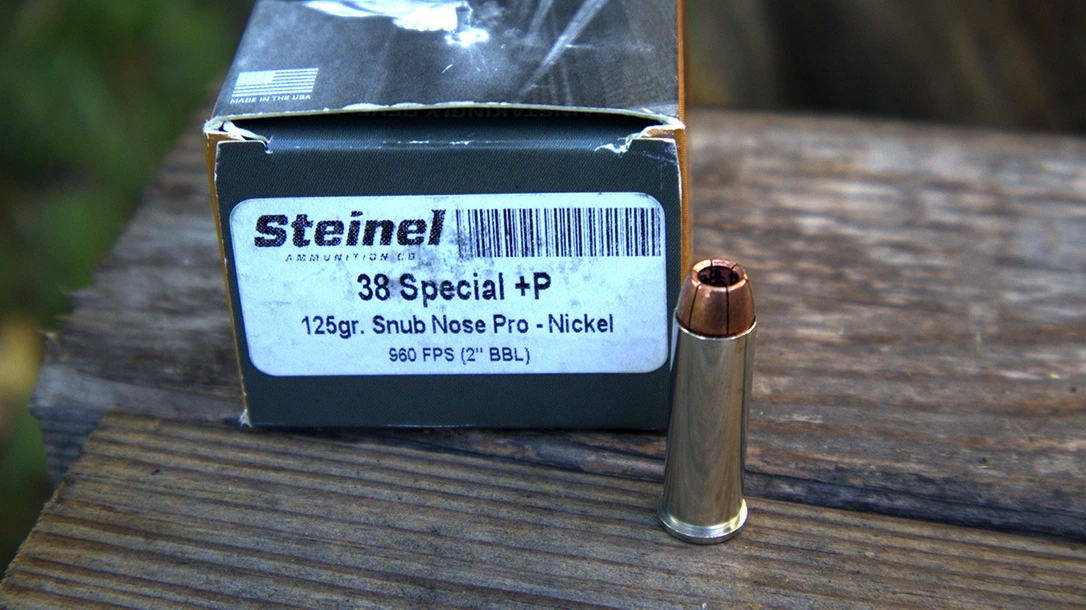
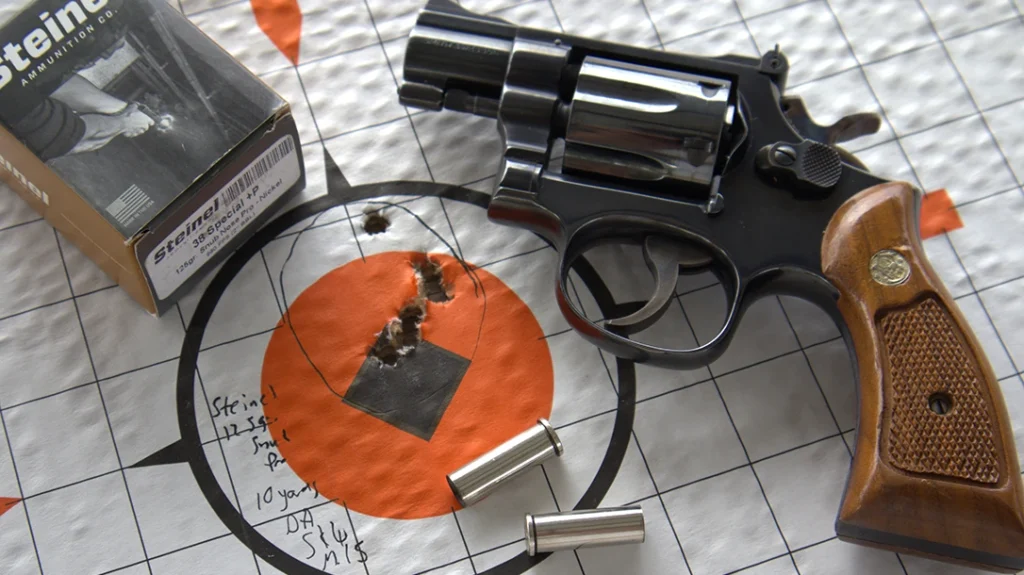
The .38 Special cartridge is an old dog that continually learns new tricks. Despite the march of time, the .38 remains the default revolver cartridge, and ammunition continues to diversify. For personal protection, some shooters often opt for the old school lead wadcutter round for recoil control, while others opt for a modern jacketed hollow point. There is also the more recent wave of all-copper fluid-dynamic and monolithic hollow-point rounds. The latter category includes the 125-grain .38 Special +P Snub Nose Pro round from Steinel Ammunition.
Steinel .38 Special +P Snub Nose Pro Ammunition
Steinel Ammunition in Twinsburg, Ohio, began producing ammunition in 2015. The company is best known for bringing back obsolete military rifle and pistol cartridges. However, it has since expanded to include match and hunting ammunition for conventional rifles. Now they have a line of cast, jacketed hollow point, and all-copper options in popular and obscure handgun cartridges. On the conventional side is Steinel’s .38 Special Snub Nose Pro load.
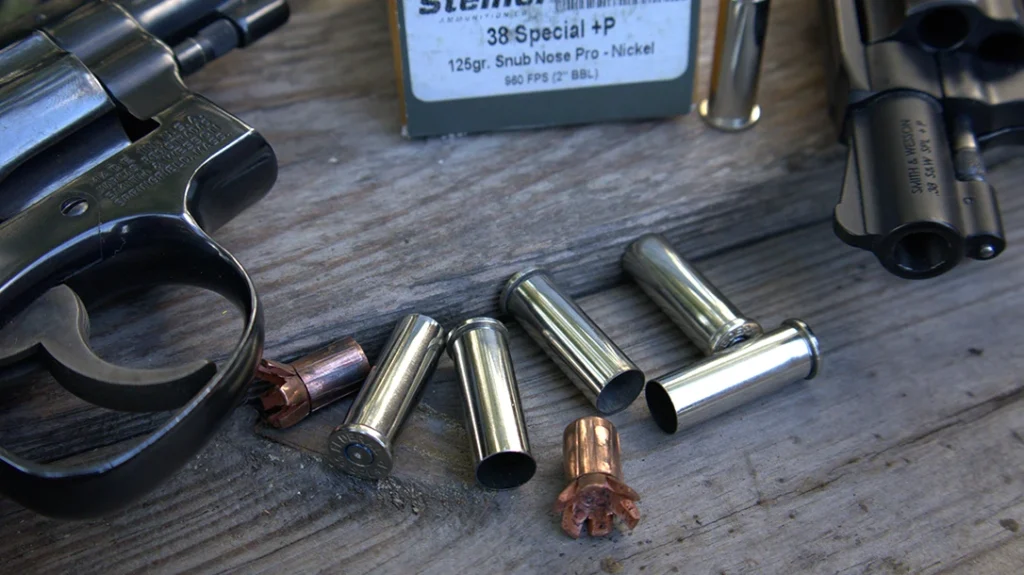
Snub Nose Pro ships in boxes of twenty rounds and is available with a choice of standard brass or nickel-plated Starline brass cases. The standout feature is the use of a proprietary all-copper 125-grain hollow point. Correspondingly, the bullet itself is conical, with a wide cavity and six segments.
Advertisement — Continue Reading Below
The Snub Pro load is +P-rated and loaded with Hodgdon CFE powder. This versatile powder yields higher velocity for the nominal pressure it generates and has the added benefits of a lower flash signature and reduced copper fouling. It is the right choice for short-barreled revolvers while keeping the ultimate cleanup minimum after range time.
A Problem to Solve
Like all other handguns, .38 Special snubnosed revolvers are a compromise. When modern hollow-point ammunition began to be offered for the round in the 1970s, 4-inch-barreled .38 Special revolvers were typical duty equipment for law enforcement. As such, hollow-point ammunition was developed with handguns like this in mind.
Advertisement — Continue Reading Below
Today, law enforcement is firmly in the semi-auto pistol camp, and most .38 Special revolvers sold today are the snubnosed variety. The old loads did not offer good expansion and penetration at the lower velocities snubnosed barrels yielded.
Ammunition makers have realized this and changed their act. But some standby loads have gone largely unchanged. As such, some .38 Special loads like the Federal HST and Speer Gold Dot perform very well, while others fail to get good expansion or penetration.
Steinel’s all-copper hollow point is engineered for good expansion. However, its monolithic nature prevents jacket separation, onerous fragmentation, and other factors that reduce mass and hinder penetration.
Advertisement — Continue Reading Below
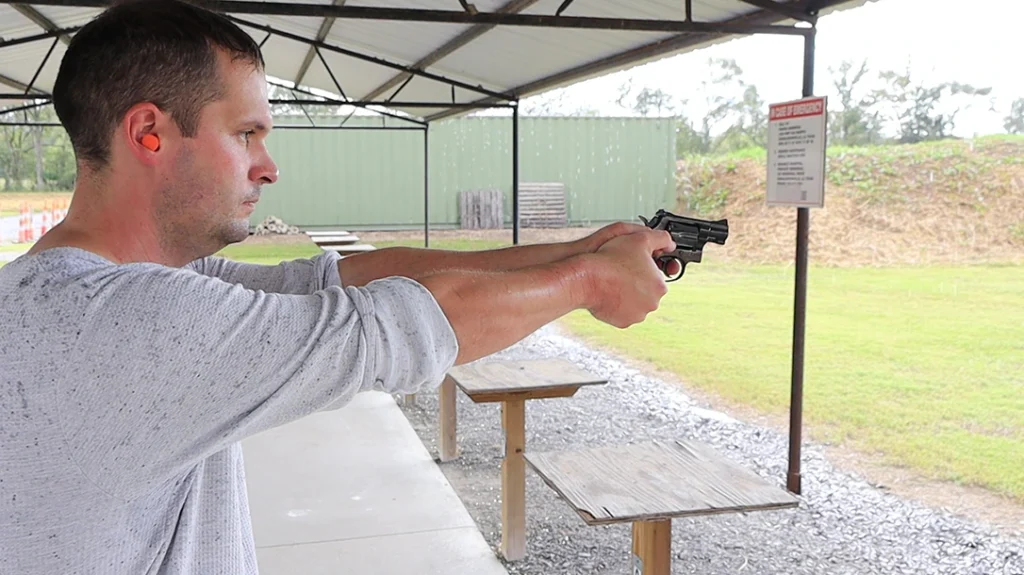
On the Range with the Steinel Snub Pro Load
I shot the Steinel 125-grain +P Snub Nose Pro load for general impressions, accuracy, velocity, and finally, terminal performance. The revolvers I used are a Smith & Wesson Model 15 and a Smith & Wesson 442. The former represents a more full-sized design, while the 442 is a classic Airweight J-frame meant for deep carry. Both wear 1 7/8 inch barrels.
As a basis of comparison, I shot the Steinel load alongside perhaps the more legendary .38 load there is: the Federal 158 grain +P lead semi-wadcutter hollow point. This is the old FBI load, and the Federal loading has the softest lead and is renowned for good penetration and expansion, even in shorter barrels.
Advertisement — Continue Reading Below
Initial Impressions and Accuracy
I warmed up with the Federal FBI load with both revolvers by shooting at paper from a distance of ten yards. All shooting was done in double action. The 158-grain slow pill was smoky. Recoil was sedate with the all-steel Model 15. The little 442, with its smaller grip and overall lighter weight, was jumpy, but recoil was not prohibitive.
Next, I moved onto the Steinel Snub Nose Pro load. Recoil was about identical to the FBI load, but there was much more concussion. That concussion did not translate to more flash, as I was able to test that variable as thunderstorms rolled in. The FBI load produced plenty of flash, but the Snub Pro load seemed tame by visual comparison.
On paper, it was easy to keep five rounds of the Snub Nose Pro load inside a two-inch pattern at ten yards. It took some trying with the little 442, but in the larger Model 15, getting near one-hole groups was child’s play.
Advertisement — Continue Reading Below
Velocity Testing
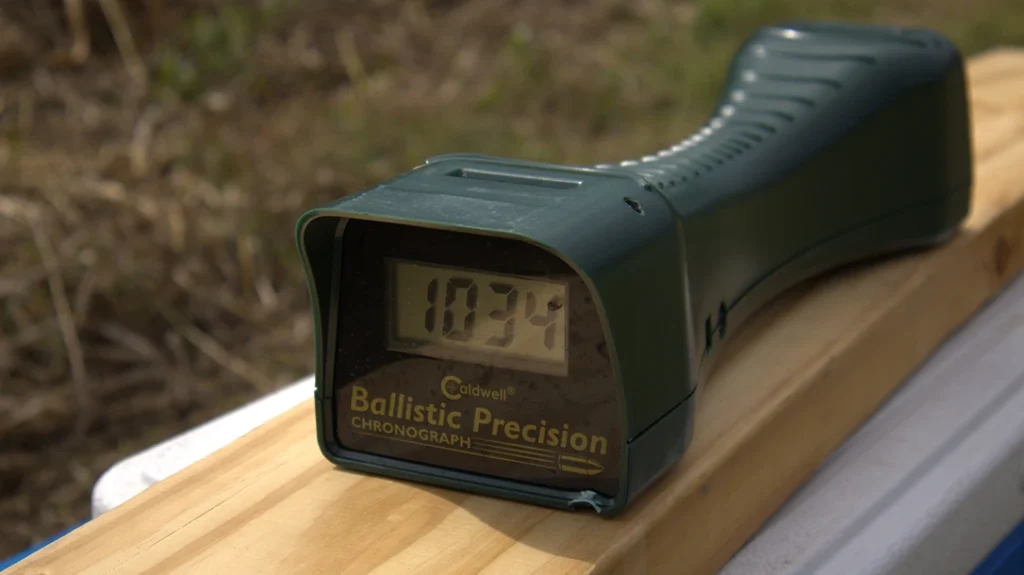
I shot both the Federal FBI load and the Steinel Snub Nose Pro load over my Caldwell chronograph from ten feet away. The five-shot average velocity with the FBI load is 773 feet per second, delivering 210 foot-pounds of energy. The Snub Nose Pro load has an advertised velocity of 960 feet per second, and that is right on the money.
The average velocity I recorded was 1,007 feet per second. That gives us a muzzle energy of 281 feet-per-second. Velocity and energy suffer with short barrels, but we can see the Snub Pro is substantially more powerful than the famed FBI load. However, will bullet construction make or break that advantage?
Advertisement — Continue Reading Below
Terminal Performance
To test terminal performance in a comparative manner, I shot the Steinel Snub Nose Pro load into two calibrated Clear Ballistics 10% ordnance gelatin blocks fronted by four layers of denim. The gelatin is a simulant for muscle tissue, while the denim barrier represents an absolute worst-case shot through an arm with the toughest fabric mankind would sanely wear.
The FBI’s standard of measure in this medium is 12-18 inches of penetration, which we will use for our baseline.
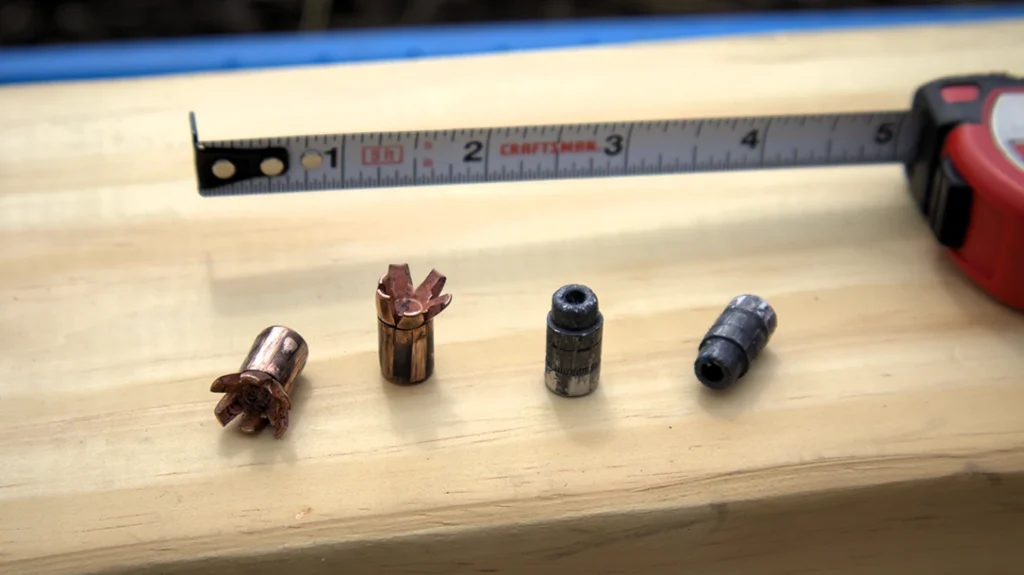
My first shot at ten feet hit a glancing blow on the left side of the block. My next two shots hit the center of the block. Both rounds tumbled and expanded, leaving impressive ¾ inch puckering running from the 1 ½ inch to the 8-inch mark, bringing in denim all the way.
Both rounds stopped base first. One stopped at 11 ½ inches while the other at 12 ¼ inches. The former’s petals expanded out to .62 inch in diameter. The other expanded out to .58 inch with only 4 out of the 6 petals fully peeling out. Weight retention for both rounds was 100%.
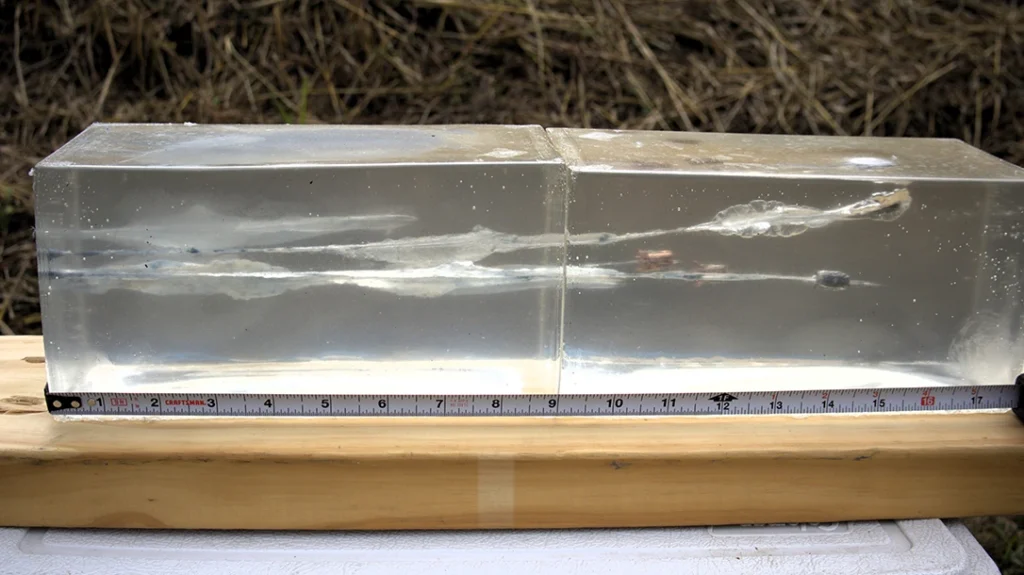
Next, I fired two rounds of the Federal 158-grain +P FBI load into the medium. The wound tracts of this load were more subdued, and at its lower velocity, both rounds clogged with denim and failed to expand. Both rounds landed between the 14- and 15-inch mark.
The Steinel Snub Nose Pro: A Good Snubby Load?
Steinel’s literature on their Snub Nose Pro load indicates a desired twelve-inch depth of penetration in gelatin. This seems to reveal the intent behind the round: it’s designed for maximum energy dump while achieving a minimum acceptable amount of penetration. The Steinel Snub Pro 125 grain +P load accomplishes this.
It did excellent damage compared to the old FBI load and gave good expansion, while the FBI load did better in the penetration department.
As a fan of the old school lead round, I came away surprised at this all-copper wonder. I was further surprised at how accurate it shot, considering there is often a variance between where traditional rounds and all-copper rounds hit. There are also variances in the manufacturing process of these machined projectiles.
All things considered, the Steinel Snub Nose Pro load is worth considering if you are toting a Roscoe in the 2020s.
WHY OUR ARTICLES/REVIEWS DO NOT HAVE AFFILIATE LINKS
Affiliate links create a financial incentive for writers to promote certain products, which can lead to biased recommendations. This blurs the line between genuine advice and marketing, reducing trust in the content.