My relationship with U.S. Optics goes back almost to their beginnings. It was the late 1990’s, and I had purchased my first “high dollar” scope, a fixed-power (10X, as I recall) designed by U.S. Optics for use on the AR-10 match rifles. Purchased from a third party, it had an elevation knob that had a dead spot or two. It was a duty optic, so I gave them a call and talked to the owner, John Williams II (Senior). Striking up a conversation, he had me send it in to take a look. Shipped on Monday, arrived on Thursday, having been completely rebuilt with both turrets replaced, free of charge, it might as well have been a new scope.
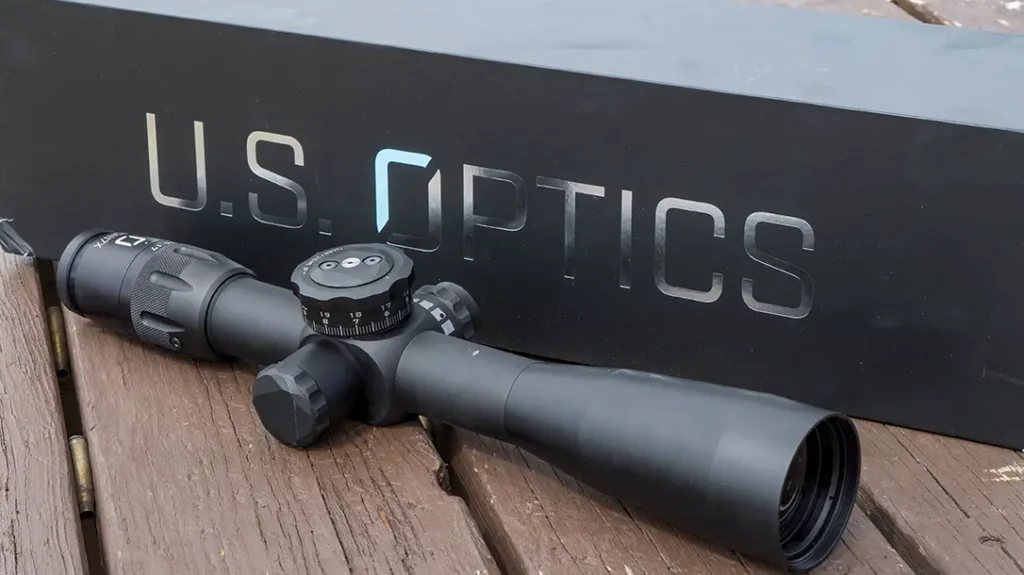
US Optics FDN 03-17X – Foundation Series Scope
That level of service solidified a relationship that spanned two generations. After John Senior’s passing, I worked with his son, John Williams III, until he left the company in 2013. I continued to use and write about US Optics scopes and still have a “legacy” 3.2-17 using an objective-based parallax adjustment. Old for sure, but it holds its own against many scopes today, a testament to the company’s past mindset.
Advertisement — Continue Reading Below
It’s a New U.S Optics
Ownership has changed along with their location. Starting in California, there was a short stop in Montana before their move to North Carolina. Their line has changed as well; the SVS and B series were a sort of combination of old and new. Slimmer and trimmer with improved ergonomics and a toolless EREK (Erector Repositioning Elevation Knob), they were very well received. Although discontinued, you can still find them on the open market. The Tactical Sporting Series (TS) remains available and is an off-the-shelf optics priced from $500.00 to $1500.00 with limited options beyond reticle choice. Their latest release, the Foundation Series (FDN), is much closer to the US Optics Legacy of top-quality, rugged optics.
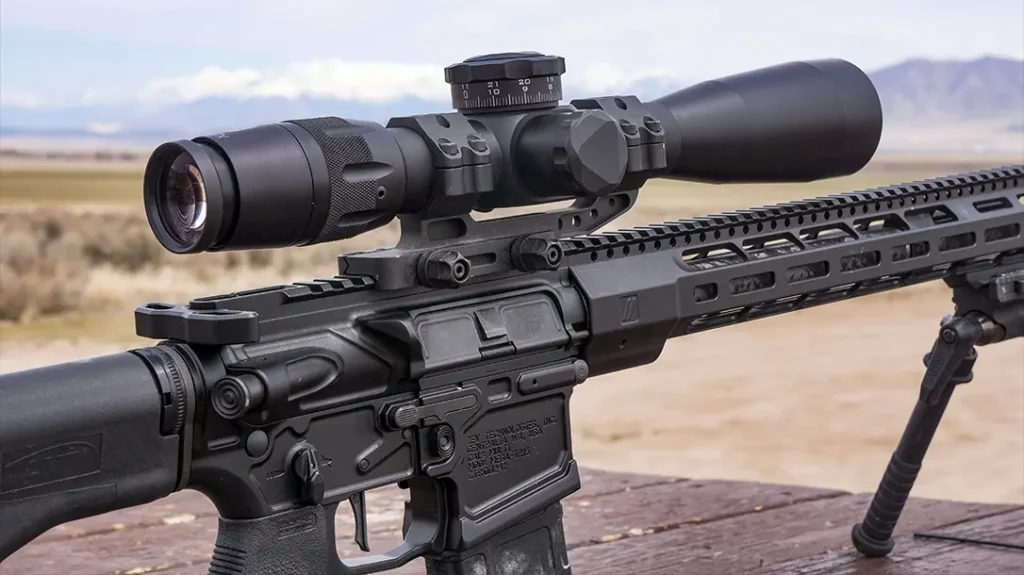
Foundation Series
Foundation Series optics use top-tier glass nestled in 34mm tubes machined from 6061-T6 Aluminum. Scopes are built to order with updated and improved versions of the turrets and controls, most importantly, the ER3K knob, a true fan favorite. Available in a fixed 10 power, 1.8-10, 3.2-17, and 5-25, they cover just about any need.
Advertisement — Continue Reading Below
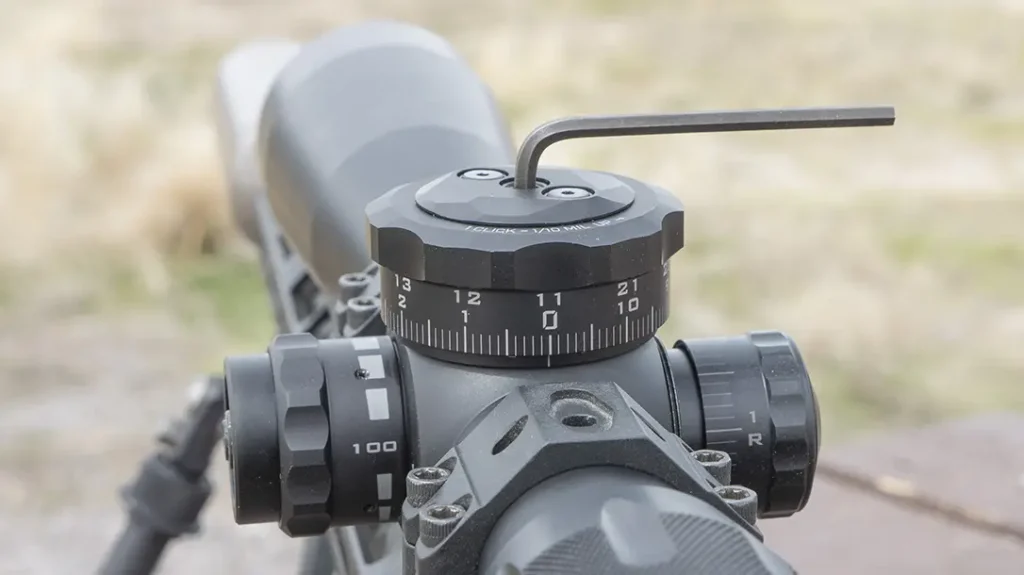
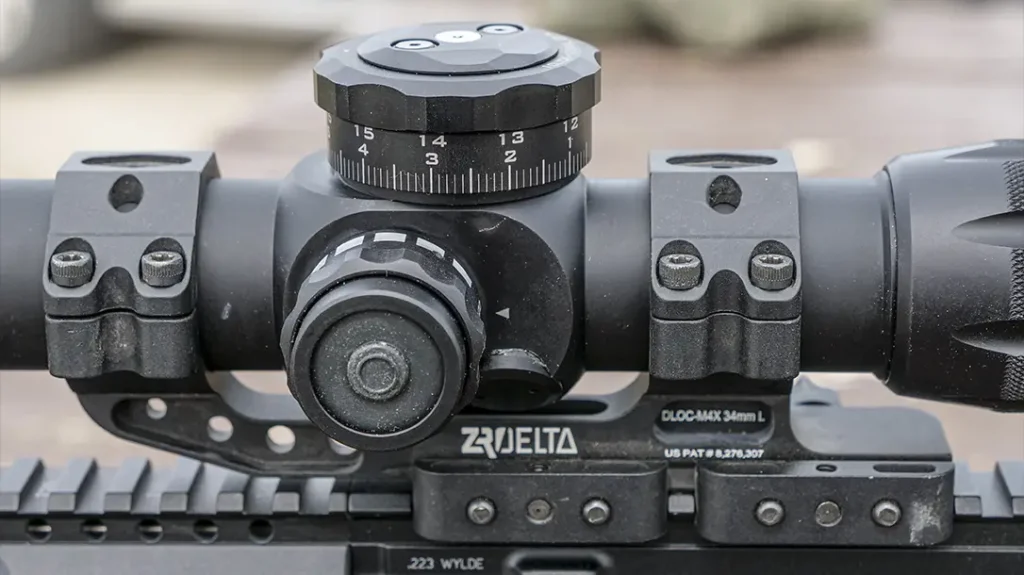
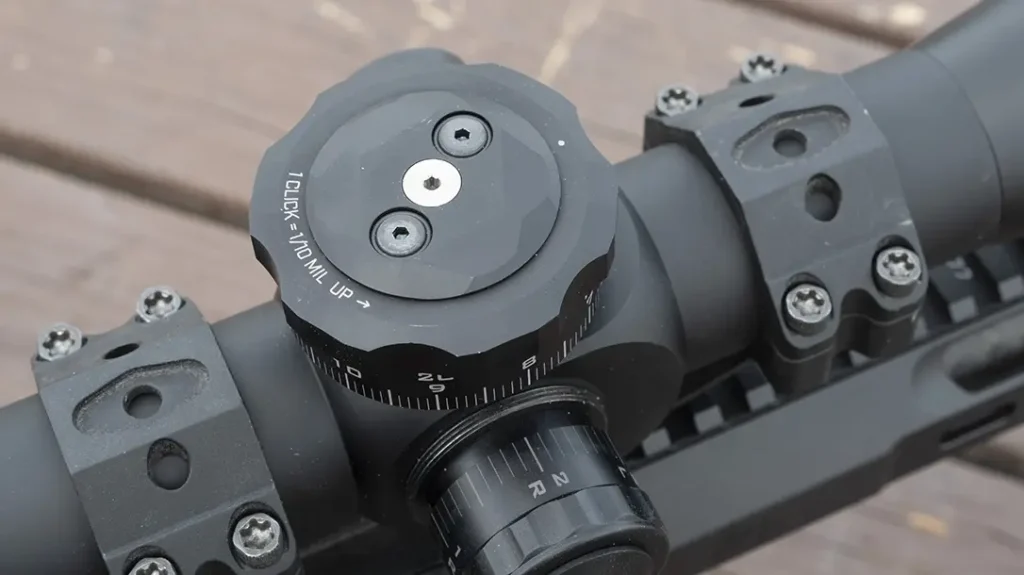
My test scope is the 3.2-17X using the GAP reticle mounted in the First Focal Plane, 50mm objective, and ER3K knob graduated in .10 mils. Providing 11 mils of elevation in a single turn, you seldom rotate past zero, and 35 Mils of elevation gets most shooters all they need. Add an elevated rail or mount that gets you out as far as most common calibers can reach. Numbers are large and bright with modern machining added and a zero stop. Windage turret is a capped US# 1 with 12 mils left and light, knobs are graduated in .10 mils with 2mils in either direction. Clicks are tactile without being chunky or loud. Parallax is adjustable down to 50 yards, and the knob doubles as a lighted reticle switch where appropriate. There are 10 levels, including night vision settings, all controlled with a single push button.
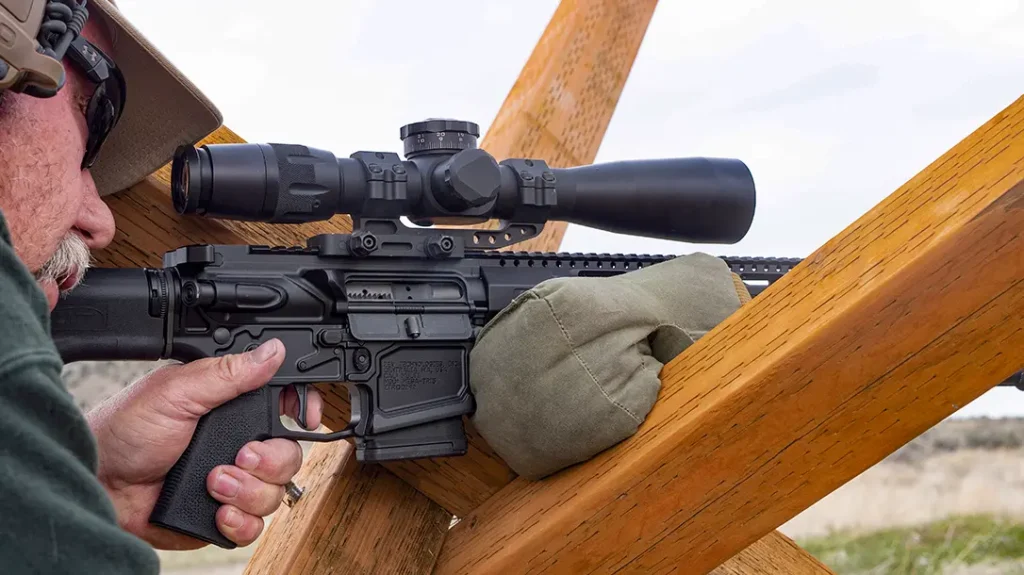
Magnification
Magnification adjustment uses a 180-degree throw, allowing you to easily move between levels. The reticle is focused easily, and the eye relief is a very usable 3.2 inches. At just under 30 ounces, it is lightweight compared to my Legacy model, about normal for this class of scopes. Great glass is heavier, as are controls and tubes designed to withstand hard use. Numerous reticles are available, including the Horus Vision T3, one of my favorites and popular with many. You can order it with or without lighting, not a particularly useful thing for most, but it’s available if needed.
Advertisement — Continue Reading Below
Setup
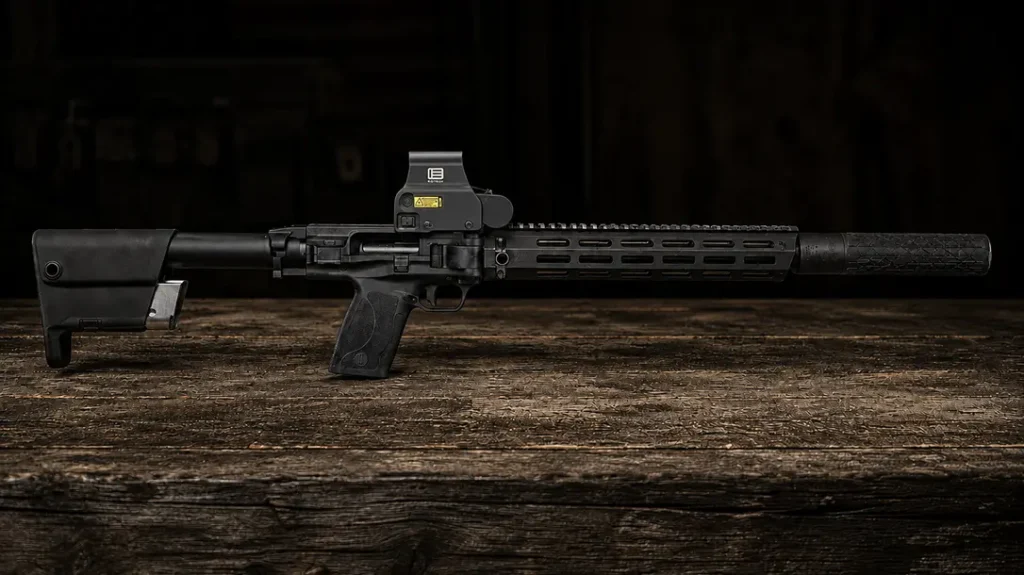
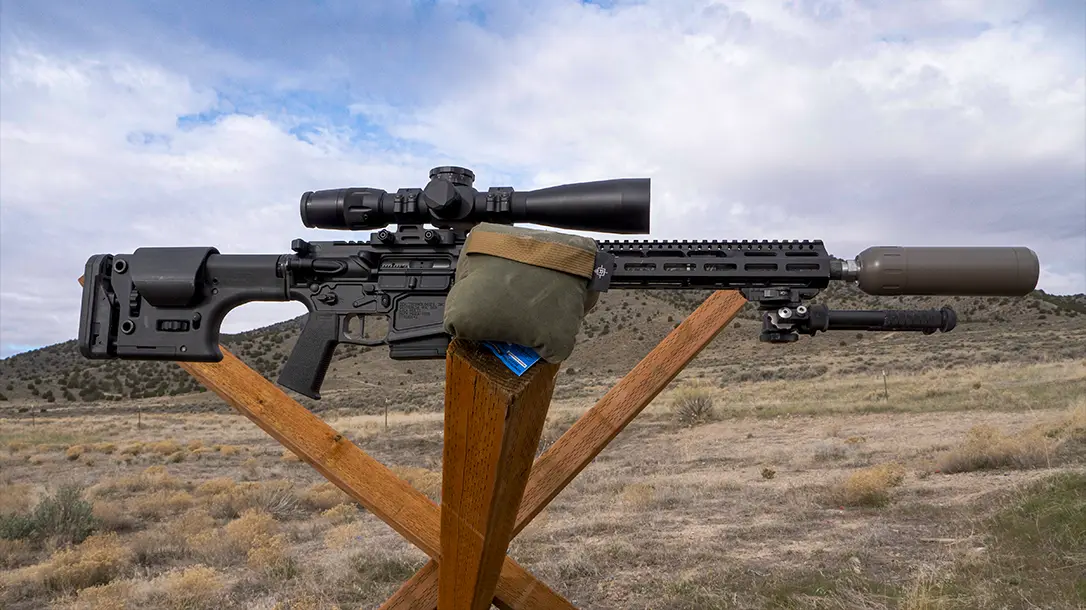
Most of the testing was completed using a Zev Technologies Billet AR15 using a Proof Research Carbon Fiber wrapped 16” barrel. This rifle took top honors at last year’s Ballistics Best round up and is one of the most accurate factory-built AR-15s ever used. Federal Gold Medal using the Berger 73-grain match bullet will produce .5-inch groups at 100 yards and 2-inch groups at 300 yards, making it a perfect test platform.
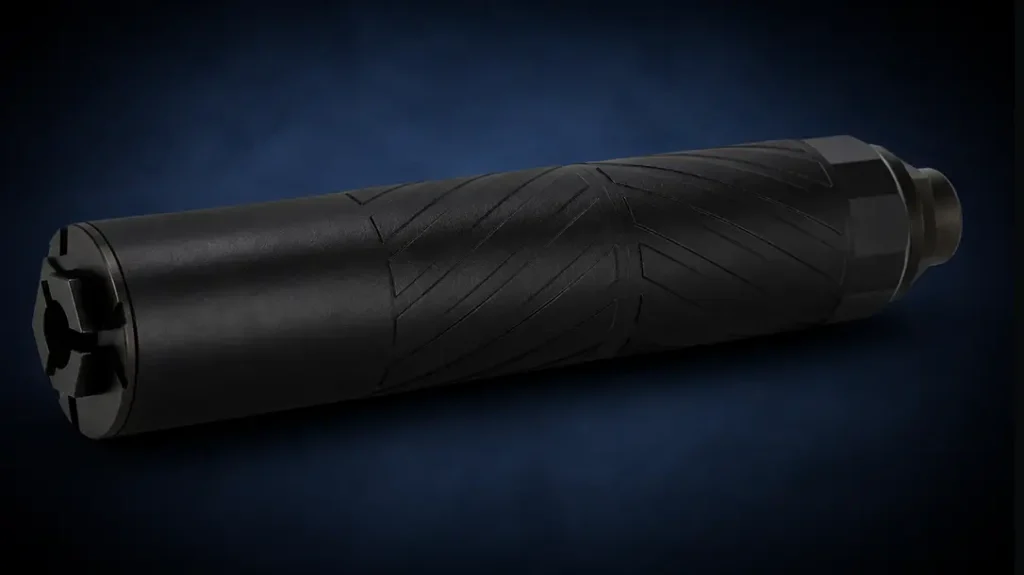
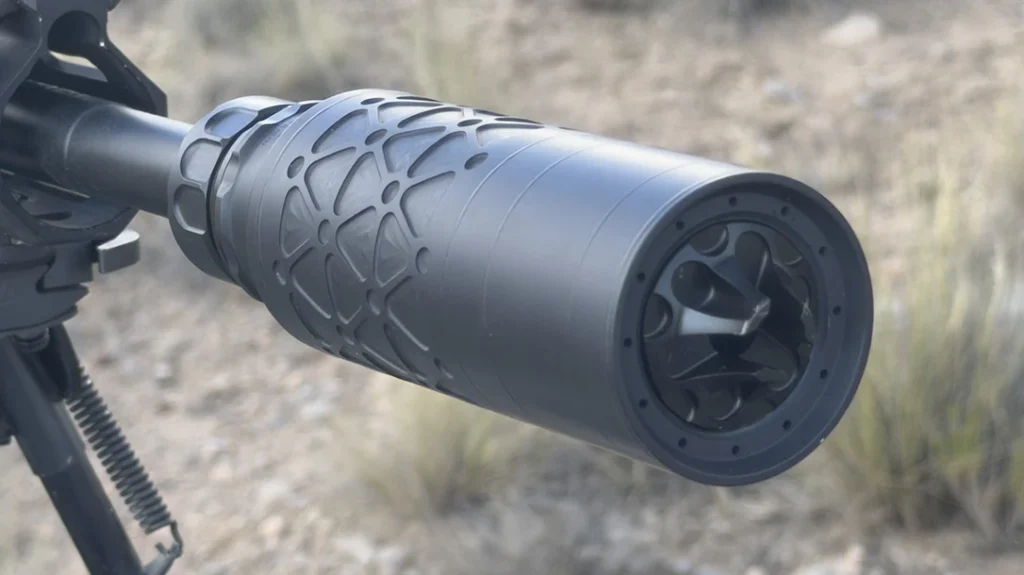
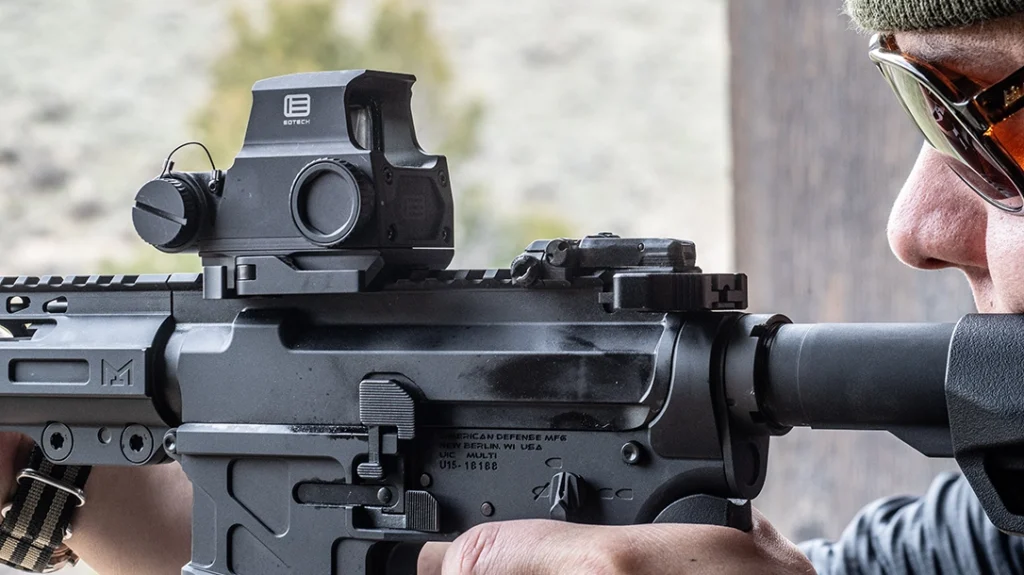
The scope was mounted in ZRODelta’s DLOC-L cantilever mount. Stock is a Lewis Machine and Tool Sniper stock, bi-pod is an Atlas CAL (Cant and Lock), suppressor is X2 DevGroup’s new Apollo X. No back pressure means no change in operation and no gas to suck up, making it a favorite of mine.
Advertisement — Continue Reading Below
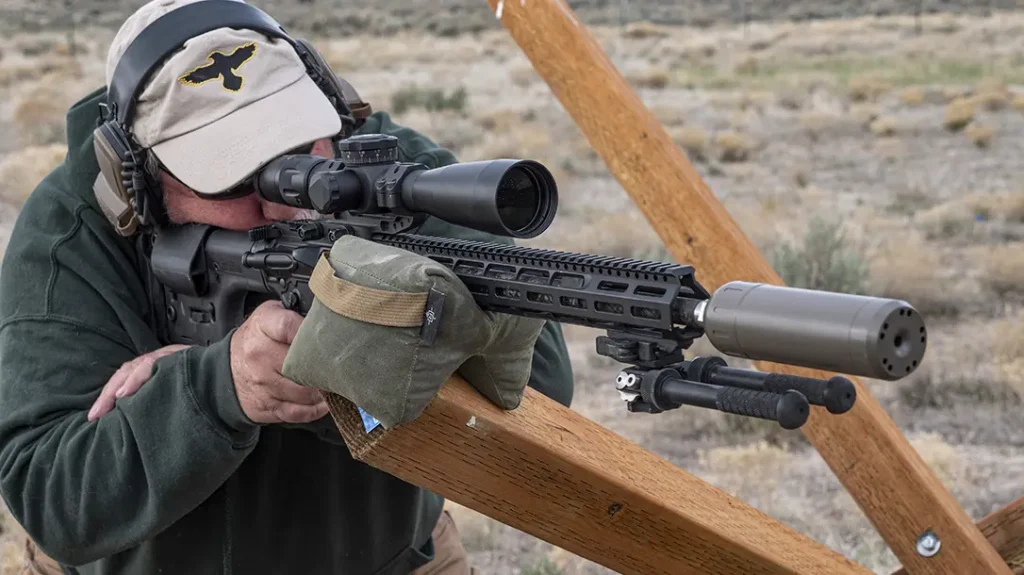
Range Time
Setting up and zeroing is pretty easy, but for those who have never used an EREK of some sort, you may want to scan the instructions or, even better, watch the video on their site. It’s a bit different, but really simple, and all the Allen wrenches needed are supplied with the scope. Zev’s rifle has a flat base, and this mount has no elevation, so it was pretty close. Once zeroed, there were roughly two revolutions (22 mils) remaining, which is more than this caliber will ever use. That gets most people on most rifles about 10 mils more than they will ever use, need more, add a rail with elevation.
Box testing is important for a new scope, but some go way overboard. I want to know whether it tracks or moves the same way in every direction. How much does it move compared to what is indicated on the turret? Box testing requires a known, precise rifle and ammunition combination, with a shooter who can reproduce that accuracy consistently. Otherwise, any inconsistencies are blamed on the scope, even though it’s more likely you, your rifle, your ammo, or all three. Holding an optic to .25-inch or .10-mil precision when you cannot shoot that all the time is a waste of ammo and time. This should be about consistency, not necessarily absolute precision.
Advertisement — Continue Reading Below
Optic Testing
Using my standard expanding 1 mil box out to 5 mils, the elevation turret was very close, within .1-.2 mils, with my best groups out to 5 mils in any direction. The drill was performed 5 times over a single session with no appreciable change outside those from atmospheric conditions. Starting at dawn, the temperature was in the 40’s, by noon it was 80 degrees, but the scope was very consistent, no matter the condition.
Box tests are a start; what really matters is how it works in the field. This rifle and ammunition combination has been tried several times out to 1000 meters using my Kestrel 5700 Elite with Applied Ballistics software. Walking from 300-925 meters inputs matched within .2 of a mil, generally right on. My hold at 925 meters is 14 mils, and dialing that up got me on the 16”x22” steel most of the time. Everything in between was pretty much the same. On this scope, a mil is a mil using the turrets out to the limits of most shooters.
Advertisement — Continue Reading Below
GAP Reticle
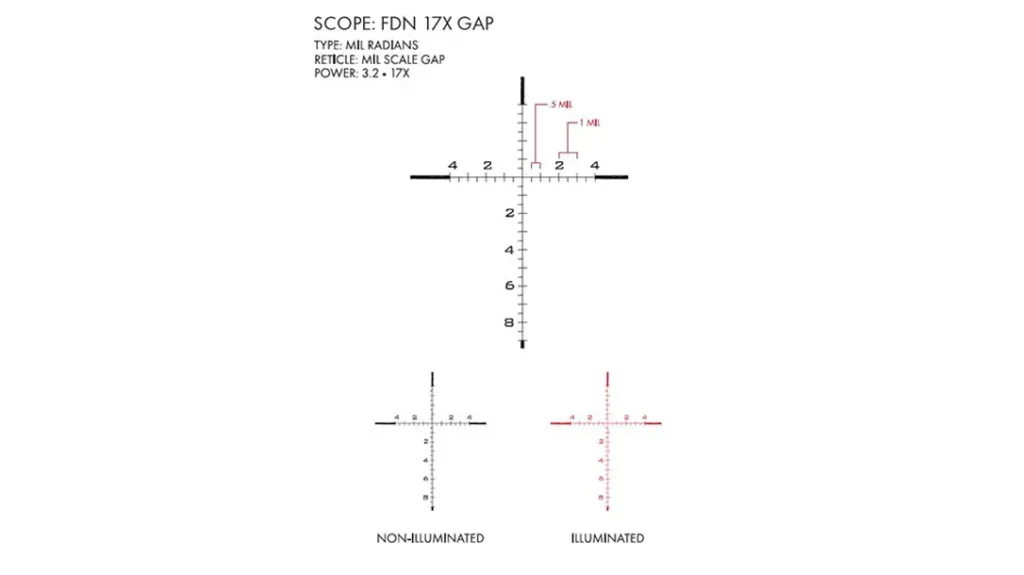
While the GAP reticle is nice for knob turners, it’s pretty useless these days for wind holds, kind of critical pushing this little bullet that far. Dialing the knob and holding the wind, it matched the turret just fine. Moving from each range holding with the reticle, it seemed to match the turret out to 600 meters, about as far as I will shoot this using the reticle for holds. Holding wind at the same time is a crap shoot, but using the top line, it was close enough. Would need a reticle like the Horus T3 to really test this, but if you are always spinning knobs, this was dead on.
Repeatability was excellent over several range sessions and two different ammunition types. While the Berger is incredibly accurate in this rifle, it’s kind of anemic compared to Black Hills 77 TMK load. Confirmed velocity on the Federal Berger is 2540 fps from this 16” barrel, compared to the Black Hills 2760, making it a much better choice outside 600 meters. Both repeated consistently, read the magic Kestrel, run the turret, and elevation was dead one, just does not get any better than that.
Return to Zero
Return to zero was just as consistent. Each session started with a group at 100 yards, lots of knob turning, followed by a confirmation of zero. While my zero shifted with the weather, conditions, and ammunition, it impacted in exactly the same spot as the starting group that morning. Even cold shots were pretty close, although that has a ton more to do with the tool behind the trigger than the one on top of the rifle. All in all, the return to zero is as consistent as any of the dozens of scopes tested over the years and consistent with a scope that costs close to three grand.
Bottom Line
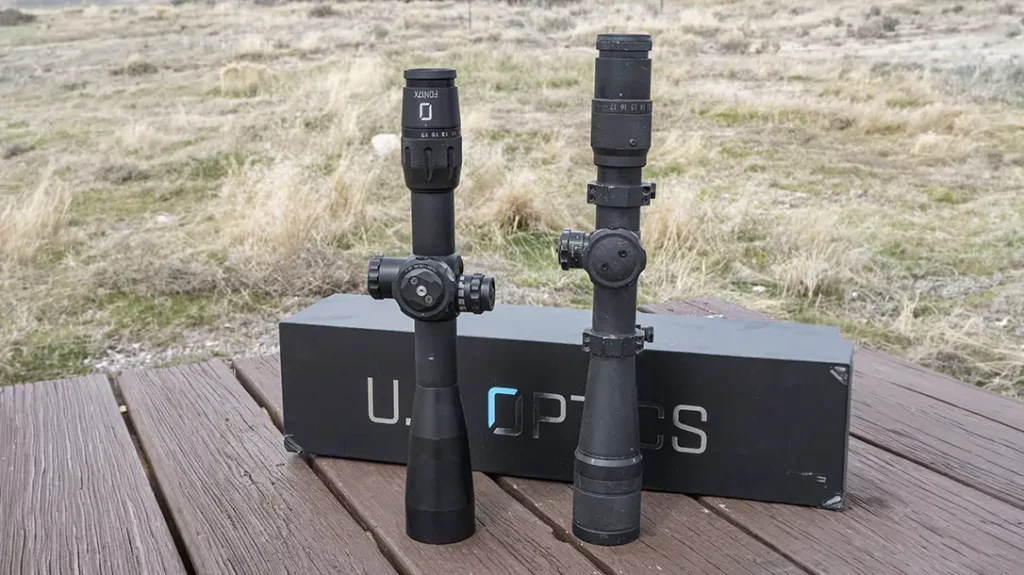
US Optics has done a great job producing a new and improved version of the legacy scopes. You can certainly see the differences with my legacy pictured next to it. Smoother, less sharp edges, excellent glass, and the best EREK to date. Although I did not chuck it across the asphalt parking lot to confirm zero, like John Williams II used to do, it was not pampered in any way. It was handled like my duty scopes of old and held zero and tracking without issue. If you are a US Optics fan, you will like this scope, but it’s also as good as any other scope in the same price range. Top-tier optics aren’t for everyone, but if that’s you, make sure you check out the new Foundation Series. My guess is you will like it.
Specifications
| Objective Lens Diameter | 50 mm |
| Tube Diameter | 34 mm |
| Weight | 29.8 oz |
| Reticle Focal Plane | First Focal Plane |
| Reticle | GAP Mil Lighted |
| Length | 15.02 in |
| Illumination | Yes |
| Weather Resistance | Waterproof/fog-proof |
| Magnification | Range 3.2 to 17X |
| Field of View | Range 25.25 – 8.03 ft at 100 yds |
| Eye Relief | 3.2 Inches |
| Retail | $2899.00 |
For more information, visit US Optics.
WHY OUR ARTICLES/REVIEWS DO NOT HAVE AFFILIATE LINKS
Affiliate links create a financial incentive for writers to promote certain products, which can lead to biased recommendations. This blurs the line between genuine advice and marketing, reducing trust in the content.