Time flies! It’s hard to believe that back in 2010, fifteen years ago, I was at SIG Sauer HQ in New Hampshire, getting ready for the announcement of their new SIG 516 short-stroke gas piston-operated AR. Production of the SIG 516 was concluded in 2019 due to factors such as market dynamics and limited engagement from law enforcement and military sectors. I am sure the introduction of new SIG products like the MCX series also played a factor. This business decision aligned with broader industry trends, with multiple manufacturers reducing their focus on piston-driven AR platforms as well. Several prominent short-stroke AR manufacturers even began offering direct impingement AR models appealing to a broader customer base, thanks to the reduced manufacturing costs of DI ARs compared to piston-driven ARs.
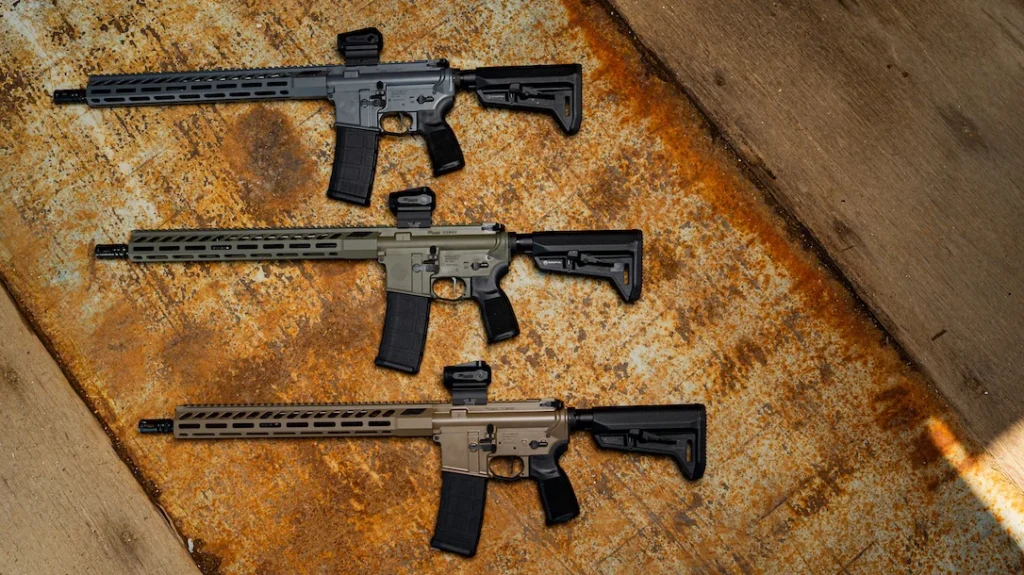
Well, I am glad to share that the SIG short-stroke piston SIG AR is back! It is safe to say that the SIG 516 G3 is not just an attempt at rebranding. As is customary with SIG, the release incorporated several enhancements and modifications, the most obvious of which was the addition of the side-charging handle. Lessons learned across all SIG rifle models have been applied to the already solid SIG 516 design with the 516 G3 model.
Why The SIG 516 G3
Proponents of piston-driven ARs point to greater reliability in adverse conditions and less reliance on routine maintenance compared to the direct impingement operating method. Instinctually, gas-piston ARs make sense by the fact that hot gases and powder residue are not dumped into the receiver a la the original direct impingement (DI) design. Anecdotal evidence of bolt carriers being handled soon after long strings of fire and merely wiped down to clean offers a stark contrast to their DI cousins.
Advertisement — Continue Reading Below
Another advantage offered by gas-piston ARs is the ability to function with shorter barrels. For DI ARs, once barrel lengths start to shrink, gas port location, size, and overall operational timing become more alchemy than science. This nicely ties into yet another gas-piston superiority over DI ARs — suppressor use. With suppressor use becoming more prevalent, the timing of the SIG 516 G3 makes sense. Do not be surprised when shorter-barreled SIG 516 G3’s are announced, validating both comments listed above. The DI rifles are more robust than most give them credit for. However, if your envisioned role involves suppressor use and/or stubby barrels, the short-stroke gas piston-driven AR typified by the SIG 516 G3 is the way to go.
The SIG Touch
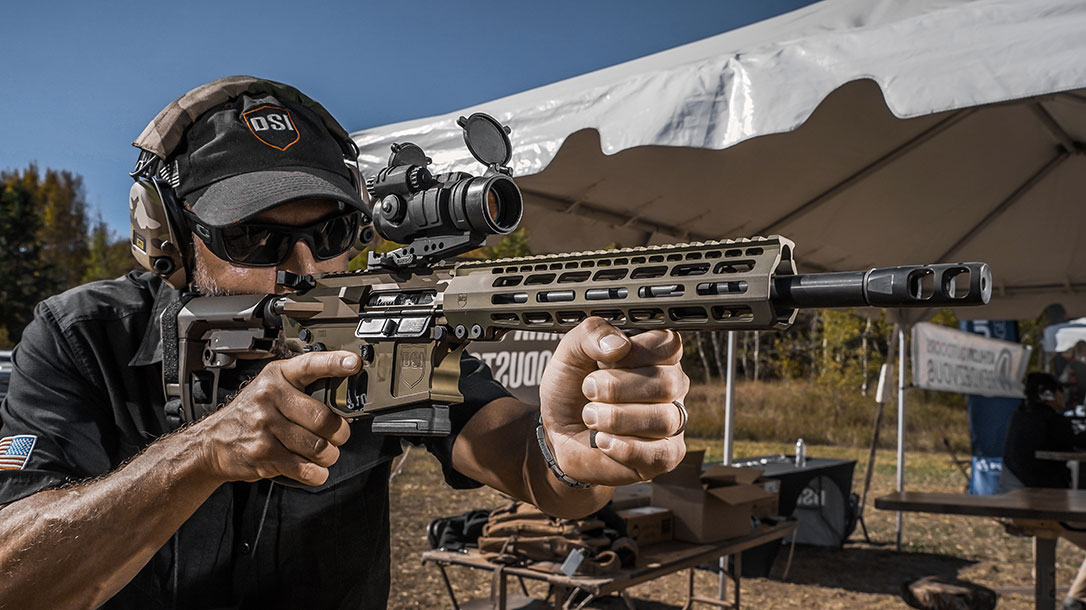
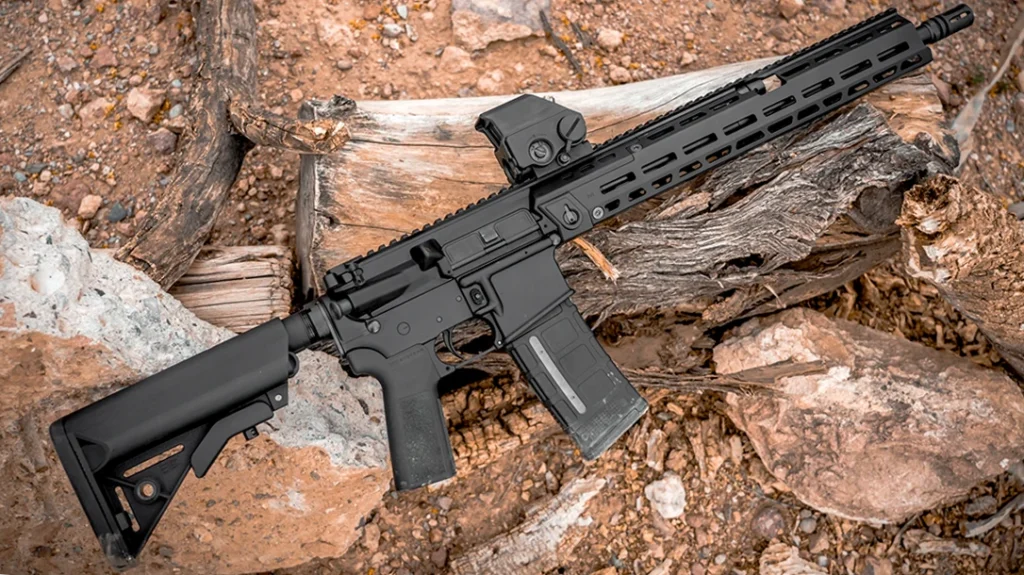
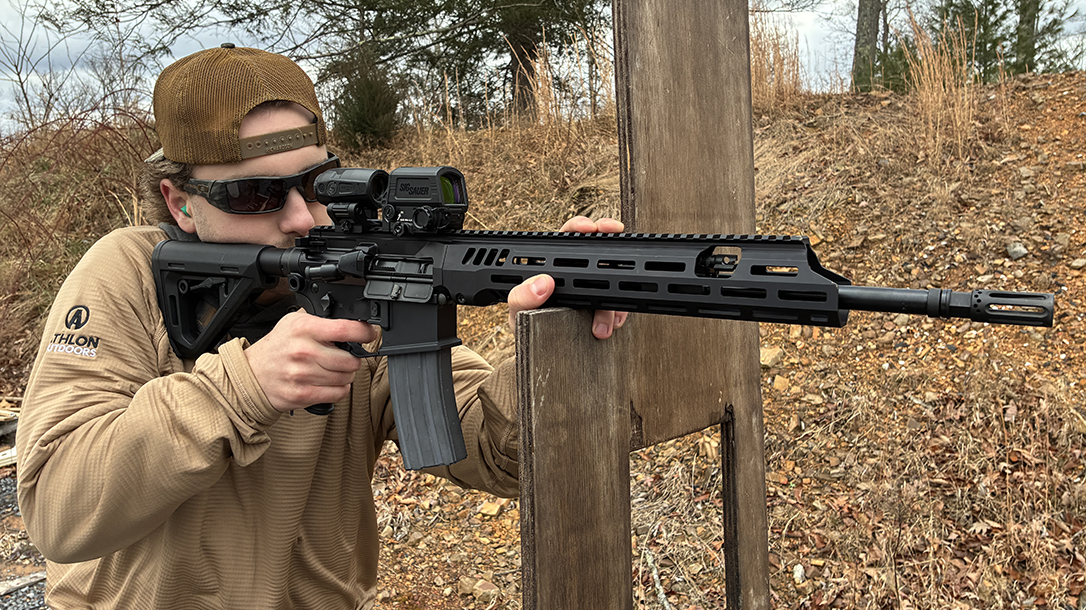
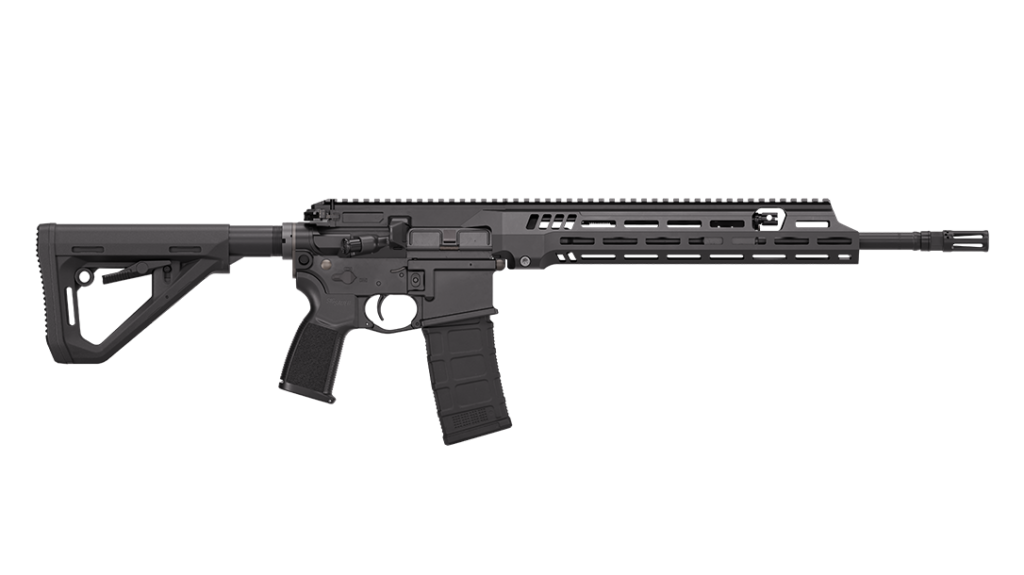
The SIG 516 G3 weighs 7.7 pounds and has an overall length of 36.5 inches and 33 inches with the Magpul stock collapsed. A SIG AR-compatible reduced-angle pistol grip is installed. The SIG 516 G3 is equipped with a hammer-forged 5.56mm 1:7 16-inch barrel surrounded by a four-sided free-floated M-LOK handguard with a Picatinny rail running along the top. A SIG hybrid flash hider compensator muzzle device was threaded on via 1/2×28 threads. The barrel is not chrome-lined. Many manufacturers are going with a nitride finish, which offers wear resistance and definitely better accuracy.
Advertisement — Continue Reading Below
The forend has a cutout allowing access to the gas adjustment knob. As is the way now with the preponderance of electronic sights and/or LPVOs, no iron sights are included. However, do not feel sorry for me as SIG did send along their ROMEO8T-AMR combo kit with the 516 G3. The 516 G3’s magazine well is chamfered, with the raised rails around the ambidextrous magazine release buttons for more positive tactile feedback during weapon manipulation. Now it is time to get “SIGGY” with the 516 G3 enhancements/tweaks.
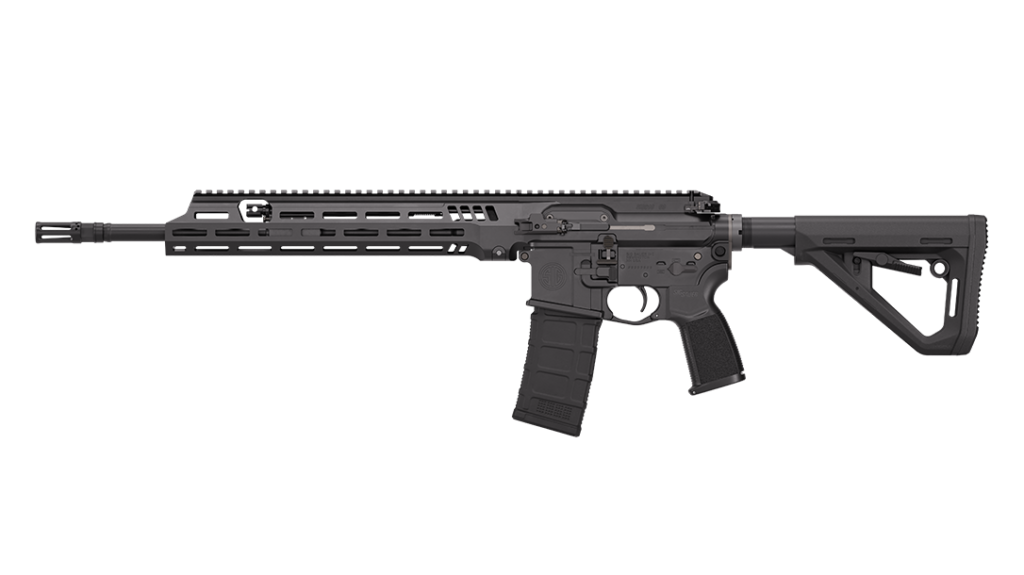
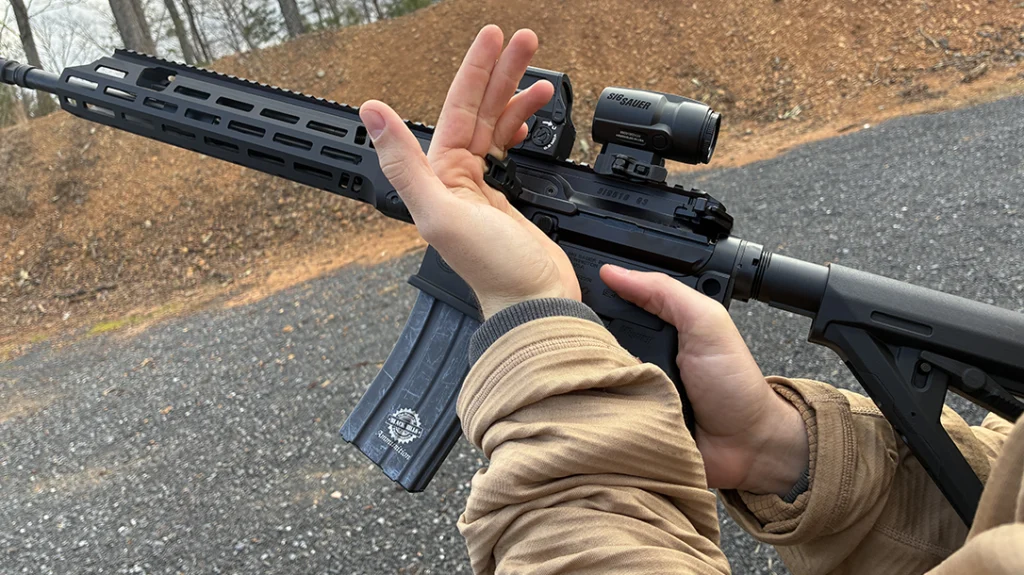
We will start with the gorilla in the room, the 516 G3’s unique side and ambidextrous top charging handle combo. The left side-charging handle is non-reciprocating and folds downagainst the receiver. SIG has done well by keeping both charging handles as an option on the 516 G3, offering the end user versatility and options. Side charging handles are known for their ergonomics and functionality. It did not take me many repetitions for me to become a fan.
Advertisement — Continue Reading Below
Lessons From The MCX
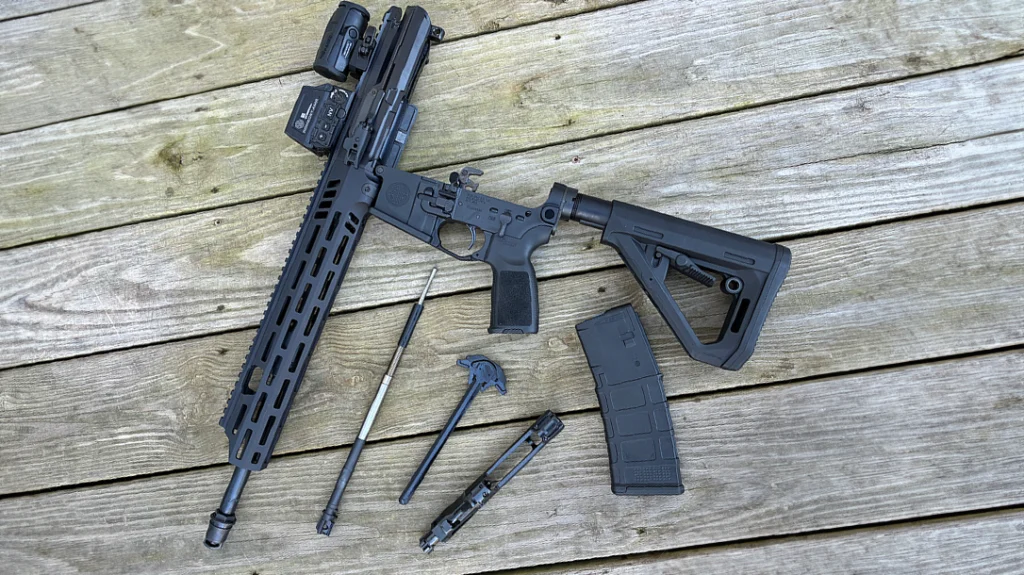
Less obvious, but just as significant, is SIG choosing to apply lessons from its innovative MCX line of rifles to the 516 G3 redux. SIG has designed the 516 G3 with key wear components upgraded to steel from aluminum; these parts are also easily replaceable. For example, the cam path and feed ramp. The charging handle latches move over steel pins as opposed to aluminum pins. The bolt forward assist is another of these high-wear parts. The replaceable version from the MCX is found on the 516 G3. Further finer details involve the bolt group’s cam pin being modified, as well as the bolt face’s locking lugs being slightly radiused, improving strength and longevity. Staying with the bolt group, a firing pin safety is part of the 516 G3.
SIG decided on using an integral strike plate instead of a staked version on the bolt body. This is based on concerns of metal fatigue and not wanting to take the chance of a staked strike plate failing. Gas rings are not needed on the piston-driven SIG 516 due to the action impulse derived from the short stroke push rod instead of tapped gas.
Advertisement — Continue Reading Below
Like the previous SIG 516s, the rear of the SIG 516 G3 bolt body features radial grooves that serve multiple functions, such as anti-tilt for the bolt assembly, along with providing a certain amount of tolerance against any debris that may find its way into the SIG 516 G3 action and buffer tube. Unlike the earlier 516’s, the 516 G3 bolt body has an auto sear “trip” as part of its profile. Lastly, the slim notch on the bolt’s left side is for the side charging handle to interact with. Next up are the 516 G3’s receivers and controls.
Receivers & More
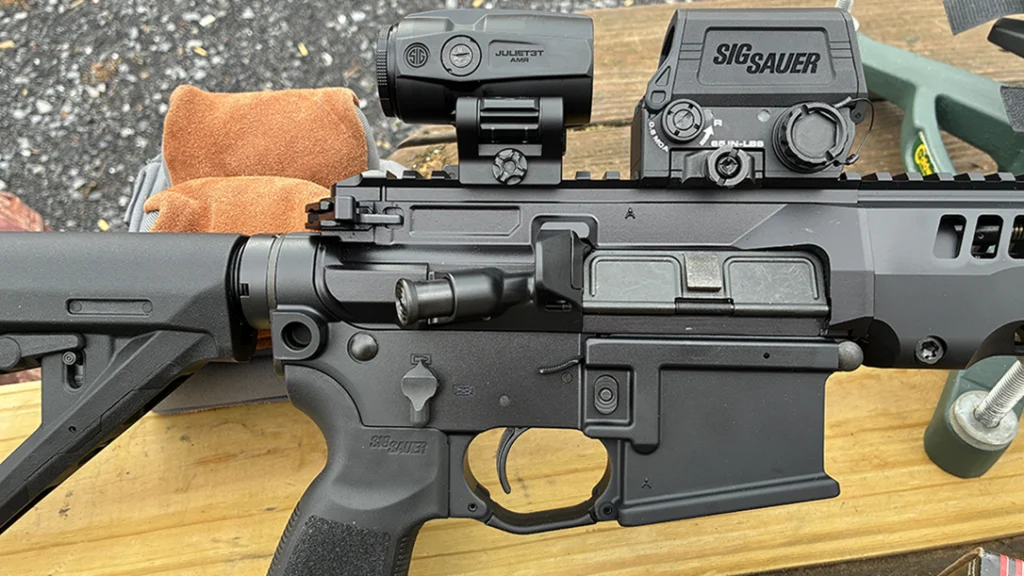
The SIG 516 G3 upper and lower receivers use standard takedown pins. An Accu-Wedgetype device tightens the interface between the receivers. A two-stage SIG Matchlite Duo curved trigger is installed in the 516 G3. Trigger pull measures 4.5 pounds. The SIG 516 G3 is fully ambidextrous—selector switch, top charging handle (plus side option), bolt, and magazine releases. A unique feature is the lever found on the right side of the receiver above the magazine release. This acts as a supplemental bolt catch and release if users find it more feasible to use on this side of the receiver. The SIG 516 G3 was designed from the ground up to be as flexible to use as possible.
Advertisement — Continue Reading Below
An enlarged steel barrel nut is utilized in the assembly method of the SIG 516 G3. The nut acts as a heat sink to further reduce temperature buildup in the action area as the rifle heats from use. The barrel appears to be “pinned” as it interacts with the lower receiver/barrel nut. The handguard attachment method with the SIG 516 G3 is one SIG pioneered with their professional shooters. It is extremely rigid with clamps securing the handguard to the barrel nut. This, combined with how the proprietary SIG free floated forend is “dog-boned” together at the top of the receiver, translates into being able to mount accessories and/or sights without worrying about impacting accuracy or skewing established zeros, no matter how hot the rifle gets or how much torque is applied to the forend.
Adjustable Gas Valve
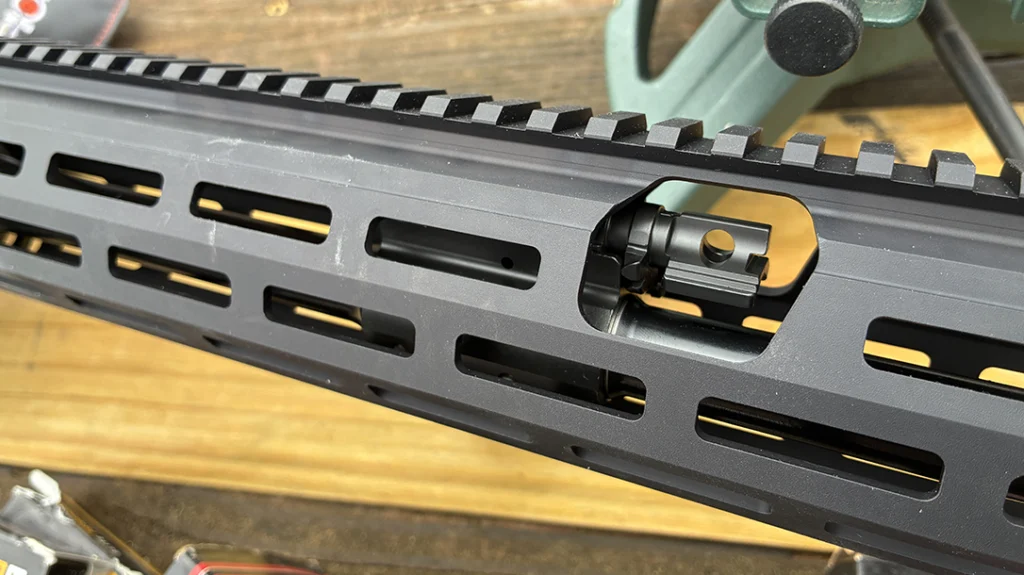
The short-stroke push rod operating system with adjustable gas valve is the heart of the SIG 516 G3. The SIG short-stroke push-rod gas system serves to isolate the action from heat and fouling, especially when compared to the typical AR direct gas impingement method. The SIG SAUER push-rod system is self-cleaning, with any excess gas vented out of the handguard just behind the gas block. The SIG 516 G3 has a 4-position gas valve that allows a user to adjust gas port settings. Settings are “normal” and “adverse”. Adverse opens the gas port for extra “oomph” if the rifle is getting sluggish after extended continuous use or a hostile environment such as sand, dust, or mud. The third setting is suppressed. This reduces gas if using a non-flow-through suppressor design, allowing the action to cycle, but without the overpressure. The 4th position setting totally cuts off gas to the piston.
Advertisement — Continue Reading Below
SIG 516 G3 Optics
A SIG ROMEO8T-AMR (Automatic Modified Reticle) with JULIET3T-AMR was mounted on the SIG 516 G3. The sight and magnifier interact via magnets to instantly transition between user-selectable reticle configurations for close and mid-range engagements. While fully enclosed and weighing only 9.4 ounces, the ROMEO8T-AMR has an eye-opening 40MM objective lens for unrivaled situational awareness. It is NV compatible with a push of a single button.
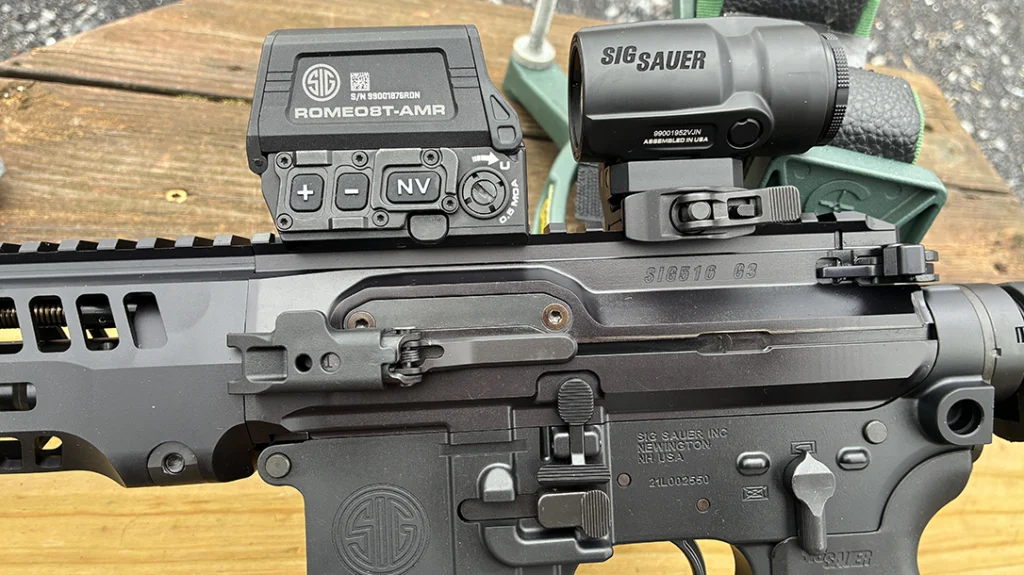
Run time with a single CR123 battery is 50,000 hours. The ROMEO8T-AMR and JULIET3T-AMR system meets MIL-810-STD protocol, is IPX8 waterproof and fogproof, has MOTAC motion sensing technology, and is covered by SIG’s Infinite Guarantee. The AMR sight and magnifier combination is worthy of consideration, as it enhances performance by offering pure red dot or magnification with a single motion. The closed nature of the SIG ROMEO8T-AMR creates a dependable design that will not be affected by weather or severe environmental conditions. Rain, snow, debris, etc., cannot interfere with the red dot being projected on the lens, enabling accurate shooting in any conditions.
Enough Talk… Time To Shoot
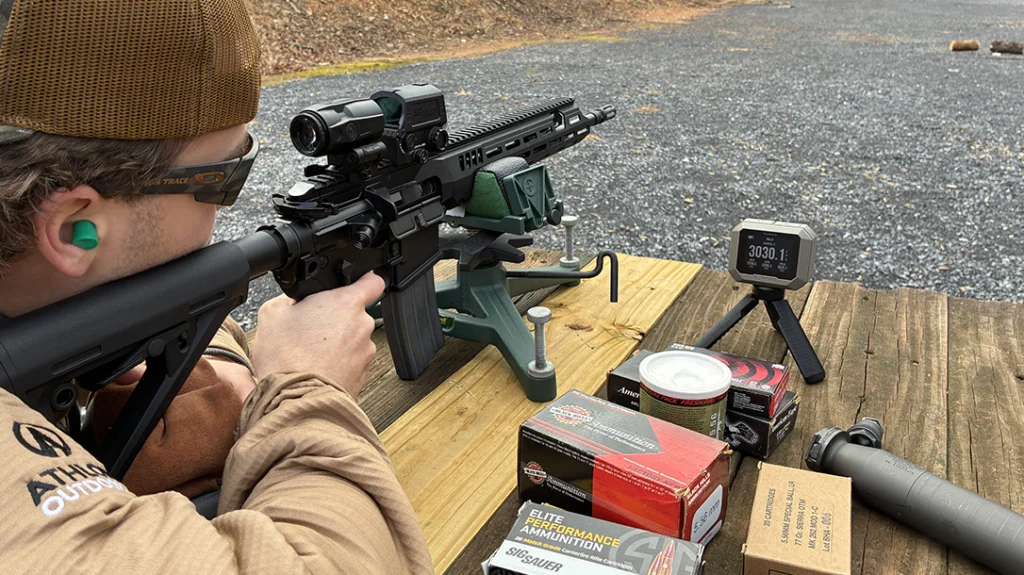
Two-inch groups at 100 yards were typical accuracy with the SIG ROMOE8T-AMR red dot and JULIET3-AMR magnifier combo. Groups at 50 yards were in the .75-inch range. Ammunition tested with the SIG 516 G3 was a combination of multiple 5.56MM/.223Rem loads from SIG SAUER, Black Hills, Federal/American Eagle. The SIG 516 G3 is not a target rifle, and low magnification with a dot-style reticle is not exactly the ideal setup for accuracy testing, making this performance even more impressive.
Drills quickly progressed from “stand and deliver” drills to more dynamic exercisesinvolving movement, magazine reloads, and firing from behind cover. It was decided to concentrate on using the piston-driven SIG 516 G3 in training scenarios involving team tactics and patrolling to contact through Echo Valley Training Center’s (EVTC) 360, MOUT Village, and “Jungle Walk” ranges. A Magpul PMAG D-60 drum magazine was utilized during portions of the T&E. The thought being the best reload is no reload, and might as well put the short-stroke gas piston to the test. This allowed the SIG 516 G3 to shine in terms of delivering potent firepower. The SIG 516 G3’s recoil impulse is very smooth for a piston gun, rivaling a DI gun, especially the carbine or pistol-length ones.
Shoot House & More
The SIG 516 G3 showed true AR versatility by performing within the 100-yard bays at EVTC as well as HESCO Shoot House. The ROMEO8T sight and JULIET 3x magnifier are a big part of this as. Clay targets were sniped with regularity out to 245 yards from the supported prone position. EVTC’s recently added 400-Yard Rifle Range was also taken advantage of. The range features four different target arrays stretching past 400 yards down a ravine following natural contours. Variable-sized/shape steel plates occupy each station. The SIG 516 G3 was used in the prone, sitting, kneeling, standing, and shooting off the BOG Infinite Deathgrip tripod. The SIG 516 G3 proved to “hang” well from less well-supported positions and was very manageable in getting into and out of shooting positions.
As a bonus, the SIG 516 G3 with SIG optics was then put through its paces on different rifle stages that were set up for a pending Origin Shooting match that was to be held at EVTC. Magazine changes, shooting from the non-dominant shoulder, steel targets out to stretching from 35 yards out to 400 yards, paper at close range, and unconventional positions helped to put the SIG through its paces. While not svelte for an AR at 7.7 pounds, the SIG 516 G3 balanced well with fast follow-up shots sent with ease. The ambi controls were much appreciated, especially the side charging handle when working through various stages. The total number of rounds fired involving multiple-range visits was nearly 800. The rifle was not cleaned between range visits—after all, that is what short-stroke piston operation is all about.
Wrapping It Up
SIG’s thought process from the original SIG 516 Patrol, to supplement positive AR characteristics with increased reliability via short-stroke gas piston operation, has carried down to the SIG 516 G3. This also allows for shorter barrel lengths, which I am guessing are forthcoming, and more confidence when running suppressors. SIG’s commitment to go the extra mile in designing and manufacturing the SIG 516 G3 is intended for maximizing effectiveness during a fight or realistic training. While most likely the SIG 516 G3 is not going to be used by our military services, after all, SIG has that covered with the MCX Spears, I can visualize law enforcement agencies using the SIG 516 G3 along with security-conscious civilians, not to mention private contractors and possibly foreign military entities.
The key component of a fighting rifle is reliability. No matter how accurate or powerful a rifle is, if it does not work 100% of the time, it is a liability. The selection of a fighting rifle is as personal as it gets. The SIG 516 G3 is intended for serious practitioners who plan on using it accordingly. A return to AR basics, such as reasonable weight and great handling with potent firepower, is often the answer for most tactical situations. SIG SAUER offers such a platform with the SIG 516 G3.
SPECIFICATIONS SIG SAUER 516 G3
- Caliber: 5.56mm
- Magazine: 1-30 round magazine arrives with the rifle
- Barrel Length: 16-inch cold hammer forged nitride-treated 1:7 twist 1/2×28 tpi
- Overall Length: 33-36.5 inches
- Trigger: Matchlite Duo Curved
- Sights: Flat Top Picatinny Rail
- Action: Short-stroke gas piston with 4-adjustment settings
- Weight Empty: 7.7 pounds
- MSRP: $2,179
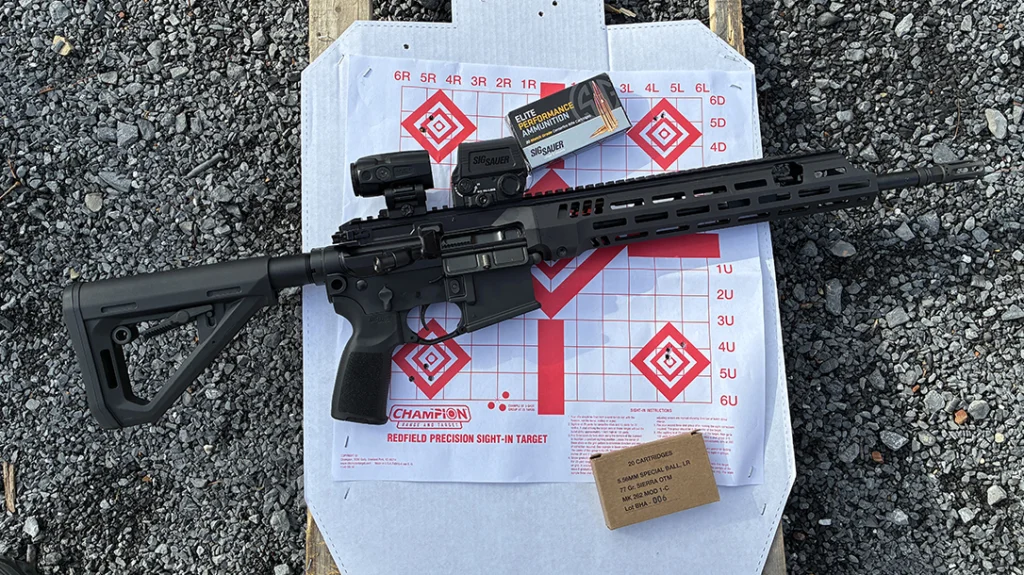
PERFORMANCE: SIG 516 G3 (SIG ROMEO8T-AMR with JULIET3T-AMR)
| Eagle 55-grain FMJ | |
| Average Velocity | 3,029 FPS |
| Average Group | 2.00 inches |
| SIG SAUER 77-grain OTM | |
| Average Velocity | 2,435 FPS |
| Average Group | 1.88 inches |
| Black Hills 77-grain Match | |
| Average Velocity | 2,698 FPS |
| Average Group | 1.75 inches |
| Federal M855 62-grain FMJ | |
| Average Velocity | 2,861 FPS |
| Average Group | 2.25 inches |
WHY OUR ARTICLES/REVIEWS DO NOT HAVE AFFILIATE LINKS
Affiliate links create a financial incentive for writers to promote certain products, which can lead to biased recommendations. This blurs the line between genuine advice and marketing, reducing trust in the content.