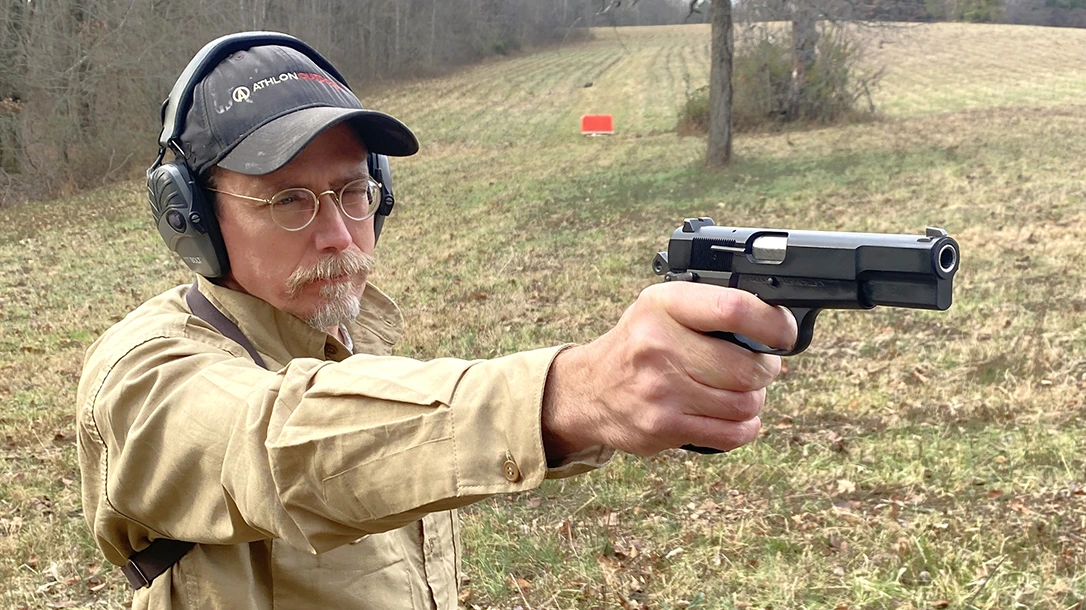
When it comes to combat-tested 9mm service pistols, the classic FN Browning Hi-Power has earned its place at the top with a 90-year service record. Introduced in 1935, it was the last of John Moses Browning’s designs. It was so advanced that it outclassed all the military handguns of its day into the mid 1970s. For this reason, SDS Arms and Inglis Manufacturing deliver their take on the classic, with the L9A1 Hi-Point.
The SDS Arms/Inglis Manufacturing L9A1 Hi-Point
Just about every contemporary semi-auto pistol uses its short-recoil camming-lock action. It was a gun so good that it was made and used by both the Allies and the Axis during World War II. Likewise, it was later adopted by over fifty armies and ninety countries for military and law enforcement use.
Some still use it, the largest among those being the armed forces of India. It should be telling that the Canadian version (made in Toronto, Canada, during World War II, by John Inglis & Company and named the High Power) was the main sidearm of the Canadian military for 80 years from 1944 to 2024. The British armed forces also used Hi-Powers from 1962 to 2017.
Advertisement — Continue Reading Below
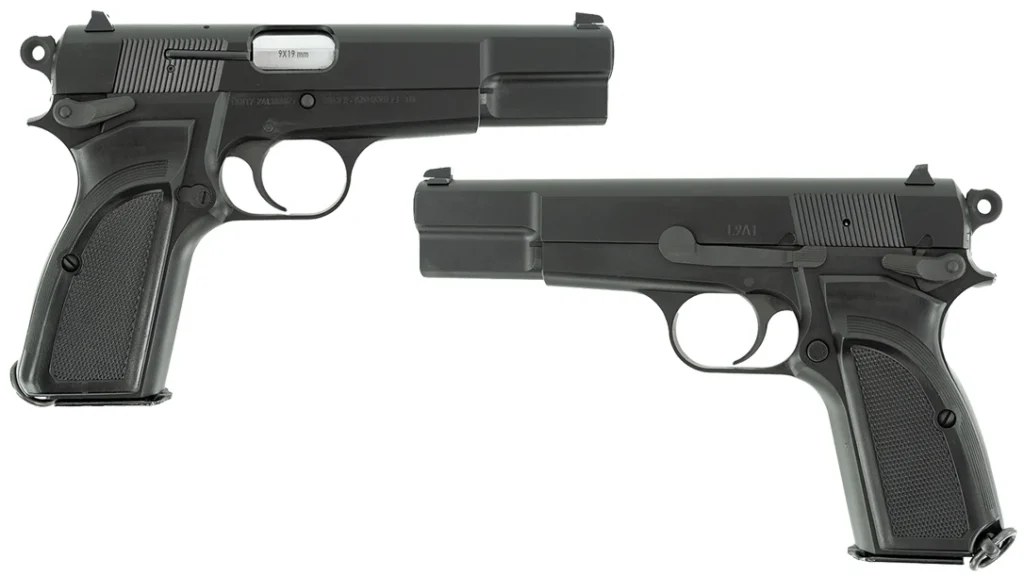
Fabrique National discontinued production of the classic Hi-Power pistol in 2018. The company introduced a significantly updated version in 2022, renamed the High Power, with an MSRP of $1,384. Actual retail is closer to $1,000. However, for that money, you could buy two of the excellent new production Inglis-branded classic 9mm Hi-Power pistols and possibly still have a hundred dollars in your pocket.
Hi-Value Hi-Point
The new Inglis guns are the best value in Hi-Powers. They are manufactured in Turkey for SDS Arms who owns the Inglis brand. This is the same SDS Arms that brought us the remarkable Tisas-made 1911 pistols, resetting quality expectations among American shooters with well-built, military-style M1911A1s retailing under $400. They shot as well as any genuine U.S. Army .45 I ever owned. They used only forged frames and slides and milled from billet parts.
Advertisement — Continue Reading Below
SDS Arms has done the same thing for the classic Hi-Power, offering it in four models under the Inglis brand. The new Inglis pistols are comparable to the last FN Hi-Power Mk III pistols, rather than the Inglis WWII models.
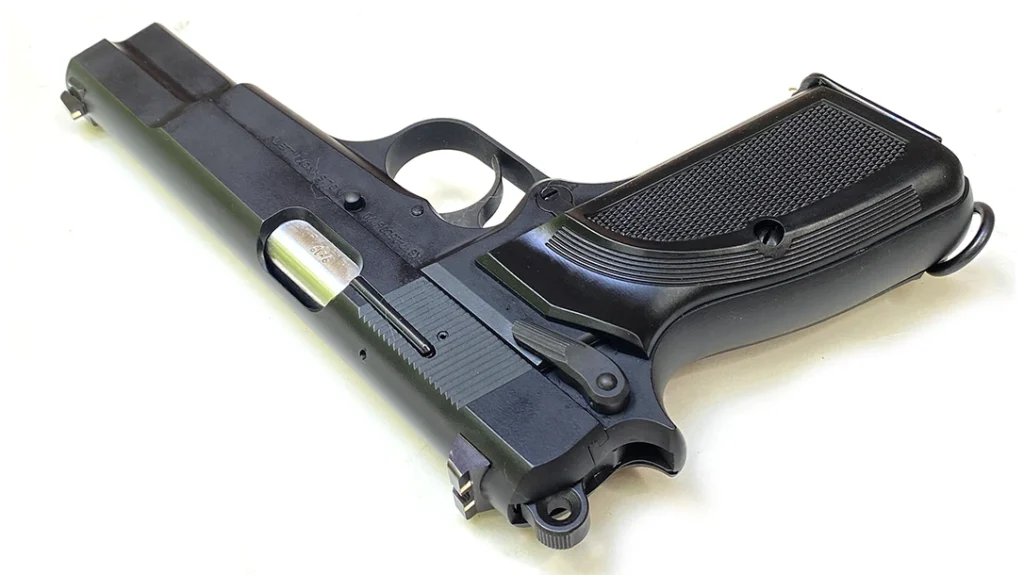
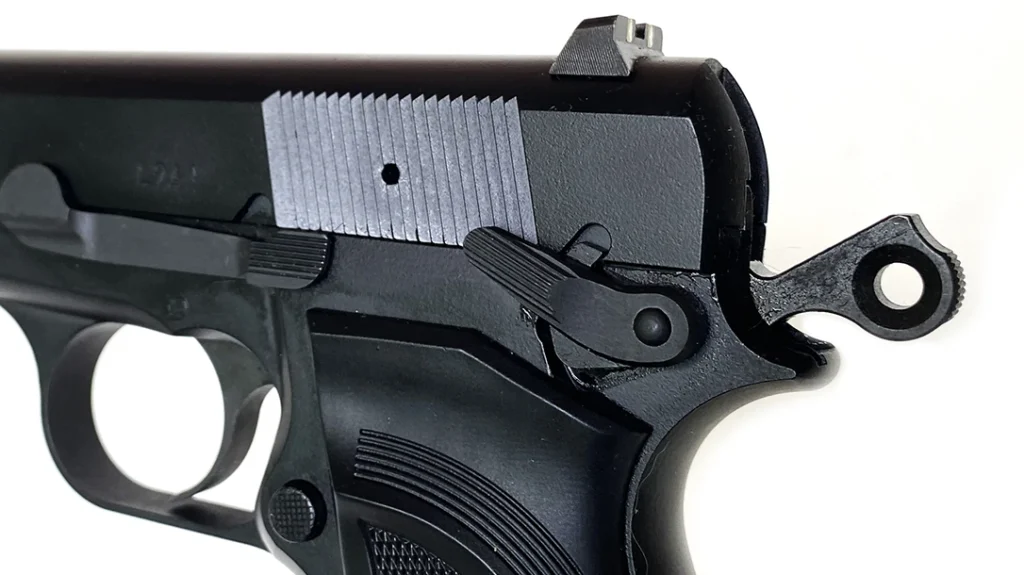
As a result, they are equipped with an ambidextrous long-lever manual safety, dovetailed windage-adjustable (three-bar) sights, an externally mounted extractor, and a passive firing pin block safety that prevents the firing pin from striking the cartridge primer unless the trigger is pulled. It’s that firing pin safety that keeps the gun drop safe.
Advertisement — Continue Reading Below
The Inglis guns differ from genuine FN Hi-Powers and most clones by omitting the magazine safety. This prevents the trigger from releasing the hammer unless the magazine is nearly fully inserted.
Over the Hi-Powers’ long service life, surely a great many military trainees weren’t accidentally shot because of that magazine safety. However, it prevented the empty magazines from dropping freely when released and somewhat negatively affected the trigger pull, which didn’t endear the feature to shooters wishing to wring every bit of speed and accuracy potential from the pistol.
Advertisement — Continue Reading Below
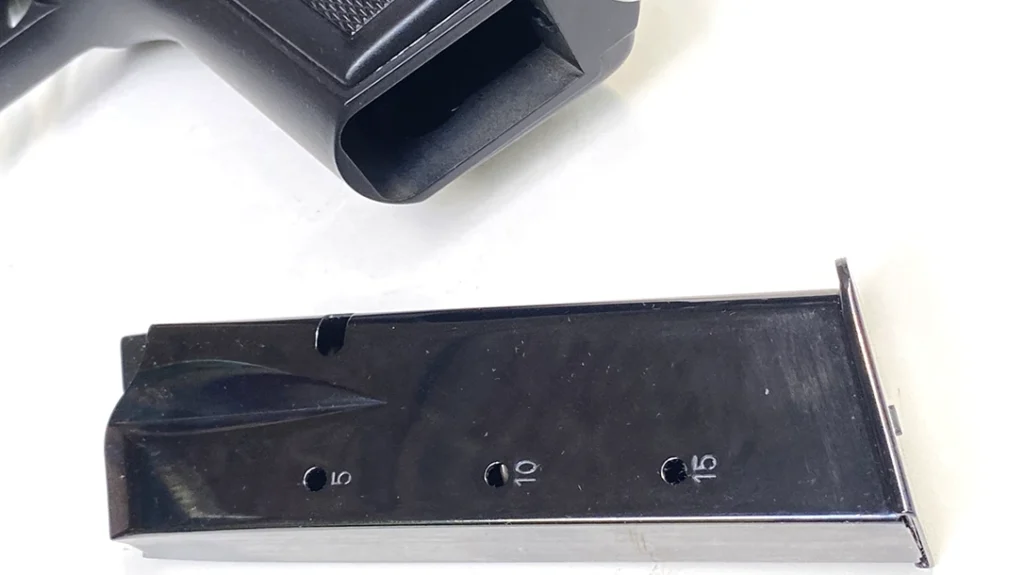
All the new Inglis pistols also have round hammers, which are less prone to biting. The Inglis guns have notably more firepower, too. This is thanks to the substitution of a 15-round magazine for the original 13-rounders.
Feeding the L9A1
The Inglis comes with a pair of high-quality 15-round Mec Gar magazines. I noticed that the bottom rounds in a fully loaded 15-round magazine could wiggle enough to make noise when shaken. However, once inserted in the magazine well, their maraca-like quality is reduced to barely audible levels. So, it is unlikely to put you at a tactical disadvantage by revealing your position.
There were no performance differences noted between my old 13-rounders and the new 15-round-capacity magazines.
Advertisement — Continue Reading Below
A Modern Classic
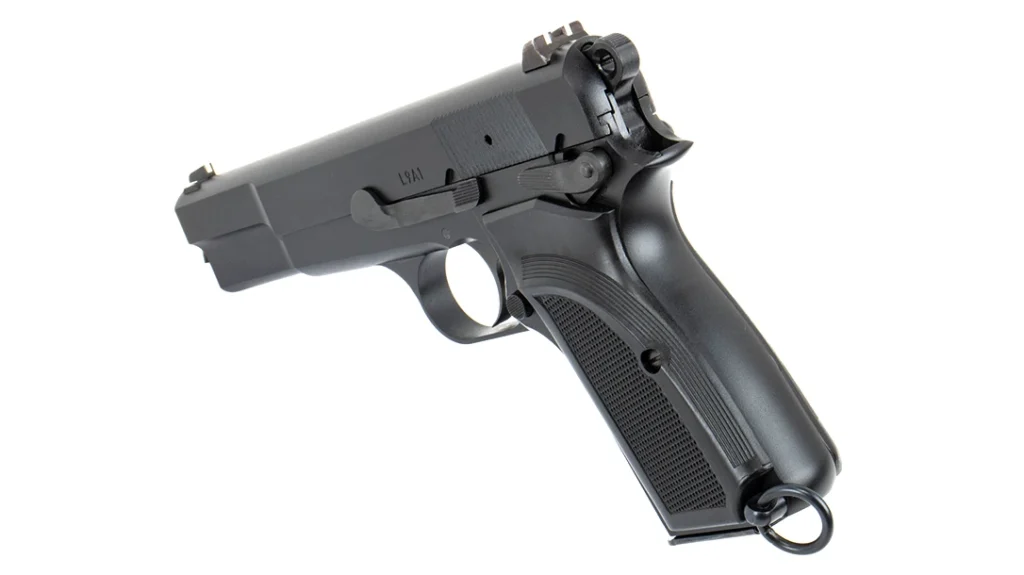
L9A1 was the British nomenclature for their military issue Hi-Powers. The Inglis pistol, though roll-marked L9A1 on the slide, appears more like a representative example of military contract Hi-Powers at the close of the Cold War than a precise copy of the British weapon. It is the base-level pistol in the Inglis line.
In testing, it functioned and shot as well as my original 1989 vintage FN Mk III Hi-Power Standard (civilian) model. It was, and remains, one of the most reliable and accurate autoloaders I’ve ever owned. It was like that right out of the box, and I’d stake my life on it. I regularly carried it concealed, for self-defense, when work took me to sketchy urban areas.
Advertisement — Continue Reading Below
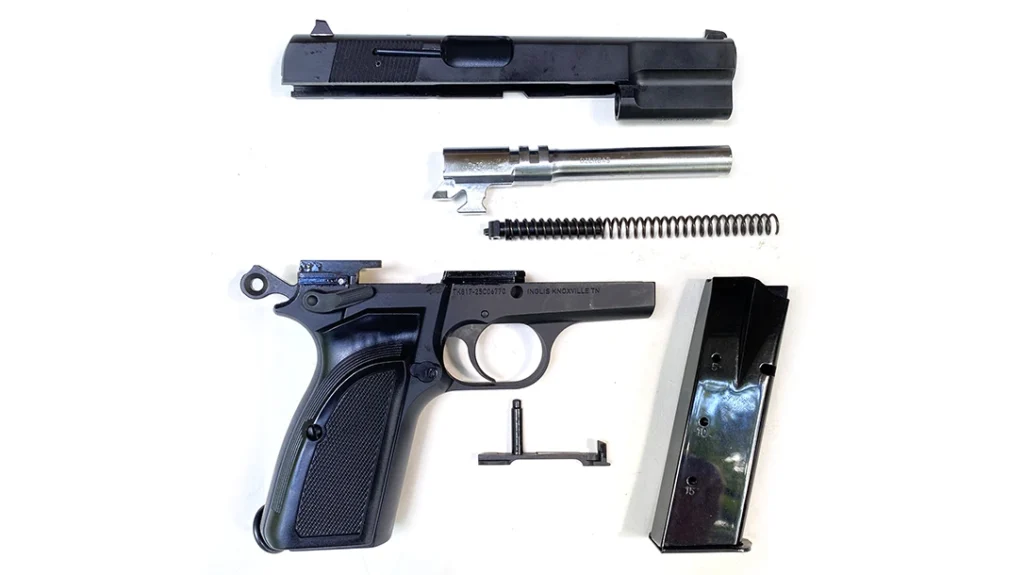
The Inglis L9A1 really looks the part of a Cold War NATO sidearm. Its black Cerakote finish mimics the tough, but truthfully less durable, ordnance paint of vintage military contract guns. It has a lanyard loop on the left side and what appears to be excellent facsimiles of the original black plastic, checkered, finger/thumb rest grips. Their virtue is that they are narrower at the top.
With these grips, the pistol sits more deeply in the web of the thumb, allowing the fingers greater reach. The rest also partially shields the magazine release button from unintentional activation.
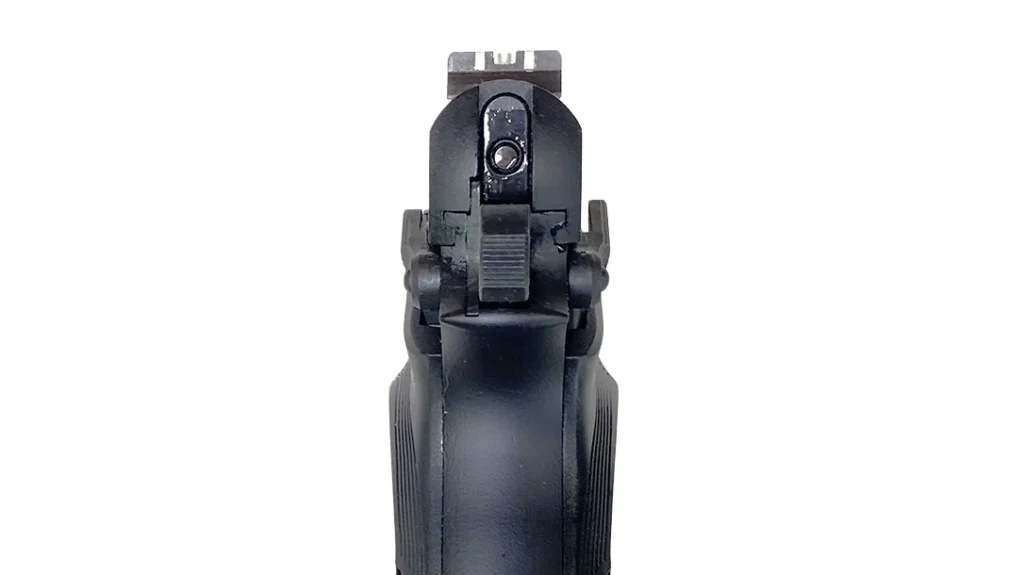
The sights are the Hi-Power high-visibility “three white bar” style. Their dovetails are cut to the Browning® standard size, so you can easily upgrade them with any aftermarket sights that will fit the original Hi-Power pistol. (The other three Inglis models come with a fiber-optic front sight as standard.)
Shooting the L9A1 Hi-Power
The Inglis L9A1 and my original FN Hi-Power had virtually identical 7-pound, two-stage trigger pulls. I was surprised they measured that heavy because neither felt like it. After the initial take-up to the wall, the break comes almost immediately. The only difference between them is that there was sometimes a slight creep in the L9A1 trigger before the break.
I tested for accuracy at 25 yards from a bench rest initially using my original FN Hi-Power as a baseline. Remington UMC “Value Pack” 115-grain JHP showed an average velocity of 1,178 feet-per-second (FPS) and five-shot groups of 2.38 inches. This average was quite close to what I got from the L9A1 with all three ammo types I tested.
The most accurate load tested through the L9A1 was 124-grain Federal Syntech Training Match ammunition. It is engineered to be the ballistic equivalent of Federal Premium® Personal Defense® HST® and Tactical® HST duty ammunition. It has a purple polymer jacket with a lubricious quality that reduces wear and tear on the barrel and eliminates jacket metal deposits in the bore. This flat-nosed bullet averaged 1,171 FPS and 2.37-inch groups.
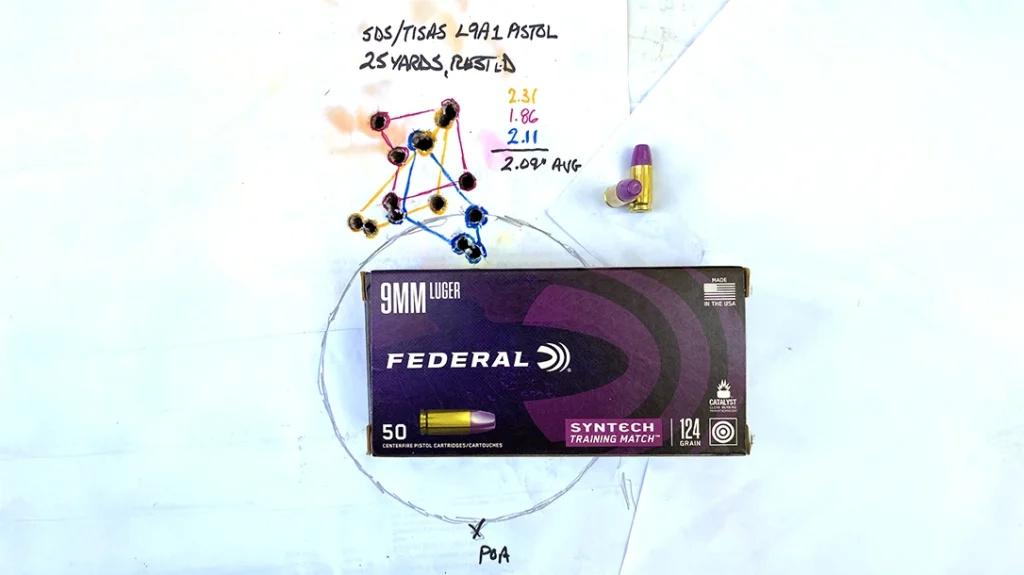
Winchester USA Ready, 115-grain flat-nose FMJ, averaged 1,185 FPS and 2.39-inch groups. Remington UMC 124-grain FMJ averaged velocity of 1,089 FPS and five-shot groups of 2.8 inches. That’s really good for any centerfire pistol and especially good for a service pistol. It’s amazing for an all-steel gun retailing for around $500.
Parting Shots
Overall, I was very impressed with the L9A1. Recently, I decided to use my Hi-Power for concealed carry again. Since testing the L9A1, I decided to retire my original FN pistol. The latter is old enough that it is starting to attract collector interest and is already worth much more than I paid for it in 1989.
Truth be told, upon disassembling both pistols and comparing them carefully, I’m of the opinion that the Inglis is the more finely made pistol of the two.
SDS Arms/Inglis Manufacturing L9A1 Hi Power Specs
| Caliber | 9 x 19mm |
| Capacity | 15+1 |
| Barrel | 4.7 inches |
| Overall Length | 7.2 inches |
| Overall Height | 5 inches |
| Width | slide width 0.875 inch, widest part of grip 1.35 inches |
| Weight | 32.2 ounces unloaded |
| Sights | windage adjustable, three-bar, Patridge front and rear in Browning® dovetails |
| Material | steel |
| Grips | black plastic military FN MKIII thumb/finger rest style |
| Action | hammer-fired, short-recoil, locked breech, single-action semi-auto |
| Trigger | two-stage, 7-pound pull |
| Controls | ambidextrous manual safety, right-hand slide lock release, NO magazine safety |
| Finish | black Cerakote |
| Accessories | extra 15-round magazine, hard storage case |
| MSRP | $588.00 |
Performance
| Winchester USA Ready 9mm | |
| Bullet Weight & Type | 115 flat nose FMJ |
| Velocity | 1,185 |
| Best Group | 1.82 |
| Federal Syntech Training Match 9mm | |
| Bullet Weight & Type | 124 flat nose full polymer jacket |
| Velocity | 1,171 |
| Best Group | 1.86 |
| Remington UMC 9mm | |
| Bullet Weight & Type | 124 FMJ |
| Velocity | 1,090 |
| Best Group | 2.10 |
Performance was tested with a series of five-shot groups fired at 25 yards from a bench rest with a Competition Electronics Pro-Chrono Digital Chronograph set 15 feet from the muzzle. Bullet weight is in grains, velocity in feet-per-second, and the group size in inches.
WHY OUR ARTICLES/REVIEWS DO NOT HAVE AFFILIATE LINKS
Affiliate links create a financial incentive for writers to promote certain products, which can lead to biased recommendations. This blurs the line between genuine advice and marketing, reducing trust in the content.