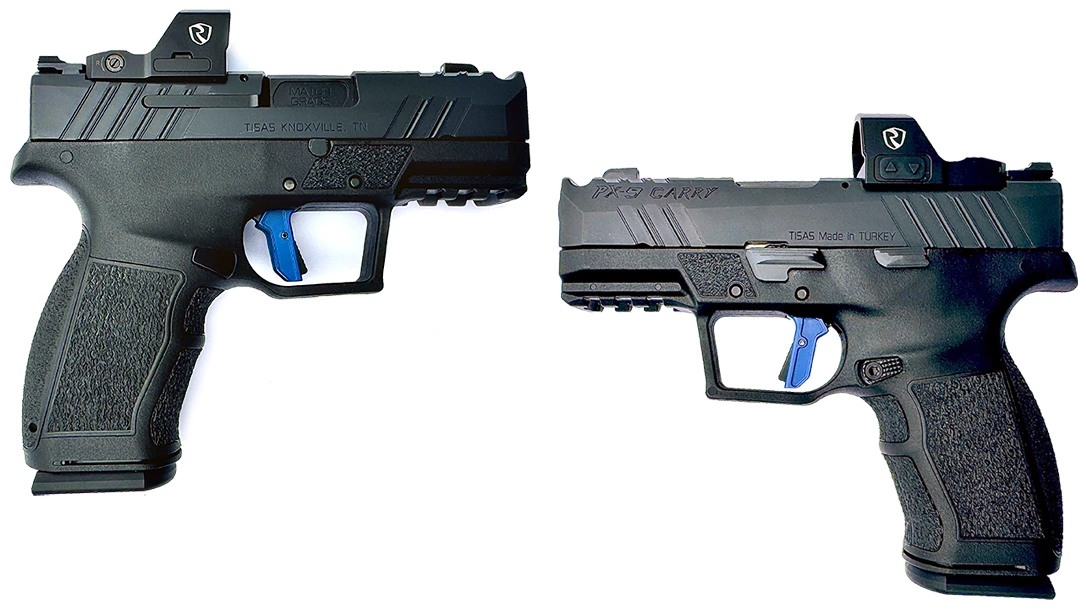
Tisas (TİSAȘ) was founded in Trabzon, Turkey, in May 1993. At present, they supply firearms to not only the Turkish military and police, but also 6 other countries. The company is probably best known in America for its exacting replicas of the Model 1911A1 pistols and the economical 1911 double-stack pistols. The PX-9 series of polymer-framed, striker-fired 9mm pistols dates to 2021, with 5 variations covering concealed carry, duty, and competition. However, Tisas recently introduced three new models, including the PX-9 Carry Comp, which we’ll look at here.
Introducing the Tisas PX-9 Carry Comp
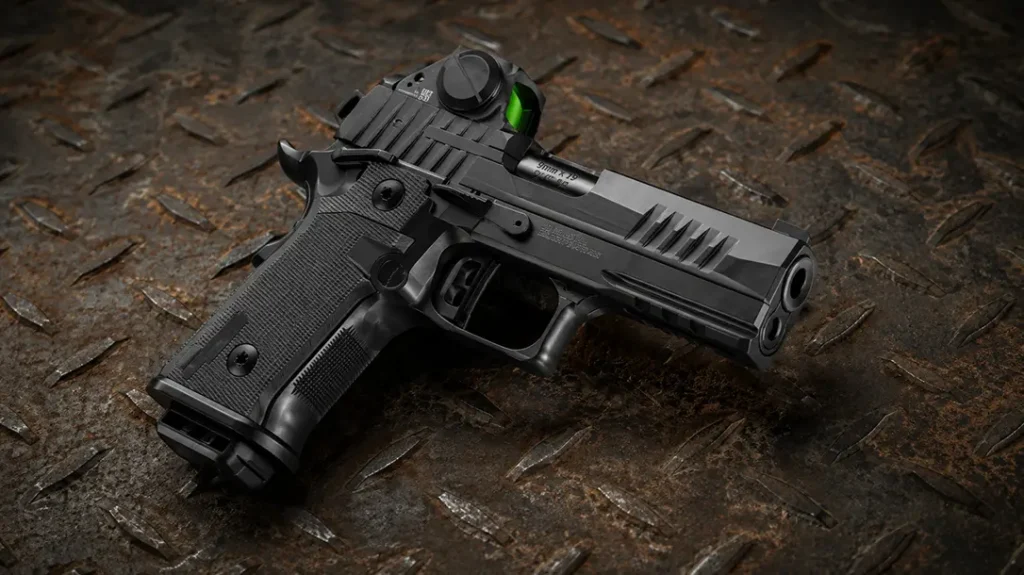
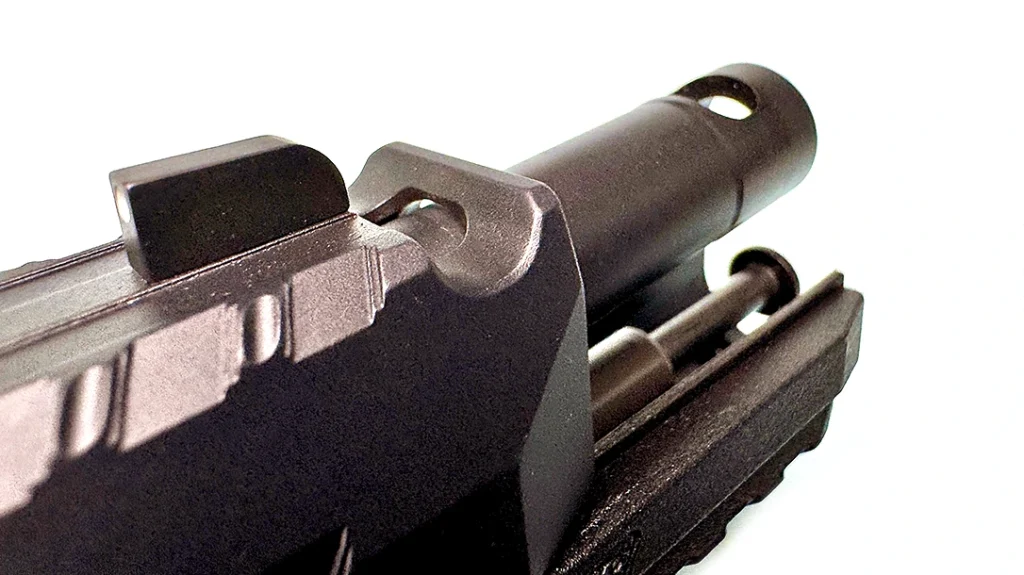
The three new PX-9 pistols are the PX-9 Carry Comp, the PX-9 Duty Comp, and the PX-9 Tactical Comp. Again, there is a concealable model (3.5-in Bbl), a duty carry model (4.1-in Bbl), and a tactical model (5.1-in Bbl). The common denominator here is that all three have a “port” cut into the slide and barrel, about 0.20 in from the muzzle.
Advertisement — Continue Reading Below
Due to the configuration of these cuts, gases produced by the fired cartridge vent upwards. This acts on the slide as a compensator, helping tame muzzle rise and improve rapid-fire controllability. I saw these new pistols for the first time at an Outdoor News America Writers Conference in early October (2025).
The gun scribes in attendance at this conference were asked by the Digital Marketing Mgr. Jahred Gamez, which of the three versions of the PX-9 Comp pistols we’d like to try out. I decided on the Carry Comp (CC), as for me it would be the most useful of the three.
I’m always on the lookout for compact handguns to add to my EDC battery, especially those with similar actions and operations. I got to shoot all three PX-9 comped pistols at the conference. So, I was eager to get home for more extensive shooting and evaluating with the PX-9 CC that I’d selected.
Advertisement — Continue Reading Below
The Tisas PX-9 In Hand
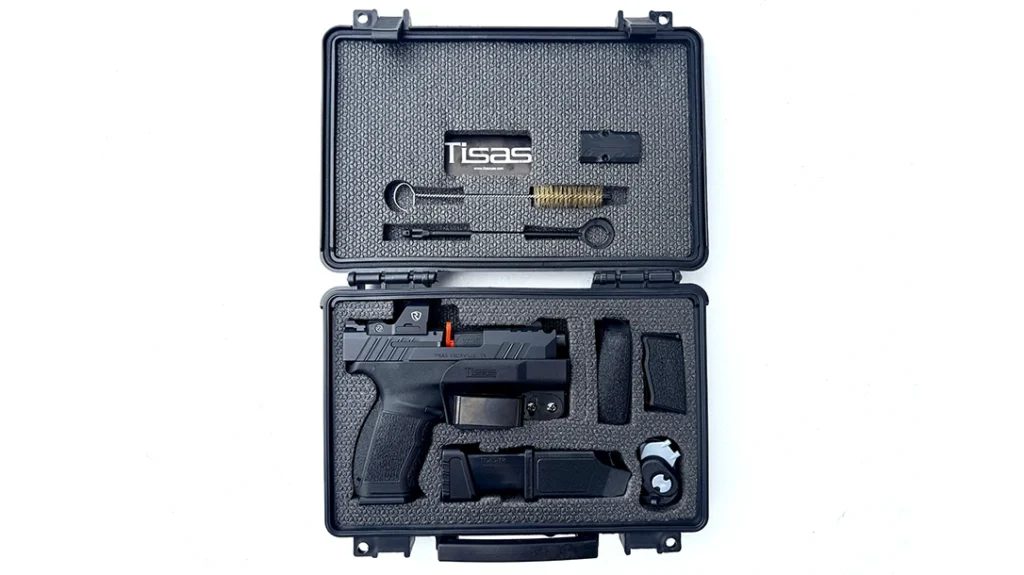
My Tisas arrived in a lockable black plastic carrying case with a hinged lid and a compartmented foam-rubber interior. The real surprise was when I opened the case and discovered that the PX-9 CC comes with everything but the “kitchen sink.”
First, there’s an owner’s manual, then a flush-base 15-round and a 17-round extended-base magazine (both 226-pattern), with a loading tool. There’s the obligatory safety trigger lock, a cleaning brush, and a cleaning rod with jag.
Advertisement — Continue Reading Below
What’s really interesting are the inserts you get that let you change the grip width, lengthen the backstrap, and even add a flared magazine well. Included is a steel punch to remove the pin near the butt of the grip, allowing you to make up to 27 grip configurations. The pistol itself is encased in a Kydex minimalist IWB holster that encloses the frame dust cover, and trigger guard.
Starting at the muzzle, the barrel is match-grade and finished in Tenifer QPQ, as is the slide. Beneath the barrel is a concentric recoil spring that better controls the recoil impulse. The front sight has a white dot, and the rear sight has serrations on the rear surface. Correspondingly, the rear sight can be moved laterally in its dovetail for windage.
It is also optics-ready, with a cover plate, and works with sights having the Trijicon RMR footprint. At the rear of the slide, in the center of the slide locking plate, the striker spring guide protrudes and acts as a loaded chamber indicator. The slide is also cut with front and rear serrations on the sides.
Advertisement — Continue Reading Below
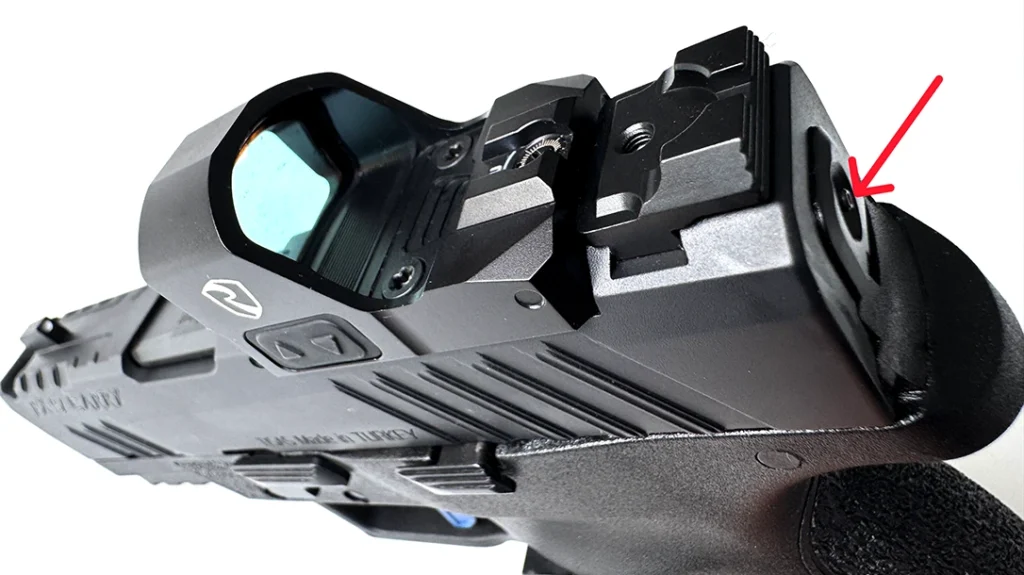
Integral with the dustcover of the black polymer frame is a 3-slot Picatinny rail for lights or lasers. Behind the rail on both sides are textured panels for index fingertip placement.
Single-Action Striker-Fired
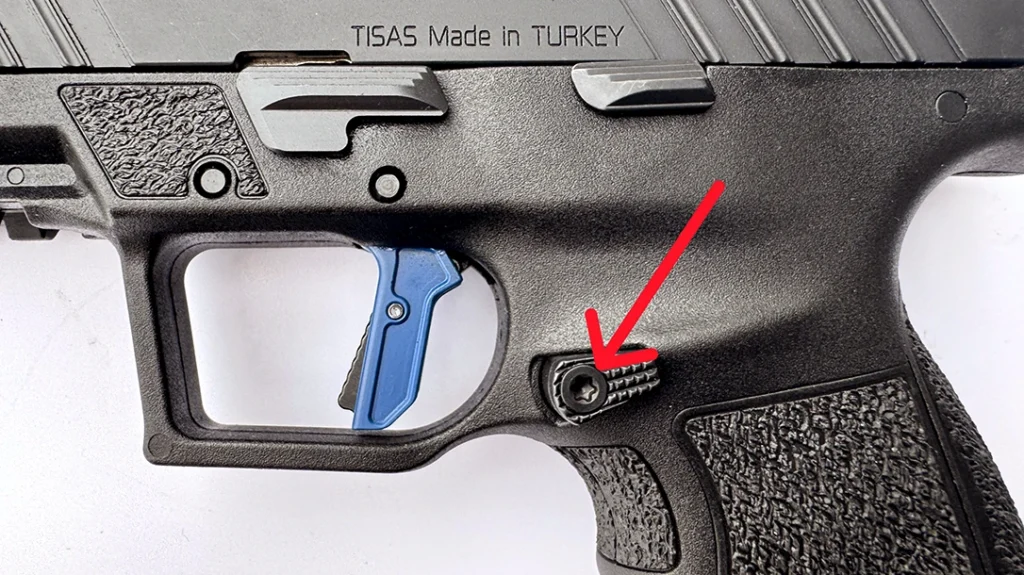
The front of the trigger guard is squared and serrated. Blue in color, the aluminum flat-faced trigger has an integrated safety. Tisas considers the mechanism to be single-action/striker-fired. As such, the striker is fully cocked when the slide is at rest, which makes for an extraordinary trigger pull.
Advertisement — Continue Reading Below
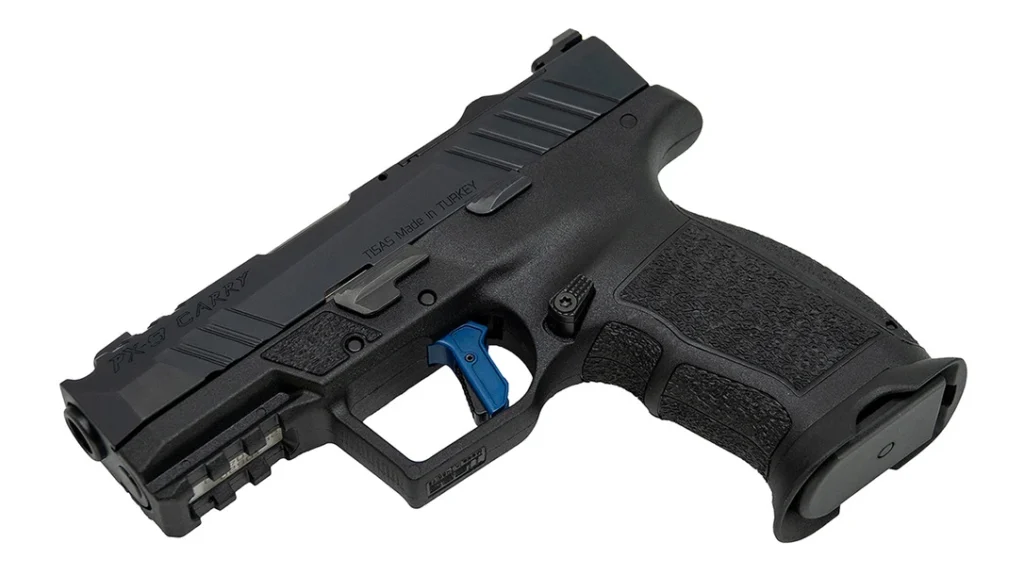
According to my Lyman Trigger Pull Gauge, the average pull weight was 3 lbs. 8.3 oz. It has a take-up of about 1/8 inch and some creep before it breaks clean.
All internal components are nickel-coated for added durability. Controls on the left side of the frame include a takedown lever, slide stop, and magazine catch. There are shallow thumb grooves on both sides of the frame behind the trigger. Textured panels are located on the front, back, and sides of the adjustable grip frame. There’s one finger groove on the front-strap.
Advertisement — Continue Reading Below
The blue steel magazines are made in the USA by Check-Mate. I’m not going to cover the disassembly for cleaning; read the manual, it’s easy, especially with the well-designed take-down lever.
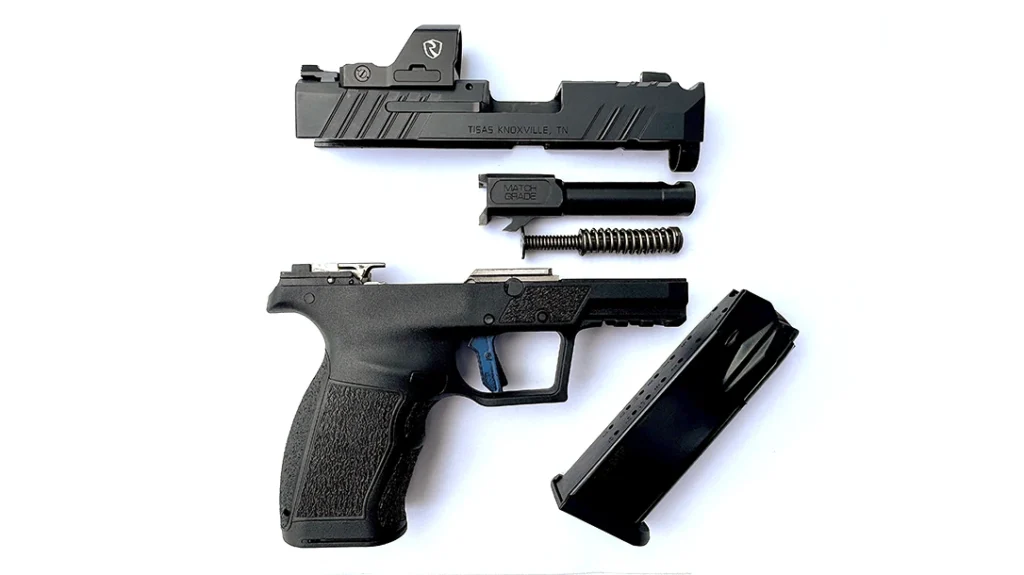
Preparing the PX-9 CC for Testing
For the Tisas PX-9 CC test shoot, I selected five 9mm loads with 5 bullet weights ranging from 90 to 147 grains. The load with the bantam-weight bullet was from Lehigh Defense and was their 90-gr. XD. This is a solid copper slug with an X-shaped nose and flutes running back from the tip. This gives it exceptional terminal and barrier performance.
Next, I had Black Hills “Red Box” 115-gr. JHP +P loads. From Federal, the tried-and-true 135-gr. Hydra-Shok JHP. I used two Hornady loads; one had the 124-gr. XTP-JHP, the other a Subsonic 147-gr. XTP-JHP.
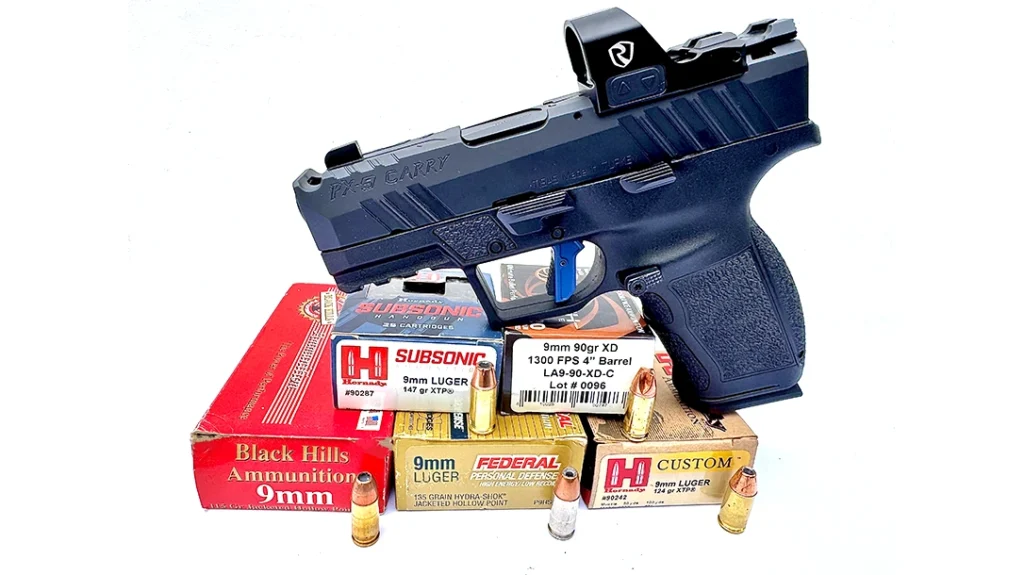
For carrying gear, I just went with the Tisas-supplied IWB holster worn at 2 o’clock from my belt buckle. I tucked the extended-base 17-round magazine in my left-side cargo pants pocket. If the factory holster doesn’t float your boat, they also offer Kydex Comp-Tac IWB and OWB holsters. Other accessories include PX-9 magazines with capacities of 10, 18, and 20 rounds.
I decided to go with an optic and chose the Riton 3 Tactix PRD 3 red dot sight. It has an RMSc footprint, and I was able to remove the cover plate of the PX-9 CC and bolt on the optic.
Features include 1x magnification, unlimited eye relief, 1 MOA click value, a 45 MOA adjustment range, and a weight of only 0.96 oz. There’s an integrated hood to protect the glass, three illuminated dot options, and 50,000 hours of battery life. The side-loading battery tray allows you to change the battery without removing the optic.
I chose to use the 3 MOA dot/30 MOA circle reticle. The base of the sight includes a fixed rear sight, reticle brightness controls, and elevation and windage adjustment screws.
Shooting the PX-9 Carry Comp
Arriving at my local Range USA, I was assigned a lane, then I grabbed a stool and arranged my gear at the bench. Job one was to get my Riton MPRD optic sighted in. That was simple, and I had it zeroed with 15 rounds.
Next, I set up my Garmin Xero C1 Pro Chronograph and got bullet velocity measurements. That data is included in the Performance Table. To assess accuracy potential, I sent double bullseye paper targets down to the 15-yard line. Three 5-shot groups were fired with each of the five 9mm test cartridges. All shooting was done from the bench using a Ransom Steady Rest.
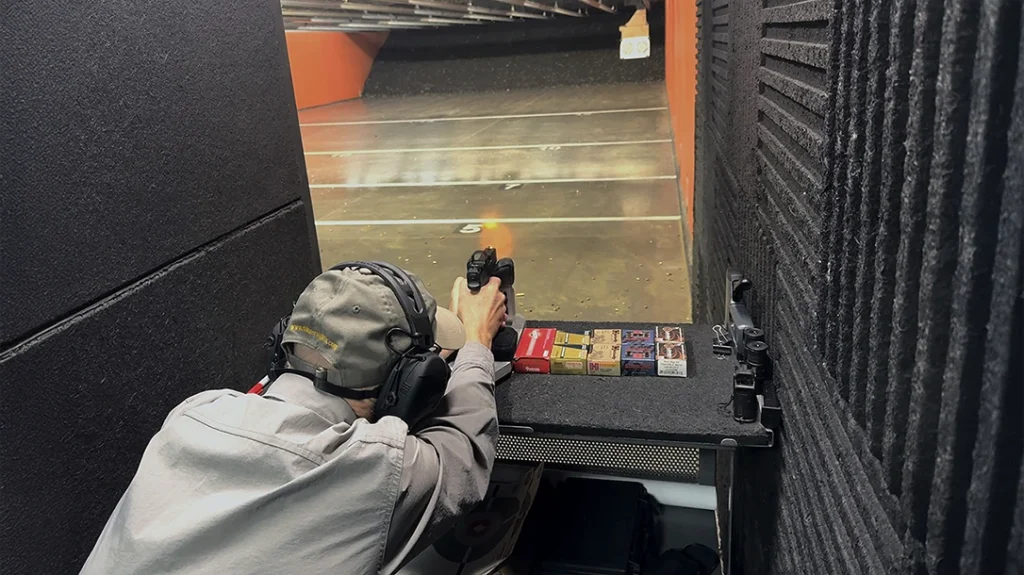
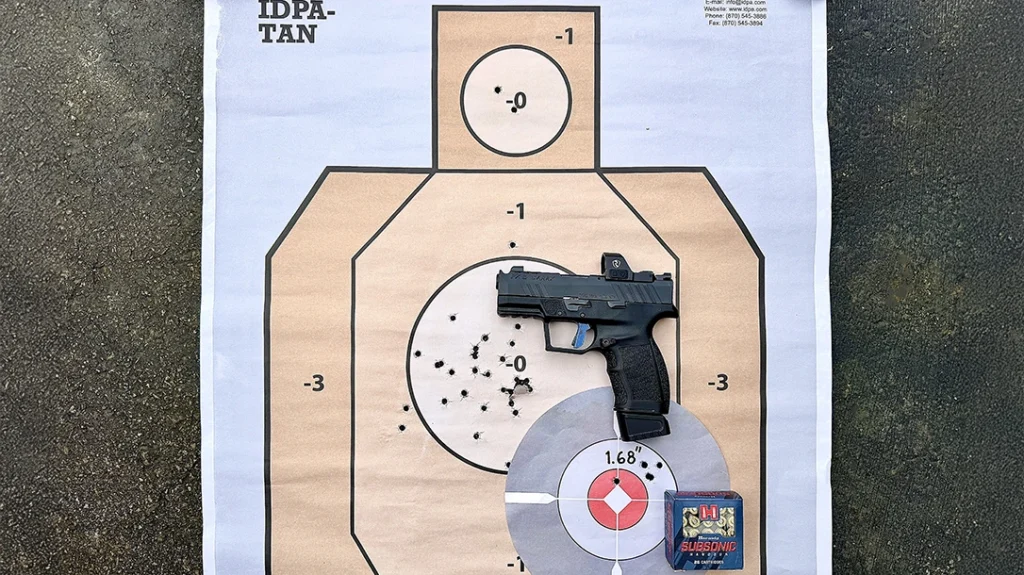
Bullet point of aim/point of impact was good. However, for some reason, the Hornady loads were shooting a little low, and I had to adjust my hold. The best 5-shot group was made using the Hornady Subsonic 147-gr. XTP cartridges, measuring 1.68 inches. Lehigh Defense 90-gr. XD was right behind it with a 1.73-inch cluster. The overall group average was just 2.12 inches.
For a practical shooting exercise and to see how well the PX-9 CC would perform in rapid-fire, with quick magazine changes, I performed a 30-round combat/qualification course. There was strong and support-hand only shooting at 3 yards, with a magazine change between hand transitions, double-taps, and two failure/body armor drills at 7 yards. At 15 yards, there was standing left/right-side, and kneeling right-side barricade shooting.
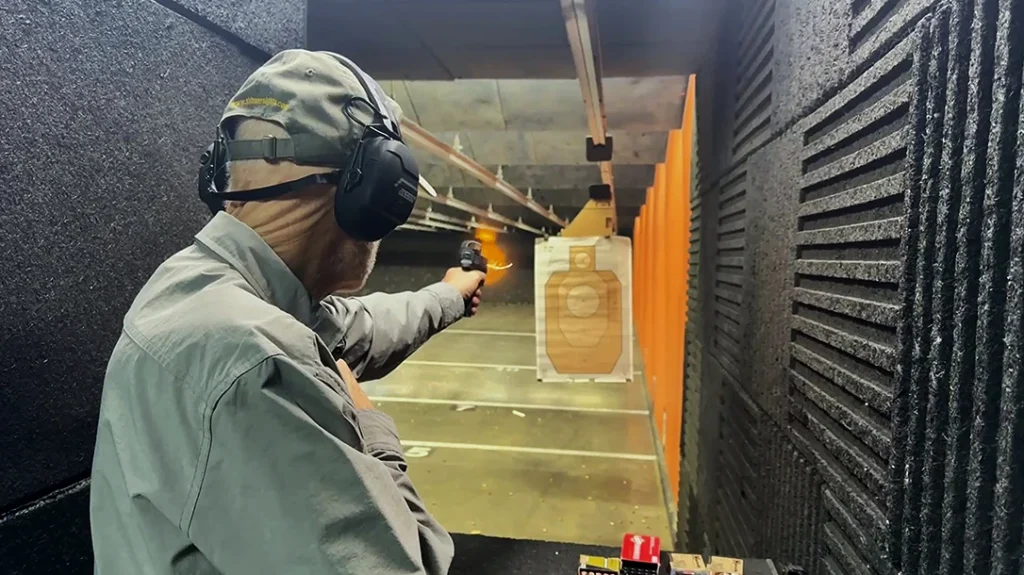
I used a mix of the 9mm test ammunition. Likewise, I used an IDPA Tan target with circular -0 scoring rings on the silhouette’s center mass and head. Outside that were -1 and -3 scoring areas. I managed to drop 3 points with impacts just outside the center circle at 8 and 12 o’clock.
Working Through Some Issues
As for the Tisas PX-9 CC, I had only two issues. First was the extended magazine catch. Even before the range-work, while manipulating the empty pistol, I accidentally hit that mag-catch several times and dropped the magazine. The 1/8-inch-wide checkered pad on the catch is held in place with a screw. I removed the screw, took off the extender pad, and problem solved.
Also, I noticed that at the beginning of my shooting session, the slide wasn’t going completely into battery, and the gun wouldn’t fire. I figured this issue would correct itself as I broke the gun in. By the time I got to the combat course, the problem was solved.
I confess, I’m not a fan of IWB holsters. It’s too easy to get a handful of shirt while drawing the pistol. Likewise, re-holstering it for me was a two-handed, gotta-watch process.
Running the Riton Optic
I want to talk about the Riton optic. The good news was that it co-witnessed with the PX-9 CC iron sights. It ran famously, and at the end of the shoot, I made a discovery. I had shot the entire T&E while wearing my regular prescription glasses.
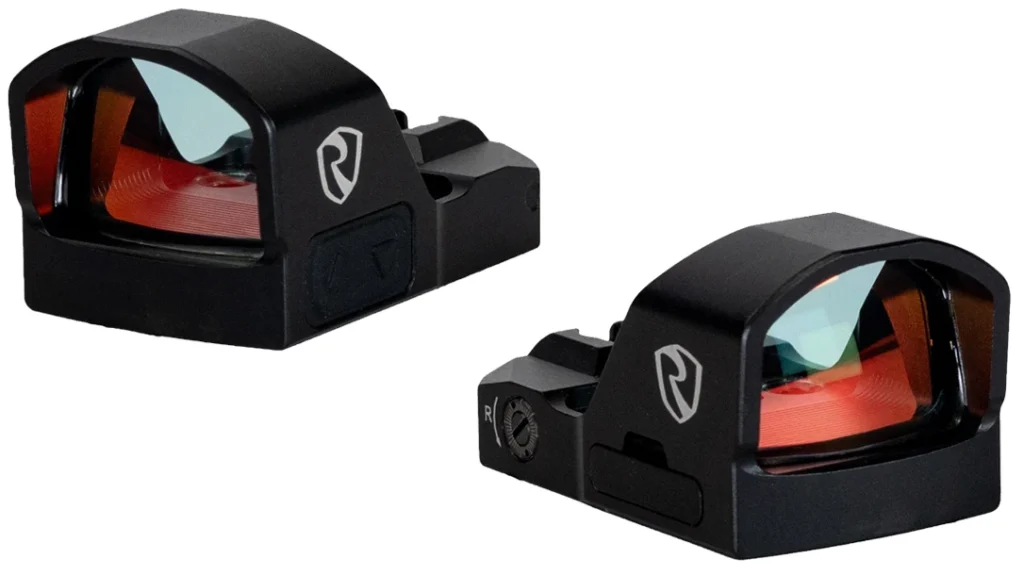
Usually, when testing a handgun, I have to switch to my shooting glasses that have a lens insert that lets me focus on the gun’s front sight. With the red dot, that wasn’t an issue, and I could focus better on the target.
I have a dot sight on another of my 9mm pistols. However, I haven’t used it that much, and wasn’t really sold on the idea. Well, now I’m a believer.
The Tisas PX-9 Carry Comp Ran Like a Top
The rest of the story was all pluses. In the end, there were no malfunctions, and the PX-9 CC ran like a top. The size, shape, and weight were, as Goldilocks stated, “Just Right.”
Rapid-fire controllability was easy to maintain, with little muzzle flip. I guess I can’t really quantify the extra control influence of the compensator. However, all I can say is that it didn’t cause any problems. The only 9mm round I shot that had appreciable muzzle blast was the somewhat vintage Black Hills +P load.
I didn’t attach the magazine well funnel, but was still able to rapidly insert mags. Likewise, when the mag-catch was pressed, the empty mag dropped right out. The newest PX-9 compact Carry Comp model from Tisas has definitely earned a place in my EDC pistol battery.
Tisas PX-9 Carry Comp Specs
| Mechanism | Locked-breech, semi-automatic, striker-fired |
| Caliber | 9mm Luger |
| Capacity | 17+1 (also 15 rd. mag) |
| Barrel | 3.5 inches |
| Overall Length | 6.7 inches |
| Empty Weight | 1.56 pounds |
| Sights | Fixed – rear black – white dot front |
| Finish | Frame black polymer, slide/barrel QPQ Tenifer |
| Stocks | Textured polymer w/ replaceable backstrap and side panels |
| MSRP | $562.20 |
Performance
| Black Hills Ammunition 115 gr. JHP +P | |
| Average Velocity | 1168 FPS |
| Best Group | 2.01 inches |
| Average Group | 2.08 inches |
| Ft. Pounds Muzzle Energy | 348 FPE |
| Federal Personal Defense 135 gr. Hydra-Shok JHP | |
| Average Velocity | 950 FPS |
| Best Group | 2.09 inches |
| Average Group | 2.30 inches |
| Ft. Pounds Muzzle Energy | 270 FPE |
| Hornady Custom 124 gr. XTP-JHP | |
| Average Velocity | 1048 FPS |
| Best Group | 2.06 inches |
| Average Group | 2.35 inches |
| Ft. Pounds Muzzle Energy | 302 FPE |
| Hornady Subsonic Ammunition 147 gr. XTP-JHP | |
| Average Velocity | 868 FPS |
| Best Group | 1.68 inches |
| Average Group | 1.88 inches |
| Ft. Pounds Muzzle Energy | 246 FPE |
| Lehigh Defense 90 gr. XD | |
| Average Velocity | 1240 FPS |
| Best Group | 1.73 inches |
| Average Group | 2.00 inches |
| Ft. Pounds Muzzle Energy | 307 FPE |
NOTE: Bullet weight measured in grains, velocity in feet per second, 15” from the muzzle by a Garmin Xero C1 Pro chronograph, and accuracy in inches for three 5-shot groups at 15 yards.
WHY OUR ARTICLES/REVIEWS DO NOT HAVE AFFILIATE LINKS
Affiliate links create a financial incentive for writers to promote certain products, which can lead to biased recommendations. This blurs the line between genuine advice and marketing, reducing trust in the content.