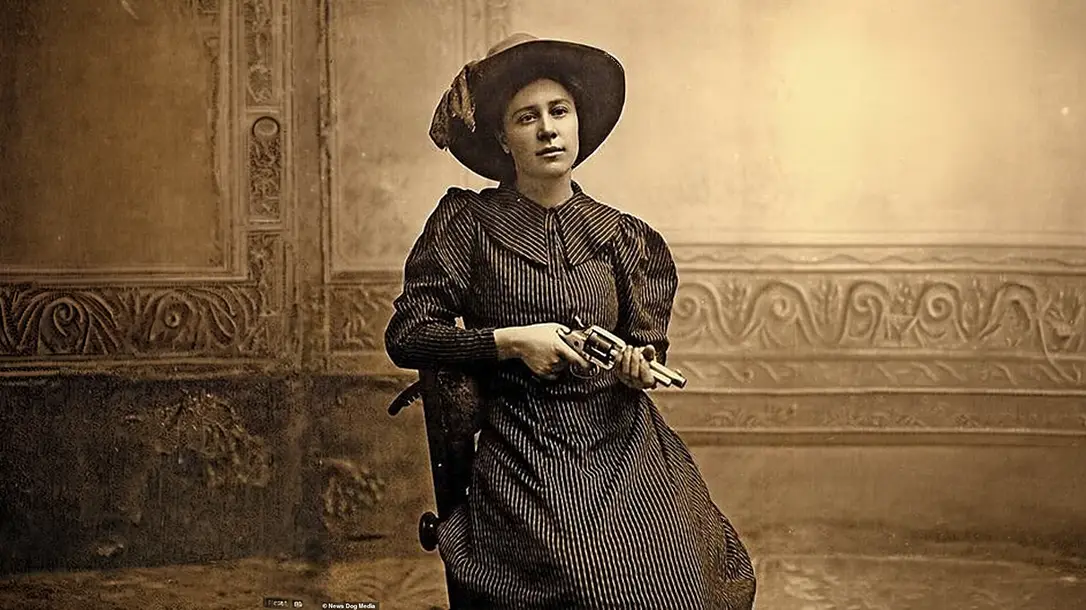
Concealed carry for women dates to the 1800’s. Back then, a lady’s hemline hid more than petticoats; it hid the equalizer that kept her alive. Frontier women turned necessity into an art form with tiny, deadly firearms. From homestead wives to “soiled doves”, carrying a firearm was a must. Frontier women’s concealed carry was a matter of necessity.
Frontier Women’s Concealed Carry – Improvised Solutions
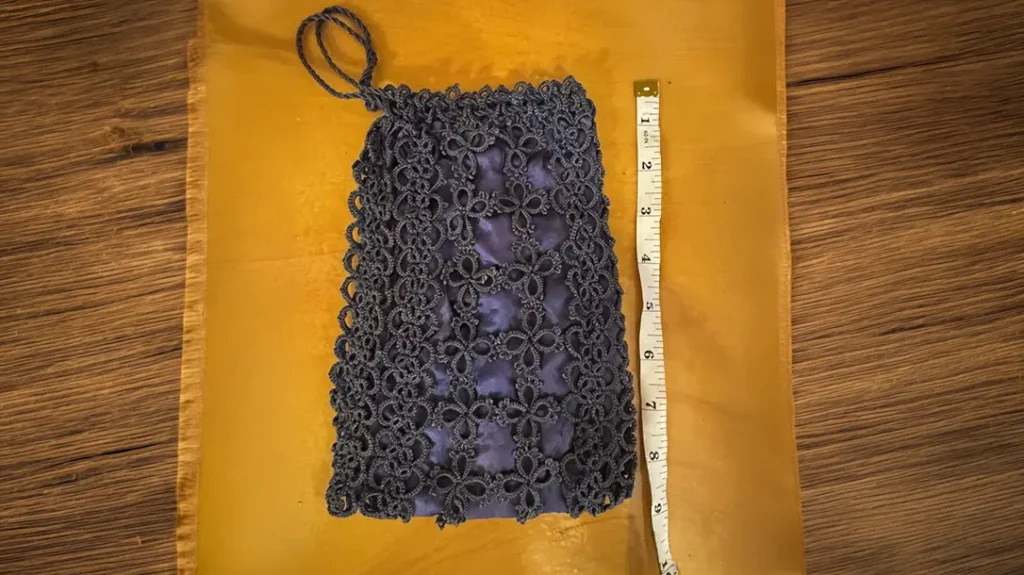
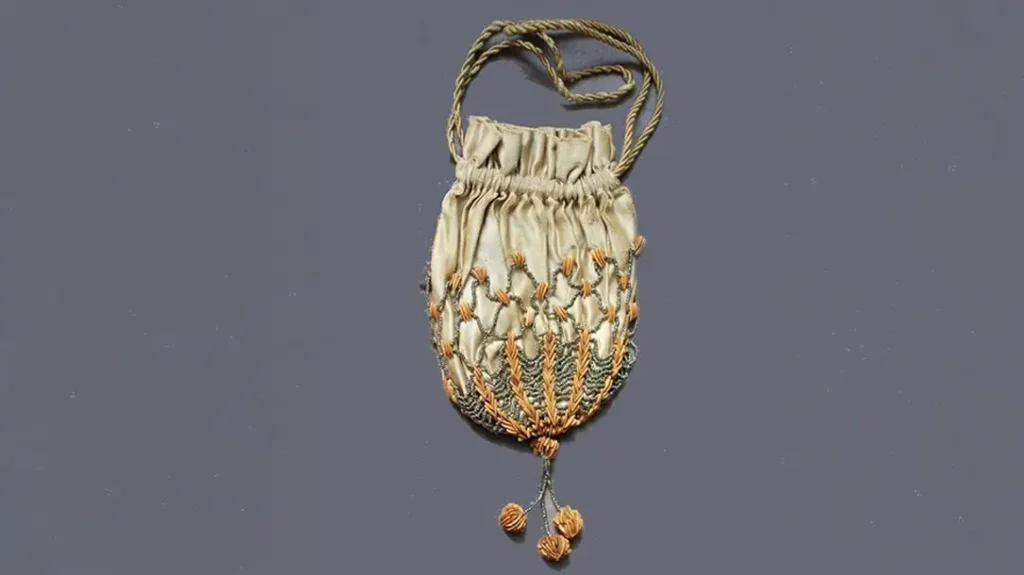
Saddleries marketed heavily to men with belts, holsters, and even “fast access saddle bags”. There was nothing for women, so they had to get creative using hoop skirts, corsets, and reticules (small handbags) to incorporate pocket-sized powerhouses. These ladies pioneered concealed carry in the United States.
Advertisement — Continue Reading Below
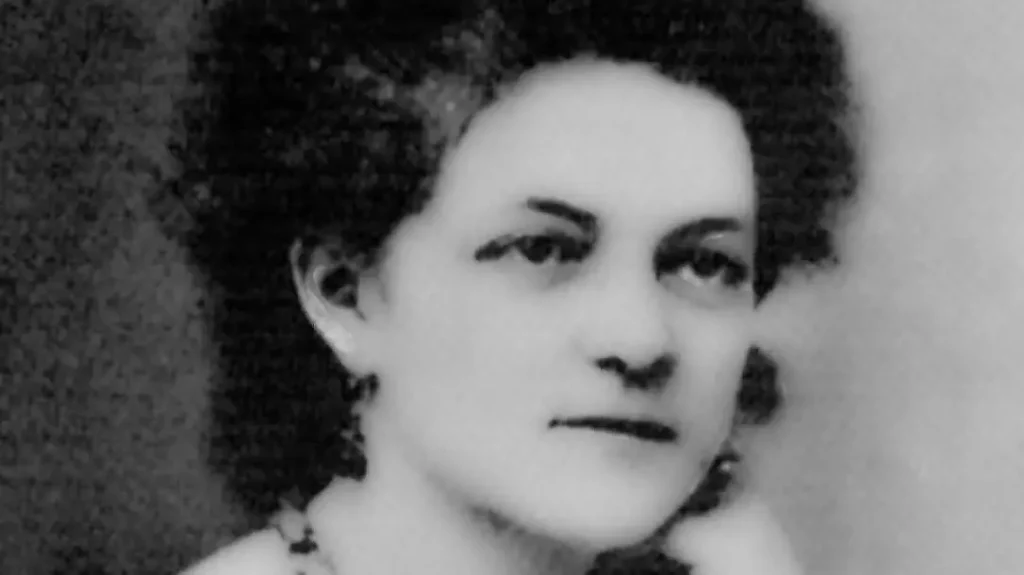
One evening on a Nevada City street in the 1860s, Eleanora Dumont, better known as Madame Mustache, walked home alone after a long night dealing blackjack. Two drunken robbers stepped from the shadows, guns drawn, demanding her winnings. Dumont nodded politely. She reached into the folds of her taffeta skirt, not for her purse, but for the Remington double-barreled derringer tucked against her thigh. One shot rang out. One man dropped. The other fled into the night. “I ain’t giving up my gold or my life,” she reportedly said.
Lady Gunslinger
Dumont wasn’t some fictional gunslinger. She was a real frontier gambler, a soiled dove, who turned necessity into survival. In an era of bustles, bonnets, and rigid “ladylike” expectations, women like her didn’t just endure the Old West; they armed it on their own terms. Unlike the cowboys, their guns were concealed, intimately. Pocket pistols, garter guns, and derringers that fit the very fabric of 19th-century femininity.
Advertisement — Continue Reading Below
The Old West wasn’t all sunsets and saloons with swinging doors. It was dangerous. Isolated homesteads sat miles from the nearest lawman. Stagecoaches invited ambush. Mining camps and cattle towns overflowed with rowdy men fueled by whiskey, gold fever, and opportunism. Bandits, claim-jumpers, and drunken miners posed constant threats, especially to women who often operated businesses in saloons or traveled alone.
Adapt to the Situation
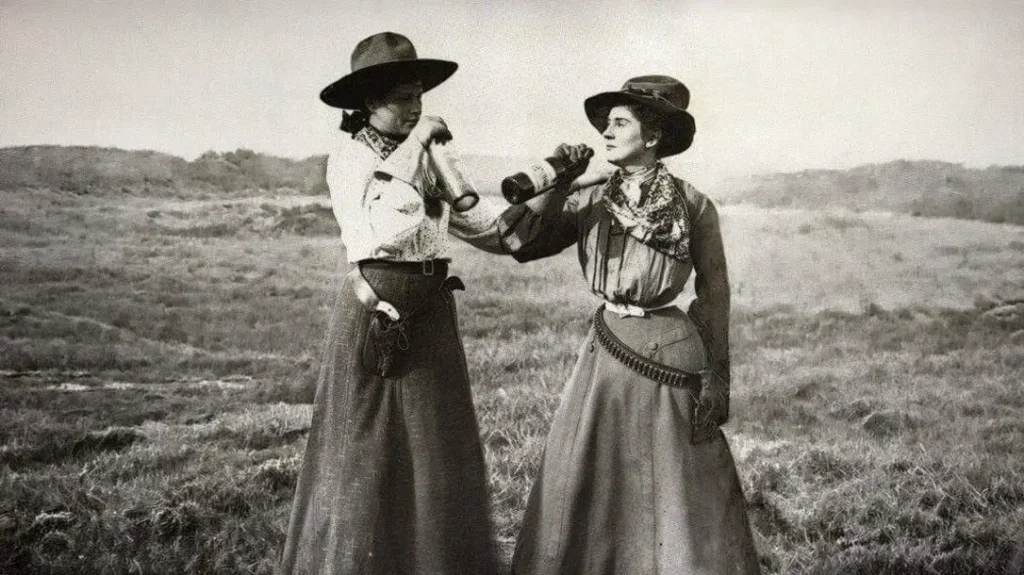
Pioneer wives like Elinore Pruitt Stewart, who chronicled her Wyoming homestead life in letters, sometimes carried Winchesters for ranch work. In contrast, women, madams, gamblers, entertainers, and “soiled doves” needed something discreet. Openly packing a full-sized revolver could draw unwanted attention or violate local ordinances against visible arms in settled areas. Fashion became both enemy and ally.
Advertisement — Continue Reading Below
Hoop skirts and bustles created natural hiding spots. Corsets provided structure for small holsters. Reticules doubled as gun bags for off-body carry. Women improvised because the frontier didn’t issue holsters with petticoats. You adapted, or you didn’t make it. As someone who’s written about badass historical women and who shoots regularly, I get it: when help is hours away, you become your own first responder.
Real Danger
Threats weren’t abstract. A woman alone at night after dealing cards or serving drinks could face robbery, assault, or worse. Derringers and pocket pistols offered a last-resort equalizer at conversational distance, exactly where most trouble started. They weren’t for showdowns at 20 paces; they were for when someone’s hands were already on you or your belongings.
Advertisement — Continue Reading Below
Garter rigs were legendary. A small pistol could be strapped to the leg under voluminous skirts, drawn with a quick lift of the hem. Some tied derringers to strings inside dress folds for faster access. Homemade corset holsters pressed flat against the body. These methods turned clothing into tactical gear long before modern Kydex or appendix carry, and far before trigger guard protection was ever considered.
The Guns
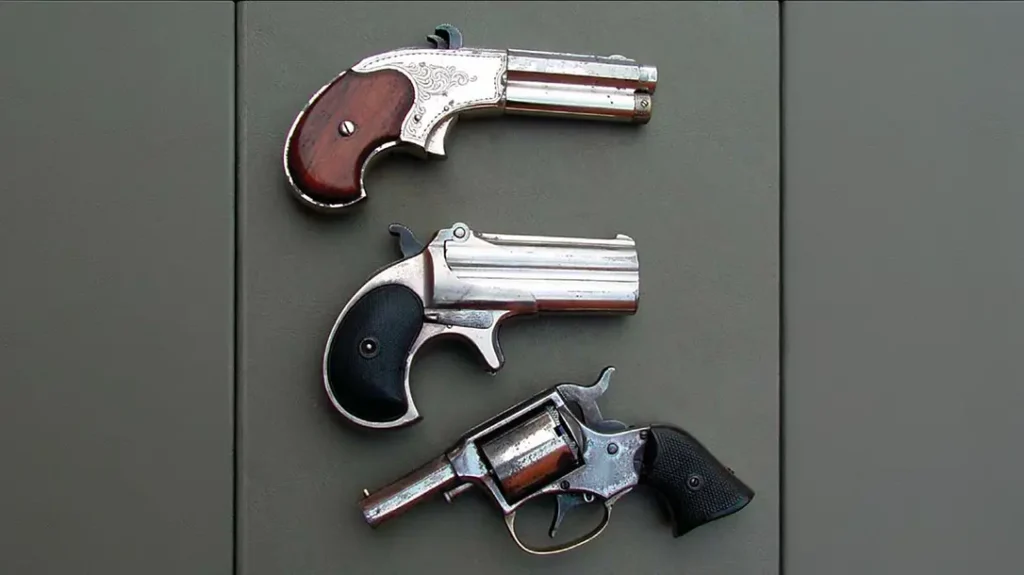
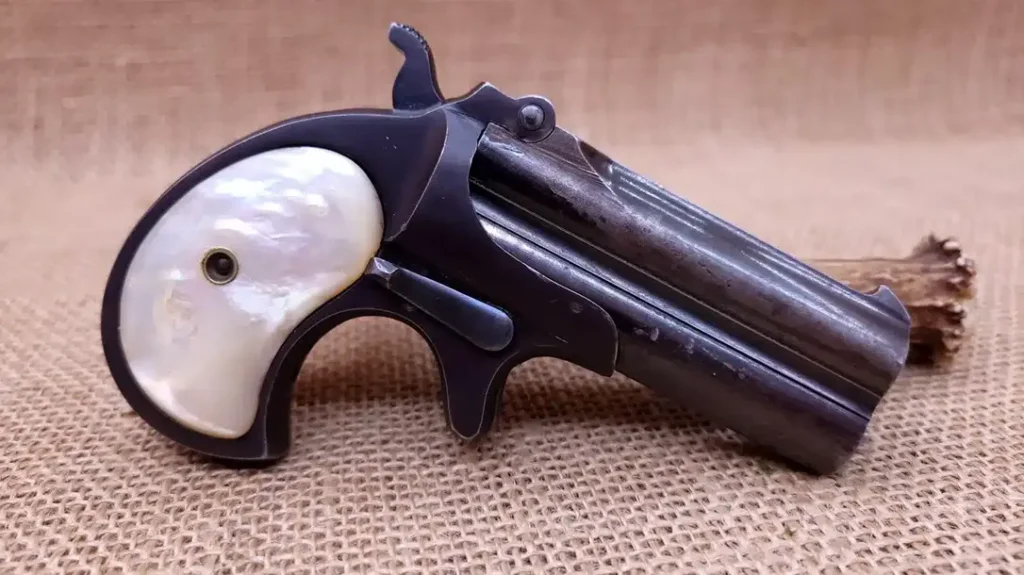
At the heart of this story are the guns themselves. Compact, often single or double-shot designs that prioritized concealment over sustained firepower. The Remington Model 95 Double Derringer (also known as the Remington-Elliot) stands out as an iconic example. Patented in 1865 and produced from 1866 into the 1930s (with over 130,000–150,000 made), it was a tiny over-under pistol chambered in .41 Short Rimfire. Measuring about 4.86 inches long, 3.2 inches tall, and weighing just 12 ounces empty, it slipped easily into a pocket, garter, or reticule.
Advertisement — Continue Reading Below
The double barrels gave two shots without reloading, an edge in a desperate moment. Recoil was stout for its size, but manageable at point-blank range. Accuracy? Negligible beyond a few yards, but that’s not what it was for. It was designed to stop a threat inches away.
Henry Deringer’s earlier single-shot percussion pistols (note the one “r”, the double-barrel version popularized the misspelled “derringer”) set the template in the 1820s–1850s. These .41 or .45 caliber muzzle-loaders were favorites of gamblers and women for their simplicity and power in a compact frame. By the cartridge era, Remington’s version dominated.
Advertisement — Continue Reading Below
Pocket Pistols
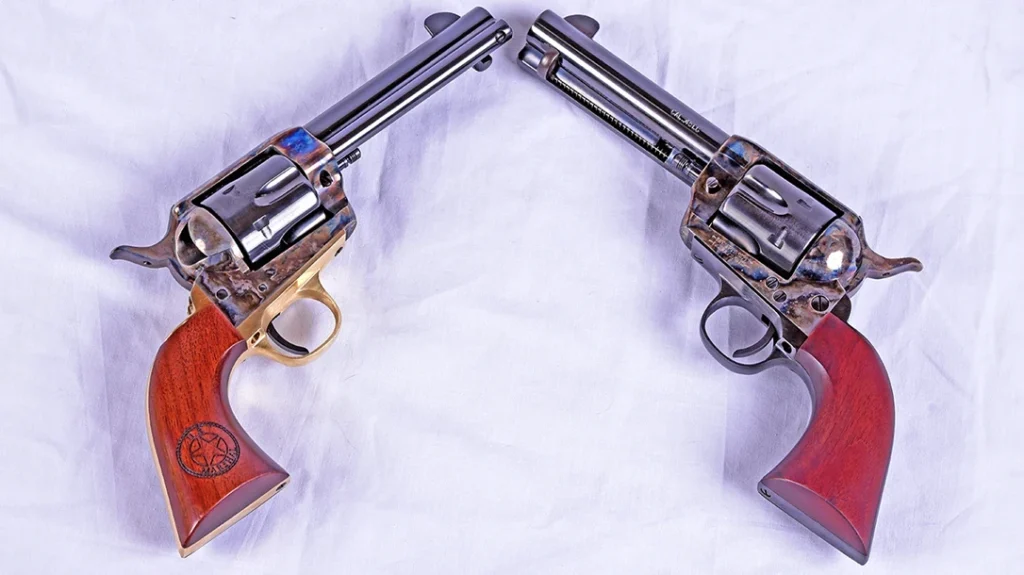
Other pocket pistols filled the gap. Colt’s New Line and Lightning models in .38 caliber offered small revolvers for those wanting more shots. Smith & Wesson’s early tip-up revolvers and Merwin & Hulbert “Baby” models provided compact wheelguns. Pepperbox designs with multiple barrels (like Sharps four-shooters) gave decent fire in a tiny package, though with varied reliability.
These guns fit a lady’s life. Lightweight meant they didn’t drag down a bustle or pull at a garter. They were tools of adaptation. A madam in a rowdy saloon could keep one in her reticule. A gambler like Dumont could draw from skirt folds without suspected intent.
Women weren’t the only users. Gamblers, outlaws, and even some lawmen carried them as backups, but the guns came to be associated with feminine ingenuity. Archival sketches and museum pieces often show garter rigs or corset holsters alongside these pistols, highlighting how fashion met function.
Fast Forward
Fast forward to the present day, and our reality seems quite different. I’m quite certain these frontier women would think us to be spoiled with the seemingly endless options for on-body, concealed carry. Especially with innovations in safety features such as trigger guard protection, safe body placement, and endless fashion options. The simple fact that we can wear pants and leggings with built-in holsters would make these historical women green with envy.
Frontier Women’s Concealed Carry
While times have changed and society overall is far more civilized, one thing still rings true today. Evil still exists, and none of us is exempt from ever facing it. We could all learn something from their grit, determination, and defensive mindset to be vigilantly prepared as our own first responders.
WHY OUR ARTICLES/REVIEWS DO NOT HAVE AFFILIATE LINKS
Affiliate links create a financial incentive for writers to promote certain products, which can lead to biased recommendations. This blurs the line between genuine advice and marketing, reducing trust in the content.