For years, gun owners have lived in a legal twilight zone when it comes to marijuana. In dozens of states, cannabis is legal in some form. Federally, however, marijuana remains a controlled substance. That contradiction has created a trap for otherwise law-abiding gun owners: you can legally buy cannabis under state law, but federal law says you can’t possess a firearm if you’re an unlawful user of a controlled substance.
This week, the U.S. Supreme Court took a sledgehammer to part of that framework.
A Decision That Could Reshape Federal Firearms Law
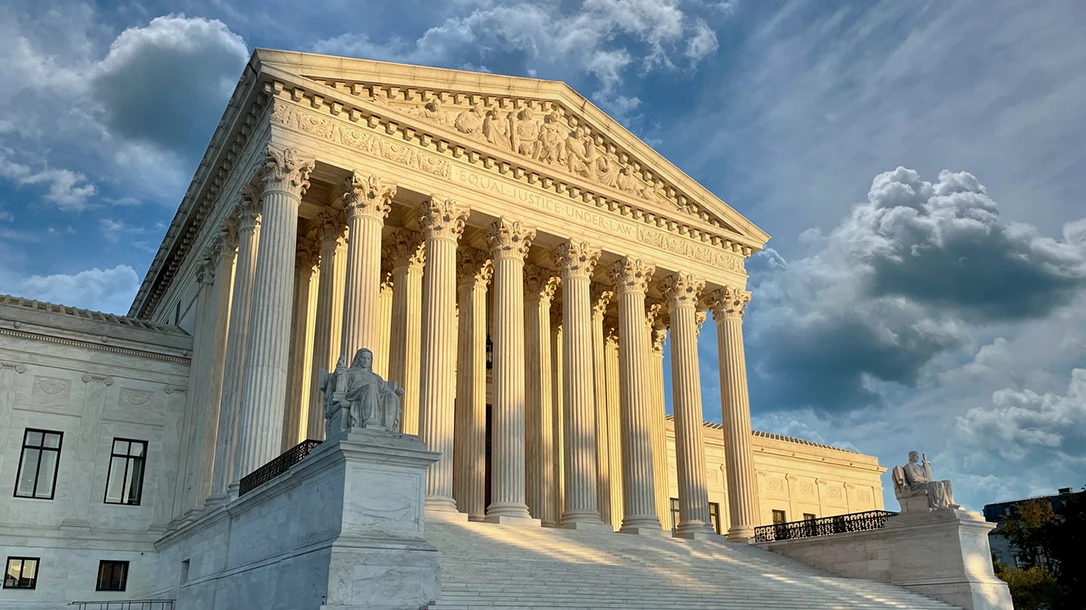
In an opinion joined by 7 Justices with 2 concurring in the result, the Court sided with Texas resident Ali Hemani, finding that his prosecution under the federal gun ban for drug users violated the Second Amendment. Justice Neil Gorsuch authored the opinion, concluding that the government failed to demonstrate that Hemani’s marijuana use alone justified stripping him of his constitutional right to keep and bear arms.
Advertisement — Continue Reading Below
The Law at the Center of the Fight
The case focused on 18 U.S.C. § 922(g)(3), a federal statute that prohibits firearm possession by anyone who is “an unlawful user of or addicted to any controlled substance.” Marijuana’s federal classification means that even users in states where cannabis is legal can fall under the prohibition.
For decades, the government treated that restriction as settled law. Then came the Supreme Court’s 2022 Bruen decision, which established that modern gun regulations must be consistent with the nation’s historical tradition of firearm regulation. Since then, courts around the country have wrestled with whether blanket bans on marijuana users can survive constitutional scrutiny.
Advertisement — Continue Reading Below
The Supreme Court’s answer is decisively: not automatically.
What the Court Actually Said
Gun-control advocates will likely be disappointed, while gun-rights groups are already celebrating. But the ruling is narrower than some headlines suggest.
The Court did not completely strike down § 922(g)(3). Instead, it held that applying the law to Hemani, a marijuana user with no evidence of violent behavior, addiction, or firearm misuse, violated the Second Amendment. The Justices rejected the notion that all marijuana users can be categorically treated as dangerous individuals.
Advertisement — Continue Reading Below
Importantly, the decision leaves room for restrictions on people who are actively intoxicated while armed, addicted to drugs, or otherwise pose a demonstrable danger. Congress may also be able to craft more narrowly tailored restrictions aimed at specific high-risk conduct.
Why This Matters for Gun Owners
The ruling represents another significant victory in the Court’s ongoing securing of Second Amendment protections. It also highlights the increasingly awkward collision between federal marijuana policy and the reality that millions of Americans legally use cannabis under state law.
Perhaps most notably, the case brought together some unusual allies. Organizations often found on opposite sides of constitutional debates, including gun-rights advocates, civil-liberties groups, and cannabis reform organizations, argued that the federal government’s position stretched too far.
Advertisement — Continue Reading Below
The Bottom Line
The Supreme Court didn’t declare open season on federal gun restrictions, nor did it create a blanket right for every drug user to possess firearms. What it did do is send a clear message: constitutional rights can’t be stripped away based solely on broad assumptions about an entire class of people.
For gun owners, it’s another reminder that the post-Bruen legal landscape continues to reshape firearm law in ways few would have predicted just a few years ago.
And for Washington? The conflict between federal marijuana laws and the Second Amendment just got a lot harder to ignore.
Advertisement — Continue Reading Below