Carrying a concealed firearm is both a right and a responsibility. While obtaining a concealed carry permit is an important first step, it’s only the beginning of becoming a responsible armed citizen. Safe firearm ownership involves much more than choosing a reliable handgun and carrying it every day. It requires ongoing training, secure storage, a solid understanding of self-defense laws, and a commitment to making smart decisions both at home and in public.
Many new permit holders focus on the excitement of carrying a firearm, but the everyday responsibilities that come with it are just as important. From knowing where you can legally carry to securing your firearm when it’s not on your person, the habits you develop now will help keep you, your loved ones, and those around you safe.
Whether you’ve just received your permit or have been carrying for years, these seven practices can help you become a more responsible, prepared, and confident concealed carry holder.
Advertisement — Continue Reading Below
1. Have an Honest Conversation With Your Family
If you carry a firearm and share your home with a spouse or children, everyone should understand that a firearm is present.
Young children should be taught, in age-appropriate language, that firearms are never toys and should never be touched without an adult present. Older children should receive proper firearm safety education as they mature. Open communication helps remove curiosity while reinforcing that firearms deserve respect.
2. Secure Your Firearm at All Times
One of the most important rules of responsible concealed carry is simple: If the firearm isn’t on your person, it should be secured. Never leave a handgun sitting on a dresser, nightstand, kitchen counter, or inside an unlocked vehicle—even for a moment.
Advertisement — Continue Reading Below
I rely on a portable rapid-access handgun safe on my nightstand. It allows me to access my Glock in roughly three seconds if an emergency occurs while preventing unauthorized access the rest of the time.
Quick-access safes provide an excellent balance between security and readiness.
3. Make Sure Your Partner Knows the Plan
If your spouse is comfortable around firearms, they should know how to safely operate your defensive handgun. Just as importantly, they should know how to access it if you’re not home.
Advertisement — Continue Reading Below
That means understanding how the firearm functions, safe handling, how to open the safe, and what the emergency plan is. Owning a defensive firearm should be a shared responsibility when both adults are willing participants.
4. Understand Your State’s Self-Defense Laws
Owning a concealed carry permit doesn’t automatically mean you’re legally justified in using deadly force.

Advertisement — Continue Reading Below
Every permit holder should have a solid understanding of the laws governing self-defense in their state, including when deadly force is legally permissible.
Many instructors offer legal-use-of-force courses, and several excellent books cover the subject in depth. One of the best-known resources remains Massad Ayoob’s In the Gravest Extreme, which has educated responsible gun owners for decades.
Knowing the law before an emergency is every bit as important as knowing how to shoot.
Advertisement — Continue Reading Below
5. Know Where You Can and Can’t Carry
Concealed carry laws vary considerably from one state to another.
Federal buildings, including U.S. Post Offices, generally prohibit firearms. Many states also restrict carry in schools, although there are exceptions. For example, Utah law allows lawful concealed carry in schools under certain circumstances.
Rather than relying on internet rumors or secondhand information, review your state’s official government website and familiarize yourself with the current laws.
Advertisement — Continue Reading Below
Don’t overlook private property rights either. Many businesses prohibit firearms by posting “No Firearms” signs, and responsible permit holders should understand and comply with those restrictions where applicable.
6. Secure Your Firearm When It Stays in the Vehicle
Eventually, every concealed carrier encounters a location where firearms aren’t permitted. When that happens, don’t simply tuck your handgun under the seat or inside the glove box.
Instead, secure it in a lockable vehicle safe. If you already own a portable handgun safe, many include a steel cable that wraps around a seat frame, preventing a thief from simply walking away with the safe.
Vehicle thefts are common, and unsecured firearms remain one of the leading sources of stolen guns.
7. Never Stop Training
Receiving your concealed carry permit doesn’t make you proficient. Regular practice and continued education are essential if you expect to carry a firearm responsibly.
Professional instruction helps reinforce safe gun handling, improve accuracy, and prepare you to make sound decisions under stress. Local defensive pistol matches can also be an excellent way to build practical shooting skills in a controlled environment.

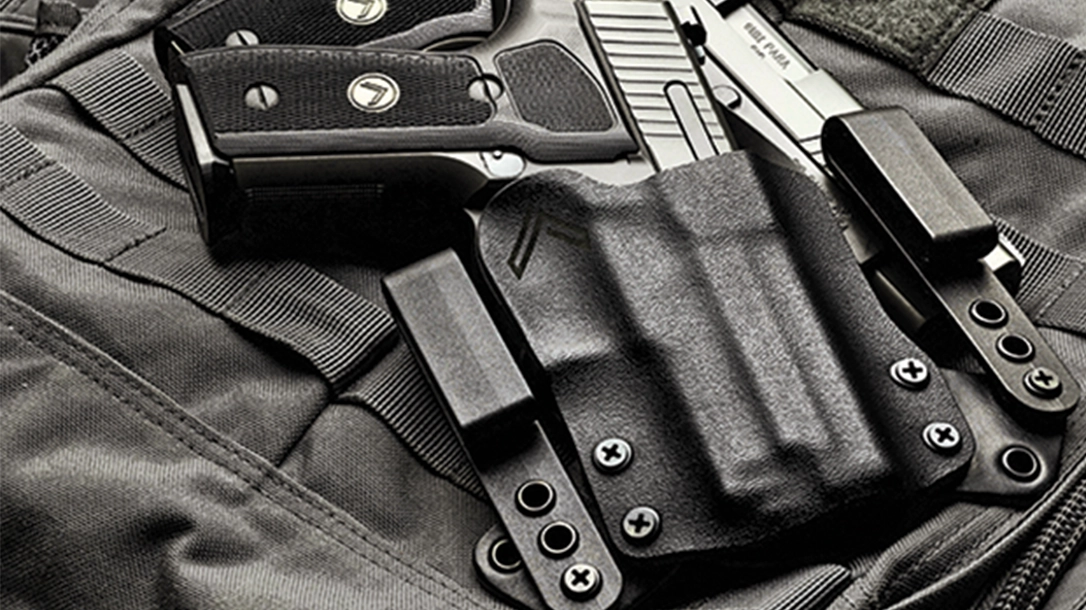
There’s another lesson nearly every concealed carrier eventually learns: finding the perfect holster takes time.
Most experienced gun owners have accumulated a box full of holsters that looked promising but ultimately didn’t fit their needs. Comfort, concealability, accessibility, and retention all matter, and what works for one person may not work for another. Don’t be discouraged if your first holster isn’t your last. Consider it part of the learning process.
Responsible Carry Is a Lifestyle
Responsible concelaed carry is far more than the legal ability to carry a firearm. It requires thoughtful planning, continuous learning, and a commitment to safety every day.
Responsible gun owners protect not only themselves and their loved ones from outside threats, but also from preventable accidents through proper storage, ongoing training, and a clear understanding of the law.
Those habits are what truly define a responsible concealed carry holder.
WHY OUR ARTICLES/REVIEWS DO NOT HAVE AFFILIATE LINKS
Affiliate links create a financial incentive for writers to promote certain products, which can lead to biased recommendations. This blurs the line between genuine advice and marketing, reducing trust in the content.